Ali Abunimah’s-Obama’s rush to judgment: Was the Boston bombing really a “terrorist” act?


From The Electronic Intifada

by Ali Abunimah

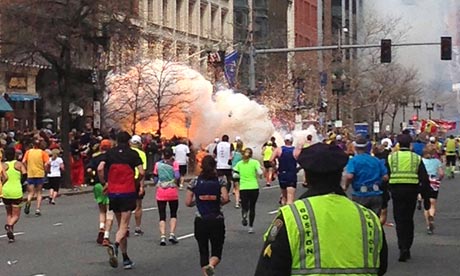
President Obama has repeatedly claimed that the Boston Marathon bombing was an “act of terror” and that its alleged perpetrators are “terrorists.”

It may seem pointless to quibble with this description: after all what could be more “terroristic” than setting off bombs at a peaceful sporting event killing three persons, one a child, and injuring or horrifically maiming dozens more?

But in fact how the act is described is very important in determining government, media and wider societal responses, including ramping up racism and bigotry against Muslims, Arabs or people of color.

There can be no doubt that the Boston Marathon bombing was a murderous act, but does it –– based on what is known –– fit the US government’s own definitions of “terrorism”?

It is important to recall that other, far more lethal recent events, including the mass shootings in Aurora, Colorado and the school massacre at Sandy Hook, Connecticut have not been termed “terrorism,” nor their perpetrators labeled “terrorist” by the government. Why?

Obama’s changing descriptions

In his first statement shortly after news emerged of the bombing in Boston on 15 April 2013, Obama pointedly did not describe the attack as “terrorism.” The term is totally absent from his statement. He does say, “We still do not know who did this or why. And people shouldn’t jump to conclusions before we have all the facts.”

It was only the next day on Tuesday, 16 April, that Obama first called the bombing an “act of terrorism” after media had pressed the White House on the issue.

Last night, after 19-year-old suspect Dzhokhar Tsarnaev was captured by police, Obama made a statement declaring: “We will investigate any associations that theseterrorists may have had. And we’ll continue to do whatever we have to do to keep our people safe.”

In his weekly video address today, Obama reaffirmed, “on Monday an act of terrorwounded dozens and killed three people at the Boston Marathon.”

Official definitions of “terrorism”

The US government has no single definition of “terrorism” but the National Institute of Justice at the US Department of Justice points to two influential standards that are in use, one enshrined in law and the other provided by the FBI:

Title 22 of the U.S. Code, Section 2656f(d) defines terrorism as “premeditated, politically motivated violence perpetrated against noncombatant targets by subnational groups or clandestine agents, usually intended to influence an audience.

The Federal Bureau of Investigation (FBI) defines terrorism as “the unlawful use of force or violence against persons or property to intimidate or coerce a government, the civilian population, or any segment thereof, in furtherance of political or social objectives.

Both definitions of terrorism share a common theme: the use of force intended to influence or instigate a course of action that furthers a political or social goal. In most cases, NIJ researchers adopt the FBI definition, which stresses methods over motivations and is generally accepted by law enforcement communities.

What was the “political” or “social” goal of the Boston bombing?

Based on these definitions, what distinguishes a “mass shooting” such as Aurora or Sandy Hook on the one hand, from an act of “terrorism” on the other, is that the mass shooters have no political goals. Their act is nihilistic and is not carried out in furtherance of any particular cause.

So far, however, absolutely no evidence has emerged that the Boston bombing suspects acted “in furtherance of political or social objectives” or that their alleged act was “intended to influence or instigate a course of action that furthers a political or social goal.”

Nor is there any evidence that the two suspects are part of a group. Indeed, on Sunday,The Boston Globe cited Boston officials to report that, “all evidence thus far indicates they were acting alone and were not part of a broader conspiracy.”

Neither of the suspects is known to have made any statement of a political or other goal for their alleged action and there has been no claim of responsibility. Obama, in his statement last night, admitted as much:

Obviously, tonight there are still many unanswered questions. Among them, why did young men who grew up and studied here, as part of our communities and our country, resort to such violence? How did they plan and carry out these attacks, and did they receive any help?

So why is Obama calling them “terrorists?

Since Obama has no idea why the alleged suspects may have resorted to violence and no one else has offered an evidence-based explanation, why is Obama already labeling them “terrorists” when he himself warned against a “rush to judgment?”

The only explanation I can think of is the suspects’ identification as ethnic Chechens and Muslims, even though there is no evidence that they acted either in relation to events in their ancestral homeland or were motivated by any Islamist ideology.

True, Obama did switch to calling the Boston attack “terrorism” before any facts were known about the identities or backgrounds of the suspects, but it was also before anynew relevant facts were known. Once those identities became known, Obama’s statements have only fed careless, prejudiced assumption so common on cable television: they’re Muslims, so they must be “terrorists.”

This may be the easy and populist way of looking at it, pandering to prejudice as Obama so often does, but it is irresponsible and violates official US policy that Obama seemed, at least on the first day, willing to observe.

How acts are labeled is highly political: recall the controversy over whether Obama was quick enough to label the attack on the US consulate in Benghazi, Libya, last September as “terrorism,” and the continuing demands that the government designate the November 2009 mass shooting at Fort Hood, allegedly perpetrated by Major Nidal Hasan, as “terrorism.”

All of these cases reinforce the widely noted observation that acts of violence, especially mass shootings, carried out typically by white males are immediately labeled as the acts of “disturbed individuals” while the acts of a person identified as “Muslim” are to be labeled “terrorism” regardless of the facts.

These are unsafe assumptions and foreclose the possibility of full understanding. Moreover, by reinforcing popular stereotypes, they give new force to the anti-Muslim backlash that seems only to be growing stronger and more poisonous as the 11 September 2001 attacks recede into the past.

It is also important to note the contrast between Obama’s eagerness to label the Boston attack as “terror” and its alleged perpetrators as “terrorists” – without evidence – and his reluctance to label last August’s mass murder at the Sikh Temple of Wisconsin as “terrorism” despite the identification of the shooter as having a history of white nationalist and supremacist activism.

Perhaps the first serious consequence of labeling Boston a “terrorist” attack was the Obama administration’s decision to deprive the suspect who was captured of his constitutional right to receive a Miranda warning on arrest, a further thinning of the already threadbare pretense of “rule of law” in post 11 September 2001 America.

Could this be another “Columbine?”

Let’s consider another possibility. Exactly 14 years ago today, 20 April 1999, Eric Harris and Dylan Klebold executed a carefully-planned attack on Columbine High School in Colorado, using guns and bombs.

The two seniors murdered 12 fellow students and one teacher before shooting themselves.

Like the Boston Marathon bombing allegedly was, the Columbine attack was carried out by two persons, and it involved some of the same methods: homemade explosives.

But the Columbine attack is remembered as a “school shooting” or a “mass shooting” – perhaps the most iconic of a sad litany of such events – but not a “terrorist” attack.

In his essential 2009 book Columbine, Dave Cullen tells the story of the attack in meticulous detail, debunking many of the popular stereotypes that persist to this day that the attack was meant to avenge bullying by “jocks.”

The evidence that emerged is that Harris was a clinically sadistic sociopath who had no ability to empathize with other human beings. Klebold was a depressive whom Harris was able to manipulate. These facts lay at the heart of what happened.

It is definitely not any more desirable in the wake of such atrocities to have a media frenzy stigmatizing all people with mental illness as potential killers any more than we want them to stigmatize all Muslims as potential terrorists – in fact people with mental illness are no more likely to be violent than anyone else, and are indeed more likely to be victims of violence. And contrary to popular stereotypes fed by the media it is exceptionally rare for Muslims to become “terrorists.”

What we do need is patient, serious and informed analysis: could the relationship between the Boston suspects be similar to those of the Columbine killers? What other factors are at at play? I don’t know, but I cannot rule anything out.

Just like President Obama, I do not know what drove the alleged Boston bombers. What I do know is that when the media and the government, egging each other on, rush to judgment, the possibility of alternative scenarios is ruled out and getting to the truth is harder.

If Boston was “terrorism” based on the little that is known, then we must be able to answer these questions: can only white or Christian males be sociopaths, or suffer from other mental illnesses that under certain conditions lead to violence?

Can only two white Colorado high school students act as a pair without “terrorist” motives? Can “Muslims” or ethnic Chechens, or Arabs never be subject to the same kind of conditions or analysis?

Surely the survivors and families of the Boston bombing deserve no less of an accounting of what happened than the victims of Columbine?

We cannot and should not rule out that evidence will emerge that the alleged Boston bombers had a political motive. But it hasn’t so far.

What we have seen is the usual rush to judgment that has left Muslims and many people of color once again fearing collective blame and the governmental and societal retribution that comes with it.

Update, 21 April: Harvard Law professor Alan Dershowitz on Boston Marathon bomb and “terrorism” definition

A few hours after I published this post on 20 April, I heard Harvard Law Professor Alan Dershowitz on the 20:05 GMT edition of the BBC World Service Newshour making some of the exact same points I made in this post, a jarring experience since I usually strongly disagree with his advocacy on Israel.

Dershowitz was responding to members of Congress who called for the government to treat surviving Boston Marathon bombing suspect Dzhokhar Tsarnaev as an “enemy combatant” and to deprive him of his constitutional rights. Already, the Obama administration has deprived Tsarnaev of his Miranda rights. I have transcribed Dershowitz’s key comments:

Dershowitz: Well if they [the members of Congress] were in my class they would flunk out of law school … It shows a complete and total ignorance of the United States constitution. This is an American citizen being charged with committing a crime on American soil against Americans.

It’s not even clear under the federal terrorism statute that this qualifies as an act of terrorism. In order to prove it’s an act of terrorism they have to prove that they had certain kinds of intentions and motivations. But it’s a perfect trial to try in the civilian courts. There’s no plausible argument that would take this case out of the civilian courts and would put it into any kind of a military tribunal.

BBC: They’ve referred to the US Supreme Court decision Hamdi vs. Rumsfeld which said that there is no bar to the US holding one of its citizens as an enemy combatant. That part they say is certainly established in law.

Dershowitz: Well yeah, an enemy combatant but who’s the enemy here? These are two young men, we have no idea what their motivation was, particularly the young man who was captured alive. As far as we know he has never been in direct contact with anybody from any foreign country. They’re just making it up. And they’re allowing their perception of bias to influence the facts of the case. This case, this will be tried in a civilian court in front of a jury…

It’s been decided-Marathon Bombers were Muslim-Chechen Immigrants


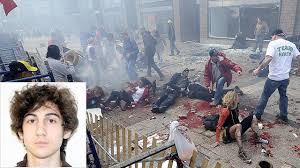
bombingA terrible thing happened on Monday, 15 April at the Boston Marathon.  Three people were killed and scores maimed and injured towards the close of the Marathon by two brothers. The act was atrocious; bodies were strewn everywhere and victims were young, old, male or female and from places all over the country and the world.  To begin this post let us remember the names of the victims, who were Martin Richards, 8 years old; Krystle Campbell, 29 and Lu Lingzi, a Boston University graduate student.  There are others who have been forever damaged by this senseless act of violence; they, corporeally, will never be whole again and neither  will the Nation; scarred beyond recognition despite the slogans of resilience and courage.  No doubt there was plenty of that which was demonstrated that day; people helping and saving the lives of strangers in ways that tested the endurance of both the helper and the victim.  Such displays are what make America great and humanity even greater, we reach across  cultural divides and help those who need it without regard to race, color or creed.

However, just as I began by mentioning the names of the victims of America’s latest tragedy without any regard to where they come from, what they believe and the color of their skin, no such consideration is given to the perpetrators of this heinous crime, Dzhokhar A. Tsarnaev,19 and his 26 year old brother Tamerlan who have had their ethnicity and faith dragged into the fracas of this brutal and callous act of murder in attempts to further demonize the perpetrators, their ethnicity and their faith. Indeed such identification in today’s American jargon is just as calculated and fatal meant to cut through bone and flesh and spirit as any pipe bomb or drone missile.  Taking a page from age old, proven concepts, words are the first weapon used to denigrate and ease the way towards genocide and cultural extermination and they have been used with precision and skill.

It began with President Obama’s first speech about the bombing where he was remiss in not saying the word “terrorism“.   Pundits, reporters and the general public hung on his every word at the first speech just hours after the bombing and they all made sure to point out that this one word, terrorist was missing from his vocabulary at that time, as if somehow the deaths of three innocent lives was less important without have that word uttered.  Every speech thereafter was flooded with the buzz word enough that it obscured any other point or lesson to be learned  from this latest tragedy and instead returned America to its roots of racist ideology which points to “others” as being unworthy of consideration, or the rights and privileges of citizenship.  Somehow, the purveyors of this brutal form of 21st century America punditry are able to parlay all of what’s negative about our diversity and turn tragedy into a plethora of causes it seeks to push at the expense of our civic cohesiveness.  Terrorism, immigration, radical Islam, government have become piggy back issues detractors have seized upon to push before the deceased have even been accorded their rights to an eternal rest.

Radical Islamic terrorism of course was the first cause which was promoted to an anxious audience before the last bomber was even captured.  That mantle of “radical Islam” was hung around the necks of the two brothers simply because of where they hailed from or what videos they might have added to their YouTube channels and yes it is true there are Muslims who embrace an ideology of violence to address what they consider are injustices but that is not relevant to Islamic beliefs as much as it is to their own personal demons. youth That Muslim organizations the world over denounced for the umpteenth time the brothers’ murderous rampage and the expulsions the older brother faced twice from Muslim masajid in his area because of his virulent rhetoric should speak to the legitimacy of Muslim condemnation of what took place that fateful week.  It’s impossible to find, outside of the imagination of the two suspects any rationality for their murderous impulses, among ANY community much less America’s Muslims.  That seems to go unnoticed however, as the events of the week invigorated a smoldering Islamophobic community that has been practicing its craft since 911.

No one could see that this violence so closely echoes all the other episodes of mass killing that have become sporadic constants  in our lives, borne out of rage and disenchantment with things personal and social?  How could a fan of movies kill scores of people in his object of obsession a movie theater; how could an emotionally dependent young man kill his doting, loving mother on his way to seek revenge on others who were not guilty?  The Boston suspects’ actions sprouted from a rage that began with a Ruslandysfunctional family dynamic that was no more clearly evident than during the “interview” given by Ruslan, the uncle of the suspects.  Even his act of contrition seemed filled with rage……his staccato cadence dripping with anger towards his nephews and family.  Yet the painfully obvious was ignored by most who weighed in on the side of fear and racial animus in describing what happened in Boston.  “He was a Muslim”, declared Tom Brokaw, the implication nothing else matters; to some not even the crime he committed was important absent reference to his faith.  Indeed , even being white offered the two no escape from the curse of being Muslim.  Joan Walsh in one of her pieces for Salon.com noted,

Over its long history America has regularly featured a process of sorting white from non-white, even among European immigrant groups. I’m not a huge admirer of the now-dated whiteness studies academic movement, but those scholars did help illuminate the way various groups of European immigrants, particularly the Irish, but also Jews, Italians and Eastern Europeans, “became” white over time, in a complicated process of determined assimilation, gradually lessening prejudice by existing “white” society, and most important, the arrival of newcomers to take the place of the scapegoated non-white other, alongside the definitive non-white scapegoats, African-Americans. Embracing racism and xenophobia, sadly, could be a shortcut to white status for previously non-white European immigrants.

…..or disavowing one’s faith.  America is in the firm grip of racism and xenophobia towards Muslims.  It doesn’t matter if you’re white, black, American, European, Caucasian, Arab, Asian…..you are all lumped into the one category of being a terrorist and therefore the rules of civilization no longer apply to you.

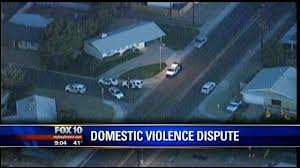
Which brings me to the final point of this tragedy and that is how quickly everyone seems to talk about abandoning the rights we’re given by our Constitution and codified over the years.  The ugly specter of torture and waterboarding has resurfaced….some claiming the younger brother should have been tortured to extract information.  Mention has been made of declaring him an enemy combatant, indefinite detention, not allowing him access to a lawyer, trial by military tribunal in essence making him persona non grata effectively disappearing him from our view.  How many of us know what has happened to Jose Padilla, another American who was subjected to labyrinthine exegesis of a judicial system determined to strip him of his humanity because he is Muslim.  The fear index has produced in all of us this desire to rid ourselves of undesirables by any means necessary, including illegal and unconstitutional ones in order to feel safe.  What’s unfortunate about that is we falsely apply our fear  to groups of  people with a very large bull’s eye on their collective backs while ignoring other groups we’re not so interested in targeting at this time.  DVHonestly, we are a Nation awash in violence.  It plagues our cities and communities on a daily basis.  On the normal scheme of things killing three people is about the average for violent deaths in America.  Not even a week after the Boston bombers were corralled five people were murdered in Seattle, Washington in a domestic violence dispute that barely made the news and we don’t even know who they are or why they died. Moreover after hearing about such news one would not even suggest that we resort to the types of punishment now being mentioned in media that should apply to the lone Boston bomber suspect in custody.   No race, tribe, group of people are immune to the ravages of violence and Muslim Americans are no exceptions, but just like we don’t do in 99% of the violence we encounter as a Nation daily, ascribing a motive to that violence that centers around ethnicity or religious belief or imparting to an entire group of people the sins of some one of its wayward members is as evil an act as any perpetrator of a crime.  Fix this America!

This is what happens to Muslims in America who are in the wrong place at the wrong time


THE SAUDI MARATHON MAN

POSTED BY AMY DAVIDSON

A twenty-year-old man who had been watching the Boston Marathon had his body torn into by the force of a bomb. He wasn’t alone; a hundred and seventy-six people were injured and three were killed. But he was the only one who, while in the hospital being treated for his wounds, had his apartment searched in “a startling show of force,” as his fellow-tenantsdescribed it to the Boston Herald, with a “phalanx” of officers and agents and two K9 units. He was the one whose belongings were carried out in paper bags as his neighbors watched; whose roommate, also a student, was questioned for five hours (“I was scared”) before coming out to say that he didn’t think his friend was someone who’d plant a bomb—that he was a nice guy who liked sports. “Let me go to school, dude,” the roommate said later in the day, covering his face with his hands and almost crying, as a Fox News producer followed him and asked him, again and again, if he was sure he hadn’t been living with a killer.

Why the search, the interrogation, the dogs, the bomb squad, and the injured man’s name tweeted out, attached to the word “suspect”? After the bombs went off, people were running in every direction—so was the young man. Many, like him, were hurt badly; many of them were saved by the unflinching kindness of strangers, who carried them or stopped the bleeding with their own hands and improvised tourniquets. “Exhausted runners who kept running to the nearest hospital to give blood,” President Obama said. “They helped one another, consoled one another,” Carmen Ortiz, the U.S. Attorney for Massachusetts, said. In the midst of that, according to a CBS News report, a bystander saw the young man running, badly hurt, rushed to him, and then “tackled” him, bringing him down. People thought he looked suspicious.

What made them suspect him? He was running—so was everyone. The police reportedly thought he smelled like explosives; his wounds might have suggested why. He said something about thinking there would be a second bomb—as there was, and often is, to target responders. If that was the reason he gave for running, it was a sensible one. He asked if anyone was dead—a question people were screaming. And he was from Saudi Arabia, which is around where the logic stops. Was it just the way he looked, or did he, in the chaos, maybe call for God with a name that someone found strange?

What happened next didn’t take long. “Investigators have a suspect—a Saudi Arabian national—in the horrific Boston Marathon bombings, The Post has learned.” That’s the New York Post, which went on to cite Fox News. The “Saudi suspect”—still faceless—suddenly gave anxieties a form. He was said to be in custody; or maybe his hospital bed was being guarded. The Boston police, who weren’t saying much of anything, disputed the report—sort of. “Honestly, I don’t know where they’re getting their information from, but it didn’t come from us,” a police spokesman told TPM. But were they talking to someone? Maybe. “Person of interest” became a phrase of both avoidance and insinuation. On theAtlas Shrugs Web site, there was a note that his name in Arabic meant “sword.” At an evening press conference, Ed Davis, the police commissioner, said that no suspect was in custody. But that was about when the dogs were in the apartment building in Revere—an inquiry that was seized on by some as, if not an indictment, at least a vindication of their suspicions.

“There must be enough evidence to keep him there,” Andrew Napolitano said on “Fox and Friends”—“there” being the hospital. “They must be learning information which is of a suspicious nature,” Steve Doocy interjected. “If he was clearly innocent, would they have been able to search his house?” Napolitano thought that a judge would take any reason at a moment like this, but there had to be “something”—maybe he appeared “deceitful.” As Mediaite pointed out, Megyn Kelly put a slight break on it (as she has been known to do) by asking if there might have been some “racial profiling,” but then, after a round of speculation about his visa (Napolitano: “Was he a real student, or was that a front?”), she asked, “What’s the story on his ability to lawyer up?”

By Tuesday afternoon, the fever had broken. Report after report said that he was a witness, not a suspect. “He was just at the wrong place at the wrong time,” a “U.S. official” told CNN. (So were a lot of people at the marathon.) Even Fox News reported that he’d been “ruled out.” At a press conference, Governor Deval Patrick spoke, not so obliquely, about being careful not to treat “categories of people in uncharitable ways.”

We don’t know yet who did this. “The range of suspects and motives remains wide open,” Richard Deslauriers of the F.B.I. said early Tuesday evening. In a minute, with a claim of responsibility, our expectations could be scrambled. The bombing could, for all we know, be the work of a Saudi man—or an American or an Icelandic or a person from any nation you can think of. It still won’t mean that this Saudi man can be treated the way he was, or that people who love him might have had to find out that a bomb had hit him when his name popped up on the Web as a suspect in custody. It is at these moments that we need to be most careful, not least.

It might be comforting to think of this as a blip, an aberration, something that will be forgotten tomorrow—if not by this young man. There are people at Guanátanmo who have also been cleared by our own government, and are still there. A new report on the legacy of torture after 9/11, released Tuesday, is a well-timed admonition. The F.B.I. said that they would “go to the ends of the earth” to get the Boston perpetrators. One wants them to be able to go with their heads held high.

“If you want to know who we are, what America is, how we respond to evil—that’s it. Selflessly. Compassionately. Unafraid,” President Obama said. That was mostly true on Monday; a terrible day, when an eight-year-old boy was killed, his sister maimed, two others dead, and many more in critical condition. And yet, when there was so much to fear that we were so brave about, there was panic about a wounded man barely out of his teens who needed help. We get so close to all that Obama described. What’s missing? Is it humility?


Patience…..


The two bombs that ripped through the 2013 Boston Marathon  re-opened wounds that had begun to heal since 911 and no where was this fresh scab more apparent than in the airwaves and bandwidth of Main Stream Media.  Throwing aside conventional wisdom which includes waiting for things to reveal themselves, pundits began almost immediately with speculation about whodunnit.  It didn’t help matters that a young and innocent Saudi student was tackled at the scene of the blast and scooped up by authorities who had to admit after a period of time that he was just as much a victim as everyone else who was in the vicinity of the blast, media trumpeted the interest authorities had in him as if he was the main suspect who was about to be charged with the crime.  Media didn’t bother to wipe the egg off their collective face when Boston and no doubt federal authorities admitted the young man was not a suspect or player in the events of that dreadful day….they just simply ignored their faux pas and moved on, but the tension their errant speculation caused revealed the problem with America today and the obsession too many have with placing collective blame on people and especially those who are Muslim.

Over time this has produced an opposite and equally repulsive reaction from Muslims who start condemning acts of violence as if there life depended on it.  In today’s America it probably does since the knives of Islamophobes are sharpened with the venom of  their own special brand of racism which they hope will drive America into an apocalypse whose goal is grander and broader than anything Hitler imagined in pre WWII Germany. Eric Rush’s tweets of ‘kill all Muslims’ within hours of the bombings are the most nerve racking and persistent sentiment voiced by ‘phobes and it has America’s Muslims ready to do and say anything to distance themselves from any tragedy.  Explosion at Boston marathon

About this tendency to obsequiously deny acts of violence ad nauseum, Tasbeeh Herwees had this to say

This is modus operandi for any Muslim organization in the U.S. after a terrorist attack: condemn, condemn, condemn. This is how we’re expected to respond. It doesn’t matter that no Muslim or Arab has been implicated in the attack. It is inconsequential that no other religious organizations are called on to do the same. In a post-9/11 world, Muslims and Arabs have become the default scapegoats for all terrorist plots, hence the pre-empting of the accusations.

Muslims for the present are the only group expected to make this kind of absolution; they require it from themselves as much as their non-Muslim citizens.  It has become their role in today’s America to assure people even when such assurance is not required that they are against an act of violence that may be attributed to one of them.  Muslim America has accepted the cloak of collectivism whereby any one person no matter how heinous, villainous, obnoxious the act may be, no matter how reprehensible and outlandish can be even remotely connected to the body and thus equal in guilt.  No other group in today’s America has taken or accepted that mantle.

white privilegeIn today’s news cycle we’ve heard of a prison official in Colorado gun down in his home by a white supremacist; a young mass murderer who took revenge against a school that housed people who bullied him many years before and a husband and wife team who killed Texas prosecutors for some perceived  injustice they felt murder was the appropriate punishment, yet not one white male or Christian group has volunteered to condemn the actions of this body of people who share their ethnicity.  Their silence, in the face of this news onslaught was defeaning and caused me to tweet on 14 April, ‘white males need to be profiled’  in order to bring attention to the fact that real crime does occur at the hands of people other than swarthy complexioned people with strange accents; that there are terrorist minded white people in places of close proximity to us who are just as lethal and scary and perhaps we should keep a closer eye on them than we have in the past. Of course no such thing will happen and Tim Wise in a very nice piece says why

As the nation weeps for the victims of the horrific bombing in Boston yesterday, one searches for lessons amid the carnage, and finds few. That violence is unacceptable stands out as one, sure. That hatred — for humanity, for life, or whatever else might have animated the bomber or bombers — is never the source of constructive human action seems like a reasonably close second.

But I dare say there is more; a much less obvious and far more uncomfortable lesson, which many are loathe to learn, but which an event such as this makes readily apparent, and which we must acknowledge, no matter how painful.

It is a lesson about race, about whiteness, and specifically, about white privilege.

I know you don’t want to hear it. But I don’t much care. So here goes.

White privilege is knowing that even if the Boston Marathon bomber turns out to be white, his or her identity will not result in white folks generally being singled out for suspicion by law enforcement, or the TSA, or the FBI.

White privilege is knowing that even if the bomber turns out to be white, no one will call for whites to be profiled as terrorists as a result, subjected to special screening, or threatened with deportation.

White privilege is knowing that if the bomber turns out to be white, he or she will be viewed as an exception to an otherwise non-white rule, an aberration, an anomaly, and that he or she will be able to join the ranks of Tim McVeigh and Terry Nichols and Ted Kaczynski and Eric Rudolph and Joe Stackand George Metesky and Byron De La Beckwith and Bobby Frank Cherry and Thomas Blanton and Herman Frank Cash and Robert Chambliss and James von Brunn and Robert Mathews and David Laneand Michael F. Griffin and Paul Hill and John Salvi and James Kopp and Luke Helder and James David Adkisson and Scott Roeder and Shelley Shannon and Dennis Mahon and Wade Michael Page andByron Williams and Kevin Harpham and William Krar and Judith Bruey and Edward Feltus andRaymond Kirk Dillard and Adam Lynn Cunningham and Bonnell Hughes and Randall Garrett Cole and James Ray McElroy and Michael Gorbey and Daniel Cowart and Paul Schlesselman and Frederick Thomas and Paul Ross Evans and Matt Goldsby and Jimmy Simmons and Kathy Simmons and Kaye Wiggins and Patricia Hughes and Jeremy Dunahoe and David McMenemy and Bobby Joe Rogers andFrancis Grady and Demetrius Van Crocker and Floyd Raymond Looker, among the pantheon of white people who engage in (or have plotted) politically motivated violence meant to terrorize and kill, but whose actions result in the assumption of absolutely nothing about white people generally, or white Christians in particular.

And white privilege is being able to know nothing about the crimes committed by most of the terrorists listed above — indeed, never to have so much as heard most of their names — let alone to make assumptions about the role that their racial or ethnic identity may have played in their crimes.

White privilege is knowing that if the Boston bomber turns out to be white, we  will not be asked to denounce him or her, so as to prove our own loyalties to the common national good. It is knowing that the next time a cop sees one of us standing on the sidewalk cheering on runners in a marathon, that cop will say exactly nothing to us as a result.

White privilege is knowing that if you are a white student from Nebraska — as opposed to, say, a student from Saudi Arabia — that no one, and I mean no one would think it important to detain and question you in the wake of a bombing such as the one at the Boston Marathon.

And white privilege is knowing that if this bomber turns out to be white, the United States government will not bomb whatever corn field or mountain town or stale suburb from which said bomber came, just to ensure that others like him or her don’t get any ideas. And if he turns out to be a member of the Irish Republican Army we won’t bomb Belfast. And if he’s an Italian American Catholic we won’t bomb the Vatican.

In short, white privilege is the thing that allows you (if you’re white) — and me — to view tragic events like this as merely horrific, and from the perspective of pure and innocent victims, rather than having to wonder, and to look over one’s shoulder, and to ask even if only in hushed tones, whether those we pass on the street might think that somehow we were involved.

It is the source of our unearned innocence and the cause of others’ unjustified oppression.

That is all. And it matters.

The next time a crime is committed that captures the public’s attention perhaps the first thing we should do is turn off the television, radio and laptop and just wait for the dust to settle.  If we can’t do that then we should demand that every group in America who has a member that has committed a violent crime in the past should take turns collectively condemning and distancing themselves from an unknown perpetrator.  We certainly cannot expect any ONE group to continue to carry this burden.  It’s not just so fix it, America!

hat tip to @ZahraBilloo

Losing my religion for equality…


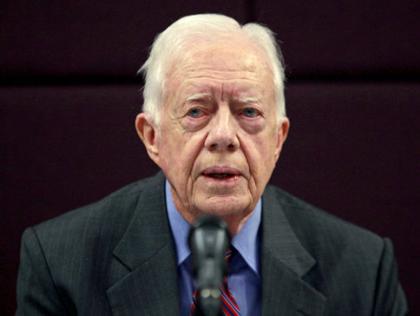
Jimmy Carter  JC

I HAVE been a practicing Christian all my life and a deacon and Bible teacher for many years. My faith is a source of strength and comfort to me, as religious beliefs are to hundreds of millions of people around the world. So my decision to sever my ties with the Southern Baptist Convention, after six decades, was painful and difficult. It was, however, an unavoidable decision when the convention’s leaders, quoting a few carefully selected Bible verses and claiming that Eve was created second to Adam and was responsible for original sin, ordained that women must be “subservient” to their husbands and prohibited from serving as deacons, pastors or chaplains in the military service.

This view that women are somehow inferior to men is not restricted to one religion or belief. Women are prevented from playing a full and equal role in many faiths. Nor, tragically, does its influence stop at the walls of the church, mosque, synagogue or temple. This discrimination, unjustifiably attributed to a Higher Authority, has provided a reason or excuse for the deprivation of women’s equal rights across the world for centuries.

At its most repugnant, the belief that women must be subjugated to the wishes of men excuses slavery, violence, forced prostitution, genital mutilation and national laws that omit rape as a crime. But it also costs many millions of girls and women control over their own bodies and lives, and continues to deny them fair access to education, health, employment and influence within their own communities.

The impact of these religious beliefs touches every aspect of our lives. They help explain why in many countries boys are educated before girls; why girls are told when and whom they must marry; and why many face enormous and unacceptable risks in pregnancy and childbirth because their basic health needs are not met.

In some Islamic nations, women are restricted in their movements, punished for permitting the exposure of an arm or ankle, deprived of education, prohibited from driving a car or competing with men for a job. If a woman is raped, she is often most severely punished as the guilty party in the crime.

The same discriminatory thinking lies behind the continuing gender gap in pay and why there are still so few women in office in the West. The root of this prejudice lies deep in our histories, but its impact is felt every day. It is not women and girls alone who suffer. It damages all of us. The evidence shows that investing in women and girls delivers major benefits for society. An educated woman has healthier children. She is more likely to send them to school. She earns more and invests what she earns in her family.

It is simply self-defeating for any community to discriminate against half its population. We need to challenge these self-serving and outdated attitudes and practices – as we are seeing in Iran where women are at the forefront of the battle for democracy and freedom.

I understand, however, why many political leaders can be reluctant about stepping into this minefield. Religion, and tradition, are powerful and sensitive areas to challenge. But my fellow Elders and I, who come from many faiths and backgrounds, no longer need to worry about winning votes or avoiding controversy – and we are deeply committed to challenging injustice wherever we see it.

The Elders are an independent group of eminent global leaders, brought together by former South African president Nelson Mandela, who offer their influence and experience to support peace building, help address major causes of human suffering and promote the shared interests of humanity. We have decided to draw particular attention to the responsibility of religious and traditional leaders in ensuring equality and human rights and have recently published a statement that declares: “The justification of discrimination against women and girls on grounds of religion or tradition, as if it were prescribed by a Higher Authority, is unacceptable.”

We are calling on all leaders to challenge and change the harmful teachings and practices, no matter how ingrained, which justify discrimination against women. We ask, in particular, that leaders of all religions have the courage to acknowledge and emphasise the positive messages of dignity and equality that all the world’s major faiths share.

The carefully selected verses found in the Holy Scriptures to justify the superiority of men owe more to time and place – and the determination of male leaders to hold onto their influence – than eternal truths. Similar biblical excerpts could be found to support the approval of slavery and the timid acquiescence to oppressive rulers.

I am also familiar with vivid descriptions in the same Scriptures in which women are revered as pre-eminent leaders. During the years of the early Christian church women served as deacons, priests, bishops, apostles, teachers and prophets. It wasn’t until the fourth century that dominant Christian leaders, all men, twisted and distorted Holy Scriptures to perpetuate their ascendant positions within the religious hierarchy.

The truth is that male religious leaders have had – and still have – an option to interpret holy teachings either to exalt or subjugate women. They have, for their own selfish ends, overwhelmingly chosen the latter. Their continuing choice provides the foundation or justification for much of the pervasive persecution and abuse of women throughout the world. This is in clear violation not just of the Universal Declaration of Human Rights but also the teachings of Jesus Christ, the Apostle Paul, Moses and the prophets, Muhammad, and founders of other great religions – all of whom have called for proper and equitable treatment of all the children of God. It is time we had the courage to challenge these views.

Well said, sir and thank you!


Symbolic perhaps, but interfaith cooperation has always been a part of sincere believers’ practice


Who Guards The Most Sacred Site In Christendom? Two Muslims

Every Christian knows the holiest places in Christendom are in Jerusalem. The holiest of all, the Church of the Holy Sepulchre, was erected in 325, over the site where it is believed Jesus was crucified, buried and rose from the dead.

Yet, few know that it is a Muslim who opens and closes the only door to this holiest of Christian sites.

In fact, it’s two Muslims: one man from the Joudeh family and another man from the Nuseibeh family, two Jerusalem Palestinian clans who have been the custodians of the entrance to the Holy Sepulchre since the 12th century.

English: Jerusalem, Church of the Holy Sepulch...
English: Jerusalem, Church of the Holy Sepulchre Deutsch: Jerusalem, Grabeskirche (Photo credit: Wikipedia)

Every morning, at 4:30, Adeeb Joudeh travels from his apartment outside the walls of the Old City to bring the cast-iron key to the church, just as his father and his forebears did before him.

Once there, he entrusts the key — looking like a 12-inch (30-centimeter) long iron wedge — to Wajeeh Nuseibeh, who knocks at the gate to call the priests and the pilgrims who spend the night praying inside. From inside the church, a wooden ladder is passed through a porthole to help him unlock the upper part of the enormous door.

Then, he unlocks the lower one before handing the precious key back to Joudeh. The ritual is reversed every evening at 7:30, after hundreds of tourists and pilgrims have left the church.

During holidays, such as Holy Week, which culminates Sunday with the Christian Easter, the elaborate opening and closing ceremonies take place several times a day.

Why the elaborate ritual? As often happens in Jerusalem, a city holy to several peoples and religions, there are different versions to explain why two Muslim families hold the key to the holiest site in Christendom.

“After the Muslim conquest in 637, the Caliph Omar guaranteed the Archbishop Sophronius that the Christian places of worship would be protected and so entrusted the custodianship to the Nuseibehs, a family who originated in Medina and had had relations with the Prophet Muhammad,” said Nuseibeh, a retired 63-year old electrician, while waiting in a nearby cafe to carry out his duties at the Holy Sepulchre.

“It happened again in 1187, after Saladin ended the Crusader Kingdom of Jerusalem. He chose our family again to look after the peace between the different Eastern and Western Christian confessions, which were at odds over control of the Sepulchre,” he said with a gentle smile, sitting next to his son, Obadah.

To this day, coexistence among the several Christian churches sharing the Holy Sepulchre is a delicate one. Catholic, Greek, Armenian, Coptic, Syriac, and Ethiopian Orthodox monks have resorted to fists more than once to defend their respective denomination’s rights and privileges in the church, as defined in an decree by the Ottoman Empire, known as the Status Quo of 1853.

Such impious brawls between clergy proved Saladin’s prescience 1,000 years ago, when the sultan sealed the second front gate of the church and entrusted control of the remaining entrance to neutral custodians.

The Nuseibehs claim that the Joudehs entered this story only in the 16th century, after the Ottoman Turks gained control of Palestine and decided to charge a second family with the responsibility of guarding the key.

“Yes, we share the responsibility with the Joudehs, and sometimes we argue, as happens in a family,” Nuseibeh said.

Each Maundy Thursday since the end of the 19th century, the two Muslim families give the key to the Holy Sepulchre to the local Franciscan friars, for as long as it takes to walk to the church in a procession and to open the door after the morning liturgies. When those are completed, the friars return the key to the families.

This ceremony, which confirms in practice the validity of the Muslim families’ custodianship, is repeated with the Greek and Armenian communities, on Orthodox Good Friday and Holy Saturday, respectively.

“Right now, I have in my hands the keys to Christendom’s heart. This is a very important moment for us,” said the Rev. Artemio Vitores, the Spanish Franciscan who is the vicar Custodian of the Holy Land, during the Maundy Thursday procession.

“For centuries, Christian pilgrims were denied entry to the church, or had to pay huge sums to pray on the Sepulchre,” he said, all while holding the key.

At the head of the procession, Vitores was flanked on one side by Wajeeh Nusseibeh, his son Obadah and two cousins, all of whom were equally compensated by the friars for their services with the symbolic sum of $60.

On Vitores’ other side were Adeeb Joudeh, wearing an impeccable dark gray suit, and his 19-year-old son Jawad.

For about 20 minutes, Joudeh ceded control of the only existing key to the Holy Sepulchre. While there is another key, it is broken and no longer used. The functioning key is normally kept in a small office attached to the church and is guarded by an employee of the Joudeh family.

“This key has seen Saladin and every generation of my family since 1187. To me, it’s an honor to be in charge of the holiest of Christian places,” Joudeh said, while walking the cobblestoned alley leading to the Holy Sepulchre.

He insisted on showing on his smartphone what he claimed are 165 official decrees confirming the Joudeh family’s role as custodian of the church over the centuries.

“My ancestor who was given the keys was a sheik, a highly respected person, who was not supposed to perform physical labor, such as climbing the ladder to open the gate,” Joudeh explained. “That’s why the Nuseibehs were called in to perform this duty. Unfortunately, they feel still ashamed of being just the doorkeepers.”

At the end of the procession, the key was welcomed by cheerful pilgrims waiting in front of the church.

For a few minutes, everybody stared at the solemn opening of the gate before rushing in.

Moments later, Adeeb Joudeh walked home with his son, as did Wajeeh Nuseibeh. They will come back here, time and again, at the gate of the Holy Sepulchre: two Muslims, coming in peace to bear the key to the heart of Christianity.

Historical revisionism-the prequel


A very fine article appeared in Salon recently that talked about how revisionist spun what happened during the Civil War fought between Americans in the 19th century.  Because this is a very early example of how revisionist have infected the historical narrative and because we’ve featuring articles here on the pages of Miscellany101 about how that happened in the lead up to the Iraq war, we’re naming the earlier example the prequel to the institution of revisionism and yet it is as egregious an illustration of how revisionism mutes the impact of history and changes the way we look and deal with circumstances in our Nation.  Had we been more realistic, more honest about what caused us to slaughter one another perhaps we would not be in denial about positions we take today in the high stakes game of politics

The Civil War is like a mountain range that guards all roads into the South: you can’t go there without encountering it. Specifically, you can’t go there without addressing a question that may seem as if it shouldn’t even be a question—to wit: what caused the war? One hundred and fifty years after the event, Americans—at least the vast majority who toil outside academia—still can’t agree. Evidence of this crops up all the time, often in the form of a legal dispute over a display of the Confederate flag. (As I write, there are two such cases pending—one in Oregon and the other in Florida, making this an average news week.) Another common forum is the classroom. But it’s not always about the Stars and Bars. In 2010, for instance, Texas school officials made the news by insisting that Jefferson Davis’s inaugural address be given equal prominence with Abraham Lincoln’s in that state’s social studies curriculum. The following year, Virginia school officials were chagrined to learn that one of their state-adopted textbooks was teaching fourth graders that thousands of loyal slaves took up arms for the confederacy.

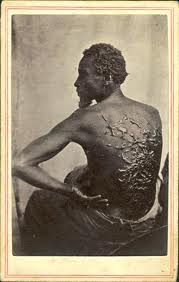
At the bottom of all of these is one basic question: was the Civil War about slavery, or states’ rights? whipped

Popular opinion favors the latter theory. In the spring of 2011, in recognition of the 150th anniversary of the start of the Civil War, pollsters at the Pew Research Center asked: “What is your impression of the main cause of the Civil War?” Thirty-eight percent of the respondents said the main cause was the South’s defense of an economic system based on slavery, while nearly half—48 percent—said the nation sacrificed some 650,000 of its fathers, sons, and brothers over a difference of interpretation in constitutional law. White non-Southerners believed this in roughly the same proportion as white Southerners, which was interesting; even more fascinating was the fact that 39 percent of the black respondents, many of them presumably the descendants of slaves, did, too.

We pause here to note that wars are complex events whose causes can never be adequately summed up in a phrase, that they can start out as one thing and evolve into another, and that what people think they are fighting for isn’t always the cause history will record. Yet, as Lincoln noted in his second inaugural address, there was never any doubt that the billions of dollars in property represented by the South’s roughly four million slaves was somehow at the root of everything, and on this point scholars who don’t agree about much of anything else have long found common ground. “No respected historian has argued for decades that the Civil War was fought over tariffs, that abolitionists were mere hypocrites, or that only constitutional concerns drove secessionists,” writes University of Virginia historian Edward Ayers. Yet there’s a vast chasm between this long-established scholarly consensus and the views of millions of presumably educated Americans, who hold to a theory that relegates slavery to, at best, incidental status. How did this happen?

One reason boils down to simple convenience—for white people, that is. In his 2002 book “Race and Reunion,” Yale historian David Blight describes a national fervor for “reconciliation” that began in the 1880s and lasted through the end of World War I, fueled in large part by the South’s desire to attract industry, Northern investors’ desire to make money, and the desire of white people everywhere to push “the Negro question” aside. In the process, the real causes of the war were swept under the rug, the better to facilitate economic partnerships and sentimental reunions of Civil War veterans.

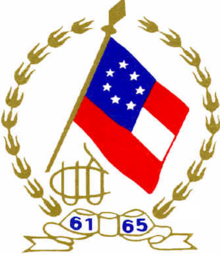
But an equally important reason was a vigorous, sustained effort by Southerners to literally rewrite history—and among the most ardent revisionists were a group of respectable white Southern matrons known as the United Daughters of the Confederacy.

confederacy


The significance of the UDC lies not in its present-day clout, which is negligible, but in its lasting contributions to history— both for good and for ill. From its inception in 1894 up through the 1960s, the UDC was the South’s premier social and philanthropic organization, an exclusive social club where the wives, sisters, and daughters of the South’s ruling white elite gathered to “revere the memory of those heroes in gray and to honor that unswerving devotion to principle which has made the confederate soldier the most majestic in history,” as cofounder Caroline Meriwether Goodlett grandly put it. At first, the UDC provided financial assistance and housing to veterans and their widows, offering a vital public service at a time when for all practical purposes most local and state governments in the South were nonfunctional and/or broke. Later, as the veteran population aged, the UDC built homes that allowed indigent veterans and their widows to live out their days with some measure of dignity. Long before there was such a thing as the National Park Service, the UDC played a crucial role in preserving priceless historic sites, war cemeteries, and battlefields across the South. At the same time, it embarked on a spree of monument building: most of those confederate monuments you can still find in hundreds of courthouse squares in small towns across the South were put there by the local UDC chapter during the early 1900s. In its way, the UDC groomed a generation of Southern women for participation in the political process: presidents attended its national convocations, and its voice was heard in the corridors of the U.S. Capitol.

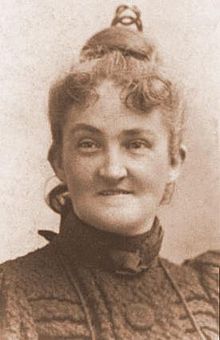
But the UDC’s most important and lasting contribution was in shaping the public perceptions of the war, an effort that was begun shortly after the war by a Confederate veterans’ group called the United Confederate Veterans (which later became the Sons of Confederate Veterans—also still around, and thirty thousand members 220px-Mildred_Lewis_Rutherfordstrong). The central article of faith in this effort was that the South had not fought to preserve slavery, and that this false accusation was an effort to smear the reputation of the South’s gallant leaders. In the early years of the twentieth century the main spokesperson for this point of view was a formidable Athens, Georgia, school principal named Mildred Lewis Rutherford (or Miss Milly, as she is known to UDC members), who traveled the South speaking, organizing essay contests, and soliciting oral histories of the war from veterans…

Miss Milly’s burning passion was ensuring that Southern youngsters learned the “correct” version of what the war was all about and why it had happened—a version carefully vetted to exclude “lies” and “distortions” perpetrated by anti-Southern textbook authors. To that end, in 1920 she wrote a book entitled “The Truths of History”—a compendium of cherry-picked facts, friendly opinions, and quotes taken out of context, sprinkled with nuggets of information history books have often found convenient to ignore. Among other things, “The Truths of History” asserts that Abraham Lincoln was a mediocre intellect, that the South’s interest in expanding slavery to Western states was its benevolent desire to acquire territory for the slaves it planned to free, and that the Ku Klux Klan was a peaceful group whose only goal was maintaining public order. One of Rutherford’s “authorities” on slavery was British writer William Makepeace Thackeray, who visited Richmond on a tour of the Southern states during the 1850s and sent home a buoyant description of the slaves who attended him: “So free, so happy! I saw them dressed on Sunday in their Sunday best—far better dressed than English tenants of the working class are in their holiday attire.”

But presenting the “correct” version of history was only half the battle; the other half was preventing “incorrect” versions from ever infiltrating Southern schools. Before the Civil War, education was strictly a private and/or local affair. After the Civil War, it became a subject of federal interest. The first federal agency devoted to education was authorized by President Ulysses S. Grant in 1867, and Congress passed several laws in the 1870s aimed at establishing a national education system. White Southerners reacted to all this with a renewed determination to prevent outsiders from maligning the reputation of their gallant fighting men by writing textbooks especially for Southern students. One postwar author was none other than Alexander Stephens, former vice president of the Confederacy, whose portrayal of the war sounds remarkably like the version you hear from many Southerners and political conservatives today: it was a noble but doomed effort on the part of the South to preserve self-government against federal intrusion, and it had little to do with slavery. (This was the same Alexander Stephens who had proclaimed in 1861 that slavery was the “cornerstone” of Southern society and “the immediate cause of the late rupture and present revolution.”)

As the UDC gained in political clout, its members lobbied legislatures in Texas, Mississippi, North and South Carolina, and Florida to ban the purchase of textbooks that portrayed the South in anything less than heroic terms, or that contradicted any of the lost cause’s basic assertions. Its reach extended not just to public schools but to tenured academia—a little-known chapter of its propaganda effort is detailed by James Cobb in his 2005 book “Away Down South: A History of Southern Identity.” Cobb recounts how in 1911, for instance, University of Florida history professor Enoch Banks wrote an essay for the New York Independent suggesting that slavery was the cause of secession; Banks was forced by the ensuing public outcry to resign. Perhaps Banks should have seen that coming: seven years earlier, William E. Dodd, a history professor at Virginia’s Randolph-Macon College, had complained that to merely suggest the confederacy might not have been a noble enterprise led by lofty-minded statesmen “is to invite not only criticism but enforced resignation.” Dodd himself would later migrate to the University of Chicago, where he established a Northern outpost for Southerners who were interested in a serious examination of Southern history. Such scholarship was not encouraged back home: the first postwar society of Southern historians was created in 1869 for the explicit purpose of vindicating the confederate cause.

…If all of this wasn’t enough to stifle all public debate and intellectual inquiry in the decades after the war, other prevailing conditions might have finished the job: the widespread poverty of those decades, the rise of Jim Crow and the need to maintain the belief in white supremacy, a pervasive religious mindset that put a higher value on faith than on reason. There were more thoughtful voices, of course—in Atlanta, W. E. B. Du Bois was writing brilliantly about the black experience and reconstruction. But the racism of his day postponed his wider influence to a later era. For all but the rich and/or socially elite this was the South that H. L. Mencken lampooned as “a stupendous region of worn-out farms, shoddy cities and paralyzed cerebrums”—far more concerned with the next meal than with intellectual inquiry. Among white Southerners, rich or poor, the universally accepted history was the version that would later find fame in Margaret Mitchell’s 1936 novel “Gone With the Wind”—a book that sold millions, was translated into twenty-seven languages, and has probably had a more lasting influence on public perceptions about the South to this day than any other single work. It’s no wonder that the so-called Southern renaissance of the 1930s happened outside academia, in the field of fiction; as Cobb points out, the people least interested in understanding Southern history at that time were Southern historians, and Blight agrees. “It would have been impossible to grow up in the South from 1890 to World War I and not have heard or read [the lost cause version of history] many times over as the common sense of white Southern self-understanding.”

I would quibble with that last part; the era when this was “the common sense of white Southern self-understanding” lasted at least until 1960, very conservatively speaking, and its legacy thrives to this day. In an era when any assertion of “fact” is met by noisy counterassertions of competing “facts,” it’s hard to grasp how completely this warped version of history was accepted as gospel in the South, as silly to dispute as the law of gravity. Former New York Times correspondent John Herbers is an old man now, living in retirement in Bethesda, Maryland, with his wife, Betty. but when he was growing up in Mississippi in the 1930s and 1940s, “the lost cause was one of the main themes my grandmother used to talk about: ‘slavery was nothing to do with the Civil War—we had a cotton economy and [the North] wanted to dominate us.’ It was an undisputed topic.” At the time, he accepted this version, as children do; today, he is struck by the vigilance with which adults in his world implanted this story in the minds of their children. “They pushed themselves to believe that,” he said. “If [the war] had anything to do with slavery, they had no ground to stand on.”

aude Sitton, another Southerner who covered the civil rights movement for the New York Times, remembers participating in a yearly essay contest sponsored by the UDC when he was a high school student in Rockdale County, Georgia, in the early 1950s. I did not encounter the UDC essay contests when I was a student in public schools in the 1960s, but the things I heard from my mother could have come straight from Miss Milly’s approved textbooks. History books were unfair to the South, she told me, so I was not to believe anti-Southern things I might read in them, and she was vigilant about correcting me if she heard me use the term “the Civil War” in conversation. To call it a Civil War was to concede that secession was impossible and/or unconstitutional—something no self-respecting Southerner should ever do. “The proper name,” she would say, “is The War Between the States.”….

Die-hard defenders of some version of the Lost Cause today say that the South has always been the victim of “political correctness” in school textbooks, and that this continues to this day. The truth is just the opposite: for decades, publishers of school textbooks went out of their way not to offend delicate Southern sensibilities in their treatment of the Civil War. One longtime publishing executive told me that when he got into the business in the 1960s, it was common to see two different versions of school history textbooks—one for in the Deep South and one for everywhere else, “and the difference was how you treated the Civil War.” By the mid-twentieth century, even textbooks that did not repeat the UDC party line still tiptoed carefully through the minefield. Take this passage, for example, from a widely used 1943 high school history textbook, which depicts a slave-holding South of stately mansions and benevolent slave owners: “The confederates . . . believed they were fighting for the democratic principle of freedom to manage their own affairs, just as the thirteen colonies had fought in the Revolutionary War.” The same textbook describes the Ku Klux Klan as a group that “sometimes” resorted to violence in its effort to retake local governments from the hands of incompetent former slaves. A 1965 textbook used in Alabama public schools taught another key point of the lost cause creed—that slavery was a benign institution: “In one respect, the slave was almost always better off than free laborers, white or black, of the same period [because] the slave received the best medical care which the times could offer.”

The above excerpt is from the book The New Mind of the South, written by Tracy Thompson which appeared in Salon. com here and does an excellent job of detailing the mind set that leads to revisionism which was motivated by the same factors that propel the revisionists of today’s media and academia.

The Evil of historical revisionism


Quite frankly, I hate it, people with gilded tongue or pen who are able to change facts to present a narrative that is completely opposite to reality and what really took place.  Such revisionist work in the service of the “empire”, people of power who enlist the help of scribes to change, conceal, cover up historical facts and outcomes in order to preserve power.  A very good example of that in these morst recent times is what happened vis-a-vis the Iraq war and the media’s implication in propelling a frightened Nation into that war.  We’ve posted several pieces on how media played a willing hand in inciting racial animus towards a non-existent enemy and resulting carnage it caused for all involved.  In keeping with being unrelenting, here’s another article written by Greg Mitchell that details media’s complicity in the Iraqi war and particularly again the WashPost

The Washington Post killed my assigned piece for its Outlook section this weekend which mainly covered media failures re: Iraq and the current refusal to come to grips with that (the subject of my latest book)–yet they ran this misleading, cherry-picking, piece by Paul Farhi claiming the media “didn’t fail.”  I love the line about the Post in March 2003 carrying some skeptical pieces just days before the war started: “Perhaps it was too late by then. But this doesn’t sound like failure.”

Here’s my rejected piece.  I see that the Post is now defending killing the article because it didn’t offer sufficient “broader analytical points or insights.”  I’ll let you consider if that’s true and why they might have rejected it.

Now let’s revisit my recent posts here on when probe in the Post itself by Howard Kurtz in 2004 showed that it failed big time.  For one thing, Kurtz tallied more than 140 front-page Post stories “that focused heavily on administration rhetoric against Iraq”–with all but a few of those questioning the evidence buried inside.  Editors there killed, delayed or buried key pieces by Ricks, Walter Pincus, Dana Priest and others.  The Post‘s David Ignatius went so far as offering an apology to readers this week for his own failures.  Also consider Bob Woodward’s reflections here and here.   He admitted he had become a willing part of the the “groupthink” that accepted faulty intelligence on the WMDs.

Woodward, shaming himself and his paper, once said it was risky for journalists to write anything that might look silly if WMD were ultimately found in Iraq.  Rather than look silly, they greased the path to war.   “There was an attitude among editors: Look, we’re going to war, why do we even worry about all the contrary stuff?” admitted the Post’s Pentagon correspondent Thomas Ricks in 2004.  And this classic from a top reporter, Karen DeYoung:  “We are inevitably the mouthpiece for whatever administration is in power.“  See my review, at the time, of how the Post fell (hook, line, and sinker) for Colin Powell’s fateful U.N. speech–and mocked critics.  Not a “fail”?

In Farhi’s piece, Len Downie, the longtime Post editor, is still claiming, with a shrug, hey, we couldn’t have slowed or halted the war anyway.  Farhi agrees with this.  Nothing to see here, move along.

Kurtz last week called the media failure on Iraq the most egregious in “modern times,” which echoes my book.  This week neither the Post nor The New York Times published an editorial admitting any shortcomings in their Iraq coverage.   Back in 2003, the Times at least called for caution in invading Iraq, in editorials.  On the other hand, as Bill Moyers pointed out, in the six months leading up to the U.S. attack on the Iraq, the Post “editorialized in favor of the war at least 27 times.”


So, What did the Muslims do for the Jews?


according to David J. Wasserstein, plenty in an essay he wrote for of all things, The Jewish Chronicle OnLine

Jewish subjects of the Ottoman Empire, sevente...
Jewish subjects of the Ottoman Empire, seventeenth century. From the 1901-1906 Jewish Encyclopedia, now in the public domain. Category:Jewish Encyclopedia images (Photo credit: Wikipedia)

Islam saved Jewry. This is an unpopular, discomforting claim in the modern world. But it is a historical truth. The argument for it is double. First, in 570 CE, when the Prophet Mohammad was born, the Jews and Judaism were on the way to oblivion. And second, the coming of Islam saved them, providing a new context in which they not only survived, but flourished, laying foundations for subsequent Jewish cultural prosperity – also in Christendom – through the medieval period into the modern world.

By the fourth century, Christianity had become the dominant religion in the Roman empire. One aspect of this success was opposition to rival faiths, including Judaism, along with massive conversion of members of such faiths, sometimes by force, to Christianity. Much of our testimony about Jewish existence in the Roman empire from this time on consists of accounts of conversions.

Great and permanent reductions in numbers through conversion, between the fourth and the seventh centuries, brought with them a gradual but relentless whittling away of the status, rights, social and economic existence, and religious and cultural life of Jews all over the Roman empire.

A long series of enactments deprived Jewish people of their rights as citizens, prevented them from fulfilling their religious obligations, and excluded them from the society of their fellows.

This went along with the centuries-long military and political struggle with Persia. As a tiny element in the Christian world, the Jews should not have been affected much by this broad, political issue. Yet it affected them critically, because the Persian empire at this time included Babylon – now Iraq – at the time home to the world’s greatest concentration of Jews.

Here also were the greatest centres of Jewish intellectual life. The most important single work of Jewish cultural creativity in over 3,000 years, apart from the Bible itself – the Talmud – came into being in Babylon. The struggle between Persia and Byzantium, in our period, led increasingly to a separation between Jews under Byzantine, Christian rule and Jews under Persian rule.

Beyond all this, the Jews who lived under Christian rule seemed to have lost the knowledge of their own culturally specific languages – Hebrew and Aramaic – and to have taken on the use of Latin or Greek or other non-Jewish, local, languages. This in turn must have meant that they also lost access to the central literary works of Jewish culture – the Torah, Mishnah, poetry, midrash, even liturgy.

The loss of the unifying force represented by language – and of the associated literature – was a major step towards assimilation and disappearance. In these circumstances, with contact with the one place where Jewish cultural life continued to prosper – Babylon – cut off by conflict with Persia, Jewish life in the Christian world of late antiquity was not simply a pale shadow of what it had been three or four centuries earlier. It was doomed.

Had Islam not come along, the conflict with Persia would have continued. The separation between western Judaism, that of Christendom, and Babylonian Judaism, that of Mesopotamia, would have intensified. Jewry in the west would have declined to disappearance in many areas. And Jewry in the east would have become just another oriental cult.

But this was all prevented by the rise of Islam. The Islamic conquests of the seventh century changed the world, and did so with dramatic, wide-ranging and permanent effect for the Jews.

Within a century of the death of Mohammad, in 632, Muslim armies had conquered almost the whole of the world where Jews lived, from Spain eastward across North Africa and the Middle East as far as the eastern frontier of Iran and beyond. Almost all the Jews in the world were now ruled by Islam. This new situation transformed Jewish existence. Their fortunes changed in legal, demographic, social, religious, political, geographical, economic, linguistic and cultural terms – all for the better.

First, things improved politically. Almost everywhere in Christendom where Jews had lived now formed part of the same political space as Babylon – Cordoba and Basra lay in the same political world. The old frontier between the vital centre in Babylonia and the Jews of the Mediterranean basin was swept away, forever.

Political change was partnered by change in the legal status of the Jewish population: although it is not always clear what happened during the Muslim conquests, one thing is certain. The result of the conquests was, by and large, to make the Jews second-class citizens.

This should not be misunderstood: to be a second-class citizen was a far better thing to be than not to be a citizen at all. For most of these Jews, second-class citizenship represented a major advance. In Visigothic Spain, for example, shortly before the Muslim conquest in 711, the Jews had seen their children removed from them and forcibly converted to Christianity and had themselves been enslaved.

In the developing Islamic societies of the classical and medieval periods, being a Jew meant belonging to a category defined under law, enjoying certain rights and protections, alongside various obligations. These rights and protections were not as extensive or as generous as those enjoyed by Muslims, and the obligations were greater but, for the first few centuries, the Muslims themselves were a minority, and the practical differences were not all that great.

Along with legal near-equality came social and economic equality. Jews were not confined to ghettos, either literally or in terms of economic activity. The societies of Islam were, in effect, open societies. In religious terms, too, Jews enjoyed virtually full freedom. They might not build many new synagogues – in theory – and they might not make too public their profession of their faith, but there was no really significant restriction on the practice of their religion. Along with internal legal autonomy, they also enjoyed formal representation, through leaders of their own, before the authorities of the state. Imperfect and often not quite as rosy as this might sound, it was at least the broad norm.

The political unity brought by the new Islamic world-empire did not last, but it created a vast Islamic world civilisation, similar to the older Christian civilisation that it replaced. Within this huge area, Jews lived and enjoyed broadly similar status and rights everywhere. They could move around, maintain contacts, and develop their identity as Jews. A great new expansion of trade from the ninth century onwards brought the Spanish Jews – like the Muslims – into touch with the Jews and the Muslims even of India.

A ll this was encouraged by a further, critical development. Huge numbers of people in the new world of Islam adopted the language of the Muslim Arabs. Arabic gradually became the principal language of this vast area, excluding almost all the rest: Greek and Syriac, Aramaic and Coptic and Latin all died out, replaced by Arabic. Persian, too, went into a long retreat, to reappear later heavily influenced by Arabic.

The Jews moved over to Arabic very rapidly. By the early 10th century, only 300 years after the conquests, Sa’adya Gaon was translating the Bible into Arabic. Bible translation is a massive task – it is not undertaken unless there is a need for it. By about the year 900, the Jews had largely abandoned other languages and taken on Arabic.

The change of language in its turn brought the Jews into direct contact with broader cultural developments. The result from the 10th century on was a striking pairing of two cultures. The Jews of the Islamic world developed an entirely new culture, which differed from their culture before Islam in terms of language, cultural forms, influences, and uses. Instead of being concerned primarily with religion, the new Jewish culture of the Islamic world, like that of its neighbours, mixed the religious and the secular to a high degree. The contrast, both with the past and with medieval Christian Europe, was enormous.

Like their neighbours, these Jews wrote in Arabic in part, and in a Jewish form of that language. The use of Arabic brought them close to the Arabs. But the use of a specific Jewish form of that language maintained the barriers between Jew and Muslim. The subjects that Jews wrote about, and the literary forms in which they wrote about them, were largely new ones, borrowed from the Muslims and developed in tandem with developments in Arabic Islam.

Also at this time, Hebrew was revived as a language of high literature, parallel to the use among the Muslims of a high form of Arabic for similar purposes. Along with its use for poetry and artistic prose, secular writing of all forms in Hebrew and in (Judeo-)Arabic came into being, some of it of high quality.

Much of the greatest poetry in Hebrew written since the Bible comes from this period. Sa’adya Gaon, Solomon Ibn Gabirol, Ibn Ezra (Moses and Abraham), Maimonides, Yehuda Halevi, Yehudah al-Harizi, Samuel ha-Nagid, and many more – all of these names, well known today, belong in the first rank of Jewish literary and cultural endeavour.

W here did these Jews produce all this? When did they and their neighbours achieve this symbiosis, this mode of living together? The Jews did it in a number of centres of excellence. The most outstanding of these was Islamic Spain, where there was a true Jewish Golden Age, alongside a wave of cultural achievement among the Muslim population. The Spanish case illustrates a more general pattern, too.

What happened in Islamic Spain – waves of Jewish cultural prosperity paralleling waves of cultural prosperity among the Muslims – exemplifies a larger pattern in Arab Islam. In Baghdad, between the ninth and the twelfth centuries; in Qayrawan (in north Africa), between the ninth and the 11th centuries; in Cairo, between the 10th and the 12th centuries, and elsewhere, the rise and fall of cultural centres of Islam tended to be reflected in the rise and fall of Jewish cultural activity in the same places.

This was not coincidence, and nor was it the product of particularly enlightened liberal patronage by Muslim rulers. It was the product of a number of deeper features of these societies, social and cultural, legal and economic, linguistic and political, which together enabled and indeed encouraged the Jews of the Islamic world to create a novel sub-culture within the high civilisation of the time.

This did not last for ever; the period of culturally successful symbiosis between Jew and Arab Muslim in the middle ages came to a close by about 1300. In reality, it had reached this point even earlier, with the overall relative decline in the importance and vitality of Arabic culture, both in relation to western European cultures and in relation to other cultural forms within Islam itself; Persian and Turkish.

Jewish cultural prosperity in the middle ages operated in large part as a function of Muslim, Arabic cultural (and to some degree political) prosperity: when Muslim Arabic culture thrived, so did that of the Jews; when Muslim Arabic culture declined, so did that of the Jews.

In the case of the Jews, however, the cultural capital thus created also served as the seed-bed of further growth elsewhere – in Christian Spain and in the Christian world more generally.

The Islamic world was not the only source of inspiration for the Jewish cultural revival that came later in Christian Europe, but it certainly was a major contributor to that development. Its significance cannot be overestimated.

Let’s hope none of the respondents were Americans


tentAli Abunimah ran the above photograph and chronicled the response of some Israelis and to read what they wrote was quite disturbing.  Look at some of them and tell me whether their suggestions don’t remind you of something that has already happened

Run the tent over with a truck/Merkava tank/a bus/ whatever it takes to crush and kill these children (Rachael Corrie)….

I’d have thrown nerve gas into the tent and closed it and made them breath it until the end…… (Saddam Hussein)

Put a couple of bullets in their heads and we’re done (Adam Lanza)

My point is these people are suggesting things be done that have been done to or by people that we acknowledge as social psychopaths, deviants who have been killed by us or whose death we cheered.  If you read Abunimah’s article you’ll find who some of the people who responded are and its scary because many of them have the means and opportunity to do what it is they are suggesting be done.

The Washington Post gets pwned


I’m not a fan of corporate media because it tends to make unsettling alliances with people of power to insure its profitability through devious journalistic and financial practices but I have a special enmity for corporate media that didn’t do its job during the time of the crisis with Iraq and misled the country with the help of dubious politicians into one of the greatest crimes against humanity that we’ve seen in our lives.  Here is another brilliant piece from Robert Parry about the culpability of the Washington Post

Four days after the Iraq War’s tenth anniversary, the Washington Post published an editorial about the disastrous war of choice, a conflict which the Post’s neocon editors promoted with falsehoods and distortions both before the invasion and for years afterwards.

However, if you thought there would be some admission of the newspaper’s long litany of mistakes or some apology to the war’s critics who were routinely maligned in Post editorials and op-eds, you would be sorely disappointed. There was not even a mention of the nearly 4,500 U.S. soldiers or the hundreds of thousands of Iraqis who died.

President Barack Obama remains a target of the Washington Post’s outrage over his supposed failure to complete the neocon agenda in the Middle East. Obama is shown here touring the crypt containing the reputed birthplace of Jesus during the President’s visit to the Church of the Nativity in Bethlehem, the West Bank, March 22, 2013. (Official White House Photo by Pete Souza)

After a brief acknowledgement that the war’s tenth anniversary “generated plenty of commentary about the lessons of that war,” the Post’s editors said nothing about what, if anything, they had learned. Instead, they remained in positive spin mode, citing one supposed accomplishment from the invasion.

“For the first time in decades, contemporary Iraq poses no threat to its neighbors,” the Post declared. However, even that is a lie on two fronts.

First, Iraq under Saddam Hussein had not been a threat to its neighbors since the Persian Gulf War of 1990-91, unless the Post’s editors were having a flashback to the glory days of 2002-03 when they were disseminating President George W. Bush’s bogus WMD propaganda. Do they still believe that nonsense?

Second, today’s Iraq under Prime Minister Nouri al-Maliki has become a threat to its neighbors because al-Qaeda-affiliated Sunni extremists from western Iraq have crossed the border to Syria where they have assumed a major role in the violent opposition to President Bashar al-Assad’s regime.

But the Post’s editors want you to believe that the Bush-neocon expedition to Iraq was on the cusp of some great success until President Barack Obama showed up to squander the victory – by not insisting on a continuation of the U.S. military occupation of Iraq.

“Iran’s influence over Mr. Maliki’s government is mounting, thanks in part to the Obama administration’s failure to agree with Baghdad on a stay-on force of U.S. troops,” the Post wrote, making it seem as if it were Obama’s petulance that prevented the continued U.S. military presence, not the insistence by Maliki’s government of terms in a “status of forces agreement” unacceptable to the Americans.

Lost Influence

In the Post’s frame of reality, however, this failure to keep tens of thousands of U.S. soldiers in Iraq has led to other terrible consequences: “According to U.S. officials, Iraq has been allowing Iran to fly weapons through its airspace to the Syrian regime of Bashar al-Assad. Repeated appeals from Washington to stop the traffic have gone unheeded.”

But an objective observer might have noted that it was the Bush-neocon hubris, rushing into a war to oust Hussein’s Sunni-dominated regime that led inevitably to the expanded influence of Shiite-ruled Iran within the new Shiite-controlled regime in Iraq. Yet, the Post instead placed the blame squarely on Obama.

The Post’s editorial then returned to its current campaign to pressure the Obama administration into entering a new military conflict in Syria, accusing the President of unmanly softness.

“The civil war in Syria, and the passivity with which the Obama administration has responded to it, have reinforced these negative trends. Mr. Maliki fears that the downfall of the Assad regime could lead to a Sunni-dominated government that would back insurrection in Sunni parts of Iraq.

“As with leaders across the Middle East, he perceives that the United States is unwilling to defend its interests in the region, either by stopping the Syrian bloodbath or countering Iran’s interventions. The risk of greater turmoil or even a return to civil war in Iraq is one of several compelling reasons for more aggressive U.S. action to end the war in Syria.”

The Post then summed up its case by suggesting that Obama has betrayed the great victory that the neocons supposedly had won in Iraq.

“President Obama has often given the impression that he has turned his back on Iraq, and many Americans understandably sympathize with him. But a failure to engage with the fragile state U.S. troops left behind would endanger U.S. interests and break faith with the many Americans who made sacrifices there.”

What is particularly startling about the Post’s editorial, which curiously appears four days after the Iraq War’s tenth anniversary, is that the dominant newspaper in the nation’s capital continues to live in a neocon fantasy world or at least refuses to acknowledge key Middle East realities.

In Neocon-land, the big U.S. mistake in Iraq was not forcing the Iraqis to accept an indefinite U.S. military occupation, compounded by the Obama administration’s hesitancy to join Israel in bombing Iran and to jump into another bloody quagmire in Syria – in other words to continue the neocon grand plan of “regime change” across the Middle East. [See Consortiumnews.com’s “The Mysterious Why of the Iraq War.”]

Not only did the Post editorial, entitled “Iraq, 10 years later,” offer no self-reflection on the Post’s many factual errors about Iraq’s non-existent WMD, no apology for its bullying of war skeptics, and no recognition of its complicity in a criminal invasion, but the newspaper’s editors appear to have absorbed not a single lesson from what happened a decade ago.

That inability to utter even the most obvious and necessary mea culpa is disturbing in itself. Indeed, if the Post were still a serious news organization committed to the principles of honest journalism, it would have undertaken a major overhaul of its editorial-page staff rather than keeping in place the same leadership and punditry that was so embarrassingly wrong on Iraq.

But, even worse, the Post’s editors continue to pontificate with an arrogance resistant to the undeniable reality of their own misjudgments, incompetence and immorality. In that sense, the Washington Post has become a threat to the Republic and to the world.

What’s my name?!


Ali-Whats-My-Name-FightNames are important to their bearers and generally to the society at large.  They are a source of pride and at other times scourge; people invest themselves with names of meaning or shed their names because  of its meaning.  We’ve seen people mercilessly pummel others for not recognizing their names and calling them by the chosen name, and we’ve seen others brutally whipped to acknowledge a name give to them by people in order to strip the name bearer of any sense of cultural identity or self worth and replace it with whatever value the name giver is trying to impart. kunta-getting-whipped-1

There are some people who intimidated by the idea that their name is identified with a certain ideology or belief chose to change it of their own accord in order to fit in and not be singled out, while some people change their names willingly to hide their cultural identity to avoid religious or cultural persecution. Others tonycurtiscolortake on names because of careers whereby the name distinguishes them from all others in the performing arts.  “Sting”, “Prince” come to mind to name a few. Such decisions are made artistically and usually enhance the image of the name bearer in the eyes of an adoring public.

People have denigrated entire classes of their fellow mankind by grouping them under one name, nigger, cracker, spic, kike, sandnigger, cockroach, gook are just a few examples that come to mind.  These names are meant to hurt; they come with their own invective; even the pronunciation rolls off the tongue with a certain inflection that’s meant to hurt the ears as much as the hearts and minds of the subjects of such abuse.  By using such language it’s meant to dehumanize and weaken the resolve of a person, to soften them up for the inevitable. We have not gotten over this ability to harm with the spoken word, or name.  When applied enough times to groups of people the result is systematic and relentless oppression, subjugation or intended and eventual annihilation.

AlexWhile I was  a freshman in college Alexander Isayevich Solzhenitsyn was the rave in American literary circles.  His book, The Gulag Archipelago had recently been released and became required reading in universities across the West, no less so where I studied. His was the first exposure many of us in my English literature class had to someone with a name like his and as we discussed his work, quite a few of us awkwardly pronounced or made fun of while attempting to pronounce his name so much so that our English teacher stopped the class and with all the seriousness and indignation appropriate for the moment declared, ‘young people every human has the RIGHT to have his/her name pronounced correctly’.  With that declaration he (I wish I could honor that teacher by recalling his name, but unfortunately I have forgotten it) made every student stand one at a time in class and pronounce Solzhenitsyn’s entire name until we got it right.  No student was spared as time was suspended until we said S-O-L-Z-H-E-N-I-T-S-Y-N correctly, no matter how many times it took for us to do so. I left that class with a deep sense of the importance of names and how its bearer should be honored with the correct application of that name to him or her. I realized no matter how hated by me a person or no matter how difficult the name I owed it to its bearer to honor them with their name, no suffixes or prefixes attached, no racial or cultural tags added. Such things could be done in a separate sentence but never immediately juxtaposed with the name….unless that person wanted it so.

During the late 70s toward the end of Jimmy Carter’s term in office when the Nation was gripped by the Iranian hostage crisis, America began its assault on Muslims.  American Muslims who showed any support for the revolution in Iran came under fire, scrutiny by a federal government bent on flexing its muscle to resolve the crisis and cap a ground swell that was boiling in America (which we survived and have since gone on to greater heights of prosperity).  During that time I ran across a young Muslim American who related how he was caught up in the turmoil of the time and indicted by the federal government.  He was told, he said, by officials if he would only agree to have the name “Al” affixed to his indictment instead of “Abdullah” the name he had on all his legal documents  they would eventually drop or reduce the charges. He was faced with a modern day horse whipping much like the character Kunta Kinte in the movie Roots, except in his case he refused and was found guilty and sentenced to 25 years for a crime he didn’t commit.  Finally after his appeal reached and was decided on by appeals court where he was awarded a new trial, the government having extracted its pound of flesh from him and countless others and satiated its blood lust, refused to re-try him and released him with time served.  Six years he languished in prison because he refused to go by any  name other than his name. That young man’s story reinforced to me the importance of one’s name and how authority sees the importance of names.

CAIRFoleySqIt came as no surprise, therefore, for me to read that names were being used AGAIN by the government to determine guilt or innocence or even if criminal activity or the THREAT of criminal activity existed.  Too often we in America especially and  the West in general rely too much on social schemata to define who a person is instead of listening to or watching how that person defines himself.  In today’s age of instant gratification, and sound bite, bumper slogan ideology, no time is given to evaluating the person beyond that brief first impression that usually starts with one’s name.  We are conditioned to make credible or inconsequential that person’s existence just by the sound of their name, whether it is anglicized or latin, mono or polysyllabic, foreign or American.  Everything after the name is totally irrelevant; it is why people today at the start of  Obama’s second term still think he is an illegitimate president and therefore nothing he says or does is American.  As a result there’s now talk of secessionist movements gaining ground in some parts of the country where such notions weren’t even whispered during the time of any other contemporary president.

notAmerica is a country made of people from all over the world, each of them, those who are law abiding, are citizens of this Republic with all the rights and responsibilities due by the Constitution and no one person can have that fact denied because of their name, yet such denial is becoming increasingly more prevalent.  We come from races and tribes with different and yes even unusual names but none of that allows us to deny or curtail the rights of such people because we cannot pronounce or don’t like a person’s name.   Nor should we expect people to conform to the names we want to bestow on them.  I was sitting with a friend a few years ago when we were approached by an elderly African-American with a soft, appealing  southern accent.  His voice was  melodic like that of a Sunday preacher as were his manners.  When he made eye contact with me and my friend he approached the two of us and introduced himself.  We in turn told him our names, but my friend’s name was a bit difficult for this gentleman to pronounce.  He prodded my friend several times to say the name and each time my friend pronounced his name slower and with more elaborate intonation.  Finally after the fourth or fifth time, the elderly gentleman scratched his name and said to my companion ‘do you mind if I call you Willie?’

sittingbullWe are uncomfortable with names that require effort to say and translate that difficulty into stereotyping the bearer negatively…especially if that person insists on us calling them by their name correctly.  As a society we don’t have an English teacher who will make us pronounce and honor a person’s name until we get it right….we give in too easy and suggest ways to call(define) a person that are acceptable to us.  But that is no longer acceptable in a pluralistic society such as America and it’s not desirable either.  Our names are European, African, Asian, Semitic, Latin, Oceanic and many times a mix of all of them and they all are as valuable, meaningful AND American as any other name you may find in the white pages of your local phone book.  If we are as exceptional as we claim to be, as great a Nation as we say we are, we will learn to respect the names of our countrymen and the diversity of these names that are brought to our society, otherwise we are no better than the tin pot despots, the banana republics we have supported and then invaded because of their perceived inhumanity to their fellow man.  Are we up to the task, America? Then, what’s my name?

What Happened to the US Press Corps?


U.S. President George W. Bush meets with troop...
U.S. President George W. Bush meets with troops and serves Thanksgiving Day Dinner at the Bob Hope Dining Facility, Baghdad International Airport, Iraq

Beautiful article written by Robert Parry asks the rhetorical question about the ineptness of the American media and then brilliantly answers it and it’s not a pretty answer, but it’s real and honest. Below is an excerpt to remind everyone while we talk about the ten year anniversary of the Iraq invasion of the how complicit media was in that war crime.

Why this history is relevant today, as the United States commemorates the tenth anniversary of the disastrous Iraq War, is that it was the Reagan administration’s success in housebreaking the Washington press corps that guaranteed that only a handful of mainstream journalists would ask tough questions about President George W. Bush’s case for invading Iraq.

Put yourself in the shoes of an aspiring Washington correspondent in 2002-2003. Your immediate editors and bureau chiefs were people who succeeded professionally during the 1980s and 1990s. They climbed the ladder by not reaching out for the difficult stories that challenged Republican presidents and earned the wrath of right-wing attack groups. They kept their eyes firmly on the backsides of those above them.

The journalists who did the hard work during that era suffered devastating career damage, again and again. Indeed, they had been made into object lessons for others. Even progressive publications, which wanted some “credibility” with the mainstream, turned away.

In other words, a decade ago – as in the 1980s and 1990s – there was little or no reward in challenging the Bush administration over its claims about Iraq’s WMD, while there was a very big danger. After all, what if you had written a tough story questioning Bush’s case for war and had managed somehow to pressure your editors to run it prominently – and then what if some WMD stockpiles were discovered in Iraq?

Your career would end in ignominy. You would forever be “the Saddam Hussein apologist” who doubted the Great War President, George W. Bush. You would probably be expected to resign to spare your news organization further embarrassment. If not, your editors would likely compel you to leave in disgrace.

People may forget now but it took guts to challenge Bush back then. Remember what happened to the Dixie Chicks, a popular music group, when they dared to express disagreement with Bush’s war of choice. They faced boycotts and death threats.

At Consortiumnews.com in 2002-2003, we ran a number of stories questioning Bush’s WMD claims and his other arguments for war – and even though we were only an Internet site, I got angry e-mails every time the U.S. invading forces found a 55-gallon drum of chemicals. The e-mails demanded that I admit I was wrong and telling me that I owed Bush an apology. [For details on the wartime reporting, see Neck Deep.]

When I would read those comments, I would flash back to the stomach-turning angst that I felt as a correspondent for AP and Newsweek when I published a story that I knew would open me to a new round of attacks. At those moments, all I had was confidence in my tradecraft, the belief that I had followed the rules of journalism in carefully assessing and presenting the evidence.

Still, there is no certainty in journalism. Even the most careful reporting can contain imprecision or errors. But that imperfection becomes a major problem when the rewards and punishments are skewed too widely, when the slightest problem on one side leads to loss of your livelihood while gross mistakes on the other carry no punishment at all.

That was the core failure of the U.S. news media on the Iraq War. By 2002-2003, a generation or more of American journalists had absorbed this career reality. There was grave danger to question Bush’s claims while there was little risk in going with the flow.

And, if you made that assessment a decade ago, you were right. Even though you were wrong journalistically in promoting or staying silent on Bush’s assertions about Iraq’s WMD, you almost surely continued your career climb. If questioned about why you got the WMD question wrong, you could simply say that “everyone got it wrong” – or at least everyone who mattered – so it would be unfair to single anyone out for blame.

But most likely, no one who mattered would even ask the question because those folks had been traveling in the same pack, spouting the same groupthink. So, if it seems odd to some Americans that today they are reading and watching the same pundits who misled them into a catastrophic war a decade ago, it shouldn’t.

Ten years ago we invaded Iraq


and our lives have not been the same since. We laid bare for all the world to see the dysfunction of our society, politically with corrupt leaders who lied and led us into an unnecessary war and socially with throngs of people who opposed the war and even more who believed in it and others who fought it….all led by a media that gobbled up everything given them by our self-serving politicians, hook, line and sinker.  Image

All of this was a long time coming.  Our institutions had been co opted long before we were attacked that fateful day in September, 2001 that they had ceased to perform in the manner for which they were created.  If it’s one thing to be taken from all this, it should be that the job of the people in this day and age is to hold everyone involved in shaping public policy accountable for what they’ve done or said.  No where has that been more eloquently done than in a piece written by a young man who will soon die because of the injuries he suffered fighting for his country ten years ago.

Image

Tomas Young has given far more to his country than he has received from those who asked him to make that ultimate sacrifice.  It’s too bad he won’t live to see them held accountable for the deception they offered that rendered him a quadriplegic after just 22 years of life.  This is what Chris Hedges had to say about him in a piece entitled “The Crucifixion of Tomas Young”

I flew to Kansas City last week to see Tomas Young. Young was paralyzed in Iraq in 2004. He is now receiving hospice care at his home. I knew him by reputation and the movie documentary “Body of War.” He was one of the first veterans to publicly oppose the war in Iraq. He fought as long and as hard as he could against the war that crippled him, until his physical deterioration caught up with him…

Young will die for our sins. He will die for a war that should never have been fought. He will die for the lies of politicians. He will die for war profiteers. He will die for the careers of generals. He will die for a cheerleader press. He will die for a complacent public that made war possible. He bore all this upon his body. He was crucified. And there are hundreds of thousands of other crucified bodies like his in Baghdad and Kandahar and Peshawar and Walter Reed medical center. Mangled bodies and corpses, broken dreams, unending grief, betrayal, corporate profit, these are the true products of war. Tomas Young is the face of war they do not want you to see…

On April 4, 2004, Young was crammed into the back of a two-and-a-half-ton Army truck with 20 other soldiers in Sadr City, Iraq. Insurgents opened fire on the truck from above. “It was like shooting ducks in a barrel,” he said. A bullet from an AK-47 severed his spinal column. A second bullet shattered his knee. At first he did not know he had been shot. He felt woozy. He tried to pick up his M16. He couldn’t lift his rifle from the truck bed. That was when he knew something was terribly wrong….

Young had been in Iraq five days. It was his first deployment. After being wounded he was sent to an Army hospital in Kuwait, and although his legs, now useless, lay straight in front of him he felt as if he was still sitting cross-legged on the floor of the truck. That sensation lasted for about three weeks. It was an odd and painful initiation into his life as a paraplegic. His body, from then on, would play tricks on him….

Young joined the Army immediately after 9/11 to go to Afghanistan and hunt down the people behind the attacks. He did not oppose the Afghanistan war. “In fact, if I had been injured in Afghanistan, there would be no ‘Body of War’ movie to begin with,” he said. But he never understood the call to invade Iraq. “When the Japanese attacked Pearl Harbor we didn’t invade China just because they looked the same,” he said.

He became increasingly depressed about his impending deployment to Iraq when he was in basic training at Fort Benning, Ga. He asked the battalion doctor for antidepressants. The doctor said he had to meet first with the unit’s chaplain, who told him, “I think you will be happier when you get over to Iraq and start killing Iraqis.”

“I was dumbstruck by his response,” Young said….

For Young, the war, the wound, the paralysis, the wheelchair, the anti-war demonstrations, the wife who left him and the one who didn’t, the embolism, the loss of motor control, the slurred speech, the colostomy, the IV line for narcotics implanted in his chest, the open bed sores that expose his bones, the despair—the crushing despair—the decision to die, have come down to a girl. Aleksus, his only niece. She will not remember her uncle. But he lies in his dimly lit room, painkillers flowing into his broken body, and he thinks of her. He does not know exactly when he will die. But it must be before her second birthday, in June. He will not mar that day with his death.

And though he is an atheist, though he believes that there is nothing after death—that, as he says, “the body is like a toy that runs out of batteries, only there are no replacements”—his final act honors the promise of Aleksus’ life. As he spoke to me softly of this child—it hurts, even now, he said, to know she will grow up without him—I wondered, sitting next to him on his bed, if he saw it, the glory of it, his final bow not before the specter of his death but the sanctity of her life. The resurrection….

ImageThankfully, for this brave young man who refuses to go down without a fight, he chose to remind people just what it was they asked him to do and what he finally has to say about that.  Here is Tomas Young in his own words

The Last Letter

A Message to George W. Bush and Dick Cheney From a Dying Veteran

To: George W. Bush and Dick Cheney
From: Tomas Young

I write this letter on the 10th anniversary of the Iraq War on behalf of my fellow Iraq War veterans. I write this letter on behalf of the 4,488 soldiers and Marines who died in Iraq. I write this letter on behalf of the hundreds of thousands of veterans who have been wounded and on behalf of those whose wounds, physical and psychological, have destroyed their lives. I am one of those gravely wounded. I was paralyzed in an insurgent ambush in 2004 in Sadr City. My life is coming to an end. I am living under hospice care.

I write this letter on behalf of husbands and wives who have lost spouses, on behalf of children who have lost a parent, on behalf of the fathers and mothers who have lost sons and daughters and on behalf of those who care for the many thousands of my fellow veterans who have brain injuries. I write this letter on behalf of those veterans whose trauma and self-revulsion for what they have witnessed, endured and done in Iraq have led to suicide and on behalf of the active-duty soldiers and Marines who commit, on average, a suicide a day. I write this letter on behalf of the some 1 million Iraqi dead and on behalf of the countless Iraqi wounded. I write this letter on behalf of us all—the human detritus your war has left behind, those who will spend their lives in unending pain and grief.

You may evade justice but in our eyes you are each guilty of egregious war crimes, of plunder and, finally, of murder, including the murder of thousands of young Americans—my fellow veterans—whose future you stole.

I write this letter, my last letter, to you, Mr. Bush and Mr. Cheney. I write not because I think you grasp the terrible human and moral consequences of your lies, manipulation and thirst for wealth and power. I write this letter because, before my own death, I want to make it clear that I, and hundreds of thousands of my fellow veterans, along with millions of my fellow citizens, along with hundreds of millions more in Iraq and the Middle East, know fully who you are and what you have done. You may evade justice but in our eyes you are each guilty of egregious war crimes, of plunder and, finally, of murder, including the murder of thousands of young Americans—my fellow veterans—whose future you stole.

Your positions of authority, your millions of dollars of personal wealth, your public relations consultants, your privilege and your power cannot mask the hollowness of your character. You sent us to fight and die in Iraq after you, Mr. Cheney, dodged the draft in Vietnam, and you, Mr. Bush, went AWOL from your National Guard unit. Your cowardice and selfishness were established decades ago. You were not willing to risk yourselves for our nation but you sent hundreds of thousands of young men and women to be sacrificed in a senseless war with no more thought than it takes to put out the garbage.

I joined the Army two days after the 9/11 attacks. I joined the Army because our country had been attacked. I wanted to strike back at those who had killed some 3,000 of my fellow citizens. I did not join the Army to go to Iraq, a country that had no part in the September 2001 attacks and did not pose a threat to its neighbors, much less to the United States. I did not join the Army to “liberate” Iraqis or to shut down mythical weapons-of-mass-destruction facilities or to implant what you cynically called “democracy” in Baghdad and the Middle East. I did not join the Army to rebuild Iraq, which at the time you told us could be paid for by Iraq’s oil revenues. Instead, this war has cost the United States over $3 trillion. I especially did not join the Army to carry out pre-emptive war. Pre-emptive war is illegal under international law. And as a soldier in Iraq I was, I now know, abetting your idiocy and your crimes. The Iraq War is the largest strategic blunder in U.S. history. It obliterated the balance of power in the Middle East. It installed a corrupt and brutal pro-Iranian government in Baghdad, one cemented in power through the use of torture, death squads and terror. And it has left Iran as the dominant force in the region. On every level—moral, strategic, military and economic—Iraq was a failure. And it was you, Mr. Bush and Mr. Cheney, who started this war. It is you who should pay the consequences.

I have, like many other disabled veterans, come to realize that our mental and physical wounds are of no interest to you, perhaps of no interest to any politician. We were used. We were betrayed.

I would not be writing this letter if I had been wounded fighting in Afghanistan against those forces that carried out the attacks of 9/11. Had I been wounded there I would still be miserable because of my physical deterioration and imminent death, but I would at least have the comfort of knowing that my injuries were a consequence of my own decision to defend the country I love. I would not have to lie in my bed, my body filled with painkillers, my life ebbing away, and deal with the fact that hundreds of thousands of human beings, including children, including myself, were sacrificed by you for little more than the greed of oil companies, for your alliance with the oil sheiks in Saudi Arabia, and your insane visions of empire.

I have, like many other disabled veterans, suffered from the inadequate and often inept care provided by the Veterans Administration. I have, like many other disabled veterans, come to realize that our mental and physical wounds are of no interest to you, perhaps of no interest to any politician. We were used. We were betrayed. And we have been abandoned. You, Mr. Bush, make much pretense of being a Christian. But isn’t lying a sin? Isn’t murder a sin? Aren’t theft and selfish ambition sins? I am not a Christian. But I believe in the Christian ideal. I believe that what you do to the least of your brothers you finally do to yourself, to your own soul.

My day of reckoning is upon me. Yours will come. I hope you will be put on trial. But mostly I hope, for your sakes, that you find the moral courage to face what you have done to me and to many, many others who deserved to live. I hope that before your time on earth ends, as mine is now ending, you will find the strength of character to stand before the American public and the world, and in particular the Iraqi people, and beg for forgiveness. 

While I grieve at the suffering of this young man, I am glad he is on our side, that his answering the call of duty necessitated him speaking truth to power when he realized his mistakes; his absolution for the sin of unbridled trust in dishonorable men was to muster enough strength to honorably assert the obvious, that we were wrong.  It’s nothing we will ever hear from the likes of those who  pushed him towards war and that’s what makes Tomas Young special.  Courage!

I’ve tried to make this point several times here, so I’ll let someone else do it more eloquently than I could


Radically Wrong: Misstated Threats – Terrorism isn’t an American-Muslim Problem

By Dena Sher, ACLU Washington Legislative Office

blog-muslimprofiling-500x280-v01None. Zero. That’s the number of fatalities or injuries from terrorist acts by American Muslims over the last two years, according to a recent report from the Triangle Center on Terrorism and Homeland Security. Here are some other numbers from the report worth noting: In the United States in 2012, there were nine “terrorist plots” by American Muslims—only one of which led to violence. Of those nine plots, only 14 suspects were indicted. Separately, six suspects were indicted for support of terrorism.

Terrorism is not a “Muslim” phenomenon. Indeed, last year, the author of the report called terrorism by American Muslims “a minuscule threat to public safety.” Yet far too many policymakers assume the opposite is true, and too many policies are predicated on the false and bigoted assumption that Muslims are more likely to engage in terrorism than other Americans. The numbers above show how false the premise is. So why are we willing to undermine civil liberties, target an entire religious community, and devote countless resources to this “minuscule threat?”

The answer: a widely debunked “theory” on describing the “process” that drives people to become terrorists. This “theory” is based on the mistaken notion that adopting “radical” ideas (which, under the theory, includes religious beliefs) is a dangerous first step toward committing terrorist acts. Countering terrorism, the thinking goes, begins with countering “radicalization.”

Although it’s been refuted, the “theory” continues to drive policy. Recent Congressional Research Service reports cite it, and the White House issued a plan to counter violent extremism based on it. While the White House deserves some credit for using more careful language and for emphasizing the need for community engagement, it still perpetuates the notion that “how individuals are radicalized to violence” is something we can and should study and understand. And the number of agencies, task forces, working groups, and committees across government that are engaged in the White House’s plan is, well, staggeringly high.

Not surprisingly, when flawed theory drives policy, implementation of the policy is flawed too. If counterterrorism officials believe that adopting radical beliefs is a necessary first stage to terrorism, they will obviously target religious communities and political activists with their enforcement measures.

Take for example, the practice of “preventive policing” by which law enforcement doesn’t focus on crime, but rather tracks legal activities. It has a real and negative impact on individuals: the FBI conducts “assessments” or uses informants, conducts interviews, and surveils people based on their ideas or religious beliefs, or whether they are a certain religion, race, or ethnicity rather than information suggesting they might be involved in criminal activity. Preventive policing also affects entire communities. Through “domain management,” the FBI monitors and tracks entire religious, ethnic, and racial communities based on false stereotypes that ascribe certain types of crimes to entire minority communities. Targeted groups include Muslim- and Arab-Americans in Michigan, and also African-Americans in Georgia, Chinese- and Russian-Americans in California, and broad swaths of Latino-American communities in multiple states.

The FBI has increasingly relied on another tactic based on this flawed theory: the agent provocateur. Remarkably, most of the nine terrorist plots carried out by American Muslims uncovered in 2012 involved informants and undercover agents. According to a recent investigation, undercover agents and informants have targeted “Muslims who espouse radical beliefs, are vocal about their disapproval of American foreign policy, or have expressed sympathy for international terrorist groups”—otherwise known as First Amendment-protected activity. The investigation shows that these targets are fairly unsophisticated and “clearly pose little real threat” on their own. With all essential materials (like money and weapons) coming from government agents and informants, these plots are more manufactured by the government than interdicted.

It’s also clear that preventive policing won’t be tied to an empirical analysis of where significant violence occurs. According to West Point’s Combating Terrorism Center, violent acts by far-right extremists significantly outnumber those by American Muslims, but have been virtually ignored by policy makers (though the report has its own problems). While there have been multiple congressional hearings on so-called radicalization of Muslims, there have been none on political violence emanating from the Far Right.

When we implement law enforcement practices that say those who hold “radical” political ideas or religious beliefs, for instance, are dangerous, we could all be in danger. What’s a “radical” idea or belief? It’s one that “reject[s] the status quo.” It’s not hard to imagine that almost all of us hold some “radical” beliefs, which is why it’s not surprising that so many groups come under government suspicion. Anti-government militiamen, misfit anarchists, PETA, Greenpeace, and the Catholic Worker have already been targeted. Who’s to say the group you belong to won’t be next.

Here we go again…..


Remember this guy? longHe was denied entry into his own country for several long, excruciating months due to the appearance of his name on the mysterious, unfathomable no fly list or whatever it’s designation really is. Finally he was allowed to fly to his home state of Oklahoma and his return was uneventful, if you don’t count this  rather intimidating run in he had with the FBI back in November.  Well he’s back in the news again and here’s why

In early November, I wrote about the infuriating story of Saadiq Long, the 43-year-old African-American Muslim who – despite having never been charged with any crime – was secretly placed on a no-fly list and thus barred from flying to the US to visit his seriously ill mother. When I met with Long in early November in Doha, Qatar, where he has lived for several years with his wife and her two children while teaching English, he was in the middle of his futile months-long battle just to find out why he was placed on this list, let alone how he could be removed.

Two weeks after that article was published, Long – without explanation – was finally removed from the no-fly list and he flew from Doha to Oklahoma City to visit his mother and other family members. He took several flights to make the 20-hour journey, all without incident. He has remained in Oklahoma for the last ten weeks, visiting his family in the US for the first time in over a decade.

But now Long – unbeknownst to him – has once again apparently been secretly placed by some unknown National Security State bureaucrat on the no-fly list. On Wednesday night, as Associated Press first reported, he went to the Will Rogers Airport in Oklahoma City to fly back home to Qatar. In order to ensure there were no problems, his lawyer sent the FBI a letter ahead of time notifying them that Long would be flying home on that date (see the embedded letter below).

But without explanation, Long was denied a boarding pass at the airport by a Delta Airlines agent. Three local police officers then arrived on the scene, followed by a US Transportation Security Administration agent who “told Long he couldn’t board a plane but did not give him a specific reason”.

Long’s lawyer, Adam Soltani of the Oklahoma chapter of the Council on American-Islamic Relations (CAIR), was with him at the airport and repeatedly asked agents why this was happening and who they should contact. He got no answers, except was told to contact the FBI. But both the FBI and Delta refused to comment to AP, while TSA spokesman David Castelveter would only say this:

“It’s my understanding this individual was denied a boarding pass by the airline because he was on a no-fly list. The TSA does not confirm whether someone is or is not on the no-fly list, as that list is maintained by the FBI.”

Long and his CAIR lawyers have thus far been told nothing about why he is barred once again from flying.

The personal cost to this injustice is obvious and substantial. Long has a job he needs to return to in Doha from which he has been away for more than two months, and his family needs that income for its sustenance. “I was extremely disappointed when I was unable to board the flight this past Wednesday,” Long told me through his lawyer. “My family in Qatar feels crushed that I will not be returning home as expected.”

The sense of humiliation and outrage should not be hard to fathom. Just imagine being a US citizen, denied the right to travel home – first to your own country, then back to your family – by a government that has never charged you with any crime or indicated you have engaged in wrongdoing of any sort. Imagine going to the airport and having local and federal agents arrive to prevent you from boarding a plane, treating you like a criminal – a Terrorist – without any tangible accusations. “I don’t understand how the government can take away my right to travel without even telling me,” he told me back in November. “If the US government wanted me to question or arrest or prosecute me, they could have had me in a minute. But there are no charges, no accusations, nothing.”

But what’s particularly infuriating here is that, if they had evidence that Long has done anything wrong, they easily could have arrested him at any point over the last ten weeks when he was in the US. The reality is that they could have arrested him at any time over the last decade because he has lived in three countries with highly US-loyal autocracies: Egypt, the UAE and Qatar. But he was never arrested, never charged with anything – just denied the basic right to travel.

Here is what CAIR’s Gadeir Abbas told me about all of this on Thursday:

“It is not as if the FBI actually thinks Saadiq is a threat. If it did – and it had actual evidence – the FBI would simply arrest him. As they surely recall, they let him fly just a few months ago. It turns out, though, the only reason for doing so is because it is, in the FBI’s view, slightly more indefensible to prevent an American citizen from flying home than it is to prevent him from flying abroad.

“And because we told the FBI ahead of time when Saadiq would be flying, hardly the behavior of a criminal, they could have stuck an air marshal right next to him. They could have subjected his person and luggage to extra scrutiny. But the FBI does not do these things because the No Fly List is not used to protect aircraft. This watchlist – and the many others like it – is a means by which the FBI metes out extra-judicial punishment.”

How can anyone argue with that? Even leaving aside that he just flew into and around the US less than three months ago without incident, the very idea that he poses a threat to this flight is patently ludicrous given their advance knowledge that he was flying and the multiple precautions they could take if they really were concerned.

Plainly, air travel safety is not what any of this is about. It is about inventing ways to punish US Muslims and deprive them of the most basic rights without so much as providing any notice, let alone any due process that would enable the secret, unknown accusations to be discovered and rebutted. And it is a very common weapon.

Use of this repressive tactic has worsened significantly under the Obama administration. Last February, Associated Press learned that “the Obama administration has more than doubled, to about 21,000 names, its secret list of suspected terrorists who are banned from flying to or within the United States, including about 500 Americans.” Moreover, as I detailed last November based on that AP report:

“Worse, the Obama administration ‘lowered the bar for being added to the list’. As a result, reported AP, ‘now a person doesn’t have to be considered only a threat to aviation to be placed on the no-fly list’ but can be included if they ‘are considered a broader threat to domestic or international security’, a vague status determined in the sole and unchecked discretion of unseen DHS bureaucrats.”

There should be no doubt of the FBI’s desire to harass Long. Although they never charged him with any crime or arrested him while he was in Oklahoma, he was, along with his sister, Ava Anderson, handcuffed and put on the ground the day after Thanksgiving after they drove to their local police department in fear when they noticed they were being followed. It turns out that the FBI had falsely told local police that Long and his sister were “fleeing felons”, but when the local police learned that was false, they never arrested Long or his sister. They were simply told to leave without explanation.

As Abbas told me after that incident occurred: “Our sense is that a particular FBI agent, or perhaps a small group of them, in Oklahoma City are looking to inflict some pain on Saadiq and his family – maybe in retaliation for the embarrassment he caused them or the thousands of emails that ended up getting sent to their field office there.”

The worst part of all of this is the complete lack of remedy available to Long. Abbas told me: “unfortunately, because of arcane jurisdictional complications, we don’t think seeking a preliminary injunction is necessarily an expeditious option for getting Saadiq on a plane.” Even worse:

“We’ll likely try again in a couple of weeks, but if there isn’t some change by then, this puts Saadiq in the position of rolling the dice and trying to get to a country by land or sea that will actually let him fly. Even in these situations, however, we’ve seen detentions and interrogations by foreign authorities, such as here and here.”

So now he’s just in a no-man’s land. He can’t contest the accusations against him because there are none. After being blocked for months from visiting his own country and his terminally ill mother, he’s now barred from returning to his home, his job, and his own family. All of this is done by his own government without a shred of due process, transparency or accountability.

When I wrote on Tuesday about the Obama DOJ’s “white paper” justifying due-process-free presidential assassinations, I wrote that “the core distortion of the War on Terror under both Bush and Obama is the Orwellian practice of equating government accusations of terrorism with proof of guilt” and that “if the US government simply asserts without evidence or trial that someone is a terrorist, then they are assumed to be, and they can then be punished as such.” This is exactly what I was talking about: I’m sure there will be no shortage of people justifying this by insisting that he must have done something wrong: even though the government has never said what that is, offered evidence for it, or provided any opportunity for the accusations to be independently examined.

This is also a perfect example of what New York Times editorial page editor Andrew Rosenthal meant when he wrote last March that the US now has “what’s essentially a separate justice system for Muslims”. State punishment without charges and trials is now perfectly normal – for Muslims.

Glenn Greenwald—The Guardian

Where’s the outrage?!?!


rageI like President Obama.  I thought he was a viable and even American alternative to the excesses of the Bush presidency,which were rooted in lies and secrecy that I thought threatened the existence of America as we know it.  However,  close examination of Obama’s record, vis-a-vis foreign policy shows that at the least there is no difference between the two administrations or worse that Obama has surpassed Bush’s excesses.

Unfortunately President Obama has gone from an America where detention of American citizens was something hinted at or debated in foreign policy circles in the Bush administration to indefinite detention being codified with NDAA, the National Defense Authorization Act.  By widening the ‘war on terror’ or accepting as did Bush that it is an infinite conflict in both time and borders, and with the appropriate laws in place, Obama has made the federal government an usurper of the rights of American citizens to habeas corpus meaning any American anywhere in the world can be captured and held indefinitely for as long as the federal government wants.  This also means, should the government wish it could act  as  executioner of those it wants to target for assassination without giving them a chance to turn themselves in or  have access to the judicial system, so says this  latest bit of news to come out of Washington

…the president can order the killing of a US citizen who is a member of al-Qaida…(without any specificity on)  the “minimum legal requirements” for launching such an operation, (the Administration) insists that the killing would be constitutionally justified as the United States is engaged in an “armed conflict” as defined by international law and authorised by Congress, with al-Qaida and its affiliates.  In a key passage in the document – which is unsigned – (the Administration) argues that for a US citizen who has rights under the due process clause and the fourth amendment, “that individual’s citizenship would not immunise from a lethal operation”.

The Administration also goes on to assert all of this can be done without any over sight from the judiciary…..it is considered too intrusive and burdensome and would get in the way of the President’s ability to act swiftly  against citizens.  Obama also says that such lethal and deadly force can be carried out against Americans even if they are not in the planning stages of an attack or if they are “associated” with terror organizations.  Just what he means by associated with is left up to his discretion alone.  Therefore, it is conceivable that an American citizen can be targeted for assassination by his government because he knows someone who is a member of a terrorist organization even though he may not share the views of his friend or the group to which he belongs.  The prospect is frightening and  horrifying.

If there is any doubt that these measures are designed for Muslims and Muslim Americans, that doubt should be erased just by a casual glimpse of those organizations deemed terrorist by the US government….an overwhelming majority of them are situated in the Middle East and most likely made of those who call themselves Muslim by faith.  That does not mean that the organization is driven by any Islamic ideals or philosophy, however, because of the many different groups the one area of the Middle East which has the most groups designated as a terrorist organization is Palestine with 8 followed by Iraq with five.  Clearly while these groups may be made up of Muslims they  exist to drive out what their members consider invaders or occupiers of their territory, or violators of their sovereignty.  Absent such a foreign influence it may be safe to assume these groups would blend into a normal political structure consistent with governments and politics the world over.

The other indication that Muslims have become targeted by this Administration in ways that exceed what Bush did is with the denial of return to American citizens living and working abroad, forced exile,  or those who may want to travel from America to other countries.  We’ve written extensively here at Miscellany101 about the pesky no-fly list since it was imposed on the American public.  Unfortunately, the Obama administration has chosen to expand upon no fly lists and means of denying travel  in ways that seem to point to it targeting specifically American Muslims.  This from the president who spent most of his first term weathering rumors that he himself was Muslim, now seemingly oppressing Muslims in order to exorcise the label from him. Fix this America!


Scared yet? You shouldn’t be!


scared_faceThere’s good news on the horizon for all of you who have believed the news pounded in the Nation’s subconscious since 911 that there’s some sort of Muslim plot to terrorize the homeland into submission.  We’ve always said such notions simply don’t exist among Muslim citizens of America and each year we’ve been proven right.  Well the trend keeps supporting that notion, with the latest news describing the prospects of terror from America’s Muslims as “nil”.

Try as al-Qaida might to encourage them, American Muslims still aren’t committing acts of terrorism. Only 14 people out of a population of millions were indicted for their involvement in violent terrorist plots in 2012, a decline from 2011′s 21. The plots themselves hit the single digits last year.

So much for a widespread stereotype. According to data tracked by the Triangle Center on Terrorism and Homeland Security in North Carolina and released Friday (.PDF), there were nine terrorist plots involving American Muslims in 2012. Only one of them, the attempted bombing of a Social Security office in Arizona, actually led to any violence. There were no casualties in that or any other incident. And the Triangle study tracks indictments, not convictions.

……The sample of Muslim Americans turning to terror is “vanishingly small,” Kurzman tells Danger Room…..Yet the scrutiny by law enforcement and homeland security on American Muslims has not similarly abated. The FBI tracks “geomaps” of areas where Muslims live and work, regardless of their involvement in any crime. The Patriot Act and other post-9/11 restrictions on government surveillance remain in place.

So while you don’t have anything to fear from your Muslim neighbors, you still have an intrusive, bloated, super secret, covert government that is finding ways to insert itself into your daily routines at your expense.  What the government and most Americans fail to realize is America’s Muslims are busy living their lives and finding their niche on this multi-cultural landscape like this Muslim American8424302590_8c1284e1c2 , Ibtihaj Muhammad, the first Muslim woman to compete on behalf of the United States in international competition.

Ibtihaj, a two-time U.S. National Fencing Champion and a member of the U.S. National Fencing Team since 2009, began fencing at the age of 13. She was raised in an athletic household with four siblings and played many recreational sports growing up. After searching for a sport that would enable her to comply with the Muslim requirement of modesty by remaining fully covered, her mother pointed out students fencing in full body uniforms while driving by their local school. Muhammad said because of this chance moment, “I’d like to think fencing found me.” Reminding students again of the ability to find a passion regardless of circumstance she added, “Don’t let anyone tell you no. There’s nothing you can’t achieve.”

America, it’s time to throw off your shackles of fear and embrace those who make up a part of the American fabric, albeit with different names and clothing than your own, but who are your equal in their fealty to the rule of law and the pursuit of happiness.  You can do it America if you stop being afraid.

Hat tip to @ZahraBillo

Transracial adoption-why is it such taboo?


transracialRecently I went on a tear on Twitter where I railed:

Is cross racial adoption as much a taboo for Muslims as it is for non Muslims? http://tinyurl.com/atnmgfo  evidently so!

Whose identity do adoption agencies fear will be lost; the adopted child or the State’s?

Where in Islam is institutional racism justified? I ask my Muslim friends but no one can give me an answer!

The cause of my ire which sent me spiraling out of  control was  this article during my daily consumption of news which I read on the web on a daily basis.  What was written there was this one sentence tidbit,

“We also consider the race of the adopting family,” she said. “A black child who lives at the centre would go to a black Emirati family because we don’t want the child growing up completely different.”

This caused me to fire off a letter to a dear friend in which I wrote,
….Muhammad’s (way of conducting affairs in society) says there is not supposed to be any difference between black and white, and where everything else is the same, I.e. religion, language AND nationality why would a Muslim country want to accentuate one of these man made obstructions……
Instead, I wrote to my friend,  I optimistically cling to the position that a society should welcome ANY family, and let’s say for the moment we’re talking about a typical man-woman/husband-wife family absent physical-emotional abuse, taking on the responsibility of adopting a child and raising it according to the norms of that society, be it an Islamic or predominantly Muslim country, or a Christian or predominantly Christian society.  What struck me about the article, even provoked me is that even when there are no impediments to a society coexisting with so many similarities within it self, we, humans place some sort of stumbling block in the way to keep peaceful coexistence and harmony from happening, to the detriment of the society as a whole.  (In the case of the young girl in the article, one has to ask how long will she languish in legal limbo while authorities  try to find a “black” family to adopt her when there may be white families ready and willing to do so now?!) There are as many examples of successful cross-racial adoptions as there are failures, yet, like the half-empty half-full glass analogy, we tend to focus on the negative and by doing so add to its power and impact on us.    I also went on to write  to my friend, without knowing at the time, that the American model of adoption was a far better example to follow, and after reading came to find out this
MEPA (Multiethnic Placement Act) contains three major provisions affecting child welfare policy and practice:

  • Prohibits agencies from refusing or delaying foster or adoptive placements because of a child’s or foster/adoptive parent’s race, color, or national origin
  • Prohibits agencies from considering race, color, or national origin as a basis for denying approval as a foster or adoptive parent
  • Requires agencies to diligently recruit a diverse base of foster and adoptive parents to better reflect the racial and ethnic makeup of children in out of home care

It’s interesting to see America, the great Satan as it was once called, teaching Islamic countries and the rest of the world lessons those countries should have learned at their inception and which still seem to elude them.

Congratulations America!


capital

You’ve done your job and done it magnificently! You said no to the haters and doubters among us; those who preferred division to unity and common purpose and interest.  Too many of us wanted to point fingers at evils that didn’t exist or at groups of people who are just like us except in gender or skin color or religious belief or the lack thereof.  We too quickly threw off the mantle of our own innate divinity and instead embraced hatred and rancor.  Somehow, through all that…..we overcame.  Now that we have done what we are supposed to do as a Nation….make Obama do what he’s supposed to do as a President.  Hold him to his promises, make sure you call his attention to mistakes in decisions or errors in policy; push your local elected officials to do the same.  Your ballots are just the first step in this process called democracy.  It doesn’t end with the election of any one official, it is an on going process.  Choose the high ground of civility in the national discourse; don’t give in  to the forces of darkness, hatred and FoxNews. This is only the beginning.  Celebrate it but move on to the real work at hand of re-building America or if you like, improving it. At some point in the very near future…I’d like to think at the end of this week, we’re going to have to roll up our sleeves and get busy.  For now, enjoy the moment.

Obama-Biden-sworn-in-for-second-term