While you are breaking your fast during the month of Ramadan there are others who are being forced to break theirs while still in detention in Guantanamo Bay. They want to eat and enjoy themselves with family, friend and worship after fasting but they just don’t want to do it in Gitmo Bay. Some of them have been determined to be worthy of being released years ago, yet still remain imprisoned for reasons they haven’t been told. I couldn’t watch this video at the link which details forced feeding of detainees there. Perhaps you can.
As Ramadan begins, more than 100 hunger-strikers in Guantánamo Bay continue their protest. More than 40 of them are being force-fed. A leaked document sets out the military instructions, or standard operating procedure, for force-feeding detainees. In this four-minute film made by Human Rights organisation Reprieve and Bafta award-winning director Asif Kapadia, US actor and rapper Yasiin Bey (formerly known as Mos Def), experiences the procedure
Warning: some viewers may find these images distressing
Yes it’s a few days early, but not as early as can be found in some newspapers across the Arab Muslim world where March, 2013 was when Ramadan’s start date was announced. It really doesn’t matter when it was announced or when it’s said it WILL begin, what matters is you enjoy the month of fasting and get the optimum benefit from observing it. During the month of fasting and reflection I hope you will pause a time or two to read what’s written on the pages of Miscellany101.wordpress.com
It was the Egyptian “mob” that brought Muhammad Mursi into power and it was the same mob that swept him out of power. During the interim he managed to do some things for his country but in the minds of many alienated himself and his party from the majority of Egyptians.
Immediately after his rise, ascent to power, Mursi was faced with the usual Israeli aggression against the Palestinians and particularly in Gaza. No doubt he was being goaded by Israel in order to test his mettle. His response was he surprisingly managed the situation in a way to avoid further aggression and even win the praise of some in the West. At the same time he helped Gazans in a show of humanitarianism rarely seen in Middle East politics.
Despite the intense economic difficulties facing Egypt Mursi refused to devalue the Egyptian pound, which would lower export costs and might be a short-term fix but have a negative impact for a majority of Egyptians. He was in the process of negotiating with the IMF for a loan that some said was necessary but wanted, during his negotiations, to avert the catastrophe of the ’70s when there was an increase in prices due to the IMF mandated reduction of government subsidies for necessities. He almost seemed to be adhering to a GOP platform of no new taxes, refusing to raise taxes on alcoholic drinks, cigarettes and a range of goods and services because of the impact it would have on Egyptians. Surprisingly, he and the IMF were even negotiating on those issues.
Mursi, however didn’t help himself much with some really stupid mistakes, like decreeing to himself powers that resembled the actions of a dictator, only to rescind such decrees a month later
The Egyptian president, Mohamed Morsi, has scrapped a decree that had generated widespread unrest by awarding him near-absolute powers…..
Selim al-Awa, an official who attended a “national dialogue meeting” called by Morsi at the presidential palace in Cairo but boycotted by his opponents, said the Islamist-dominated discussion recommended removing articles that granted the president powers to declare emergency laws and shield him from judicial oversight.
and having the baggage of the Muslim Brotherhood, that much maligned Islamic party certainly didn’t help Mursi’s chances with many Egyptians and others across the Arab world who feared a politically strong Islamist power in the most powerful and populous Arab country.
Victim of the military’s justice in Cairo
The problem with Mursi’s rise to power is that it was done at the behest of the mob and mobs by definition are unruly, lawless masses of people who are not visionary which is what is needed to govern, but rather reactionary by nature. After 30 years of Mubarak’s despotic rule Egyptians had had enough and took their frustrations to the streets. They were confronted by an army whose sole interest is remaining in power, no matter who the titular head of Egypt may be. That army owns upwards of 40% of Egypt’s gross domestic product, it is a money making franchise for some but it is also brutal and often times as lawless as the mob it faces.
Mursi and his supporters hitched their political aspirations to the mob and upon seizing power diplomatically changed the make-up of the army. It appeared the transition was smooth, but obviously it wasn’t because one year later the opposition’s mob used the same military to takeover power from Mursi in what could only be described as a banana republic like act of political gamesmanship. One can expect that the same thing could happen again after whatever period of time passes. Even in the face of a Constitution, mob rule can negate at will laws and systems merely by taking to the streets and asking the military to join with it and if the population is used to, acquiesces to such displays of opposition the “when” just becomes a matter of time.
Trying to chart change by any yardstick to ANY party in power after a period of one year is inherently an exercise in futility. Using western models of political success for a government taking over the reins from a 30 year dictatorship is immature at best, doomed to failure at worse and so it (the Morsi government) was. Articles appeared which sought to chart Morsi’s success after the first 100 days in office as if he possessed a magic wand that could change everything wrong with Egypt so shortly after Mubarak’s regime. Mursi was even given a report card that detailed what he did and did not do, as if he alone was the catalyst for change among a nation mired in neglect and overwhelming collapse. When the obvious happened, i.e. he could not produce for Egypt what it was promised after one year, the mob took to the streets and exclaimed it was only doing what was necessary to protect the country. One tweeter eloquently said, ‘You can call Egypt’s opposition groups many things, but not “liberal” — liberals don’t support military coups. Emerging secular extremism’….. a rather scary foreboding of what’s to come, perhaps. Sadly, the same could have applied to Mursi’s climb to power a year ago, with the help of the same military.
Egypt therefore joins the ranks of those countries in the Arab spring that have not yet reached their zenith and are still societies of chaos and strife. Palestine, Syria, Iraq, perennially Lebanon are all embroiled in some sort of prolonged armed struggle which has disrupted the lives of its citizens and now Egypt can be added to the list. Also, it’s interesting to note all of these countries are contiguous to or neighbors of Israel which profits militarily and economically from the instability of her neighbors by increased American largesse. There are still other countries on the periphery with unrest, Afghanistan, Pakistan, Tunisia, Libya, Mali, which mars social cohesion and prosperity and endangers peace. Moreover, indefinite instability is never good for any country, and the fact that Egyptians so quickly embraced it is almost suicidal for its hopes of an upturn in the economy, but they’ve gone down that road and there’s no turning back.
What is equally troubling is too many in the West seem to encourage Egyptians to use yardsticks that are wholly inappropriate for what it is Egypt is facing. What democracy can expect a 180 degree turn in the political direction of a country of 82.5 million people in anything less than decades? How can it be that a society as old as Egypt, centuries old some would say extending to the very beginning of mankind, should expect a political reconstruction in anything less than years and why is it that people with internal clocks that date to the Pharaohs feel the need to be in such a hurry? It almost seems as if it’s against their nature. The usual course of affairs in democracies is ineffective leaders are voted out of office, not run out as was the case with Mursi. Why anyone from a western styled democracy would suggest anything other than that for Egyptians is suspicious. Democracies are big ships with many different captains at the helm who must all work in sync with one another. When brought together for the first time, the cooperation needed to successfully guide the ship of state takes time..years, not months. Almost six years after the waning days of the Bush Administration, America is still trying to recover from merely 8 years of unbridled spending and rampant military adventurism which pales in comparison to 30 years of Mubarak’s rule. Do Egyptians think they possess some other other worldly recuperative powers that can rebuild their country so quickly?
Hardly. Let us hope the disease for the change of power at the hands of mobs is quickly replaced in Egypt with true representative government that’s instituted not at the threat of a gun barrel but by participatory democracy. This must be the goal and the means to be employed by all concerned, those in power today and those who oppose them.
It’s real, pervasive and intrusive. Any and everything you produce electronically, digitally or perhaps even analog with crossover to digital equipment is monitored by the government and stored away for future reference. This can be done without the required governmental judicial oversight and is done, up until now, without your knowledge. Eugene Robinson weighs in on that here
I don’t believe government officials when they say the National Security Agency’s (NSA) surveillance programs do not invade our privacy. The record suggests that you shouldn’t believe them, either.
It pains me to sound like some Rand Paul acolyte. I promise I’m not wearing a tinfoil hat or scanning the leaden sky for black helicopters. I just wish our government would start treating us like adults — more important, like participants in a democracy — and stop lying. We can handle the truth.
James Clapper (Photo credit: Wikipedia)
The starkest lie came in March at a Senate intelligence committee hearing, when Sen. Ron Wyden (D-Ore.) asked Director of National Intelligence James Clapper a simple question: “Does the NSA collect any type of data at all on millions or hundreds of millions of Americans?”
Clapper replied, “No, sir.”
As we’ve learned from Edward Snowden, a former analyst for an NSA contractor, Clapper’s answer was patently false. The agency collects metadata — essentially, a detailed log — of many and perhaps all of our domestic phone calls.
Lying to Congress is a serious offense; baseball legend Roger Clemens was tried —and acquitted — on criminal charges for allegedly lying about steroid use at a congressional hearing. The chance that Clapper will face similar peril, however, is approximately zero.
Following Snowden’s revelations, Clapper said that an honest answer to Wyden’s question would have required him to divulge highly classified secrets, so he gave the “least untruthful” answer he could come up with. Clapper apparently believes that “least” is a synonym for “most.”
In a recent letter to the Senate intelligence committee, Clapper said he thought Wyden was asking about the content of domestic communications — which the NSA says it does not collect “wittingly,” for what that’s worth — rather than about the metadata. “Thus, my response was clearly erroneous,” Clapper wrote, “for which I apologize.”
He sounded like the cheating husband, caught in flagrante by his wife, who feigns surprise and says, “What mistress? Oh, you mean that mistress.”
Clapper’s defenders say Wyden unfairly asked a question that he knew the director could not answer. But Wyden says he sent the question to Clapper’s office a day in advance — and gave him the chance to amend his answer afterward.
Also untrue is President Obama’s assertion that the NSA surveillance programs are “transparent.” They are, in fact, completely opaque — or were, until Snowden started leaking the agency’s secrets.
Edward Snowden
By what authority does the government collect data on our private communications? We don’t know. More accurately, we’re not permitted to know.
A provision of the Patriot Act allows the FBI to seek warrants “requiring the production of any tangible things (including books, records, papers, documents and other items) for an investigation to protect against international terrorism or clandestine intelligence activities.”
Seizing records that pertain to an investigation is not the same thing as compiling a comprehensive log of billions of domestic phone calls. How has the law been stretched — I mean, interpreted — to accommodate the NSA’s wish to compile a record of our contacts, associations and movements? The government refuses to tell us.
We know that permission for this surveillance was granted by one or more judges of the Foreign Intelligence Surveillance Court. But the court’s proceedings and rulings are secret. We don’t know what argument the government made in seeking permission to conduct this kind of vacuum-cleaner surveillance. We don’t know what the court’s legal reasoning was in granting the authority. We don’t know whether the court considers other laws so elastic.
We do know that the court’s secret hearings are not adversarial, meaning that there is no push-back from advocates of civil liberties. And we know that since its inception the court has approved more than 30,000 government requests for surveillance warrants and refused only 11.
I accept that the administration officials, Justice Department lawyers, federal judges, FBI agents and NSA analysts involved in the phone surveillance and other programs are acting in good faith. The same is true of members of the House and Senate intelligence committees, who are supposed to be providing oversight. But honorable intentions are not enough — especially when we know that much of what these honorable officials have told us is false.
The biggest lie of all? That the American people don’t even deserve to be told what their laws mean, much less how those laws are being used.
Congress has abrogated its oversight powers, choosing instead to blame the present Administration which has simply continued the policy of its predecessors. One of the reasons why the progressive movement was so vigorous in its opposition to the Bush administration’s surveillance measures ramped up during the fictitious war on terror was because of the common government practice of never relinquishing power of secret enforcement measures once they have been imposed. We’ve talked about that here and here among other places. Rather, governments tend to embellish those practices and make it even more difficult to rescind them. Such is the case now with the Obama administration; he has doubled down on what Bush gave America. That’s not what you call change, but it’s no different a federal policy than any other president either. It’s probably accurate to assume that ANY president will take this position of intrusive national spying on American citizens regardless of his/her campaign promises and especially a lame duck president not faced with re-election who can disregard the wishes of the electorate no matter how progressive it may be. The solution therefore is in oversight and congress members who will take that responsibility seriously. At the moment there are none like that in Washington. Fix this America!
This is my call to the outside world from behind these rusty bars, in this monstrous cell. Does the world know what is happening in this prison?
Despite the long years we the prisoners have spent in this place from 2002 to 2013, the American government does not seem interested in solving the problem. The past few months have been among the harshest lived by the prisoners here. During the Bush years, solutions seemed possible. Under Obama, it seems like there is no will to solve the problem.
I once lived communally with the other prisoners in Camp Six. Now we are all in solitary confinement here, with only two hours of recreation a day. Some prisoners are too weak and sick to ever leave their cells as a result of the hunger strike and the U.S. military’s reaction to it.
The military here has used brute force against the hunger strikers. They have beaten us and used rubber-coated bullets and tear gas against us. They have confiscated everything from our cells, from toothbrushes to blankets and books. They have confined us to cold, windowless cells, beyond the reach of the sun’s rays or a fresh breeze. Sometimes, we don’t even know if it’s day or night out.
It isn’t unusual for prison guards here to search prisoners’ genital parts and their rectum ten times in a single day.
(Photo credit: Wikipedia)
Daily, I am forced into a restraint chair, my arms, legs and chest tied down tight. Big guards grab my head with both hands. I feel like my skull is being crushed. Then, so-called nurses violently push a thick tube down my nostril. Blood rushes out of my nose and mouth. The nurses turn on the feeding solution full throttle. I cannot begin to describe the pain that causes.
Recently, a nurse brutally yanked out the force-feeding tube, threw it on my shoulder, and left the cell, leaving me tied down to the chair. Later, the nurse returned to the cell, took the tube off my shoulder and began to reinsert it into my nose. I asked him to cleanse and purify the tube first but he refused.
When I later tried to complain to another nurse about the incident, the other nurse threatened to force the feeding tube up my rear, not down my nose, if I didn’t suspend my hunger strike.
And when I tried taking the matter to a senior medical officer, he told me that they would strap me to a bed and make me urinate through a catheter forced into my penis if I kept up my peaceful protest.
I used to think I was the only one coping with severe joint pain, a weakened memory, having a hard time concentrating, and feeling constantly distracted as a result of all this. But I’ve since discovered that many hunger strikers struggle with the same symptoms. Without realizing it, some of the hunger strikers even speak to themselves out loud when they’re alone.
But we also know that there are peaceful protests in solidarity with our plight in many countries. Even in America itself, there are protests demanding that the U.S. government close this prison that has hurt America’s reputation. And international criticism mounts daily.
We the hunger strikers continue to demand our rights. President Obama can begin by releasing those of us who have been cleared for release years ago, followed by the prisoners who have not been charged with any crime after eleven years in captivity.
Despite the difficulties, the hard conditions, and the challenges created by the U.S. government, those of us on hunger strike will continue protesting until our demands for justice are met.
This letter was written by a man held at Gitmo since 2002, but who has been cleared for release since 2010, yet he still languishes in prison.
In Tijuana on the Mexican-US border, Islam is beginning to establish a presence – not just imported by Muslim immigrants but also chosen by native Mexicans, despite occasional disapproval and suspicion from their families. Amy Leang reports
Naima (née Nancy) Carr, 29, seated in black hijab, and Jamila (née Daniela) Ortiz, 24, standing in red hijab, pray at the Masjid Al-Islam located in the Las Playas neighborhood of Tijuana. ‘A lot of my family has stopped talking to me because of my religion,’ said Carr who married an American convert but chose to follow Islam of her own volition after witnessing his dedication to ritual during Ramadan two years ago. –
Jamila Ortiz, a 24-year-old divorced mother of two and massage therapist in Tijuana, Mexico, belongs to a growing number of “reverts”, the name given to Mexicans who believe they were born into Islam but had their original faith changed by their families. For them, this is not a conversion but a return.
While the majority of Mexico is Catholic and generally tolerant of other religions, “reverts” face challenging circumstances at home: their families are often the last to accept their conversion. A turn towards Islam, they fear, is a turn away from them and what it means to be Mexican. Ortiz’s own sister told her she had been “brainwashed” when she first wore a headscarf last year. They stopped speaking for a month.
“Then they decided to be my family again,” says Ortiz. “We just can’t talk about religion.”
TJ, as it is commonly known, is a border town in Baja California that sprang up in the late 19th century and quickly became a popular tourist destination. In more recent times, it was regarded as a violent battleground for drug cartels. At its brutal peak, according to the Trans-Border Institute of the University of San Diego, one out of every eight drug-related killings in Mexico occurred in Baja California. Today the streets are much quieter. Instead of the rattle of gunfire, another sound reverberates; the call to prayer. Since 2010, six new mosques and Islamic centres have opened up in Tijuana and its neighbouring cities throughout the state of Baja California, Mexico.
“When we started here, there were just 30 to 40 Muslims. In three years, it became 200,” says Muhanna Jamaleddin, the Palestinian-American imam of the Masjid Al-Islam in Tijuana’s sleepy, idyllic Las Playas neighbourhood.
Masjid Al-Islam imam Muhanna Jamaleddin, 37, leads a sermon on love at their mosque located in the Las Playas neighborhood of Tijuana. ‘Wherever you go in the USA and Canada, people are defending themselves. ‘No we are not terrorists.’ They don’t even have time to do the da’wah. Don’t spend time defending yourself. Just do. Act as a Muslim. I see Muslims these days. They are not Muslims. There’s a lot of challenges in this country. We are growing. If we don’t start it right, we will not succeed,’ advised Jamaleddin, a Palestinian American entrepreneur in the gold and silver business who donates his time and money to the mosque. ‘Crossing back and forth was difficult. I do all of this for the sake of Allah because I love my religion. I want everyone to know more about my religion. The problem is that we really need an imam who speaks Spanish.’
His congregation is a mix of Muslim immigrants from around the Arab world and Mexican nationals. Mexico has always had a population of immigrants from Lebanon and elsewhere, and religious growth has largely been spearheaded by people like Ortiz. While there are male reverts, the majority are women who discovered Islam through their spouses, from other Mexican Muslims or via social networking sites.
That’s how Maryam Alvarez came to develop the Muslim community in Tijuana. An acquaintance had earlier introduced her to the faith and her curiosity led her to seek out other Muslims online.
“I found a sister and then I found another. I put ads up on Facebook and MySpace. They would all meet at my house,” says Alvarez, who was then living in nearby Rosarito. She was one of the first reverts in 2009. A group of 10 women – college students, a teacher, an accountant, an estate agent and a factory worker – followed. They would gather at her home to pray and study Arabic and the Quran, but soon outgrew the space, pooled their money together and created Masjid Al-Islam.
Maryam Alvaarez
“This has grown so fast,” says Alvarez, who has plans to create another centre that will incorporate a school and a place to help single mothers and the disabled.
At his home not far from the Masjid Al-Islam, Amir Carr carefully leads Abdullah, who converted nine months ago, in a lesson on the character endings of Arabic at his home. Abdullah traces a series of “wah”s over and over on lined paper as Amir’s wife Naima sorts through piles of clothing donations in the next room.
“The difficult thing about Islam in Mexico is illiteracy. Our goal is to get brothers and sisters to study. It’s important to study Arabic so that we capture the true inspiration of the Quran itself and not the interpretation,” says Carr, who moved to Mexico in 2009 to join his wife. He taught himself Arabic after converting to Islam in a Texas prison, where he was held for a short period for an attempted car robbery. Now his focus in life is to obtain a degree in Islamic studies through an online university. “Islam, the study of it, teaching it and practising it are the few things that have given me a sense of balance and satisfaction,” he says.
Amir Carr
In the most unexpected of places and with limited resources, Islam has begun to prosper due to the enthusiasm of a handful of believers. The community hopes it will soon be able to find an imam who speaks Spanish.
“We are looking for a teacher,” says Amir Carr. “We sent a letter to the Egyptian embassyin Mexico City but heard no response so far. We’re looking for volunteers. We need help with materials and things. We’re not going to stay in this mosque forever.”
I haven’t seen this news splashed across the front and home pages of America’s media as much as I would say, if the bad guys were Muslims, but I was happy to see it here. Seems America’s real terrorists are at it again out to wreck mayhem and sew dissension and chaos as far and wide as they can. In the case of the terrorists mentioned below, targeted Muslims and anyone who was against Israel (?) and I’ve got to wonder were they able to make contact with members of the Jewish community as the article below implies and what was the result of that contact?
2 accused of plot to kill Muslims with X-ray weapon
A Ku Klux Klansman working for General Electric and an accomplice are facing terrorism charges in Upstate New York for allegedly planning to build a mobile X-ray weapon to kill Muslims and other “enemies of Israel,” federal authorities announced Wednesday.
Eric J. Feight
Glendon Scott Crawford, 49, of Galway, N.Y., and Eric J. Feight, 54, of Hudson, N.Y., were charged with conspiracy to provide material support to terrorists, which carries a maximum prison term of 15 years, U.S. Attorney Richard Hartunian said. They were due in federal court in Albany on Wednesday.
Crawford, an industrial mechanic with GE, claimed the “Hiroshima on a light switch” device could fit in a van, be triggered remotely and deliver lethal doses of ionizing radiation that would kill its targets as they slept, the complaint stated. Feight allegedly agreed to build the electronic controls.
Glendon Scott Crawford
Their target was the Muslim community, the complaint stated, and they had successfully tested the remote trigger from about a half-mile away.
Crawford, a married father of three, is a member of the United Northern and Southern Knights of the Ku Klux Klan, the criminal complaint said. In disrupting the alleged plot, undercover agents posed as Klansmen in North Carolina who offered to finance and buy the device, which the FBI said was constructed but never operable or a public danger.
Feight works for a GE contractor in Columbia County, authorities said. He formerly was employed as a computer software expert and project engineer for Smith Control Systems, in Hudson, the Albany Times-Union reported in its detailed account.
Up to six unidentified people, including another GE employee, were assisting Crawford, and some may have known his intentions, according to an FBI affidavit.
GE said in a statement that the company has “no reason to believe the act took place on GE property nor is there any information indicating that our employees’ safety was ever compromised. Since this incident, Mr. Crawford has been suspended. We are cooperating fully with the authorities on their investigation.”
In April 2012, authorities were notified that Crawford had gone to an Albany-area synagogue and and(sic) contacted a local Jewish organizations(sic)”seeking out individuals who might offer assistance in helping him with a type of technology that could be used against people he perceived as enemies of Israel” and the United States. He called these perceived enemies and Muslims “medical waste” and “scumbags.”
Crawford told an informant he planned to buy or build a battery-powered, industrial-strength X-ray device and hoped to land a part-time job in a metal shop with X-ray tubes, according to the complaint.
A year later — April 15, the day of the Boston Marathon bombings — Crawford said in an e-mail exchange monitored by the FBI that he had found a power supply. He railed against President Obama, whom he derided as “your treasoness bedwetting maggot in chief,” for “bringing the muzzies here without background checks.”
Crawford was aware that authorities might monitor his cellphone, e-mail and text messages — which they did with search warrants — so he used pseudonyms and code words.
Hartunian, the U.S. attorney, said the case “demonstrates how we must remain vigilant to detect and stop potential terrorists, who so often harbor hatred toward people they deem undesirable.”
The nation that killed protesters at Jackson and Kent State Universities. The nation that executed Fred Hampton in his bed, without so much as a warrant. The nation that still, still, still holds Leonard Peltier in prison. The nation that supported Noriega, the Shah, Trujillo, and dozens of other fascist monsters who did nothing but fuck over their own people and their neighbors. The nation of Joseph McCarthy and his current-day descendants. The nation that allows stop-and-frisk.
Joseph Raymond McCarthy.
Before all that: The nation that enforced Jim Crow laws. Before that, the nation that built itself on slavery and the slave trade. And before all of that, the nation that nearly succeeded in the genocide of this continent’s indigenous peoples.
So why are you so surprised that our government is gathering yottabytes of data on our phone calls?
Some of us outgrew this level of shock and outrage in our 20s. Which in no way means we don’t want to work to repeal the Patriot Act, or fight the current NSA invasion of our private lives.
In the interest of full disclosure, though I’ve stated it elsewhere: I’m a red-diaper baby raised in a multicultural environment. My parents were doggedly tracked by Tailgunner Joe McCarthy and his pals. They were under constant threat, and their careers compromised as a result.
Our phone was tapped. Our mail was opened. We were followed by G-men in black suits with white socks. Our homes were broken into by the same guys.
When my brother was able to file for his FBI files under the FOIA, the delivery of the materials filled his sizable living room from wall to wall and floor to ceiling. We were all in there, sometimes accurately, sometimes with laughable inaccuracy.
During the Vietnam years, I was tear-gassed and beaten with batons by police multiple times.
I’ve worked closely with the Black Panthers, the Young Lords, SDS, and Occupy.
And some of you are angry that we’re not all as up in arms as you about the NSA collecting data?
Headquarters of the NSA at Fort Meade, Maryland.
The shocked reactions to what happened to Occupiers, for example, leaves me astonished. I was, in truth, equally astonished that police brutality had regressed to 1968, but it wasn’t completely unexpected. Particularly in NYC, given who the city’s mayor is. And, of course, the level of weaponry used against citizens has become so much more powerful (and often illegal, even in the hands of the police). But still — shock? Really?
Welcome to the world many of us have lived in for decades.
These things have never stopped activists from focusing on the problems. On assessing them fully. On finding the most appropriate ways to fight back against the problems.
Those of you angry at some of us because we don’t seem as angry as you have demonstrated what I can only call a naive sense of privilege in your unfettered name-calling, slandering of our good names, and total failure to even ascertain what our views on the subject of NSA data collection are. Instead you gleefully reply to us with insults and write about us as idiots, ‘bots, blind supporters of the President, and “cheerleaders.”
The essence of community building — and, in fact, the building of any kind of successful movement — is forming alliances and coalitions.
So the question is, where do we go from here?
Do we remain two discrete groups essentially in agreement about the issue but opposed to — and distrusting of — one another’s methods?
Or do we cast that all aside and work together to approach this problem? Lord knows, there’s a shitload of work to be done on it.
How do we move on from the vast chasm that keeps us from interacting in a productive way?
The truth of the matter is I’m every bit as incensed and disgusted as most of the people on this site. But no one asks; no one offers a dialogue. Mostly they just hurl invective because I’m not tearing out my hair or rending my garments.
If the best we can hope for is throwing shit at each other, we’ll implode just as fast as the GOP has.
The key difference seems to be that some of us don’t hate Obama enough. Those of us who don’t hate Obama don’t hate him because he never presented himself as liberal — always self-identified as moderate. I didn’t expect miracles. But what I got were some of the most profound changes in social issue and social justice legislation this country has ever seen. I got troops pulled out of Iraq and, in progress, out of Afghanistan. I saw a president who’d inherited more of a shitstorm than any in history make choices based on what was practical and what would be impossible with a completely recalcitrant GOP controlling the House — not to mention a bunch of half-assed Democrats in the Senate.
Divisiveness is what the Right wants. And divisiveness is what we’re giving them.
There’s practically no one in my life I can’t make peace with, given the opportunity. There’s not a soul among my friends who is anything less than kind in their intentions or uses meanness as a debating technique. Life’s too short and too easily poisoned for that. And that’s a choice I made in the second grade, long before I had a really strong read on the world.
So can we, in the interest of productive political unity, work something out?
…and there’s no way it will be put back in the bottle. The genie I’m referring to here is government surveillance on American citizens. Ever since government has felt threatened by its citizens there has been surveillance of the same; it’s a natural reaction. You can choose for yourself when you think that “fear” manifested itself in illegal spying on Americans. I tend to think it started
around the time J.Edgar Hoover surreptitiously gathered information on people who participated in the civil rights movement of the 50s and 60s, but the federal government has made it its raison d’etre to know any and everything about any and everyone it felt imperiled government’s existence, no matter how big or small, real or imagined the threat.
The events of 911 changed all of that however, so that now government no longer cares if you know of its spying on you and the extent to which it does so; it claims for itself complete and unfettered access to all information generated over any medium, whether you like it or not. Obama is only the most recent figure to sign on to this idea that the federal government has this right and joins a long line of presidents who’ve embraced the concept of total government access to information. The Snowden revelations are equally not new. People have clamored for quite some time that this kind of spying was going on on the part of government. Below is the story, as told by USA Today of three who made similar claims a decade or more ago. It’s alleged that the spying going on is on such a scale that even the President doesn’t know its full extent and that despite the possibility spying can be done with proper constitutional safeguards people in charge of this are not at all concerned with people’s right to privacy or other rights and privileges we expect as citizens; rather the aim of such spy programs is solely determined by those in charge and in power without any proper oversight by any branch of government. It’s a sobering article you must read in its entirety.
3 NSA veterans speak out on whistle-blower: We told you so
NSA whistle-blowers, from left, Thomas Drake, J. Kirk Wiebe and William Binney. (Photo: H. Darr Beiser, USA TODAY)
When a National Security Agency contractor revealed top-secret details this month on the government’s collection of Americans’ phone and Internet records, one select group of intelligence veterans breathed a sigh of relief.
Thomas Drake, William Binney and J. Kirk Wiebe belong to a select fraternity: the NSA officials who paved the way.
For years, the three whistle-blowers had told anyone who would listen that the NSA collects huge swaths of communications data from U.S. citizens. They had spent decades in the top ranks of the agency, designing and managing the very data-collection systems they say have been turned against Americans. When they became convinced that fundamental constitutional rights were being violated, they complained first to their superiors, then to federal investigators, congressional oversight committees and, finally, to the news media.
To the intelligence community, the trio are villains who compromised what the government classifies as some of its most secret, crucial and successful initiatives. They have been investigated as criminals and forced to give up careers, reputations and friendships built over a lifetime.
Today, they feel vindicated.
They say the documents leaked by Edward Snowden, the 29-year-old former NSA contractor who worked as a systems administrator, proves their claims of sweeping government surveillance of millions of Americans not suspected of any wrongdoing. They say those revelations only hint at the programs’ reach.
On Friday, USA TODAY brought Drake, Binney and Wiebe together for the first time since the story broke to discuss the NSA revelations. With their lawyer, Jesselyn Radack of the Government Accountability Project, they weighed their implications and their repercussions. They disputed the administration’s claim of the impact of the disclosures on national security — and President Obama’s argument that Congress and the courts are providing effective oversight.
And they have warnings for Snowden on what he should expect next.
Q: Did Edward Snowden do the right thing in going public?
William Binney: We tried to stay for the better part of seven years inside the government trying to get the government to recognize the unconstitutional, illegal activity that they were doing and openly admit that and devise certain ways that would be constitutionally and legally acceptable to achieve the ends they were really after. And that just failed totally because no one in Congress or — we couldn’t get anybody in the courts, and certainly the Department of Justice and inspector general’s office didn’t pay any attention to it. And all of the efforts we made just produced no change whatsoever. All it did was continue to get worse and expand.
Q: So Snowden did the right thing?
Binney: Yes, I think he did.
Q: You three wouldn’t criticize him for going public from the start?
J. Kirk Wiebe: Correct.
Binney: In fact, I think he saw and read about what our experience was, and that was part of his decision-making.
Wiebe: We failed, yes.
Jesselyn Radack: Not only did they go through multiple and all the proper internal channels and they failed, but more than that, it was turned against them. … The inspector general was the one who gave their names to the Justice Department for criminal prosecution under the Espionage Act. And they were all targets of a federal criminal investigation, and Tom ended up being prosecuted — and it was for blowing the whistle.
Q: There’s a question being debated whether Snowden is a hero or a traitor.
Binney: Certainly he performed a really great public service to begin with by exposing these programs and making the government in a sense publicly accountable for what they’re doing. At least now they are going to have some kind of open discussion like that.
But now he is starting to talk about things like the government hacking into China and all this kind of thing. He is going a little bit too far. I don’t think he had access to that program. But somebody talked to him about it, and so he said, from what I have read, anyway, he said that somebody, a reliable source, told him that the U.S. government is hacking into all these countries. But that’s not a public service, and now he is going a little beyond public service.
So he is transitioning from whistle-blower to a traitor.
Thomas Drake: He’s an American who has been exposed to some incredible information regarding the deepest secrets of the United States government. And we are seeing the initial outlines and contours of a very systemic, very broad, a Leviathan surveillance state and much of it is in violation of the fundamental basis for our own country — in fact, the very reason we even had our own American Revolution. And the Fourth Amendment for all intents and purposes was revoked after 9/11. …
He is by all definitions a classic whistle-blower and by all definitions he exposed information in the public interest. We’re now finally having the debate that we’ve never had since 9/11.
Radack: “Hero or traitor?” was the original question. I don’t like these labels, and they are putting people into categories of two extremes, villain or saint. … By law, he fits the legal definition of a whistle-blower. He is someone who exposed broad waste, abuse and in his case illegality. … And he also said he was making the disclosures for the public good and because he wanted to have a debate.
Q: James Clapper, the director of national intelligence, said Snowden’s disclosures caused “huge, grave damage” to the United States. Do you agree?
Wiebe: No, I do not. I do not. You know, I’ve asked people: Do you generally believe there’s government authorities collecting information about you on the Net or your phone? “Oh, of course.” No one is surprised.
There’s very little specificity in the slides that he made available (describing the PRISM surveillance program). There is far more specificity in the FISA court order that is bothersome.
Q: Did foreign governments, terrorist organizations, get information they didn’t have already?
The National Security Agency’s data center in Bluffdale, Utah. Former NSA employees interviewed by USA TODAY offered insight on the recent leak of documents by Edward Snowden.(Photo: Rick Bowmer, AP)
Binney: Ever since … 1997-1998 … those terrorists have known that we’ve been monitoring all of these communications all along. So they have already adjusted to the fact that we are doing that. So the fact that it is published in the U.S. news that we’re doing that, has no effect on them whatsoever. They have already adjusted to that.
Radack: This comes up every time there’s a leak. … In Tom’s case, Tom was accused of literally the blood of soldiers would be on his hands because he created damage. I think the exact words were, “When the NSA goes dark, soldiers die.” And that had nothing to do with Tom’s disclosure at all, but it was part of the fear mongering that generally goes with why we should keep these things secret.
Q: What did you learn from the document — the Verizon warrant issued by the Foreign Intelligence Surveillance Court — that Snowden leaked?
Drake: It’s an extraordinary order. I mean, it’s the first time we’ve publicly seen an actual, secret, surveillance-court order. I don’t really want to call it “foreign intelligence” (court) anymore, because I think it’s just become a surveillance court, OK? And we are all foreigners now. By virtue of that order, every single phone record that Verizon has is turned over each and every day to NSA.
There is no probable cause. There is no indication of any kind of counterterrorism investigation or operation. It’s simply: “Give us the data.” …
There’s really two other factors here in the order that you could get at. One is that the FBI requesting the data. And two, the order directs Verizon to pass all that data to NSA, not the FBI.
Binney: What it is really saying is the NSA becomes a processing service for the FBI to use to interrogate information directly. … The implications are that everybody’s privacy is violated, and it can retroactively analyze the activity of anybody in the country back almost 12 years.
Now, the other point that is important about that is the serial number of the order: 13-dash-80. That means it’s the 80th order of the court in 2013. … Those orders are issued every quarter, and this is the second quarter, so you have to divide 80 by two and you get 40.
If you make the assumption that all those orders have to deal with companies and the turnover of material by those companies to the government, then there are at least 40 companies involved in that transfer of information. However, if Verizon, which is Order No. 80, and the first quarter got order No. 1 — then there can be as many as 79 companies involved.
So somewhere between 40 and 79 is the number of companies, Internet and telecom companies, that are participating in this data transfer in the NSA.
Radack: I consider this to be an unlawful order. While I am glad that we finally have something tangible to look at, this order came from the Foreign Intelligence Surveillance Court. They have no jurisdiction to authorize domestic-to-domestic surveillance.
Binney: Not surprised, but it’s documentation that can’t be refuted.
Wiebe: It’s formal proof of our suspicions.
Q: Even given the senior positions that you all were in, you had never actually seen one of these?
Drake: They’re incredibly secret. It’s a very close hold. … It’s a secret court with a secret appeals court. They are just not widely distributed, even in the government.
Q: What was your first reaction when you saw it?
Binney: Mine was that it’s documentary evidence of what we have been saying all along, so they couldn’t deny it.
Drake: For me, it was material evidence of an institutional crime that we now claim is criminal.
Binney: Which is still criminal.
Wiebe: It’s criminal.
Q: Thomas Drake, you worked as a contractor for the NSA for about a decade before you went on staff there. Were you surprised that a 29-year-old contractor based in Hawaii was able to get access to the sort of information that he released?
Drake: It has nothing to do with being 29. It’s just that we are in the Internet age and this is the digital age. So, so much of what we do both in private and in public goes across the Internet. Whether it’s the public Internet or whether it’s the dark side of the Internet today, it’s all affected the same in terms of technology. …
One of the critical roles in the systems is the system administrator. Someone has to maintain it. Someone has to keep it running. Someone has to maintain the contracts.
Binney: Part of his job as the system administrator, he was to maintain the system. Keep the databases running. Keep the communications working. Keep the programs that were interrogating them operating. So that meant he was like a super-user. He could go on the network or go into any file or any system and change it or add to it or whatever, just to make sure — because he would be responsible to get it back up and running if, in fact, it failed.
So that meant he had access to go in and put anything. That’s why he said, I think, “I can even target the president or a judge.” If he knew their phone numbers or attributes, he could insert them into the target list which would be distributed worldwide. And then it would be collected, yeah, that’s right. As a super-user, he could do that.
Q: As he said, he could tap the president’s phone?
Binney: As a super-user and manager of data in the data system, yes, they could go in and change anything.
Q: At a Senate hearing in March, Oregon Democratic Sen. Ron Wyden asked the director of national intelligence, James Clapper, if there was mass data collection of Americans. He said “no.” Was that a lie?
Drake: This is incredible dissembling. We’re talking about the oversight committee, unable to get a straight answer because if the straight answer was given it would reveal the perfidy that’s actually going on inside the secret side of the government.
Q: What should Clapper have said?
Binney: He should have said, “I can’t comment in an open forum.”
Wiebe:Yeah, that’s right.
Q: Does Congress provide effective oversight for these programs?
Radack: Congress has been a rubber stamp, basically, and the judicial branch has been basically shut down from hearing these lawsuits because every time they do they are told that the people who are challenging these programs either have no standing or (are covered by) the state secrets privilege, and the government says that they can’t go forward. So the idea that we have robust checks and balances on this is a myth.
Binney: But the way it’s set up now, it’s a joke. I mean, it can’t work the way it is because they have no real way of seeing into what these agencies are doing. They are totally dependent on the agencies briefing them on programs, telling them what they are doing. And as long as the agencies tell them, they will know. If they don’t tell them, they don’t know. And that’s what’s been going on here.
And the only way they really could correct that is to create billets on these committees and integrate people in these agencies so they can go around every day and watch what is happening and then feed back the truth as to what’s going on, instead of the story that they get from the NSA or other agencies. …
Even take the FISA court, for example. The judges signed that order. I mean, I am sure they (the FBI) swore on an affidavit to the judge, “These are the reasons why,” but the judge has no foundation to challenge anything that they present to him. What information does the judge have to make a decision against them? I mean, he has absolutely nothing. So that’s really not an oversight.
Radack: The proof is in the pudding. Last year alone, in 2012, they approved 1,856 applications and they denied none. And that is typical from everything that has happened in previous years. … I know the government has been asserting that all of this is kosher and legitimate because the FISA court signed off on it. The FISA court is a secret court — operates in secret. There is only one side and has rarely disapproved anything.
Q: Do you think President Obama fully knows and understands what the NSA is doing?
Binney: No. I mean, it’s obvious. I mean, the Congress doesn’t either. I mean, they are all being told what I call techno-babble … and they (lawmakers) don’t really don’t understand what the NSA does and how it operates. Even when they get briefings, they still don’t understand.
Radack: Even for people in the know, I feel like Congress is being misled.
Binney: Bamboozled.
Radack: I call it perjury.
Q: What should Edward Snowden expect now?
Binney: Well, first of all, I think he should expect to be treated just like Bradley Manning (an Army private now being court-martialed for leaking documents to WikiLeaks). The U.S. government gets ahold of him, that’s exactly the way he will be treated.
Q: He’ll be prosecuted?
Binney: First tortured, then maybe even rendered and tortured and then incarcerated and then tried and incarcerated or even executed.
Wiebe: Now there is another possibility, that a few of the good people on Capitol Hill — the ones who say the threat is much greater than what we thought it was — will step forward and say give this man an honest day’s hearing. You know what I mean. Let’s get him up here. Ask him to verify, because if he is right — and all pointers are that he was — all he did was point to law-breaking. What is the crime of that?
Drake: But see, I am Exhibit No. 1. …You know, I was charged with 10 felony counts. I was facing 35 years in prison. This is how far the state will go to punish you out of retaliation and reprisal and retribution. … My life has been changed. It’s been turned inside, upside down. I lived on the blunt end of the surveillance bubble. … When you are faced essentially with the rest of your life in prison, you really begin to understand and appreciate more so than I ever have — in terms of four times I took the oath to support the Constitution — what those rights and freedoms really mean. …
Believe me, they are going to put everything they have got to get him. I think there really is a risk. There is a risk he will eventually be pulled off the street.
Q: What do you mean?
Drake: Well, fear of rendition. There is going to be a team sent in.
Radack: We have already unleashed the full force of the entire executive branch against him and are now doing a worldwide manhunt to bring him in — something more akin to what we would do for Osama bin Laden. And I know for a fact, if we do get him, he would definitely face Espionage Act charges, as other people have who have exposed information of government wrongdoing. And I heard a number of people in Congress (say) he would also be charged with treason.
These are obviously the most serious offenses that can be leveled against an American. And the people who so far have faced them and have never intended to harm the U.S. or benefit the foreign nations have always wanted to go public. And they face severe consequences as a defector. That’s why I understand why he is seeking asylum. I think he has a valid fear.
Wiebe: We are going to find out what kind of country we are, what have we become, what do we want to be.
Q: What would you say to him?
Binney: I would tell him to steer away from anything that isn’t a public service — like talking about the ability of the U.S. government to hack into other countries or other people is not a public service. So that’s kind of compromising capabilities and sources and methods, basically. That’s getting away from the public service that he did initially. And those would be the acts that people would charge him with as clearly treason.
Drake: Well, I feel extraordinary kinship with him, given what I experienced at the hands of the government. And I would just tell him to ensure that he’s got a support network that I hope is there for him and that he’s got the lawyers necessary across the world who will defend him to the maximum extent possible and that he has a support-structure network in place. I will tell you, when you exit the surveillance-state system, it’s a pretty lonely place — because it had its own form of security and your job and family and your social network. And all of a sudden, you are on the outside now in a significant way, and you have that laser beam of the surveillance state turning itself inside out to find and learn everything they can about you.
Wiebe: I think your savior in all of this is being able to honestly relate to the principles embedded in the Constitution that are guiding your behavior. That’s where really — rubber meets the road, at that point.
Radack: I would thank him for taking such a huge personal risk and giving up so much of his life and possibly facing the loss of his life or spending it in jail. Thank him for doing that to try to help our country save it from itself in terms of exposing dark, illegal, unethical, unconstitutional conduct that is being done against millions and millions of people.
Drake: I actually salute him. I will say it right here. I actually salute him, given my experience over many, many years both inside and outside the system. Remember, I saw what he saw. I want to re-emphasize that. What he did was a magnificent act of civil disobedience. He’s exposing the inner workings of the surveillance state. And it’s in the public interest. It truly is.
Wiebe: Well, I don’t want anyone to think that he had an alternative. No one should (think that). There is no path for intelligence-community whistle-blowers who know wrong is being done. There is none. It’s a toss of the coin, and the odds are you are going to be hammered.
Q: Is there a way to collect this data that is consistent with the Fourth Amendment, the constitutional protection against unreasonable search and seizure?
Binney: Two basic principles you have to use. … One is what I call the two-degree principle. If you have a terrorist talking to somebody in the United States — that’s the first degree away from the terrorist. And that could apply to any country in the world. And then the second degree would be who that person in the United States talked to. So that becomes your zone of suspicion.
And the other one (principle) is you watch all the jihadi sites on the Web and who’s visiting those jihadi sites, who has an interest in the philosophy being expressed there. And then you add those to your zone of suspicion.
Everybody else is innocent — I mean, you know, of terrorism, anyway.
Wiebe: Until they’re somehow connected to this activity.
Binney: You pull in all the contents involving (that) zone of suspicion and you throw all the rest of it away. You can keep the attributes of all the communicants in the other parts of the world, the rest of the 7 billion people, right? And you can then encrypt it so that nobody can interrogate that base randomly.
That’s the way of preventing this kind of random access by a contractor or by the FBI or any other DHS (Department of Homeland Security) or any other department of government. They couldn’t go in and find anybody. You couldn’t target your next-door neighbor. If you went in with his attributes, they’re encrypted. … So unless they are in the zone of suspicion, you won’t see any content on anybody and you won’t see any attributes in the clear. …
It’s all within our capabilities.
Drake: It’s been within our capabilities for well over 12 years.
Wiebe: Bill and I worked on a government contract for a contractor not too far from here. And when we showed him the concept of how this privacy mechanism that Bill just described to you — the two degrees, the encryption and hiding of identities of innocent people — he said, “Nobody cares about that.” I said, “What do you mean?”
This man was in a position to know a lot of government people in the contracting and buying of capabilities. He said. “Nobody cares about that.”
Lawyer Jesselyn Radack, left, with whistle-blowers J. Kirk Wiebe, standing; William Binney, center; and Thomas Drake.(Photo: H. Darr Beiser, USA TODAY)
Drake: This (kind of surveillance) is all unnecessary. It is important to note that the very best of American ingenuity and inventiveness, creativity, had solved the major challenge problem the NSA faced: How do you make sense of vast amounts of data, provide the information you need to protect the nation, while also protecting the fundamental rights that are enshrined in the Constitution?
The government in secret decided — willfully and deliberately — that that was no longer necessary after 9/11. So they said, you know what, hey, for the sake of security we are going to draw that line way, way over. And if it means eroding the liberties and freedoms of Americans and others, hey, so be it because that’s what’s most important. But this was done without the knowledge of the American people.
Q: Would it make a difference if contractors weren’t used?
Wiebe: I don’t think so. They are human beings. You know, look at what’s going on with the IRS and the Tea Party. You know, there (are) human beings involved. We are all human beings — contractors, NSA government employees. We are all human beings. We undergo clearance checks, background investigations that are extensive and we are all colors, ages and religions. I mean this is part of the American fabric.
Binney: But when it comes to these data, the massive data information collecting on U.S. citizens and everything in the world they can, I guess the real problem comes with trust. That’s really the issue. The government is asking for us to trust them.
It’s not just the trust that you have to have in the government. It’s the trust you have to have in the government employees, (that) they won’t go in the database — they can see if their wife is cheating with the neighbor or something like that. You have to have all the trust of all the contractors who are parts of a contracting company who are looking at maybe other competitive bids or other competitors outside their — in their same area of business. And they might want to use that data for industrial intelligence gathering and use that against other companies in other countries even. So they can even go into a base and do some industrial espionage. So there is a lot of trust all around and the government, most importantly, the government has no way to check anything that those people are doing.
Q: So Snowden’s ability to access information wasn’t an exception?
Binney: And they didn’t know he was doing (it). … That’s the point, right? …They should be doing that automatically with code, so the instant when anyone goes into that base with a query that they are not supposed to be doing, they should be flagged immediately and denied access. And that could be done with code.
But the government is not doing that. So that’s the greatest threat in this whole affair.
Wiebe: And the polygraph that is typically given to all people, government employees and contractors, never asks about integrity. Did you give an honest day’s work for your pay? Do you feel like you are doing important and proper work? Those things never come up. It’s always, “Do you have any association with a terrorist?” Well, everybody can pass those kinds of questions. But, unfortunately, we have a society that is quite willing to cheat.
It’s a common place phenomenon for Africa-American males in America; they automatically come under suspicion by members of the law enforcement community, but sometimes that unwanted and unwarranted attention comes at rather extreme measures
Jessie Thornton sleeps during the day and runs errands and works out during the night.
“My wife, she’s an ER nurse and works three 12-hour shifts, so I adjusted my schedule to be like her schedule,” said Thornton.
The 64-year-old retired firefighter moved to a Surprise retirement community from Ohio.
Jessie says his late hours have put him in the police spotlight.
“I’ve been stopped 10 times in Surprise and given four tickets, it’s amazing,” said Thornton.
His latest incident with Surprise police officers prompted Thornton to hire a lawyer with plans to sue the department.
Around 11 p.m. Thornton, according to Surprise Police Department paperwork, was pulled over for crossing the white line in his lane.
“He (the officer) walked up and he said ‘I can tell you’re driving DUI by looking in your eyes,'” said Thornton.
The 64-year-old says his eyes could have been red because he had just left LA Fitness where he was in the pool swimming.
“I take my glasses off and he says, ‘You’ve got bloodshot eyes.’ I said, ‘I’ve been swimming at LA Fitness,’ and he says, ‘I think you’re DUI,'” said Thornton. “He (the officer) goes, ‘Well we’re going to do a sobriety test.’ I said, ‘OK, but I got bad knees and a bad hip with surgery in two days.'”
Medical documents show Thornton was scheduled to have hip replacement surgery two days after the incident.
According to the police report, the officer notes that Thornton does have a hip and knee problem.
Thornton said two other officers arrived and he conducted the sobriety test.
“At one point, one of the officers shined the light in my eye and said, ‘Oh, sorry,’ and asked the other officer if he was doing it right,'” said Thornton.
Thornton said he was then placed in handcuffs and told to sit on the curb.
“I couldn’t even sit on the ground like that and they knew it and I was like laying on the ground, then they put me in the back of an SUV and when I asked the officer to move her seat up ’cause my hip hurt she told me to stop whining,” said Thornton.
According to documents provided to ABC15 from the City of Surprise, Thornton was taken to police headquarters where he took a breathalyzer test.
The test, according to the police documents came back with a blood alcohol level of 0.000.
“Yes, I do the breathalyzer and it comes back zero, zero, zero,” said Thornton.
While in custody, a “DRE” or drug recognition expert is called to test Thornton.
“After he did all the tests, he says, ‘I would never have arrested you, you show no signs of impairment,'” said Thornton.
The Surprise resident is right. The police documents show the drug recognition officer wrote, “I conducted an evaluation of Jessie, in my opinion Jessie was not under the influence of drugs or alcohol.”
According the documents from the Surprise Police Department, the blood analysis showed no drugs were detected in Thornton’s blood.
Jessie’s car had been impounded and the MVD notified of the DUI charge.
“I then get this message that my license is being suspended and I have to take some sort of drinking class or something,” said Thornton.
According to the police documents, Thornton was later released to his wife.
“She was at work and had to come get me, it was a mess, I couldn’t believe it,” said Thornton. “On top of that my car was impounded on a Friday night and they said I couldn’t get it until Monday..”
Thornton now claims this wasn’t DUI.
“It was driving while black,” said Thornton.
“This is a case of D-W-B, driving while black,” said Thornton’s attorney Marc Victor.
Victor’s office has filed a notice of claim against the City of Surprise seeking $500,000.
“It’s not totally about the money, although I’m already out more than $5,000, that’s $5,000 that I don’t have,” said Thornton.
“This is not the way American citizens ought to be treated by officers or treated by anybody for that matter,” said Victor.
To be clear, ABC15 provided the Surprise Police Department an opportunity to talk about Thornton’s incident, however, due to standard policy, the Department was unable to comment due to pending legal action.
The DUI charge was recently dropped, but Victor’s office claims it’s not enough.
“Here he (Jessie) is being harassed for no other reason than the color of his skin,” said Attorney Charity Clark. “It’s frustrating that somebody had to go through this type of experience, they poke and prod him and arrest him for nothing.”
Thornton said his daughter, who is in law enforcement, has filed an official complaint with the City of Surprise.
“Listen, I was a firefighter and firefighters work hand in hand with police officers, I have nothing against police officers, this just wasn’t right.”
As for Jessie’s hip, medical documents show he did have hip replacement surgery days after the arrest.
“I just don’t want any of this to happen to somebody else,” said Thornton.
I saw this headline, Tremaine McMillian, 14 year old with puppy, choked by Miami-Dade Police over ‘Dehumanizing Stares’ and thought almost immediately of Emmit Till another 14 year old African-American boy who was set upon and murdered by a gang because of a loud wolf whistle and wondered what is it about gestures and body language of 14 year old black boys that makes people in power go bonkers?
I don’t remember much about being 14 years old, it happened so very long ago, but I didn’t weigh 150 pounds soaking wet so it wouldn’t have taken much or too many to subdue me, but in the most recent case a half naked McMillian was set upon by two officers because of how he looked at them. It was clear he didn’t have a weapon…he barely had on any clothes; he was carrying an animal and he probably weighed less than I did when I was his age but there’s something about skin color and uniforms that makes people act in strange ways, and policemen and especially white policemen seemed threatened by black boys.
What happened to McMillian is the same as what happened to Emmit Till almost 60 years ago with the exception Till’s encounter with white authority resulted in the loss of his life. He too was accused of indecent body language that his accusers felt deserved their attention and correction. Although Till’s killers were widely known they were never brought to justice which is almost akin to McMillian being charged with a felony because of his stare and demeanor…the demeanor of being a black 14 year old boy in the south which will result if not in a jail sentence, more attention from authorities because of the stigma such charges will bring.
What is it about this toxic mix of black male youths who are primarily defenseless and white authority that usually ends up so tragically for the former? I know young people can be especially petulant and unyielding but is that reason enough to exert force that causes physical harm or even death which seems to be the outcome whenever these two ingredients of race and power come together. There are other parallels to be drawn from this combination of race and power….many of which are being played out in Washington, DC. I wonder whether these young boys are being made examples of so that others don’t grow up and become ambitious enough to think they can sit in the halls of power and tell others what to do; what is going on with Obama is motivated by the same forces which are signaling to young aspirant black youth that Obama’s example is what will happen to them should they get too uppity and seek to grab the rings of power that have previously been reserved for only some. The revolving door of race and politics continues to trap us until and unless we stop it and figure out how to get out of it! Fix this America!
This title caught my eye and upon reading it I was amused and perplexed at the same time. Why, I asked my self, would Muslims venture into a state that has shown its hostility towards them with rhetoric meant to demean them by singling Muslims as a religious group out to be legislated against in their anti-sharia ballot initiative of 2010 only to follow that up with House Bill 1060 which even some Oklahomans see as something that will only inflame passions and whip up hysteria against Muslims. With that backdrop, Muslims offering to help fellow American citizens is something strange or unusual to say that least. Read on
While Muslim teams have been deployed to help those in need, US Muslim leaders have appealed to the sizable minority to join efforts to aid victims of a devastating tornado in Oklahoma that wiped whole blocks of homes and killed scores.
“Our hearts go out to the victims’ families, and especially to the parents of little children who lost their young lives in this natural disaster,” Imam Mohamed Magid, President of the Islamic Society of North America (ISNA), told OnIslam.net.
“We stand by the citizens of Moore in their effort to rebuild their lives.”
At least 24 people have been killed after a massive tornado ripped through the Oklahoma City suburb of Moore.
Trapping victims beneath the rubble, the deadly storm destroyed hundreds of homes and businesses, wiped out two schools and a hospital and left at least 237 people injured, including many children.
Emergency workers have pulled more than 100 survivors from the rubble of homes, schools and a hospital.
ISNA has called on Americans to offer aid to those in need of emergency assistance and to make generous contribution to relief efforts through national relief organizations.
……….
Muslim relief agencies have activated disaster response teams to help in the relief efforts for Oklahoma victims.
Islamic Relief’s Disaster Assistance Response Team (DART) is on the ground and helping those devastated by the tragedy.
Islamic Relief is working closely with the American Red Cross and local authorities to ensure aid reaches those affected in a timely manner.
Meanwhile, the Islamic Circle of North America (ICNA)’s Relief has also activated its disaster response team which is set for immediate deployment in the area.
“We are saddened at the loss of so many lives including many children caused by this tornado,” said ICNA President Naeem Baig.
“Our thoughts and prayers go out to the families who have lost their loved ones in Oklahoma today.”
The Council on American-Islamic Relations (CAIR), … chapter in Oklahoma is teaming up with the Islamic Society of Tulsa and the Islamic Society of Greater Oklahoma City to collect items to prepare disaster relief kits for the victims of the storms.
Awad said the home of CAIR’s Oklahoma chapter board chair, Saad Mohammed, was destroyed while his family sought shelter from the tornado in a closet. No one in the family was injured.
“CAIR-Oklahoma will coordinate with disaster officials to help facilitate the Muslim community’s role in the recovery effort,” said the chapter’s Executive Director Adam Soltani.
Now compare that response on the part of America’s political outcasts to this
Humanist groups and atheists across the U.S. have banded together to help a fellow atheist who survived the massive tornado that struck Moore, Oklahoma earlier this week.
At the fund-raising website Indiegogo, atheists have set up a relief fund for Vitsun, (Rebecca Vitsmun) who lost her house in the storm and most of her possessions.
“Let’s show the world that you dont need to believe in a god to have human compassion nor does all charity fall under the banner of religion,” says the site. “Let’s get this courageous woman and her family back in their own home.”
The site has already passed its goal of $50,000 by nearly $700 at press time, with 60 days in the fund-raiser still to go.
Imagine, I tweeted, what would be the outcry of Islamophobes if a news report spoke of how Muslims were targeting their relief efforts to just Muslims in the face of a widespread, devastating natural disaster that affected all Americans. Cries of discrimination and self imposed racial/religious isolation and an unwillingness to integrate in American society would ring out from every nook and cranny of the American landscape. I dont’ know how many people in Oklahoma were helped by Islamic organizations after the tornados of May, 2013 but that one act of unity and resolve gave more to Oklahoma than Oklahoma gave them.
On May 15, military officials at the Guantanamo Bay detention facility escorted visiting media to maximum security Camp 5, where non compliant prisoners are held, for a rare opportunity to observe the prisoners’ morning prayer. Aliya Hussain, who works with the Center for Constitutional Rights’ Global Justice Initiative, tweeted after she watched the video, “Despite all that’s cruel and unjust at Guantanamo, humanity perseveres.”
The visit to Camp 5 took place amid a mass hunger strike that is now entering its fourth month and counts 103 prisoners as taking part in the protest and 32 who are being force-fed. Media arrived at the camp at 4:30 am and were instructed to remain silent as the officer in charge of the camp did not want prisoners to know we were present. The prisoners did not leave their cells for prayer so we were unable to see them. What you are hearing (at 3:00 into the video) is the leader’s call to prayer being done from inside of his prison cell. The closest we in the media came to a seeing a prisoner on the cell block is when one man stuck his arms through a bean hole to hand the guard an unknown object. The guards walking the block are checking the prisoners cells every one to three minutes in accordance with their standard operating procedures. They are wearing “splash shields” over their faces to protect from being splashed with urine and feces, the military said.
As we exited the camp and waited outside for the gate to open, I looked up behind me and could see three very narrow prison cell windows. In one stood a prisoner dressed in white. He stared at me and gave me a “thumbs down” sign.
Robert Salaam of the blog The American Muslim(yes there are two blogs by that name and both are excellent) asks an interesting question that should be raised in light of the recent terrorist bombings in Boston. His question is the media responsible for some of the anti-Islamic backlash directed towards Muslims and Muslim organizations and places of worship. Take a look at a brief excerpt
What caused a 52-year-old former Marine to leave his home in Indiana and drive for 2 hours to a Mosque in Ohio, with the intention to burn it down? According to Randy Linn, it was television’s constant portrayal of Muslims as wanting to do nothing more than kill Americans. After some heavy drinking, Linn made his way to the Mosque, carrying a firearm. He broke in and started the fire. He went room to room presumably to do God only knows what. Fortunately no one was at the Mosque at the time. Also fortunately, the sprinkler system kicked in and extinguished the flames. Randy Linn was later caught after being identified in surveillance photos.
In court, when asked whether he thought all Muslims were terrorists, Linn responded in affirmation.
As a Muslim and former Marine, this hate crime disturbs me. It disturbs me not so much because Randy Linn—by his own actions and admissions—betrayed that sacred trust and dedication to the values we Marines hold so dear. Instead, it disturbs me because his reasoning behind the betrayal of not only our Marine Corps values, but also the boundaries of common decency and citizenry.
It’s telling and worth noting that Randy Linn, like many others who use terrorism as means of vengeance against Muslims, often cite the Media as a major source in the influence of how they perceive members of the Islamic faith. Some anti-Muslim terrorists like Anders Breivik, who murdered 77 people because of his anti-Muslim beliefs, go so as far as quoting and identifying popular anti-Muslim antagonists by name in their writings such as Robert Spencer, Pamela Geller, Daniel Pipes, Ayaan Hirsi Ali, Geert Wilders, and many others as the inspiration behind their beliefs. Each of these individuals has found television, print, and political success with their extremist ideologies.
Pamela Geller
Salaam’s point is a good and valid one. Muslims are always on the defensive, pushed to deny and condemn even the slightest indiscretion made by any Muslim anywhere in the world. Even if the condemnation is accepted it rarely finds any traction in major media, and even more rarely are Muslims given a platform to weigh in on matters that affect the national conscience. However, people with very definite patterns of hate speech and really incendiary rhetoric that borders on hysteria, designed to take the country over the edge to brink of civil war, are given repeated voice in media to promote division among Americans which in the case outlined above drives people to violence. Yet they are not held responsible for this invisible crime and are given a “pass” by the media….nay, some would say an audience. Such is the hypocrisy of American politics and news reporting; be careful America. Don’t give voice to hatred and division. Fix this!
For now, America is a country that allows for the free exercise of religion, but we are also a fairly divisive Nation with different political agendas and interests, some of which clash with one another. That special interest that gains the upper hand is usually the one that has the largest budget and the biggest microphone………usually, except when the interest is one’s personal belief in God. Then for some reason, the religious interest is able to grab the attention of people over the shouting and noise of those who don’t believe in religion or virulently oppose it…..and no where is that more apparent than with the religion of Islam.
Even during a time of national distress after the bombings in Boston, an act alleged to have been committed by radicalized Muslims….a term synonymous with “fundamentalist Christians”, people who’ve chosen Islam out of conviction, not fear, out of a desire to worship their Creator, not kneel before the altar of secular power which could ultimately be more profitable for them, speak to why they accepted a religion that is so vilified by many within their communities.
An article that first appeared on NBC News‘ web page and written by JoNel Aleccia, Senior Writer, NBC News speaks to the experience of three American women who embraced Islam. They did so out of conviction not hatred, out of a desire to express themselves in a way they thought was necessary to worship God and they did so as free thinking citizens of America. Please read their stories
When an American convert to Islam was revealed as the wife of the dead Boston bombing suspect, Lauren Schreiber wasn’t surprised at what came next.
Comments from former acquaintances and complete strangers immediately suggested that 24-year-old Katherine Russell, a New England doctor’s daughter, must have been coerced and controlled by her husband, Tamerlan Tsarnaev, who died last week in a firefight with police.
“She was a very sweet woman, but I think kind of brainwashed by him,” reported the Associated Press, quoting Anne Kilzer, a Belmont, Mass., woman who said she knew Russell and her 3-year-old daughter.
Lauren Schreiber, 26, converted to Islam in 2010 after a study-abroad trip. She and others want to dispel stereotypes that have sprung up after news reports about Katherine Russell, 24, the U.S.-born wife of suspected Boston bomber Tamerlan Tsarnaev.
That kind of assumption isn’t new to Schreiber, 26, a Greenbelt, Md., woman who became a Muslim in 2010.
“The moment you put on a hijab, people assume that you’ve forfeited your free will,” says Schreiber, who favors traditional Islamic dress.
The Boston terror attack and the questions about whether Russell knew about her husband’s deadly plans have renewed stereotypes and misconceptions that U.S. women who have chosen that faith say they want to dispel.
“It’s not because somebody made me do this,” explains Schreiber, who converted after a college study-abroad trip to West Africa. “It’s what I choose to do and I’m happy.”
Her view is echoed by Rebecca Minor, 28, of West Hartford, Conn., a special education teacher who converted to Islam five years ago. When her students, ages 5 to 8, ask why she wears a headscarf, she always says the same thing: “It’s something that’s important to me and it reminds me to be a good person,” says Minor, who is secretary for the Muslim Coalition of Connecticut.
Rebecca Minor, 28, of West Hartford, Conn., converted to Islam five years ago. Wearing a hijab “reminds me to be a good person,” she said.
Muslims make up less than 1 percent of the U.S. population, according to studies by the Pew Forum on Religion and Public Life. In 2011, about 1.8 million U.S. adults were Muslim, and about 20 percent had converted to the faith, Pew researchers say. Of those converts, about 54 percent were men and 46 percent were women. About 1 in 5 converts mentioned family factors, including marrying a Muslim, as a reason for adopting the faith.
Accusations are ‘harsh’ Women convert for a wide range of reasons — spiritual, intellectual and romantic — says Yvonne Haddad, a professor of the history of Islam and Christian-Muslim relations at Georgetown University.
“Islam is attractive to women that the feminist movement left behind,” says Haddad, who co-authored a 2006 book, “Muslim Women in America: The Challenge of Islamic Identity Today.”
Women like Lindsey Faraj, 26, of Charlotte, N.C., say that wearing a headscarf and other traditional Islamic garb in public often leads people to assume she sacrificed her American life to please a man.
“’You must have converted in order to marry him,’ I hear it all the time,” says Faraj, who actually converted simultaneously with her husband, Wathek Faraj, who is from Damascus, about four years ago.
She’s also heard people say that her husband is allowed to beat her, that she’s not free to get a divorce, that she and her two children, ages 4 months and 2, are subservient to the man. Such concepts are untrue, of course, she says.
“In the beginning, it did offend me a lot,” says Faraj, who grew up in a Christian family in Florida. “But now as my sense of my new self has grown, I don’t feel offended.”
She’s able to joke, for instance, about the woman who screamed insults from a passing car.
“They screamed: ‘Go back to your own country’ and I thought, ‘It doesn’t get more white than this, girl,’” says Faraj, indicating her fair features.
Like all stereotypes, such views are steeped in fear, says Haddad.
“Accusations of brainwashing are harsh,” she says. “They cover up the fact that we don’t comprehend why people like ‘us’ want to change and be like ‘them.’”
Islam ‘entered my heart’ Schreiber, who is a community outreach and events coordinator for the Council on American-Islamic Relations, says she was drawn to the religion after meeting other Muslims on her trip abroad before graduating from St. Mary’s College of Maryland in 2009.
She grew up in an agnostic family where she was encouraged to discover her own faith.
“It was, whatever you decide to do — temple, church, mosque — I support you finding yourself,” says Schreiber. She’s now married to a Muslim man, Muhammad Oda, 27, whose parents were both converts to Islam. She said came to the faith before the relationship.
Faraj, a stay-at-home mom, says she never saw herself “as a religious person, in the least,” but became enthralled after trying to learn more about Islam before a visit to see her husband’s family.
Lindsey Faraj, 26, of Charlotte, N.C., converted to Islam four years ago. She says it was thoughtful, heart-felt choice that changed her life.
“The concept of Islam hit me,” Faraj recalls. “It was just something that entered my heart.”
Minor, who is single, says she was intrigued by Islam in college, when she was close friends with a deployed American Marine but had Muslim friends at school.
“I saw a huge discrepancy in the negative things I heard coming from my (friend) and the actions I could see in my co-workers,” she recalls. After spending 18 months learning about Islam, she decided to convert.
The response from family and friends has been overwhelmingly supportive, Minor says.
“The more you can do to educate people about Islam, not by preaching, but by actions, the better,” she says.
Reports that Katherine Russell might have been embroiled in an abusive relationship, or that her husband intimidated her aren’t an indictment of Islam, Haddad says.
“Abusive men come in all colors, nationalities, ethnicities and from all religions,” she says. “No one says that Christianity teaches abuse of women because some Christian men are abusive.”
Schreiber says she frequently gets comments from people surprised to see her fair skin and hear her American accent from beneath a scarf. She says she appreciates it when people actually ask questions instead of making assumptions.
“I just want people to know that there are American Muslim women who wear hijab by choice because they believe in it and it feels right to them, not because anyone tells them to.”
Race is a social construction. There is only one race, the human race.
But race has historically been something negotiated by the courts, something that has legal standing, and something that has impacted people’s lives across the color line. AsCheryl Harris and Ian Haney Lopez have written, to be “white” is to have a type of property in America. Because “whiteness” is property, it can be inherited, passed down from one person to another as an inheritance, and has value — both symbolic and monetary — under the law, and in the broader society.
European immigrants understood (and continue to understand) the value of whiteness. They knew to distance themselves from black folks as a way of becoming fully “white” and a “real American.” The United States government helped to create race and reinforce the value of whiteness when it passed immigration laws that privileged “desirable races” from Europe over those “less desirable” from Africa, Asia, and other parts of the world.
Race is a type of magic and pseudo-science. This makes it no less real or important.
And, of course, the racist implementation of the G.I. Bill and FHA Housing Programs after World War II helped to create whiteness again by creating a segregated place called “suburbia,” and creating a stark divide in the racial wealth and income gap that is still with us today.
Race works through a type of “common sense” that is based on individual experiences, cultural norms, (misunderstandings of) history, the law, politics, as well as psychological motivations and decision-making that operate on both a conscious and subconscious level. In total, the race business is a type of magic and pseudo-science. This makes it no less real or important.
Whiteness is synonymous with “American” for those who have socialized into what sociologists such as Joe Feagin have termed “the white racial frame.” Here, common sense dictates that “those people” look “American” and those “other people” do not.
The U.S. Supreme Court summed up this logic in the Thind case (1932) in which a South Asian man, a former U.S. Army soldier, was denied citizenship because he was not judged to be “white” by the “common sense” standards of the average white person.
Recent experiments in social psychology have demonstrated how test takers identified an image of former British Prime Minister Tony Blair, who is white, as being “American,” and an image of Barack Obama, the President of the United States, and a black man, as being a “foreigner.”
For the white racial frame, whiteness and “white” people are understood be “normal”; those “other people” are “raced” and are somehow “different.” Because citizenship is about the creation of an “imagined community” some groups and types of people are considered “outsiders.” The color line has racialized this process in the United States: to be white is to be considered de facto part of the country’s political community.
History is inconvenient on these matters.
The first great waves of immigrants to the United States were from Africa and not Europe. First Nations peoples were already present in what would later become the United States, when the first white settlers arrived from Europe. The Southwest was already populated when it was claimed under Manifest Destiny after the Mexican American war.
While some will try to suggest the two bombing suspects are not really “white” because they are Muslim, Chechens are considered white under the law in the United States.
Yet European immigrants, the majority of whom came long after those first arrivals can somehow claim to be more “American?” For race, whiteness, and white supremacy to cohere with one another necessarily involves those great leaps of faith.
The two suspects in the Boston Bombing are white Chechens. While many in the mass public–white conservatives and racial reactionaries especially–will try to suggest they are not really “white” because they are Muslim, Chechens are considered white under the law in the United States, and through the pseudo-scientific “common sense” norms of race. Tamerlan Tsarnaev and Dzhokhar Tsarnaev are also proof that racial profiling does not work as an effective law enforcement measure.
I was not alone in my long-held belief that the next “terrorist” attack on the United States would be conducted by white Europeans. I was also not alone in suggesting that it would be a group of white Chechen women such as the suicide bombers known as “The Black Widows” who would conduct a spectacular attack on the United States or her allies. Why not?
If the state and the public have telegraphed their hand by obsessing over “dark-skinned” Arabs that are a caricature out of a bad 1980s action movie, and the media and conservatives are willfully blind to white domestic terrorists in the U.S., the preferred tactical choice is a clear one.
As the legendary comedian Paul Mooney has observed: “Whiteness is the complexion for the protection” of the U.S. Whiteness will keep white folks safe. Whiteness, as it has long been for people of color, is also a source of terror and fear. However, whiteness and white-skin privilege are not benign. The Boston Marathon Bombing, and the subsequent manhunt and violence, demonstrates this long-standing history reality once again.
On CNN, a man was interviewed about the Boston Marathon Bombing and manhunt. He told the reporter about one of the suspects that, “I thought he was white, you know, a regular American.”
Tamerlan Tsarnaev and Dzhokhar Tsarnaev are “regular” Americans.
Tamerlan Tsarnaev and Dzhokar Tsarnaev are also white.
And Tamerlan Tsarnaev and Dzhokar Tsarnaev decided to kill other “regular Americans” who also happened to be white.
Erik Rush and others who hastened to scapegoat Muslims for the Boston Marathon bombing are ignorant of the religion. I can’t understand why people who have never so much as read a book about a subject appoint themselves experts on it. (Try this book, e.g.). We don’t yet know who carried out the attack, but we know they either aren’t Muslims at all or they aren’t real Muslims, in the nature of the case.
For the TLDR crowd, here are the top ten ways that Islamic law and tradition forbid terrorism (some of these points are reworked from previous postings):
1. Terrorism is above all murder. Murder is strictly forbidden in the Qur’an. Qur’an 6:151 says, “and do not kill a soul that God has made sacrosanct, save lawfully.” (i.e. murder is forbidden but the death penalty imposed by the state for a crime is permitted). 5:53 says, “… whoso kills a soul, unless it be for murder or for wreaking corruption in the land, it shall be as if he had killed all mankind; and he who saves a life, it shall be as if he had given life to all mankind.”
2. If the motive for terrorism is religious, it is impermissible in Islamic law. It is forbidden to attempt to impose Islam on other people. The Qur’an says, “There is no compulsion in religion. The right way has become distinct from error.” (-The Cow, 2:256). Note that this verse was revealed in Medina in 622 AD or after and was never abrogated by any other verse of the Quran. Islam’s holy book forbids coercing people into adopting any religion. They have to willingly choose it.
3. Islamic law forbids aggressive warfare. The Quran says, “But if the enemies incline towards peace, do you also incline towards peace. And trust in God! For He is the one who hears and knows all things.” (8:61) The Quran chapter “The Cow,” 2:190, says, “Fight in the way of God against those who fight against you, but begin not hostilities. Lo! God loveth not aggressors.”
4. In the Islamic law of war, not just any civil engineer can declare or launch a war. It is the prerogative of the duly constituted leader of the Muslim community that engages in the war. Nowadays that would be the president or prime minister of the state, as advised by the mufti or national jurisconsult.
5. The killing of innocent non-combatants is forbidden. According to Sunni tradition, ‘Abu Bakr al-Siddiq, the first Caliph, gave these instructions to his armies: “I instruct you in ten matters: Do not kill women, children, the old, or the infirm; do not cut down fruit-bearing trees; do not destroy any town . . . ” (Malik’s Muwatta’, “Kitab al-Jihad.”)
6. Terrorism or hirabah is forbidden in Islamic law, which groups it with brigandage, highway robbery and extortion rackets– any illicit use of fear and coercion in public spaces for money or power. The principle of forbidding the spreading of terror in the land is based on the Qur’an (Surah al-Ma’ida 5:33–34). Prominent [pdf] Muslim legal scholar Sherman Jackson writes, “The Spanish Maliki jurist Ibn `Abd al-Barr (d. 464/ 1070)) defines the agent of hiraba as ‘Anyone who disturbs free passage in the streets and renders them unsafe to travel, striving to spread corruption in the land by taking money, killing people or violating what God has made it unlawful to violate is guilty of hirabah . . .”
7. Sneak attacks are forbidden. Muslim commanders must give the enemy fair warning that war is imminent. The Prophet Muhammad at one point gave 4 months notice.
8. The Prophet Muhammad counseled doing good to those who harm you andis said to have commanded, “Do not be people without minds of your own, saying that if others treat you well you will treat them well, and that if they do wrong you will do wrong to them. Instead, accustom yourselves to do good if people do good and not to do wrong (even) if they do evil.” (Al-Tirmidhi)
9. The Qur’an demands of believers that they exercise justice toward people even where they have reason to be angry with them: “And do not let the hatred of a people prevent you from being just. Be just; that is nearer to righteousness.”[5:8]
10. The Qur’an assures Christians and Jews of paradise if they believe and do good works, and commends Christians as the best friends of Muslims. I wrote elsewhere, “Dangerous falsehoods are being promulgated to the American public. The Quran does not preach violence against Christians.
Quran 5:69 says (Arberry): “Surely they that believe, and those of Jewry, and the Christians, and those Sabeaans, whoso believes in God and the Last Day, and works righteousness–their wage waits them with their Lord, and no fear shall be on them, neither shall they sorrow.”
In other words, the Quran promises Christians and Jews along with Muslims that if they have faith and works, they need have no fear in the afterlife. It is not saying that non-Muslims go to hell– quite the opposite.
When speaking of the 7th-century situation in the Muslim city-state of Medina, which was at war with pagan Mecca, the Quran notes that the polytheists and some Arabian Jewish tribes were opposed to Islam, but then goes on to say:
5:82. ” . . . and you will find the nearest in love to the believers [Muslims] those who say: ‘We are Christians.’ That is because amongst them are priests and monks, and they are not proud.”
So the Quran not only does not urge Muslims to commit violence against Christians, it calls them “nearest in love” to the Muslims! The reason given is their piety, their ability to produce holy persons dedicated to God, and their lack of overweening pride.
The Tsarnaevs have nothing in common with me or other Muslims. But don’t tell that to the political opportunists
So, the Boston bombing suspects, Tamerlan and Dzhokhar Tsarnaev, are Muslim.
When the news broke, snarky Twitter trolls – are there any other kind? – launched the rhetorical gauntlet of questions, those predictably designed to confirm a biased, flawed narrative that casts “Islam” as the quintessential anti-American antagonist in the endless “War on Terror.”
First, I was asked how I felt knowing “Islam” was behind the bombing?
I felt the same way I did before the suspects were identified: devastated and saddened at the needless loss of life and the chaos that paralyzed a nation for a week. I prayed that the capture of the alleged suspects brings much needed peace and catharsis to the victims, their families and the entire city of Boston.
As far as Islam goes, I’ve never met Islam.
Islam has never asked me out on a date.
If it did, one day it might take me to eat Hyderabadi biryani followed by chai and kheer as dessert. Another night I might be treated to fried chicken, collard greens and bean pies. Islam might even try to make a move at the end of the night or abstain from all physical relations until marriage. Islam might toast me with a glass of champagne or order an overpriced, non-alcoholic mojito. Islam might ask me to pray the late-night Isha prayer or skip ritual acts of worship altogether and go to the local club to holler at some women (or men, or both). Islam might listen to Jay-Z before playing Nusrat or renounce music considering it haram and recite Quran instead. In fact, Islam might want to kick me to the curb for being a heathen because I don’t sport a beard, or label me a fundamentalist for fasting during Ramadan and not eating ham sandwiches.
Islam doesn’t speak – Muslims do.
The Tsarnaev brothers’ criminal and perverse actions do not speak for me or the overwhelming majority of Muslims. I am not compelled to apologize for them or explain their actions. Muslims are not a monolithic, Borg-like collective, who possess a shared consciousness, specializing in counterterrorism knowledge with a telepathic understanding of the perverse mind-set of radicals in their “community.” This is like asking Republican Christians to apologize for Timothy McVeigh or expecting young white males to explain why individuals like Adam Lanza, Jared Loughner and James Holmes used assault rifles to unleash terror on innocent civilians.
Before brothers Tamerlan and Dzhokhar Tsarnaev were even identified as the Boston bombing suspects, the media announced the usual villains: a “dark-skinned suspect,” a 21-year-old Saudi “jihadi” whose only crime was to run away from a violent explosion, and a 17-year-old Moroccan high school track star who attended the marathon carrying a bag. There was also a clarion call from conservative columnist (and sometime Fox News guest) Erik Rush to murder all Muslims.
We now know the suspected brothers were born in Kyrgyzstan, are ethnically Chechen, and lived in America for several years. They are literally Caucasian since their family originates from the northern Caucasus region. Neither of them were dark-skinned, “Saudi,” bearded or brandished a fiery red trident or horns on their head.
The profile of these two brothers highlights the conclusions of the British Intelligence Agency MI5 report that states Muslim terrorists in the West “are a diverse collection of individuals, fitting no single demographic profile, nor do they all follow a typical pathway to violent extremism.” In the words of Olivier Roy, a French scholar on Islamic societies, “the process of violent radicalization has little to do with religious practice.” In fact, most Islamic fundamentalists are “religious novices” and “there is evidence that a well-established religious identity actually protects against violent radicalization.” A MAPOS study found that Muslims’ religiosity curbs anti-American extremism and “that mosques and religiosity are associated with high levels of civic engagement and support for the American political system.”
Undeterred, the Twitter tribunal persisted and asked why Muslims do not renounce and actively discourage violent extremism? Well, 40 percent of all extremist plots in America were thwarted as a result of Muslim American help. Also, Muslim Americans continue toaid law enforcement, are more likely to reject violence than any other U.S. religious community, and overwhelmingly renounce the extremist ideologies of al-Qaida. A Muslim American community in Virginia proactively tipped off the FBI and turned in five radicalized youths. A Senegalese Muslim vendor was the first to mention the burning car bomb in New York’s Times Square incompetently engineered by Faisal Shahzad. Muslims in Orange County received a restraining order against a mosque attendee who advocated jihad against America. Ironically, he turned out to be a mosque crawler: Craigh Monteilh, an FBI informant, who said he was paid to infiltrate the local community and entrappotential radicals.
Just three months ago, Tamerlan was kicked out during Friday prayer at the Islamic Society of Boston Culture Center for acting “crazy” by standing up and shouting at the imam whose sermon praised Martin Luther King Jr. as an example worth emulating. U.S. imams are currently debating whether to hold Islamic funeral services for Tamleran. “This is a person who deliberately killed people. There is no room for him as a Muslim. He already left the fold of Islam by doing that,” says one Boston imam.
Last Monday, before the brothers’ capture, a few friends and I wondered what the reaction would be if the suspect was a white Muslim. I often joke with my white Muslim friends that they are like the vampire superhero Blade, known as the “Daywalker,” gifted with “all of our strengths and none of our weaknesses.” As long as they hide their Muslimyness, their Whiteness serves as a protective cloak that mainstreams them as “American” shielding them from public interrogations regarding their loyalty and “otherness.”
The emotional press conference with Ruslan Tsarni, the suspects’ estranged uncle, proved that the privileges of Whiteness are lost when the individual is Muslim or born abroad. We all empathized with the uncle who said the suspects brought “shame” to his family. He volunteered to passionately defend his ethnicity, religion and patriotism in front of a sensationalistic court of public opinion for the alleged misdeeds of two family members,whom he called “losers” and not deserving to live on Earth. A reporter then asked, “What do you think of America?” – a question never posed to family members of white criminals. Tsarni passed the loyalty test by responding, “I respect this country. I love this country.”
Muslim mass murderers excluded from “Whiteness” are usually labeled “terrorist” as opposed to being categorized as “lone wolf,” “lone radical/gunman ” or “deeply disturbed.” The latter applies to white men, such as mass murderers Wade Page, Jared Loughner, Adam Lanza, James Holmes and Anders Breivik.
This raises the legitimate question: What’s the difference between the “terrorism” of the Tsarnaev brothers and the “lone radical” violence of white supremacist Wade Page, who shot and killed six Sikh Americans at their temple? What are the definitions and standards for “terrorism”? Who decides?
Apparently, it’s new media, which covered the police hunt for the brothers as a “Choose Your Own Adventure” novel scripted by amateur Hardy Boys and “CSI” aficionados. Overnight, the world witnessed the birth of a great career opportunity for self-proclaimed experts on Chechnya, jihad, radicalization and counterterrorism, who emerged instantly using Google and Wikipedia to obtain their dubious scholarship.
This includes Chuck Woolery, self-identified conservative and a relic of ’80s game shows, who displayed brilliant, evidence-based, sociological insights with this helpful tweet: “Muslims can’t seem to live in peace with anyone. Even each other. FACT.” He continued his love connections with Muslims by adding, “All Muslims are not terrorists. Most, if not all terrorists are Muslims. Please dispute that.”
No one denies that radicalized Muslim violence is a problem, as evidenced by Nidal Hassan Malik, the unhinged Army major who killed 13 soldiers at Fort Hood and injured 31, and Faisal Shahzad, the failed Times Square bomber.
That explains why Daryl Johnson, a former counterterrorism expert for the government, submitted a study on the rise and danger of right-wing extremists and white supremacists only to be pressured, criticized, repudiated and ultimately sidelined by conservative members of Congress and the Department of Homeland Security.
Republican Rep. Steve King also exploited the tragedy to delay immigration reform,referencing the national origin of the bombing suspects. If King really cares about national security, then he should insist on profiling and deporting several angry, white males in light of numerous recent shooting massacres.
There are significant casualties in moments of national panic and tragedy. As history has reflected, people would sacrifice the rights and civil liberties of minorities, and in turn their own freedoms, for the illusion of safety. We don’t need more policing, we need effective and intelligent policing that does not automatically transform millions of its Muslim citizens into perpetual suspects.
The casualties also wear a human face, ones that are often not “Muslim.” The first post 9/11 hate murder was of Balbir Singh Sohdi, a Sikh American, whom the murderer chose because he was “dark-skinned, bearded and wore a turban.” This past week a Bangladeshi man was beaten up by Latino men outside a Bronx Applebee’s restaurant. In Massachusetts, a man shouted, “F_ you Muslims! You are terrorists! I hate you! You are involved in the Boston explosions! F_ you!” to a Palestinian American woman. Also, new media is to law enforcement investigations what Scooby Doo’s Mystery Inc. is to detective work: messy, ad hoc, prone to mistakes, but sometimes reliable and effective. Like so many others, I retweeted unverified information by Reddit and news agencies falsely identifying missing Brown student Sunil Tripathi as a suspect. I sincerely apologize to him and his family, who are still searching for Sunil and have launched a new Facebook page requesting supporters to write messages of encouragement.
The Boston Bombing tragedy highlights our intense obsession to know a suspect’s ethnicity, religion and “Americanness” to profile and cast them in our reductive but reliable War on Terror narrative. The resulting collateral damage, aside from thousands killed, includes hysteria, scapegoating and the voluntary exchange of our liberties and freedoms for the transient feeling of safety.
However, the tragedy affords a nation of many faiths and ethnicities an opportunity to pen a new narrative that recasts its diverse citizens as fellow protagonists committed toward healing and mutual understanding. Our actions must live up to the hopes and opinion Uncle Ruslan has of America, his emigrated homeland:
“This country, which gives chance to everybody else to be treated as a human being. That’s what I feel about this country.”


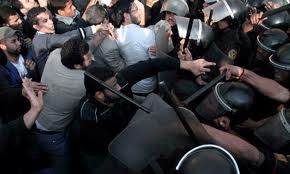
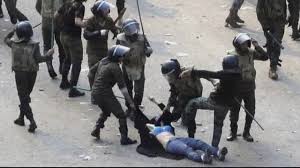


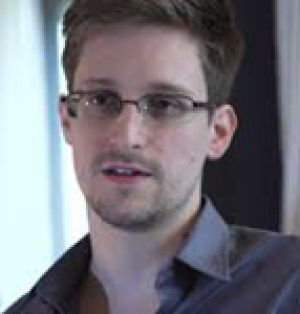

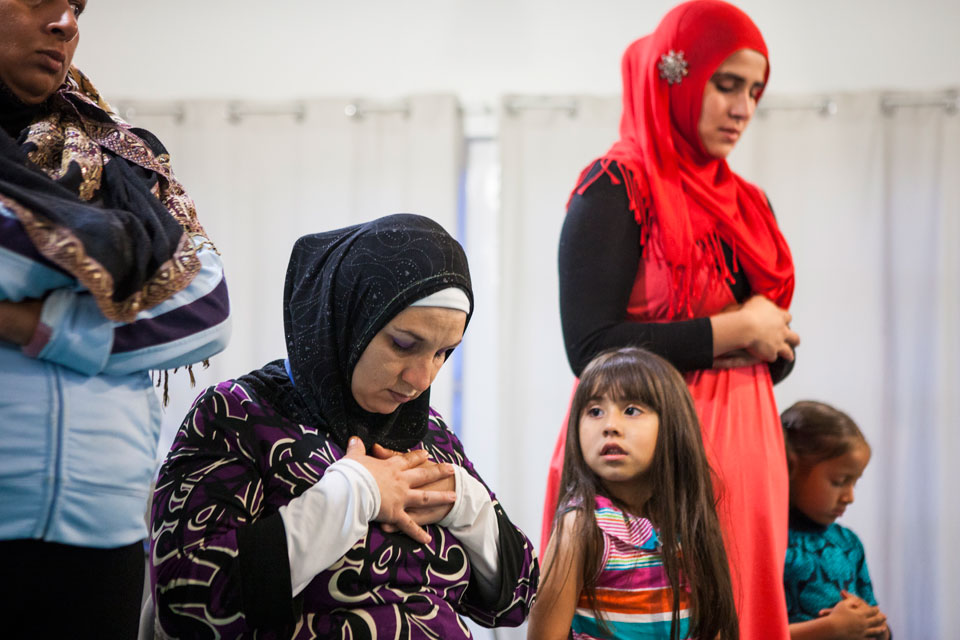
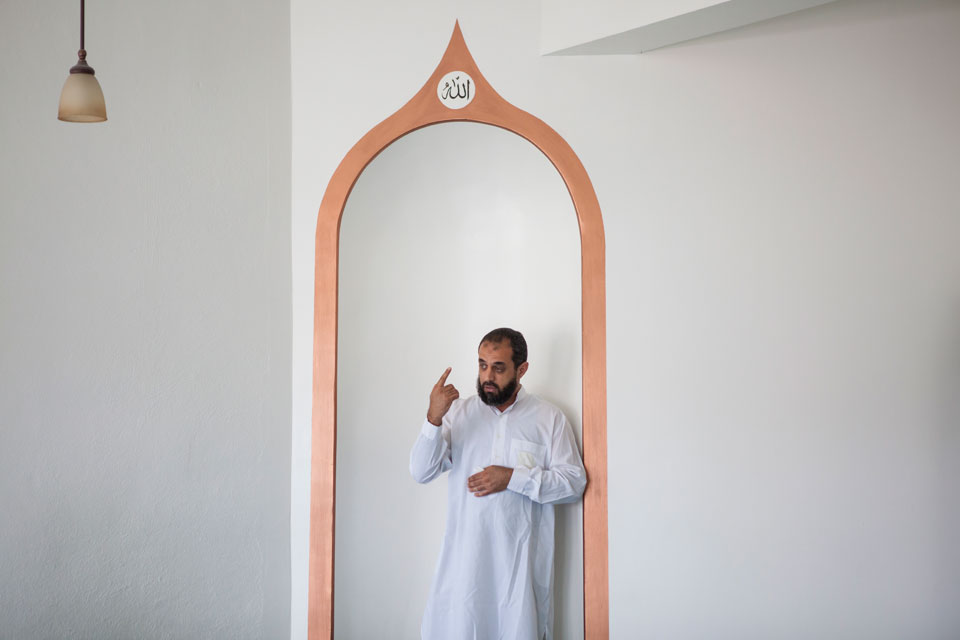

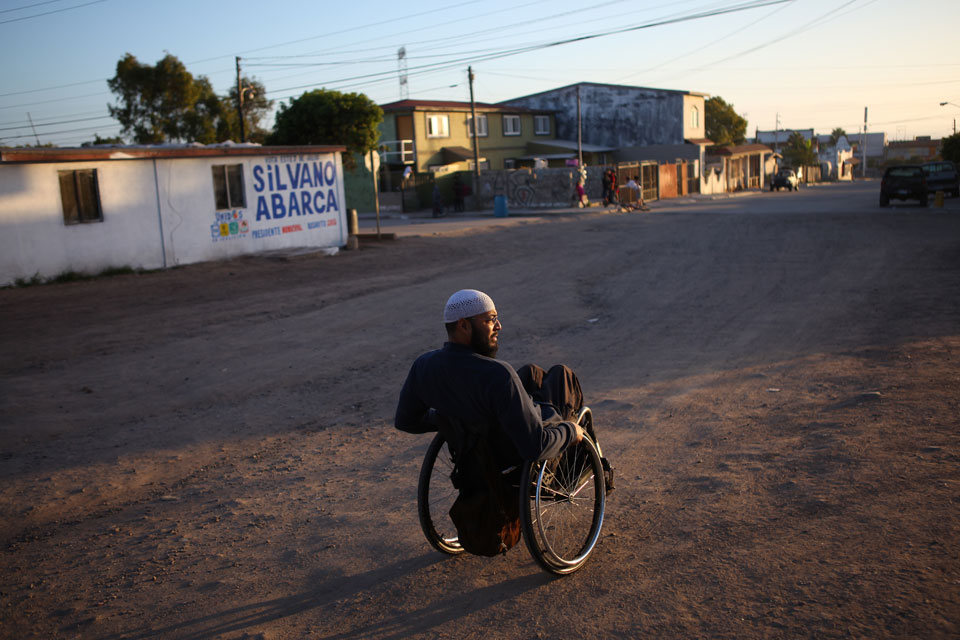




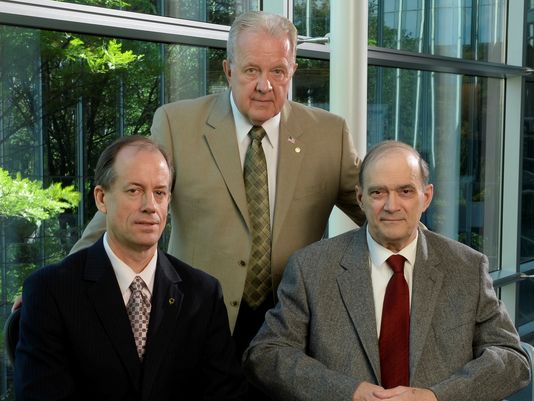

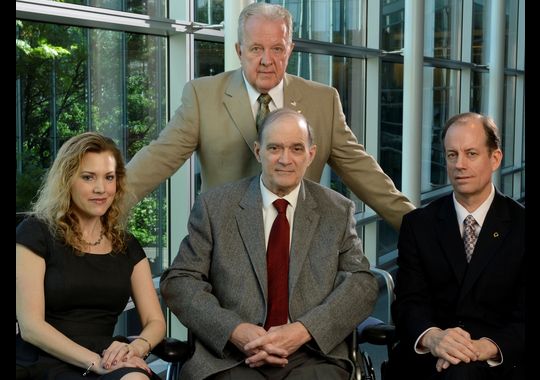
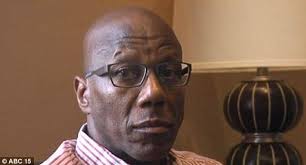
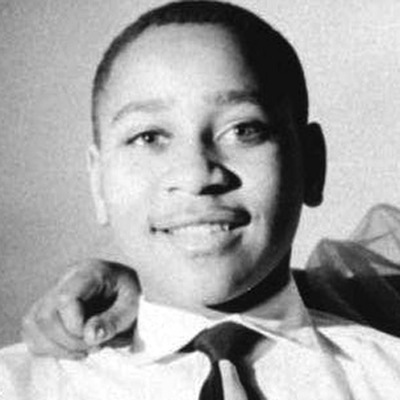

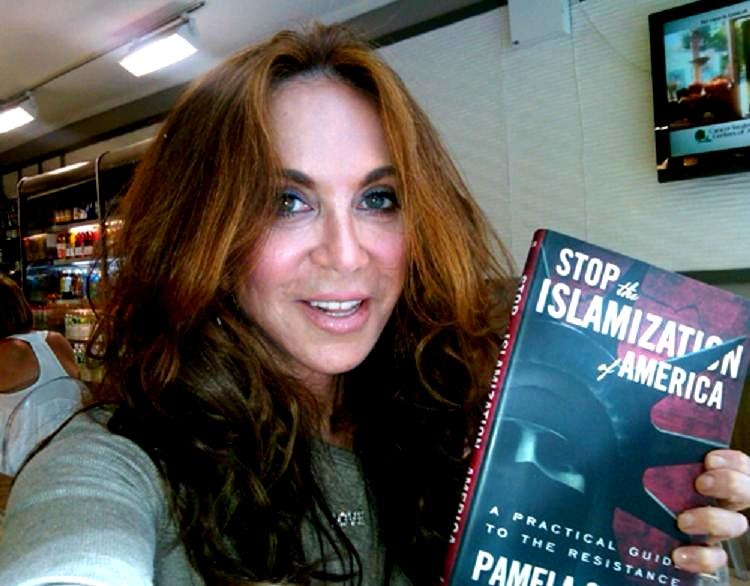

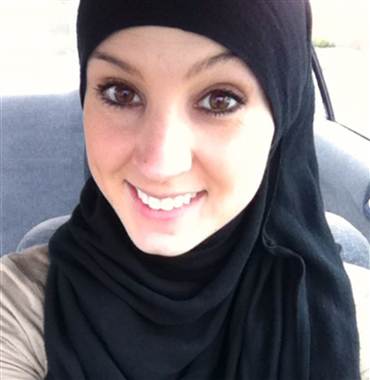
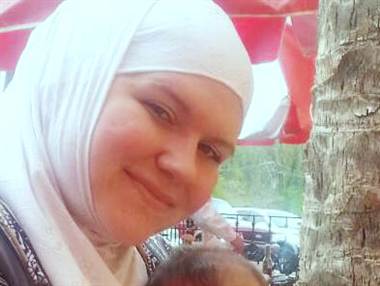
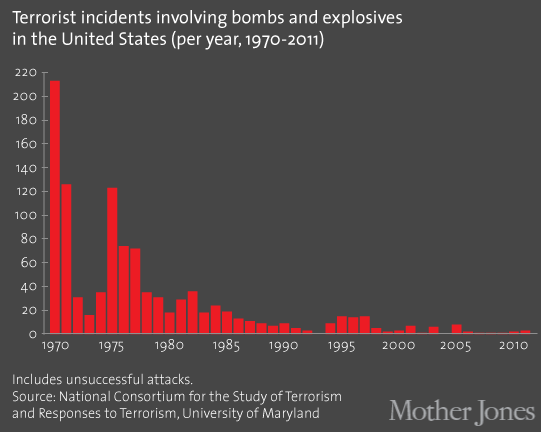

 Miscellany101's Weblog