The Government, Guns and Drugs


drugsI was once asked if I ever sold drugs; after getting over the initial shock of the question and realizing it was being asked by someone not even remotely interested in his own question I laid down the hammer and told him I considered selling drugs an act of treason and therefore punishable by death.  It’s treasonous I told the young man because the proliferation of drugs in a community is meant to render that group of people inert to the issues facing our country and disinterested in engaging in them.  Using drugs or people who peddle them are no better than people who practice slavery I said. My reply fell on deaf ears.

I was aware of the claims made by Gary Webb in  his “Dark Alliance” newspaper series that the US government has had a hand in the proliferation of drugs in the African-American community and that its intent was pretty much as I described to my interlocutor to destroy the black community.  When Webb first printed his articles he was driven to suicide but we all know there was merit to his assertions.  Indeed some preceded Webb in saying the same things.  The US government introduces drugs into a segment of the population, reaps the financial rewards thereof, the social advantages of making an entire population static non participants in their political, economic, social, or educational future. The existence of the government’s product necessitates government intervention, bureaucracy in the form of all the various agencies that must be employed to fight the war on drugs thereby legitimizing government itself.  A pretty neat slight of hand but only for government…for the people who are preyed upon by government it means their literal destruction or at least reduction to a comatose state where they are no longer relevant. Which brings me to Israel and Palestine.

I literally bolted out of my chair when I heard the Democracy Now interview last week with Budour Hassan talking about the situation in one of the refugee camps, Shuafat refugee camp and what goes on there.  She said this

……Subhi Abu Khalifa lives in Shuafat refugee camp, which is literally a ghetto, which the Israeli occupation since the 1970s has tried to crush with all means possible, turning it into a poverty hub, turning—putting drugs in the camp, smuggling arms to some of the residents. So they’ve tried to do everything in the camp, not just to destroy the community there, but to also prevent this camp from being active in the Palestinian resistance movement.

I thought finally, the US has taught Israel a thing or two about oppression…..America has at least at some point in the relationship between Israel and the US been a leader, not a follower of the Israeli agenda.  Everything about the US-Israel relationship has been completely and utterly one sided.  America has been the sole servant to Israeli interests even when they contradicted our own.  Now I had in front of me an example where Israel was doing the very same things to Palestinians living in the squalor of their Israeli imposed existence with the same diet of drugs and guns that have destroyed African-American communities being used to wipe out Palestinians as well.  In the interest of fairness it must be said Americans have resumed following Israel by parroting extra judicial killings of oppressed people without repercussion; #blacklivesmatter is an outgrowth of that but Israel has the advantage of looking at how that deadly cocktail of drugs and guns can benefit government in many ways and we can say they learned that from us.  #AmericanExceptionalism!

An American terrorist who is NOT a Muslim


Jon Ritzheimer
Jon Ritzheimer

This guy is as crazy as they come and yet Islamophobes are so consumed with their hatred of Muslims they don’t realize how much worse off they are for having him around.  He first gained notoriety when he staged a draw a cartoon of the Prophet Muhammad protest after the terrorism debacle at the offices of the newspaper in Paris, France known for inciting religious hatred by and towards Muslims for their obscene cartoons.  Shortly after his own failed attempt at inciting Muslims he started a GoFundMe page to collect money while he went into hiding because he claimed he received so many death threats from people for exposing Islam. Fraud! Later he claimed the money he wanted to collect from the GoFundMe account to be  used to run against his state’s US Senator, John McClain.  Whatever the intent of trying to fleece America the account was taken down and the last tally of funds he got was really not worth the effort.

Thankfully, enough people were able to see beyond his extortion not to get involved.  He also emerged from hiding long enough to rage against the Oath Keepers because they wouldn’t help him arrest Senator Debbie Stabenow.  Mind you, these are the same Oath Keepers who walked around Ferguson, Missouri openly carrying firearms while that city still seething over the murder of Mike Brown saw one year pass since his death. For Ritzheimer to be to the right of that group doesn’t bode well for his state of mind….yet in today’s America he still resonates with someone.

We’ve been told for sometime that there are elements in American society intent on acts of terrorism and that they are made up primarily of the political right, white males who either want to overthrow the government or start a race war and Ritzheimer fits that profile to the “T”.  He and others like him have been successful in diverting attention away from themselves by claiming the bigger threat is “radical Islam” and “extremists Muslims” and Americans fall for it every time.

There were anti-Islam rallies across America this month and this is how America’s Muslims reacted


Cynthia Cox de Boutinkhar hugs "Annie" an anti-Islam protestor at a Hilliard, Ohio masjid
Cynthia Cox de Boutinkhar hugs “Annie” an anti-Islam protestor at a Hilliard, Ohio masjid

It’s not everyday that you run across a coordinated effort to defame a religious community in America…..some might call that “terrorism”…..but one weekend in October such an event was planned by a group which named its effort, “Global Rally for Humanity”.  This group even mapped out Muslim places of worship where they wanted to protest/demonstrate and the masjid/mosque Noor Islamic Cultural Center in Dublin, Ohio where Ms. de Boutinkhar worships was one of them.  However, de Boutinkhar, picture above on the right, decided to hug her antagonist and thus set into motion a dialogue that Islamophobes probably didn’t count on.  This is not to say all of the coordinated demonstrations had such sentimental graphics.  In this day and age of gun violence the demonstration planned for Dearborn, Michigan encouraged its participants to bring their weapons and openly carry them in front of the Islamic Center of America.  That protest site was changed to the Henry Ford Library in Dearborn.   All in all, those planned events went on without being too newsworthy for the average American but they underscored a few points. Islamophobia is very much alive in America; there are many among all faiths who oppose it and the Muslim response of either ignoring such events, silently preparing themselves for it and embracing those who participate in them demonstrate the seriousness with which America’s Muslims take their religion

Making literacy thrive in the black community


A story worthy of bringing me out of my writing doldrums.  For the longest time people of color were told across dinner tables throughout this country, America, that in order for them to make it, be accepted, achieve their dreams, goals, aspirations they had to learn the language.  It’s gratifying to see that that’s still practiced by some who might not be sitting in dining rooms but rather in barber shops.

A barber gave free haircuts to kids, but first they had to read him a story.

barber with book


On Aug. 8, 2015, barber Courtney Holmes decided to take a different approach to his work for the day.

It was during his community’s second annual Back to School Bash in Dubuque, Iowa’s Comiskey Park, an event in which community partners and organizations help get kids and families off on the right feet for the upcoming school year.

Holmes, from the Spark Family Hair Salon, knew exactly how to contribute.

He decided to give his hair-cutting services away for free.

There was one catch: The kids had to read him a story to get their free haircuts.

No strings attached … just words!haircut

Holmes told the Telegraph Herald that his A+ back-to-school move was because he wanted to support the kids learning to read.

“I just want to help out the kids, help out the community, make sure the kids are able to read a book and get a nice haircut for school,” he said.

What a great reason. Exchanging a story for a trim? It’s a small gesture that can go such a long way.

“The idea [of the Back to School Bash] is to connect people to people and people to resources,” said Anderson Sainci, coordinator of the bash. “It helps all of us to reach our full potential.”

It’s great to see communities coming together to support each other, especially during back-to-school time.

It’s great to see communities coming together no matter what the reason, but around these kinds of moments where money and resources might be tight, it’s helping hands like this that can make a big difference.

And it is, indeed, how we can all help each other reach our full potential.

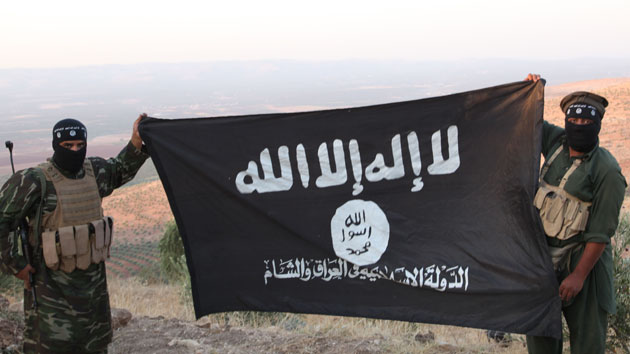
ISIS-ISIL news


The phony unISIL group has been exposed again with what appears to be video of people conducting one of the group’s video beheadings inside a studio.  Check it out

https://www.youtube.com/watch?v=Ouj6OLvgtjs

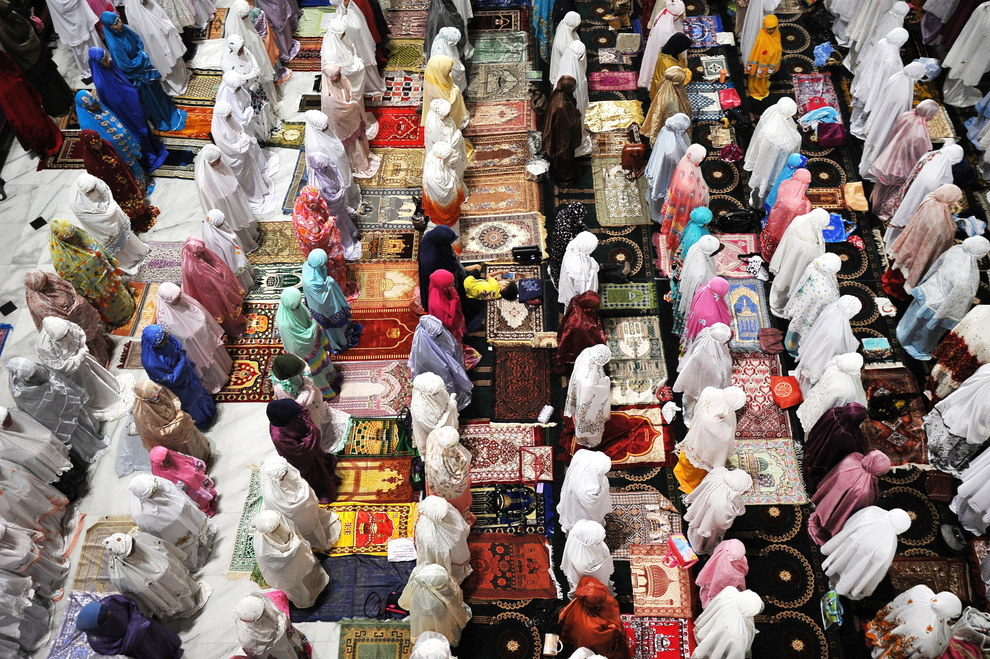
Then there’s this news about the group banning the celebration of the end of the month of fasting, Ramadan, which will take place later this week.  Their claim it is not an authentic Muslim celebration does more to belie their authenticity than anything we could say or post here on the pages of Miscellany101. More proof the group is not at all what it purports to be. Take heed young Muslims; don’t be deceived or misled. Stay home and enjoy your youth.

Powerless in the Face of White Supremacy and a Gun


While out shopping in Georgia at my favorite bookstore, the same day theEmanuel AME Church reopened its doors after the mass shooting, a white man in camouflage entered the store openly carrying a gun on his hip.

In my home state, we recently allowed licensed individuals to bring their guns into bars, churches, and college campuses, all for the sake of “safety.” Yet, in this moment, at the bookstore, I realized that such gun control laws only ensure certain people feel safe, while others who do not wish to own a gun are left feeling powerless. opencarry

This tense moment was still too soon. Too soon after Charleston, after the deaths of Eric Garner and Rekia Boyd—and even too soon after Emmett Till. Too soon after cops in Georgia attacked Kenya Harris until she miscarried.

Too soon because I haven’t processed the constant surveillance and prosecution I experience as a dark-skinned Black person navigating a society where I can be tried and executed in the streets without jury.

The gun-toting man had a wide-shouldered build and was probably shorter than me once he took off his combat boots. Looking back, I probably could have taken him on in a fair fight. Lord knows, I’ve fought men bigger than him before.

The bookstore employee, who will go down in history as my favorite bookstore employee ever, immediately said to the man, “Woah, that’s a gun! That makes me uncomfortable.”

Anywhere you stood in the store you could hear his reply: “Well, it shouldn’t be a problem so long as I don’t feel threatened.” The way his voice trailed off as his eyes panned the room froze me temporarily. I tucked myself behind a bookshelf where I could still see and hear what was happening. He also said he has an open carry licenseas if that would make us feel safe.

And then to change the subject, as if carrying a gun in a bookstore is no big deal, he shared that he had been scoping out the bookstore for some time, but only just decided to come in. I popped my head over a bookshelf to lock eyes with the bookstore employee. We widened our gaze and raised our eyebrows at each other to non-verbally confirm that this situation was indeed absurd.

But what troubled me most about the situation as it was happening was the realization that our legislative system was working as intended in that moment.

Long before I walked in to buy a copy of Octavia’s Brood, so that I could think about a world where my body is free through activism-driven science fiction, the system set things up with discriminatory gun control laws.

The idea of openly carrying a gun to protect myself has never been a realistic option—only when I’m imagining myself as Storm from X-Men dismantling oppressive systems with Black feminist thunderstorms and a small silver glock just in case. In reality, if the cops saw me with a gun, a bag of Skittles, or even a loosey cigarette, they would probably shoot me and ask questions about my permit later. As a Jamaican-American whose parents had to navigate the country’s unjust immigration system, I’ve almost always known that papers and permits don’t save dark-skinned people.

And so now, Georgia’s open carry policy, the Second Amendment of the U.S. Constitution, and the whole foundation of America’s justice system works as it was always intended: allowing certain people to feel safe at the expense of others existing in fear. I was without arms and face-to-face with a man who may or may not have wanted to kill meand a man who had the freedom to make that decision without repercussions.

As he approached me in a corner of the store, my heart raced as I thought about the families of the victims and the nine people who were being put to rest in Charleston. I kept thinking ofTywanza Sanders jumping to defend his aunt Susie Jackson. I wondered if I could drum up that courage. I wondered if Cynthia Hurd was as frozen as I was. I wondered if Ethel Lancefelt as caught off-guard. I thanked the employee, a fellow woman of color, repeatedly in my head for maintaining calm in that moment of uncertainty. The man and I stood for a moment side-by-side browsing titles like Does Your Mama Know. It was a split second. Then I darted away to the middle of the store in three wide steps.

After he burrowed his nose into every corner of the bookstore, all he bought were two button pins with probably the most unpolitical messaging on them. I didn’t get to see them, but I know the store carries some very alluring pins of cats. Maybe he got those? At the counter, he showed the employee his Harry Potter tattoo. He made uncomfortable comments about how the tattoo reminds him of seeking truth and justice against liars, loud enough for all of us to hear. He talked about his “no good” ex. He said “open carry” ensures that his son respects him.

“Do you need a bag,” the bookstore employee interrupted, making it clear it was time for him to go.

Once he left, the rest of us still in the store let out a communal, belly-deep sigh. One customer noticed that subconsciously all the books they had collected to purchase were about men and violence. “They take up so much space,” the customer said with regard to the man who just left and the bundle of books in their arms.

Oppression can preoccupy our safe spaces, even in our minds.

My fellow customer’s comment allowed all of us in the store to laugh and begin the process of grasping what had just happened.

I don’t know why he came in armed. I don’t know what his intentions were. I don’t want to know. I want to know a world where I don’t have to be caught up in fear in the first place. I want a world where none of us feel the need to carry a gun. A world where the Confederate flag and a CVS aren’t more important to our political leaders than seven burning churches, the countless dead at the hands of militarized police, and those empowered with the false hubris of white supremacy.

People like me, and hopefully you, are trying to make that world a reality in the here and now. Bree Newsome, for example, took the Confederate flag down from the South Carolina statehouse with her bare hands. Emanuel AME Church reopened its doors when I’m sure domestic terrorists and other right-wing extremist groups were hoping they’d stayed closed. Not only are these activists not giving in to the pressure, but they’re reminding all of us that the world we’re fighting for uses love to overpower violence. Sanders’ 5-year-old niece, just by virtue of surviving the shooting by playing dead, is proof of Audre Lorde’s prophesizing.

No, we were never meant to survive, Lorde, and so whenever we end up doing so, we are being revolutionary, perhaps even futuristic.

The Meaning of July Fourth for the Negro


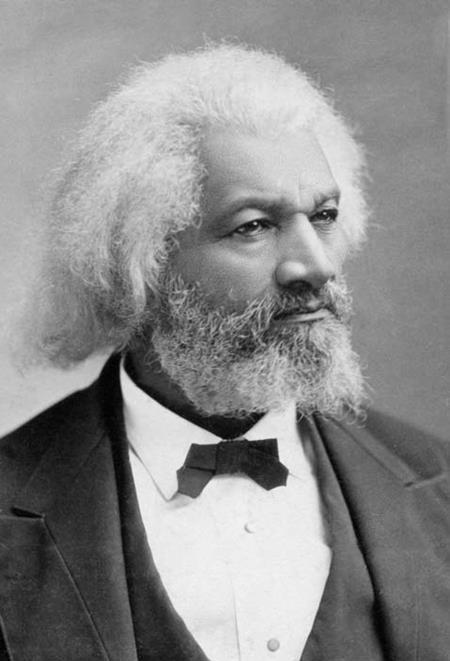
FrederickDouglassFrederick Douglass is the reason why slave owners DID NOT want slaves to get an education because it was assumed, correctly, they would turn out like him.

Mr. President, Friends and Fellow Citizens:

He who could address this audience without a quailing sensation, has stronger nerves than I have. I do not remember ever to have appeared as a speaker before any assembly more shrinkingly, nor with greater distrust of my ability, than I do this day. A feeling has crept over me quite unfavorable to the exercise of my limited powers of speech. The task before me is one which requires much previous thought and study for its proper performance. I know that apologies of this sort are generally considered flat and unmeaning. I trust, however, that mine will not be so considered. Should I seem at ease, my appearance would much misrepresent me. The little experience I have had in addressing public meetings, in country school houses, avails me nothing on the present occasion.

The papers and placards say that I am to deliver a Fourth of July Oration. This certainly sounds large, and out of the common way, for me. It is true that I have often had the privilege to speak in this beautiful Hall, and to address many who now honor me with their presence. But neither their familiar faces, nor the perfect gage I think I have of Corinthian Hall seems to free me from embarrassment.

The fact is, ladies and gentlemen, the distance between this platform and the slave plantation, from which I escaped, is considerable-and the difficulties to he overcome in getting from the latter to the former are by no means slight. That I am here to-day is, to me, a matter of astonishment as well as of gratitude. You will not, therefore, be surprised, if in what I have to say I evince no elaborate preparation, nor grace my speech with any high sounding exordium. With little experience and with less learning, I have been able to throw my thoughts hastily and imperfectly together; and trusting to your patient and generous indulgence I will proceed to lay them before you.

This, for the purpose of this celebration, is the Fourth of July. It is the birth day of your National Independence, and of your political freedom. This, to you, as what the Passover was to the emancipated people of God. It carries your minds back to the day, and to the act of your great deliverance; and to the signs, and to the wonders, associated with that act, and that day. This celebration also marks the beginning of another year of your national life; and reminds you that the Republic of America is now 76 years old. l am glad, fellow-citizens, that your nation is so young. Seventy-six years, though a good old age for a man, is but a mere speck in the life of a nation. Three score years and ten is the allotted time for individual men; but nations number their years by thousands. According to this fact, you are, even now, only in the beginning of your national career, still lingering in the period of childhood. I repeat, I am glad this is so. There is hope in the thought, and hope is much needed, under the dark clouds which lower above the horizon. The eye of the reformer is met with angry flashes, portending disastrous times; but his heart may well beat lighter at the thought that America is young, and that she is still in the impressible stage of her existence. May he not hope that high lessons of wisdom, of justice and of truth, will yet give direction to her destiny? Were the nation older, the patriot’s heart might be sadder, and the reformer’s brow heavier. Its future might be shrouded in gloom, and the hope of its prophets go out in sorrow. There is consolation in the thought that America is young.-Great streams are not easily turned from channels, worn deep in the course of ages. They may sometimes rise in quiet and stately majesty, and inundate the land, refreshing and fertilizing the earth with their mysterious properties. They may also rise in wrath and fury, and bear away, on their angry waves, the accumulated wealth of years of toil and hardship. They, however, gradually flow back to the same old channel, and flow on as serenely as ever. But, while the river may not be turned aside, it may dry up, and leave nothing behind but the withered branch, and the unsightly rock, to howl in the abyss-sweeping wind, the sad tale of departed glory. As with rivers so with nations.

Fellow-citizens, I shall not presume to dwell at length on the associations that cluster about this day. The simple story of it is, that, 76 years ago, the people of this country were British subjects. The style and title of your “sovereign people” (in which you now glory) was not then born. You were under the British Crown. Your fathers esteemed the English Government as the home government; and England as the fatherland. This home government, you know, although a considerable distance from your home, did, in the exercise of its parental prerogatives, impose upon its colonial children, such restraints, burdens and limitations, as, in its mature judgment, it deemed wise, right and proper.

But your fathers, who had not adopted the fashionable idea of this day, of the infallibility of government, and the absolute character of its acts, presumed to differ from the home government in respect to the wisdom and the justice of some of those burdens and restraints. They went so far in their excitement as to pronounce the measures of government unjust, unreasonable, and oppressive, and altogether such as ought not to be quietly submitted to. I scarcely need say, fellow-citizens, that my opinion of those measures fully accords with that of your fathers. Such a declaration of agreement on my part would not be worth much to anybody. It would certainly prove nothing as to what part I might have taken had I lived during the great controversy of 1776. To say now that America was right, and England wrong, is exceedingly easy. Everybody can say it; the dastard, not less than the noble brave, can flippantly discant on the tyranny of England towards the American Colonies. It is fashionable to do so; but there was a time when, to pronounce against England, and in favor of the cause of the colonies, tried men’s souls. They who did so were accounted in their day plotters of mischief, agitators and rebels, dangerous men. To side with the right against the wrong, with the weak against the strong, and with the oppressed against the oppressor! here lies the merit, and the one which, of all others, seems unfashionable in our day. The cause of liberty may be stabbed by the men who glory in the deeds of your fathers. But, to proceed.

Feeling themselves harshly and unjustly treated, by the home government, your fathers, like men of honesty, and men of spirit, earnestly sought redress. They petitioned and remonstrated; they did so in a decorous, respectful, and loyal manner. Their conduct was wholly unexceptionable. This, however, did not answer the purpose. They saw themselves treated with sovereign indifference, coldness and scorn. Yet they persevered. They were not the men to look back.

As the sheet anchor takes a firmer hold, when the ship is tossed by the storm, so did the cause of your fathers grow stronger as it breasted the chilling blasts of kingly displeasure. The greatest and best of British statesmen admitted its justice, and the loftiest eloquence of the British Senate came to its support. But, with that blindness which seems to be the unvarying characteristic of tyrants, since Pharaoh and his hosts were drowned in the Red Sea, the British Government persisted in the exactions complained of.

The madness of this course, we believe, is admitted now, even by England; but we fear the lesson is wholly lost on our present rulers.

Oppression makes a wise man mad. Your fathers were wise men, and if they did not go mad, they became restive under this treatment. They felt themselves the victims of grievous wrongs, wholly incurable in their colonial capacity. With brave men there is always a remedy for oppression. Just here, the idea of a total separation of the colonies from the crown was born! It was a startling idea, much more so than we, at this distance of time, regard it. The timid and the prudent (as has been intimated) of that day were, of course, shocked and alarmed by it.

Such people lived then, had lived before, and will, probably, ever have a place on this planet; and their course, in respect to any great change (no matter how great the good to be attained, or the wrong to be redressed by it), may be calculated with as much precision as can be the course of the stars. They hate all changes, but silver, gold and copper change! Of this sort of change they are always strongly in favor.

These people were called Tories in the days of your fathers; and the appellation, probably, conveyed the same idea that is meant by a more modern, though a somewhat less euphonious term, which we often find in our papers, applied to some of our old politicians.

Their opposition to the then dangerous thought was earnest and powerful; but, amid all their terror and affrighted vociferations against it, the alarming and revolutionary idea moved on, and the country with it.

On the 2nd of July, 1776, the old Continental Congress, to the dismay of the lovers of ease, and the worshipers of property, clothed that dreadful idea with all the authority of national sanction. They did so in the form of a resolution; and as we seldom hit upon resolutions, drawn up in our day, whose transparency is at all equal to this, it may refresh your minds and help my story if I read it.

“Resolved, That these united colonies are, and of right, ought to be free and Independent States; that they are absolved from all allegiance to the British Crown; and that all political connection between them and the State of Great Britain is, and ought to be, dissolved.”

Citizens, your fathers made good that resolution. They succeeded; and to-day you reap the fruits of their success. The freedom gained is yours; and you, there fore, may properly celebrate this anniversary. The 4th of July is the first great fact in your nation’s history-the very ringbolt in the chain of your yet undeveloped destiny.

Pride and patriotism, not less than gratitude, prompt you to celebrate and to hold it in perpetual remembrance. I have said that the Declaration of Independence is the ringbolt to the chain of your nation’s destiny; so, indeed, I regard it. The principles contained in that instrument are saving principles. Stand by those principles, be true to them on all occasions, in all places, against all foes, and at whatever cost.

From the round top of your ship of state, dark and threatening clouds may be seen. Heavy billows, like mountains in the distance, disclose to the leeward huge forms of flinty rocks! That bolt drawn, that chain broken, and all is lost. Cling to this day-cling to it, and to its principles, with the grasp of a storm-tossed mariner to a spar at midnight.

The coming into being of a nation, in any circumstances, is an interesting event. But, besides general considerations, there were peculiar circumstances which make the advent of this republic an event of special attractiveness. The whole scene, as I look back to it, was simple, dignified and sublime. The population of the country, at the time, stood at the insignificant number of three millions. The country was poor in the munitions of war. The population was weak and scattered, and the country a wilderness unsubdued. There were then no means of concert and combination, such as exist now. Neither steam nor lightning had then been reduced to order and discipline. From the Potomac to the Delaware was a journey of many days. Under these, and innumerable other disadvantages, your fathers declared for liberty and independence and triumphed.

Fellow Citizens, I am not wanting in respect for the fathers of this republic. The signers of the Declaration of Independence were brave men. They were great men, too-great enough to give frame to a great age. It does not often happen to a nation to raise, at one time, such a number of truly great men. The point from which I am compelled to view them is not, certainly, the most favorable; and yet I cannot contemplate their great deeds with less than admiration. They were statesmen, patriots and heroes, and for the good they did, and the principles they contended for, I will unite with you to honor their memory.

They loved their country better than their own private interests; and, though this is not the highest form of human excellence, all will concede that it is a rare virtue, and that when it is exhibited it ought to command respect. He who will, intelligently, lay down his life for his country is a man whom it is not in human nature to despise. Your fathers staked their lives, their fortunes, and their sacred honor, on the cause of their country. In their admiration of liberty, they lost sight of all other interests.

They were peace men; but they preferred revolution to peaceful submission to bondage. They were quiet men; but they did not shrink from agitating against oppression. They showed forbearance; but that they knew its limits. They believed in order; but not in the order of tyranny. With them, nothing was “settIed” that was not right. With them, justice, liberty and humanity were “final”; not slavery and oppression. You may well cherish the memory of such men. They were great in their day and generation. Their solid manhood stands out the more as we contrast it with these degenerate times.

How circumspect, exact and proportionate were all their movements! How unlike the politicians of an hour! Their statesmanship looked beyond the passing moment, and stretched away in strength into the distant future. They seized upon eternal principles, and set a glorious example in their defence. Mark them! Fully appreciating the hardships to be encountered, firmly believing in the right of their cause, honorably inviting the scrutiny of an on-looking world, reverently appealing to heaven to attest their sincerity, soundly comprehending the solemn responsibility they were about to assume, wisely measuring the terrible odds against them, your fathers, the fathers of this republic, did, most deliberately, under the inspiration of a glorious patriotism, and with a sublime faith in the great principles of justice and freedom, lay deep, the corner-stone of the national super-structure, which has risen and still rises in grandeur around you.

Of this fundamental work, this day is the anniversary. Our eyes are met with demonstrations of joyous enthusiasm. Banners and pennants wave exultingly on the breeze. The din of business, too, is hushed. Even mammon seems to have quitted his grasp on this day. The ear-piercing fife and the stirring drum unite their accents with the ascending peal of a thousand church bells. Prayers are made, hymns are sung, and sermons are preached in honor of this day; while the quick martial tramp of a great and multitudinous nation, echoed back by all the hills, valleys and mountains of a vast continent, bespeak the occasion one of thrilling and universal interest-nation’s jubilee.

Friends and citizens, I need not enter further into the causes which led to this anniversary. Many of you understand them better than I do. You could instruct me in regard to them. That is a branch of knowledge in which you feel, perhaps, a much deeper interest than your speaker. The causes which led to the separation of the colonies from the British crown have never lacked for a tongue. They have all been taught in your common schools, narrated at your firesides, un folded from your pulpits, and thundered from your legislative halls, and are as familiar to you as household words. They form the staple of your national po etry and eloquence.

I remember, also, that, as a people, Americans are remarkably familiar with all facts which make in their own favor. This is esteemed by some as a national trait-perhaps a national weakness. It is a fact, that whatever makes for the wealth or for the reputation of Americans and can be had cheap! will be found by Americans. I shall not be charged with slandering Americans if I say I think the American side of any question may be safely left in American hands.

I leave, therefore, the great deeds of your fathers to other gentlemen whose claim to have been regularly descended will be less likely to be disputed than mine!

My business, if I have any here to-day, is with the present. The accepted time with God and His cause is the ever-living now.

Trust no future, however pleasant,
Let the dead past bury its dead;
Act, act in the living present,
Heart within, and God overhead.

We have to do with the past only as we can make it useful to the present and to the future. To all inspiring motives, to noble deeds which can be gained from the past, we are welcome. But now is the time, the important time. Your fathers have lived, died, and have done their work, and have done much of it well. You live and must die, and you must do your work. You have no right to enjoy a child’s share in the labor of your fathers, unless your children are to be blest by your labors. You have no right to wear out and waste the hard-earned fame of your fathers to cover your indolence. Sydney Smith tells us that men seldom eulogize the wisdom and virtues of their fathers, but to excuse some folly or wickedness of their own. This truth is not a doubtful one. There are illustrations of it near and remote, ancient and modern. It was fashionable, hundreds of years ago, for the children of Jacob to boast, we have “Abraham to our father,” when they had long lost Abraham’s faith and spirit. That people contented themselves under the shadow of Abraham’s great name, while they repudiated the deeds which made his name great. Need I remind you that a similar thing is being done all over this country to-day? Need I tell you that the Jews are not the only people who built the tombs of the prophets, and garnished the sepulchers of the righteous? Washington could not die till he had broken the chains of his slaves. Yet his monument is built up by the price of human blood, and the traders in the bodies and souls of men shout-“We have Washington to our father.”-Alas! that it should be so; yet it is.

The evil, that men do, lives after them,
The good is oft interred with their bones.

Fellow-citizens, pardon me, allow me to ask, why am I called upon to speak here to-day? What have I, or those I represent, to do with your national independence? Are the great principles of political freedom and of natural justice, embodied in that Declaration of Independence, extended to us? and am I, therefore, called upon to bring our humble offering to the national altar, and to confess the benefits and express devout gratitude for the blessings resulting from your independence to us?

Would to God, both for your sakes and ours, that an affirmative answer could be truthfully returned to these questions! Then would my task be light, and my burden easy and delightful. For who is there so cold, that a nation’s sympathy could not warm him? Who so obdurate and dead to the claims of gratitude, that would not thankfully acknowledge such priceless benefits? Who so stolid and selfish, that would not give his voice to swell the hallelujahs of a nation’s jubilee, when the chains of servitude had been torn from his limbs? I am not that man. In a case like that, the dumb might eloquently speak, and the “lame man leap as an hart.”

But such is not the state of the case. I say it with a sad sense of the disparity between us. I am not included within the pale of this glorious anniversary! Your high independence only reveals the immeasurable distance between us. The blessings in which you, this day, rejoice, are not enjoyed in common.-The rich inheritance of justice, liberty, prosperity and independence, bequeathed by your fa thers, is shared by you, not by me. The sunlight that brought light and healing to you, has brought stripes and death to me. This Fourth July is yours, not mine. You may rejoice, I must mourn. To drag a man in fetters into the grand illuminated temple of liberty, and call upon him to join you in joyous anthems, were inhuman mockery and sacrilegious irony. Do you mean, citizens, to mock me, by asking me to speak to-day? If so, there is a parallel to your conduct. And let me warn you that it is dangerous to copy the example of a nation whose crimes, towering up to heaven, were thrown down by the breath of the Almighty, burying that nation in irrevocable ruin! I can to-day take up the plaintive lament of a peeled and woe-smitten people!

“By the rivers of Babylon, there we sat down. Yea! we wept when we remembered Zion. We hanged our harps upon the willows in the midst thereof. For there, they that carried us away captive, required of us a song; and they who wasted us required of us mirth, saying, Sing us one of the songs of Zion. How can we sing the Lord’s song in a strange land? If I forget thee, O Jerusalem, let my right hand forget her cunning. If I do not remember thee, let my tongue cleave to the roof of my mouth.”

Fellow-citizens, above your national, tumultuous joy, I hear the mournful wail of millions! whose chains, heavy and grievous yesterday, are, to-day, rendered more intolerable by the jubilee shouts that reach them. If I do forget, if I do not faithfully remember those bleeding children of sorrow this day, “may my right hand forget her cunning, and may my tongue cleave to the roof of my mouth!” To forget them, to pass lightly over their wrongs, and to chime in with the popular theme, would be treason most scandalous and shocking, and would make me a reproach before God and the world. My subject, then, fellow-citizens, is American slavery. I shall see this day and its popular characteristics from the slave’s point of view. Standing there identified with the American bondman, making his wrongs mine, I do not hesitate to declare, with all my soul, that the character and conduct of this nation never looked blacker to me than on this 4th of July! Whether we turn to the declarations of the past, or to the professions of the present, the conduct of the nation seems equally hideous and revolting. America is false to the past, false to the present, and solemnly binds herself to be false to the future. Standing with God and the crushed and bleeding slave on this occasion, I will, in the name of humanity which is outraged, in the name of liberty which is fettered, in the name of the constitution and the Bible which are disregarded and trampled upon, dare to call in question and to denounce, with all the emphasis I can command, everything that serves to perpetuate slavery-the great sin and shame of America! “I will not equivocate; I will not excuse”; I will use the severest language I can command; and yet not one word shall escape me that any man, whose judgment is not blinded by prejudice, or who is not at heart a slaveholder, shall not confess to be right and just.

But I fancy I hear some one of my audience say, “It is just in this circumstance that you and your brother abolitionists fail to make a favorable impression on the public mind. Would you argue more, and denounce less; would you persuade more, and rebuke less; your cause would be much more likely to succeed.” But, I submit, where all is plain there is nothing to be argued. What point in the anti slavery creed would you have me argue? On what branch of the subject do the people of this country need light? Must I undertake to prove that the slave is a man? That point is conceded already. Nobody doubts it. The slaveholders themselves acknowledge it in the enactment of laws for their government. They ac knowledge it when they punish disobedience on the part of the slave. There are seventy-two crimes in the State of Virginia which, if committed by a black man (no matter how ignorant he be), subject him to the punishment of death; while only two of the same crimes will subject a white man to the like punishment. What is this but the acknowledgment that the slave is a moral, intellectual, and responsible being? The manhood of the slave is conceded. It is admitted in the fact that Southern statute books are covered with enactments forbidding, under severe fines and penalties, the teaching of the slave to read or to write. When you can point to any such laws in reference to the beasts of the field, then I may con sent to argue the manhood of the slave. When the dogs in your streets, when the fowls of the air, when the cattle on your hills, when the fish of the sea, and the reptiles that crawl, shall be unable to distinguish the slave from a brute, then will I argue with you that the slave is a man!

For the present, it is enough to affirm the equal manhood of the Negro race. Is it not astonishing that, while we are ploughing, planting, and reaping, using all kinds of mechanical tools, erecting houses, constructing bridges, building ships, working in metals of brass, iron, copper, silver and gold; that, while we are reading, writing and ciphering, acting as clerks, merchants and secretaries, having among us lawyers, doctors, ministers, poets, authors, editors, orators and teachers; that, while we are engaged in all manner of enterprises common to other men, digging gold in California, capturing the whale in the Pacific, feeding sheep and cattle on the hill-side, living, moving, acting, thinking, planning, living in families as husbands, wives and children, and, above all, confessing and worshipping the Christian’s God, and looking hopefully for life and immortality beyond the grave, we are called upon to prove that we are men!

Would you have me argue that man is entitled to liberty? that he is the rightful owner of his own body? You have already declared it. Must I argue the wrongfulness of slavery? Is that a question for Republicans? Is it to be settled by the rules of logic and argumentation, as a matter beset with great difficulty, involving a doubtful application of the principle of justice, hard to be understood? How should I look to-day, in the presence of Americans, dividing, and subdividing a discourse, to show that men have a natural right to freedom? speaking of it relatively and positively, negatively and affirmatively. To do so, would be to make myself ridiculous, and to offer an insult to your understanding.-There is not a man beneath the canopy of heaven that does not know that slavery is wrong for him.

What, am I to argue that it is wrong to make men brutes, to rob them of their liberty, to work them without wages, to keep them ignorant of their relations to their fellow men, to beat them with sticks, to flay their flesh with the lash, to load their limbs with irons, to hunt them with dogs, to sell them at auction, to sunder their families, to knock out their teeth, to burn their flesh, to starve them into obedience and submission to their masters? Must I argue that a system thus marked with blood, and stained with pollution, is wrong? No! I will not. I have better employment for my time and strength than such arguments would imply.

What, then, remains to be argued? Is it that slavery is not divine; that God did not establish it; that our doctors of divinity are mistaken? There is blasphemy in the thought. That which is inhuman, cannot be divine! Who can reason on such a proposition? They that can, may; I cannot. The time for such argument is passed.

At a time like this, scorching irony, not convincing argument, is needed. O! had I the ability, and could reach the nation’s ear, I would, to-day, pour out a fiery stream of biting ridicule, blasting reproach, withering sarcasm, and stern rebuke. For it is not light that is needed, but fire; it is not the gentle shower, but thunder. We need the storm, the whirlwind, and the earthquake. The feeling of the nation must be quickened; the conscience of the nation must be roused; the propriety of the nation must be startled; the hypocrisy of the nation must be exposed; and its crimes against God and man must be proclaimed and denounced.

What, to the American slave, is your 4th of July? I answer; a day that reveals to him, more than all other days in the year, the gross injustice and cruelty to which he is the constant victim. To him, your celebration is a sham; your boasted liberty, an unholy license; your national greatness, swelling vanity; your sounds of rejoicing are empty and heartless; your denunciation of tyrants, brass fronted impudence; your shouts of liberty and equality, hollow mockery; your prayers and hymns, your sermons and thanksgivings, with all your religious parade and solemnity, are, to Him, mere bombast, fraud, deception, impiety, and hypocrisy-a thin veil to cover up crimes which would disgrace a nation of savages. There is not a nation on the earth guilty of practices more shocking and bloody than are the people of the United States, at this very hour.

Go where you may, search where you will, roam through all the monarchies and despotisms of the Old World, travel through South America, search out every abuse, and when you have found the last, lay your facts by the side of the everyday practices of this nation, and you will say with me, that, for revolting barbarity and shameless hypocrisy, America reigns without a rival.

Take the American slave-trade, which we are told by the papers, is especially prosperous just now. Ex-Senator Benton tells us that the price of men was never higher than now. He mentions the fact to show that slavery is in no danger. This trade is one of the peculiarities of American institutions. It is carried on in all the large towns and cities in one-half of this confederacy; and millions are pocketed every year by dealers in this horrid traffic. In several states this trade is a chief source of wealth. It is called (in contradistinction to the foreign slave-trade) “the internal slave-trade.” It is, probably, called so, too, in order to divert from it the horror with which the foreign slave-trade is contemplated. That trade has long since been denounced by this government as piracy. It has been denounced with burning words from the high places of the nation as an execrable traffic. To arrest it, to put an end to it, this nation keeps a squadron, at immense cost, on the coast of Africa. Everywhere, in this country, it is safe to speak of this foreign slave-trade as a most inhuman traffic, opposed alike to the Jaws of God and of man. The duty to extirpate and destroy it, is admitted even by our doctors of divinity. In order to put an end to it, some of these last have consented that their colored brethren (nominally free) should leave this country, and establish them selves on the western coast of Africa! It is, however, a notable fact that, while so much execration is poured out by Americans upon all those engaged in the foreign slave-trade, the men engaged in the slave-trade between the states pass with out condemnation, and their business is deemed honorable.

Behold the practical operation of this internal slave-trade, the American slave-trade, sustained by American politics and American religion. Here you will see men and women reared like swine for the market. You know what is a swine-drover? I will show you a man-drover. They inhabit all our Southern States. They perambulate the country, and crowd the highways of the nation, with droves of human stock. You will see one of these human flesh jobbers, armed with pistol, whip, and bowie-knife, driving a company of a hundred men, women, and children, from the Potomac to the slave market at New Orleans. These wretched people are to be sold singly, or in lots, to suit purchasers. They are food for the cotton-field and the deadly sugar-mill. Mark the sad procession, as it moves wearily along, and the inhuman wretch who drives them. Hear his savage yells and his blood-curdling oaths, as he hurries on his affrighted captives! There, see the old man with locks thinned and gray. Cast one glance, if you please, upon that young mother, whose shoulders are bare to the scorching sun, her briny tears falling on the brow of the babe in her arms. See, too, that girl of thirteen, weeping, yes! weeping, as she thinks of the mother from whom she has been torn! The drove moves tardily. Heat and sorrow have nearly consumed their strength; suddenly you hear a quick snap, like the discharge of a rifle; the fetters clank, and the chain rattles simultaneously; your ears are saluted with a scream, that seems to have torn its way to the centre of your soul The crack you heard was the sound of the slave-whip; the scream you heard was from the woman you saw with the babe. Her speed had faltered under the weight of her child and her chains! that gash on her shoulder tells her to move on. Follow this drove to New Orleans. Attend the auction; see men examined like horses; see the forms of women rudely and brutally exposed to the shock ing gaze of American slave-buyers. See this drove sold and separated forever; and never forget the deep, sad sobs that arose from that scattered multitude. Tell me, citizens, where, under the sun, you can witness a spectacle more fiendish and shocking. Yet this is but a glance at the American slave-trade, as it exists, at this moment, in the ruling part of the United States.

I was born amid such sights and scenes. To me the American slave-trade is a terrible reality. When a child, my soul was often pierced with a sense of its horrors. I lived on Philpot Street, Fell’s Point, Baltimore, and have watched from the wharves the slave ships in the Basin, anchored from the shore, with their cargoes of human flesh, waiting for favorable winds to waft them down the Chesapeake. There was, at that time, a grand slave mart kept at the head of Pratt Street, by Austin Woldfolk. His agents were sent into every town and county in Maryland, announcing their arrival, through the papers, and on flaming “hand-bills,” headed cash for Negroes. These men were generally well dressed men, and very captivating in their manners; ever ready to drink, to treat, and to gamble. The fate of many a slave has depended upon the turn of a single card; and many a child has been snatched from the arms of its mother by bargains arranged in a state of brutal drunkenness.

The flesh-mongers gather up their victims by dozens, and drive them, chained, to the general depot at Baltimore. When a sufficient number has been collected here, a ship is chartered for the purpose of conveying the forlorn crew to Mobile, or to New Orleans. From the slave prison to the ship, they are usually driven in the darkness of night; for since the antislavery agitation, a certain caution is observed.

In the deep, still darkness of midnight, I have been often aroused by the dead, heavy footsteps, and the piteous cries of the chained gangs that passed our door. The anguish of my boyish heart was intense; and I was often consoled, when speaking to my mistress in the morning, to hear her say that the custom was very wicked; that she hated to hear the rattle of the chains and the heart-rending cries. I was glad to find one who sympathized with me in my horror.

Fellow-citizens, this murderous traffic is, to-day, in active operation in this boasted republic. In the solitude of my spirit I see clouds of dust raised on the highways of the South; I see the bleeding footsteps; I hear the doleful wail of fettered humanity on the way to the slave-markets, where the victims are to be sold like horses, sheep, and swine, knocked off to the highest bidder. There I see the tenderest ties ruthlessly broken, to gratify the lust, caprice and rapacity of the buyers and sellers of men. My soul sickens at the sight.

Is this the land your Fathers loved,
The freedom which they toiled to win?
Is this the earth whereon they moved?
Are these the graves they slumber in?

But a still more inhuman, disgraceful, and scandalous state of things remains to be presented. By an act of the American Congress, not yet two years old, slavery has been nationalized in its most horrible and revolting form. By that act, Mason and Dixon’s line has been obliterated; New York has become as Virginia; and the power to hold, hunt, and sell men, women and children, as slaves, remains no longer a mere state institution, but is now an institution of the whole United States. The power is co-extensive with the star-spangled banner, and American Christianity. Where these go, may also go the merciless slave-hunter. Where these are, man is not sacred. He is a bird for the sportsman’s gun. By that most foul and fiendish of all human decrees, the liberty and person of every man are put in peril. Your broad republican domain is hunting ground for men. Not for thieves and robbers, enemies of society, merely, but for men guilty of no crime. Your law-makers have commanded all good citizens to engage in this hellish sport. Your President, your Secretary of State, your lords, nobles, and ecclesiastics enforce, as a duty you owe to your free and glorious country, and to your God, that you do this accursed thing. Not fewer than forty Americans have, within the past two years, been hunted down and, without a moment’s warning, hurried away in chains, and consigned to slavery and excruciating torture. Some of these have had wives and children, dependent on them for bread; but of this, no account was made. The right of the hunter to his prey stands superior to the right of marriage, and to all rights in this republic, the rights of God included! For black men there is neither law nor justice, humanity nor religion. The Fugitive Slave Law makes mercy to them a crime; and bribes the judge who tries them. An American judge gets ten dollars for every victim he consigns to slavery, and five, when he fails to do so. The oath of any two villains is sufficient, under this hell-black enactment, to send the most pious and exemplary black man into the remorseless jaws of slavery! His own testimony is nothing. He can bring no witnesses for himself. The minister of American justice is bound by the law to hear but one side; and that side is the side of the oppressor. Let this damning fact be perpetually told. Let it be thundered around the world that in tyrant-killing, king-hating, people-loving, democratic, Christian America the seats of justice are filled with judges who hold their offices under an open and palpable bribe, and are bound, in deciding the case of a man’s liberty, to hear only his accusers!

In glaring violation of justice, in shameless disregard of the forms of administering law, in cunning arrangement to entrap the defenceless, and in diabolical intent this Fugitive Slave Law stands alone in the annals of tyrannical legislation. I doubt if there be another nation on the globe having the brass and the baseness to put such a law on the statute-book. If any man in this assembly thinks differently from me in this matter, and feels able to disprove my statements, I will gladly confront him at any suitable time and place he may select.

I take this law to be one of the grossest infringements of Christian Liberty, and, if the churches and ministers of our country were nor stupidly blind, or most wickedly indifferent, they, too, would so regard it.

At the very moment that they are thanking God for the enjoyment of civil and religious liberty, and for the right to worship God according to the dictates of their own consciences, they are utterly silent in respect to a law which robs religion of its chief significance and makes it utterly worthless to a world lying in wickedness. Did this law concern the “mint, anise, and cummin”-abridge the right to sing psalms, to partake of the sacrament, or to engage in any of the ceremonies of religion, it would be smitten by the thunder of a thousand pulpits. A general shout would go up from the church demanding repeal, repeal, instant repeal!-And it would go hard with that politician who presumed to so licit the votes of the people without inscribing this motto on his banner. Further, if this demand were not complied with, another Scotland would be added to the history of religious liberty, and the stern old covenanters would be thrown into the shade. A John Knox would be seen at every church door and heard from every pulpit, and Fillmore would have no more quarter than was shown by Knox to the beautiful, but treacherous, Queen Mary of Scotland. The fact that the church of our country (with fractional exceptions) does not esteem “the Fugitive Slave Law” as a declaration of war against religious liberty, im plies that that church regards religion simply as a form of worship, an empty ceremony, and not a vital principle, requiring active benevolence, justice, love, and good will towards man. It esteems sacrifice above mercy; psalm-singing above right doing; solemn meetings above practical righteousness. A worship that can be conducted by persons who refuse to give shelter to the houseless, to give bread to the hungry, clothing to the naked, and who enjoin obedience to a law forbidding these acts of mercy is a curse, not a blessing to mankind. The Bible addresses all such persons as “scribes, pharisees, hypocrites, who pay tithe ofÝ mint, anise, and cummin, and have omitted the weightier matters of the law, judgment, mercy, and faith.”

But the church of this country is not only indifferent to the wrongs of the slave, it actually takes sides with the oppressors. It has made itself the bulwark of American slavery, and the shield of American slave-hunters. Many of its most eloquent Divines, who stand as the very lights of the church, have shamelessly given the sanction of religion and the Bible to the whole slave system. They have taught that man may, properly, be a slave; that the relation of master and slave is ordained of God; that to send back an escaped bondman to his master is clearly the duty of all the followers of the Lord Jesus Christ; and this horrible blasphemy is palmed off upon the world for Christianity.

For my part, I would say, welcome infidelity! welcome atheism! welcome anything! in preference to the gospel, as preached by those Divines! They convert the very name of religion into an engine of tyranny and barbarous cruelty, and serve to confirm more infidels, in this age, than all the infidel writings of Thomas Paine, Voltaire, and Bolingbroke put together have done! These ministers make religion a cold and flinty-hearted thing, having neither principles of right action nor bowels of compassion. They strip the love of God of its beauty and leave the throne of religion a huge, horrible, repulsive form. It is a religion for oppressors, tyrants, man-stealers, and thugs. It is not that “pure and undefiled religion” which is from above, and which is “first pure, then peaceable, easy to be entreated, full of mercy and good fruits, without partiality, and with out hypocrisy.” But a religion which favors the rich against the poor; which exalts the proud above the humble; which divides mankind into two classes, tyrants and slaves; which says to the man in chains, stay there; and to the oppressor, oppress on; it is a religion which may be professed and enjoyed by all the robbers and enslavers of mankind; it makes God a respecter of persons, denies his fatherhood of the race, and tramples in the dust the great truth of the brotherhood of man. All this we affirm to be true of the popular church, and the popular worship of our land and nation-a religion, a church, and a worship which, on the authority of inspired wisdom, we pronounce to be an abomination in the sight of God. In the language of Isaiah, the American church might be well addressed, “Bring no more vain oblations; incense is an abomination unto me: the new moons and Sabbaths, the calling of assemblies, I cannot away with; it is iniquity, even the solemn meeting. Your new moons, and your appointed feasts my soul hateth. They are a trouble to me; I am weary to bear them; and when ye spread forth your hands I will hide mine eyes from you. Yea’ when ye make many prayers, I will not hear. Your hands are full of blood; cease to do evil, learn to do well; seek judgment; relieve the oppressed; judge for the fatherless; plead for the widow.”

The American church is guilty, when viewed in connection with what it is doing to uphold slavery; but it is superlatively guilty when viewed in its connection with its ability to abolish slavery.

The sin of which it is guilty is one of omission as well as of commission. Albert Barnes but uttered what the common sense of every man at all observant of the actual state of the case will receive as truth, when he declared that “There is no power out of the church that could sustain slavery an hour, if it were not sustained in it.”

Let the religious press, the pulpit, the Sunday School, the conference meeting, the great ecclesiastical, missionary, Bible and tract associations of the land array their immense powers against slavery, and slave-holding; and the whole system of crime and blood would be scattered to the winds, and that they do not do this involves them in the most awful responsibility of which the mind can conceive.

In prosecuting the anti-slavery enterprise, we have been asked to spare the church, to spare the ministry; but how, we ask, could such a thing be done? We are met on the threshold of our efforts for the redemption of the slave, by the church and ministry of the country, in battle arrayed against us; and we are compelled to fight or flee. From what quarter, I beg to know, has proceeded a fire so deadly upon our ranks, during the last two years, as from the Northern pulpit? As the champions of oppressors, the chosen men of American theology have appeared-men honored for their so-called piety, and their real learning. The Lords of Buffalo, the Springs of New York, the Lathrops of Auburn, the Coxes and Spencers of Brooklyn, the Gannets and Sharps of Boston, the Deweys of Washington, and other great religious lights of the land have, in utter denial of the authority of Him by whom they professed to be called to the ministry, deliberately taught us, against the example of the Hebrews, and against the remonstrance of the Apostles, that we ought to obey man’s law before the law of God.2

My spirit wearies of such blasphemy; and how such men can be supported, as the “standing types and representatives of Jesus Christ,” is a mystery which I leave others to penetrate. In speaking of the American church, however, let it be distinctly understood that I mean the great mass of the religious organizations of our land. There are exceptions, and I thank God that there are. Noble men may be found, scattered all over these Northern States, of whom Henry Ward Beecher, of Brooklyn; Samuel J. May, of Syracuse; and my esteemed friend (Rev. R. R. Raymond) on the platform, are shining examples; and let me say further, that, upon these men lies the duty to inspire our ranks with high religious faith and zeal, and to cheer us on in the great mission of the slave’s redemption from his chains.

One is struck with the difference between the attitude of the American church towards the anti-slavery movement, and that occupied by the churches in Eng land towards a similar movement in that country. There, the church, true to its mission of ameliorating, elevating and improving the condition of mankind, came forward promptly, bound up the wounds of the West Indian slave, and re stored him to his liberty. There, the question of emancipation was a high religious question. It was demanded in the name of humanity, and according to the law of the living God. The Sharps, the Clarksons, the Wilberforces, the Buxtons, the Burchells, and the Knibbs were alike famous for their piety and for their philanthropy. The anti-slavery movement there was not an anti-church movement, for the reason that the church took its full share in prosecuting that movement: and the anti-slavery movement in this country will cease to be an anti-church movement, when the church of this country shall assume a favorable instead of a hostile position towards that movement.

Americans! your republican politics, not less than your republican religion, are flagrantly inconsistent. You boast of your love of liberty, your superior civilization, and your pure Christianity, while the whole political power of the nation (as embodied in the two great political parties) is solemnly pledged to support and perpetuate the enslavement of three millions of your countrymen. You hurl your anathemas at the crowned headed tyrants of Russia and Austria and pride yourselves on your Democratic institutions, while you yourselves consent to be the mere tools and body-guards of the tyrants of Virginia and Carolina. You invite to your shores fugitives of oppression from abroad, honor them with banquets, greet them with ovations, cheer them, toast them, salute them, protect them, and pour out your money to them like water; but the fugitives from oppression in your own land you advertise, hunt, arrest, shoot, and kill. You glory in your refinement and your universal education; yet you maintain a system as barbarous and dreadful as ever stained the character of a nation-a system begun in avarice, supported in pride, and perpetuated in cruelty. You shed tears over fallen Hungary, and make the sad story of her wrongs the theme of your poets, statesmen, and orators, till your gallant sons are ready to fly to arms to vindicate her cause against the oppressor; but, in regard to the ten thousand wrongs of the American slave, you would enforce the strictest silence, and would hail him as an enemy of the nation who dares to make those wrongs the subject of public discourse! You are all on fire at the mention of liberty for France or for Ireland; but are as cold as an iceberg at the thought of liberty for the enslaved of America. You discourse eloquently on the dignity of labor; yet, you sustain a system which, in its very essence, casts a stigma upon labor. You can bare your bosom to the storm of British artillery to throw off a three-penny tax on tea; and yet wring the last hard earned farthing from the grasp of the black laborers of your country. You profess to believe “that, of one blood, God made all nations of men to dwell on the face of all the earth,” and hath commanded all men, everywhere, to love one another; yet you notoriously hate (and glory in your hatred) all men whose skins are not colored like your own. You declare before the world, and are understood by the world to declare that you “hold these truths to be self-evident, that all men are created equal; and are endowed by their Creator with certain in alienable rights; and that among these are, life, liberty, and the pursuit of happiness; and yet, you hold securely, in a bondage which, according to your own Thomas Jefferson, “is worse than ages of that which your fathers rose in rebellion to oppose,” a seventh part of the inhabitants of your country.

Fellow-citizens, I will not enlarge further on your national inconsistencies. The existence of slavery in this country brands your republicanism as a sham, your humanity as a base pretense, and your Christianity as a lie. It destroys your moral power abroad: it corrupts your politicians at home. It saps the foundation of religion; it makes your name a hissing and a bye-word to a mocking earth. It is the antagonistic force in your government, the only thing that seriously disturbs and endangers your Union. it fetters your progress; it is the enemy of improvement; the deadly foe of education; it fosters pride; it breeds insolence; it promotes vice; it shelters crime; it is a curse to the earth that supports it; and yet you cling to it as if it were the sheet anchor of all your hopes. Oh! be warned! be warned! a horrible reptile is coiled up in your nation’s bosom; the venomous creature is nursing at the tender breast of your youthful republic; for the love of God, tear away, and fling from you the hideous monster, and let the weight of twenty millions crush and destroy it forever!

But it is answered in reply to all this, that precisely what I have now denounced is, in fact, guaranteed and sanctioned by the Constitution of the United States; that, the right to hold, and to hunt slaves is a part of that Constitution framed by the illustrious Fathers of this Republic.

Then, I dare to affirm, notwithstanding all I have said before, your fathers stooped, basely stooped

To palter with us in a double sense:
And keep the word of promise to the ear,
But break it to the heart.

And instead of being the honest men I have before declared them to be, they were the veriest impostors that ever practised on mankind. This is the inevitable conclusion, and from it there is no escape; but I differ from those who charge this baseness on the framers of the Constitution of the United States. It is a slander upon their memory, at least, so I believe. There is not time now to argue the constitutional question at length; nor have I the ability to discuss it as it ought to be discussed. The subject has been handled with masterly power by Lysander Spooner, Esq. by William Goodell, by Samuel E. Sewall, Esq., and last, though not least, by Gerrit Smith, Esq. These gentlemen have, as I think, fully and clearly vindicated the Constitution from any design to support slavery for an hour.

Fellow-citizens! there is no matter in respect to which the people of the North have allowed themselves to be so ruinously imposed upon as that of the pro-slavery character of the Constitution. In that instrument I hold there is neither warrant, license, nor sanction of the hateful thing; but interpreted, as it ought to be interpreted, the Constitution is a glorious liberty document. Read its preamble, consider its purposes. Is slavery among them? Is it at the gate way? or is it in the temple? it is neither. While I do not intend to argue this question on the present occasion, let me ask, if it be not somewhat singular that, if the Constitution were intended to be, by its framers and adopters, a slaveholding instrument, why neither slavery, slaveholding, nor slave can any where be found in it. What would be thought of an instrument, drawn up, legally drawn up, for the purpose of entitling the city of Rochester to a tract of land, in which no mention of land was made? Now, there are certain rules of interpretation for the proper understanding of all legal instruments. These rules are well established. They are plain, commonsense rules, such as you and I, and all of us, can understand and apply, without having passed years in the study of law. I scout the idea that the question of the constitutionality, or unconstitutionality of slavery, is not a question for the people. I hold that every American citizen has a right to form an opinion of the constitution, and to propagate that opinion, and to use all honorable means to make his opinion the prevailing one. Without this right, the liberty of an American citizen would be as insecure as that of a Frenchman. Ex-Vice-President Dallas tells us that the constitution is an object to which no American mind can be too attentive, and no American heart too devoted. He further says, the Constitution, in its words, is plain and intelligible, and is meant for the home-bred, unsophisticated understandings of our fellow-citizens. Senator Berrien tells us that the Constitution is the fundamental law, that which controls all others. The charter of our liberties, which every citizen has a personal interest in understanding thoroughly. The testimony of Senator Breese, Lewis Cass, and many others that might be named, who are everywhere esteemed as sound lawyers, so regard the constitution. I take it, therefore, that it is not presumption in a private citizen to form an opinion of that instrument.

Now, take the Constitution according to its plain reading, and I defy the presentation of a single pro-slavery clause in it. On the other hand, it will be found to contain principles and purposes, entirely hostile to the existence of slavery.

I have detained my audience entirely too long already. At some future period I will gladly avail myself of an opportunity to give this subject a full and fair discussion.

Allow me to say, in conclusion, notwithstanding the dark picture I have this day presented, of the state of the nation, I do not despair of this country. There are forces in operation which must inevitably work the downfall of slavery.

“The arm of the Lord is not shortened,” and the doom of slavery is certain. I, therefore, leave off where I began, with hope. While drawing encouragement from “the Declaration of Independence,” the great principles it contains, and the genius of American Institutions, my spirit is also cheered by the obvious tendencies of the age. Nations do not now stand in the same relation to each other that they did ages ago. No nation can now shut itself up from the surrounding world and trot round in the same old path of its fathers without interference. The time was when such could be done. Long established customs of hurtful character could formerly fence themselves in, and do their evil work with social impunity. Knowledge was then confined and enjoyed by the privileged few, and the multitude walked on in mental darkness. But a change has now come over the affairs of mankind. Walled cities and empires have become unfashionable. The arm of commerce has borne away the gates of the strong city. Intelligence is penetrating the darkest corners of the globe. It makes its pathway over and under the sea, as well as on the earth. Wind, steam, and lightning are its chartered agents. Oceans no longer divide, but link nations together. From Boston to London is now a holiday excursion. Space is comparatively annihilated.-Thoughts expressed on one side of the Atlantic are distinctly heard on the other.

The far off and almost fabulous Pacific rolls in grandeur at our feet. The Celestial Empire, the mystery of ages, is being solved. The fiat of the Almighty, “Let there be Light,” has not yet spent its force. No abuse, no outrage whether in taste, sport or avarice, can now hide itself from the all-pervading light. The iron shoe, and crippled foot of China must be seen in contrast with nature. Africa must rise and put on her yet unwoven garment. “Ethiopia shall stretch out her hand unto God.” In the fervent aspirations of William Lloyd Garrison, I say, and let every heart join in saying it:

God speed the year of jubilee
The wide world o’er!
When from their galling chains set free,
Th’ oppress’d shall vilely bend the knee,

And wear the yoke of tyranny
Like brutes no more.
That year will come, and freedom’s reign.
To man his plundered rights again
Restore.

God speed the day when human blood
Shall cease to flow!
In every clime be understood,
The claims of human brotherhood,
And each return for evil, good,
Not blow for blow;

That day will come all feuds to end,
And change into a faithful friend
Each foe.

 

A Shout out to Muslims and ISIS-are you listening?


The author of this piece, while dismantling ISIS also swipes at common Muslim conceptions which he thoroughly discredits. Can you spot them?  Read on

In separate attacks last week, ISIS terrorists killed 39 tourists at a beach resort in Tunisia, and close to 30 worshipers at a Shia Mosque in Kuwait. The onslaught came shortly after the group called on its militant Jihadi sympathizers to expand operations in the month of Ramadan.

ISIS has demonstrated an unflinching determination to take out anyone who dares to disagree with it. Its members have slaughtered Yazidis and Christians, but the vast majority of its victims have been Muslims who resist it and refuse to acknowledge its authority. ISIS has even executed Sunni clerics who refused to swear allegiance to it, and Muslim women who did not submit to its worldview.

This feature is shared across all terrorist groups operating in the name of Islam. The vast majority of the victims of the Taliban, for instance, are also Muslims. Hundreds of Shia Muslims have been killed just in the last few years. And I have lost many close friends in similar attacks on the Ahmadi Muslims in Pakistan, Indonesia, Bangladesh, Afghanistan and even in America.

So when some anti-Islam critics keep doggedly associating the faith of us Muslims with the acts of our tormentors, we call them out for their insensitivity.

I do not disagree that part of the motivation for religious extremism is rooted in perverted interpretation of scripture by radical extremists. However, it is dishonest to label the vast majority of Muslims who reject such interpretations as non-devout or “nominal.”

An honest study of the Quran shows that groups like ISIS act in complete defiance of the injunctions of Islam. The Quran, for instance, equates one murder to the elimination of the whole human race (5:32), and considers persecution and disorder on earth as an even worse offense (2:217). It lays emphasis on peace, justice and human rights. It champions freedom of conscience and forbids worldly punishment for apostasy and blasphemy.

A study of the traditions of the Prophet Muhammad also demonstrates that he warned us of the rise of religious extremism in this age in astonishing detail.

1,400 years ago, he prophesized that a time would come when nothing would remain of Islam but its name, nothing of the Quran but its word, and that many “Mosques would be splendidly furnished but destitute of guidance” (Mishkatul Masabih). In these latter days, the true spiritual essence of Islam would be lost, and religion, for the most part, would be reduced to a ritualistic compulsion. He foretold that the clergy would be corrupt and be a source of strife during these times.

How true this is of the extremist clerics in parts of the Muslim world that abuse the pulpit to preach division and hate.

He also went on to describe terrorist groups such as ISIS that would try to hijack the Islamic longhairedfaith. At this time of dissension, he said there would appear “a group of young people who would be immature in thought and foolish.” They would speak beautiful words but commit the most heinous of deeds. They would engage in so much prayer and fasting that the worship of the Muslims would appear insignificant in comparison. They would call people to the Quran but would have nothing to do with it in reality. The Quran would not go beyond their throats, meaning they wouldn’t understand its essence at all, merely regurgitating it selectively. The Prophet then went on to describe these people as “the worst of the creation.”

Oct 17, 2013 - Aleppo, Syria - ISIS fighters holding the Al-Qaeda flag with 'Islamic State of Iraq and the Levant' written on it. on the frontline. Islamic State of Iraq and the Levant aka ISIS. The group An-Nusra Front announced its creation January 2012 during the Syrian Civil War. Since then it has been the most aggressive and most effective rebel force in Syria. The group has been designated as a terrorist organization by the United Nations. April 2013, the leader of the ISIS released an audio statement announcing that Jabhat al-Nusra is its branch in Syria. (Credit Image: © Medyan Dairieh/ZUMA Wire/ZUMAPRESS.com)
Oct 17, 2013 – Aleppo, Syria – ISIS fighters holding the Al-Qaeda flag with ‘Islamic State of Iraq and the Levant’ written on it. 

As if this outline wasn’t clear enough, another tradition in the book Kitaab Al Fitan reported by Caliph Ali, the fourth successor to Prophet Muhammad, describes these people as having long hair and bearing black flags. Their “hearts will be hard as iron,” and they would be the companions of a State (Ashab ul Dawla). Interestingly, ISIS refers to itself as the Islamic State or Dawla. The tradition further mentions that they will break their covenants, not speak the truth and have names that mention their cities. The ISIS caliph, Abu Bakr al Baghdadi, comes to mind.

Prophet Muhammad furiously and painfully described these evildoers, and admonished Muslims to beware of their evil and fight it. “Whoever fights them is better to Allah than them,” he proclaimed.

Reflect on this critical point. Whenever ISIS kills in the name of Islam, claims to follow the Quran, or uses the Holy month of Ramadan to spread anarchy across the globe, know that Prophet Muhammad explicitly warned us of these imposters, and entrusted us to root them out.

The only people who refuse to reflect on this point are ISIS, ISIS sympathizers and anti-Islam extremists who want the world to believe that ISIS is legitimate. Intelligent people, meanwhile, see Prophet Muhammad’s prophetic wisdom and thus remain united against both ignorance and extremism.

This is what Ramadan looks like around the world


BuzzFeed produced an excellent, graphically pleasing look at Ramadan at places around the world.  I wish they had posted a picture of American Muslims celebrating Ramadan, but nevertheless here’s their piece

TURKEY

Thousands of Turkish people break their fasting at the Blue Mosque square in Istanbul, during the first day of the holy month of Ramadan. Ramadan is sacred to Muslims because it is during that month that tradition says the Qur’an was revealed to the Prophet Mohammed. The fast is one of the five main religious obligations under Islam. Ozan Kose / Getty Images

INDONESIA

Indonesians Muslims pray in the first Tarawih as Muslims begin fasting for Ramadan at Al-Akbar Mosque in Surabaya, Indonesia Robertus Pudyanto / Getty Images

CHINA

Muslims pray after breaking their fast on the first day of Ramadan, the muslim holy month, at a mosque in Beijing. China has banned civil servants, students and teachers in its mainly Muslim Xinjiang region from fasting during Ramadan and ordered restaurants to stay open. Greg Baker / AFP / Getty Images

ENGLAND

Men carry out Wudu, a washing procedure in preparation for prayer, at the East London Mosque before the first Friday prayers of the Islamic holy month of Ramadan in London, England. Rob Stothard / Getty Images
Men carry out Wudu, a washing procedure in preparation for prayer, at the East London Mosque before the first Friday prayers of the Islamic holy month of Ramadan in London, England.  Rob Stothard / Getty Images

JERUSALEM

Palestinian Muslim worshipers pray outside the Dome of the Rock at the Al-Aqsa Mosque compound in Jerusalem during the first Friday prayer of the holy month of Ramadan. Israel announced it was relaxing restrictions on the movement of Palestinians to and from the West Bank and Gaza Strip, ahead of the Muslim holy month of Ramadan. Men aged over 40 and women of all ages from the West Bank will be able to pray at the Israeli-controlled holy site, and 800 people from the Gaza Strip will be allowed to attend Friday prayers.  Ahmad Gharabli / AFP / Getty Images
Palestinian Muslim worshipers pray outside the Dome of the Rock at the Al-Aqsa Mosque compound in Jerusalem during the first Friday prayer of the holy month of Ramadan. Israel announced it was relaxing restrictions on the movement of Palestinians to and from the West Bank and Gaza Strip, ahead of the Muslim holy month of Ramadan. Men aged over 40 and women of all ages from the West Bank will be able to pray at the Israeli-controlled holy site, and 800 people from the Gaza Strip will be allowed to attend Friday prayers. Ahmad Gharabli / AFP / Getty Images

KENYA

Kenyan Muslim men pray on the first Friday of Ramadan, at Jamia mosque in Nairobi, Kenya.  Khalil Senosi / AP
Kenyan Muslim men pray on the first Friday of Ramadan, at Jamia mosque in Nairobi, Kenya. Khalil Senosi / AP

PATTANI

Thai Muslim women pray at the Pattani Central Mosque to mark the holy month of Ramadan in Pattani. Tuwaedaniya Meringing / Getty Images

PAKISTAN

Pakistani Muslims perform a special “Taraweeh” evening prayer on the first day of Ramadan at a mosque in Lahore. Arif Ali / AFP / Getty Images
Pakistani Muslims perform a special “Taraweeh” evening prayer on the first day of Ramadan at a mosque in Lahore.
Arif Ali / AFP / Getty Images

INDIA

Indian Muslim boys offer prayers prior to breaking their fast on the first day of the Islamic holy month of Ramadan at Mecca Masjid in Hyderabad.  Noah Seelam / AFP / Getty Images
Indian Muslim boys offer prayers prior to breaking their fast on the first day of the Islamic holy month of Ramadan at Mecca Masjid in Hyderabad. Noah Seelam / AFP / Getty Images

AFGHANISTAN

Afghan children study the Quran during first day of the month of Ramadan at a mosque in Jalalabad. Noorullah Shirzada / AFP / Getty Images
Afghan children study the Quran during first day of the month of Ramadan at a mosque in Jalalabad.
Noorullah Shirzada / AFP / Getty Images

MALAYSIA

A Malaysian Muslim arrives to offer prayers on the first Friday of the holy Islamic month of Ramadan in Kuala Lumpur. Manan Vatsyayana / AFP / Getty Images
A Malaysian Muslim arrives to offer prayers on the first Friday of the holy Islamic month of Ramadan in Kuala Lumpur.
Manan Vatsyayana / AFP / Getty Images

BANGLADESH

Bangladeshi street vendors prepare Iftar food for breaking the daytime fast on the first day of Ramadan, the holy fasting month of Islam, at a traditional bazaar in the old part of Dhaka. Munir Uz Zaman / Getty Images
Bangladeshi street vendors prepare Iftar food for breaking the daytime fast on the first day of Ramadan, the holy fasting month of Islam, at a traditional bazaar in the old part of Dhaka.
Munir Uz Zaman / Getty Images

SRINAGAR

Kashmiri Muslim women are accompanied by a child as they pray during the first day of the month of Ramadan, at the Shah-i-Hamdaan shrine in Srinagar. Tauseef Mustafa / AFP / Getty Images
Kashmiri Muslim women are accompanied by a child as they pray during the first day of the month of Ramadan, at the Shah-i-Hamdaan shrine in Srinagar.
Tauseef Mustafa / AFP / Getty Images

PHILLIPINES

Filipino Muslims take part in prayers at the Golden Mosque in Manila. Jay Directo / AFP / Getty Images
Filipino Muslims take part in prayers at the Golden Mosque in Manila.
Jay Directo / AFP / Getty Images

LEBANON

A vendor carries traditional sweets called ‘Qatayef’ during the Muslim fasting month of Ramadan in Sidon’s Old City in southern Lebanon. Ali Hashisho / Reuters
A vendor carries traditional sweets called ‘Qatayef’ during the Muslim fasting month of Ramadan in Sidon’s Old City in southern Lebanon.
Ali Hashisho / Reuters

GAZA

Blind and visually impaired Palestinian girls read the Braille version of the Qur’an during a Qur’an memorization class at the main center of Dar al-Quran Society, on the first day of the holy month of Ramadan in Gaza City. Thousands of Palestinians, among them blind and visually impaired students, are taking lessons which are sponsored by the Muslim organization Dar al-Quran Society. The society teaches people the right recitation of the Muslim holy book and helps them memorize the whole Qur’an, directors in the organization said. Suhaib Salem / Reuters
Blind and visually impaired Palestinian girls read the Braille version of the Qur’an during a Qur’an memorization class at the main center of Dar al-Quran Society, on the first day of the holy month of Ramadan in Gaza City. Thousands of Palestinians, among them blind and visually impaired students, are taking lessons which are sponsored by the Muslim organization Dar al-Quran Society. The society teaches people the right recitation of the Muslim holy book and helps them memorize the whole Qur’an, directors in the organization said.
Suhaib Salem / Reuters

IRAQ

Iraqi Muslim men gather, on the roof of Imam Ali Mosque, waiting to see the crescent moon marking the beginning of Ramadan, at sunset in Basra, Iraq. Nabil Al-jurani / AP
Iraqi Muslim men gather, on the roof of Imam Ali Mosque, waiting to see the crescent moon marking the beginning of Ramadan, at sunset in Basra, Iraq.
Nabil Al-jurani / AP

BOSNIA

Bosnian Muslims offer a prayer during late night prayer for upcoming holy month of Ramadan, inside memorial room for Srebrenica massacre victims, at the memorial center Potocari, northeast of the Bosnian capital of Sarajevo. Family members of the Srebrenica victims killed in July, 1995, will mark the first night of Ramadan at the memorial center Potocari, in front of the graves of killed Muslims from this small Bosnian town. Amel Emric / AP
Bosnian Muslims offer a prayer during late night prayer for upcoming holy month of Ramadan, inside memorial room for Srebrenica massacre victims, at the memorial center Potocari, northeast of the Bosnian capital of Sarajevo. Family members of the Srebrenica victims killed in July, 1995, will mark the first night of Ramadan at the memorial center Potocari, in front of the graves of killed Muslims from this small Bosnian town.
Amel Emric / AP 

MYANMAR

Muslims pray on the first day of Ramadan at a mosque in Taunggyi capital city of Shan State, Myanmar. Soe Zeya Tun / Reuters
Muslims pray on the first day of Ramadan at a mosque in Taunggyi capital city of Shan State, Myanmar.
Soe Zeya Tun / Reuters

SINGAPORE

Bangladeshi workers prepare to break fast during the holy month of Ramadan at a makeshift mosque near their dormitory in Singapore. Edgar Su / Reuters

GAZA

A family shares in a pre-dawn Suhoor meal in Gaza City. Facebook: ShehabAgency.MainPage
A family shares in a pre-dawn Suhoor meal in Gaza City.
Facebook: ShehabAgency.MainPage

TUNISIA

A vendor displays his dates on the first day of the Muslim holy fasting month of Ramadan, in a market downtown in Tunis, Tunisia. Zoubeir Souissi / Reuters
A vendor displays his dates on the first day of the Muslim holy fasting month of Ramadan, in a market downtown in Tunis, Tunisia.
Zoubeir Souissi / Reuters

ITALY

Migrants pray for the start of Ramadan as they gather at the French border hoping to enter the country in Ventimiglia, Italy. A group of around 200 migrants, mostly from Libya, Sudan and Eritrea, were left stranded at the border after French police refused them entry to the country. Patrick Aventurier / Getty Images

PAKISTAN

Pakistani Muslims perform a special “Taraweeh” evening prayer on the first day of Ramadan at the grand Faisal Mosque in Islamabad. Aamir Qureshi / AFP / Getty Images
Pakistani Muslims perform a special “Taraweeh” evening prayer on the first day of Ramadan at the grand Faisal Mosque in Islamabad.
Aamir Qureshi / AFP / Getty Images

NEPAL

Nepalese Muslims offer the first Friday prayers of Ramadan at The Kashmiri Mosque in Kathmandu. Prakash Mathema / Getty Images
Nepalese Muslims offer the first Friday prayers of Ramadan at The Kashmiri Mosque in Kathmandu.
Prakash Mathema / Getty Images

EGYPT

People read the Qur’an at a mosque during the first day of Ramadan in Cairo, Egypt. Asmaa Waguih / Reuters
People read the Qur’an at a mosque during the first day of Ramadan in Cairo, Egypt.
Asmaa Waguih / Reuters

Charleston, South Carolina’s tragedy


grief

America’s terrorism against its people of color, even its Christian people of color continues.  FoxNews always talks about the war on Christianity but neglects the war white America wages against black Christians.  Now that we have a new name for political deaths, one that we can easily stick on people of color and especially Muslims, most white Americans want to deflect or mute the impact of the word terrorist when acts of violence are directed by them against ethnic and religious minorities.  I’m glad to see in some circles that’s not the case here. front

The victims ranged in age from 26 to 87 years of age and included six women and three men. I’ll let this be the last word for now on this latest form of American terrorism

Kalief Browder-In Memoriam


Kalief Browder-1993-2015

“The Speedy Trial Clause of the Sixth Amendment to the United States Constitution provides that “[i]n all criminal prosecutions, the accused shall enjoy the right to a speedy . . . trial . . . .”[1] The Clause protects the defendant from delay between the presentation of the indictment or similar charging instrument and the beginning of trial.”  That didn’t happen for Kalief Browder who tragically ended his life this past Saturday because he languished in a New York City jail for three years. He’s one whose story was published; there may be more like him but because his life ended prematurely and due to his captivity and torture for a petty charge which he said he did not commit, here in its entirety is the story that brought his case to national attention. Fix this America!

Before the Law

A boy was accused of taking a backpack. The courts took the next three years of his life.

BY

In the early hours of Saturday, May 15, 2010, ten days before his seventeenth birthday, Kalief Browder and a friend were returning home from a party in the Belmont section of the Bronx. They walked along Arthur Avenue, the main street of Little Italy, past bakeries and cafés with their metal shutters pulled down for the night. As they passed East 186th Street, Browder saw a police car driving toward them. More squad cars arrived, and soon Browder and his friend found themselves squinting in the glare of a police spotlight. An officer said that a man had just reported that they had robbed him. “I didn’t rob anybody,” Browder replied. “You can check my pockets.”

The officers searched him and his friend but found nothing. As Browder recalls, one of the officers walked back to his car, where the alleged victim was, and returned with a new story: the man said that they had robbed him not that night but two weeks earlier. The police handcuffed the teens and pressed them into the back of a squad car. “What am I being charged for?” Browder asked. “I didn’t do anything!” He remembers an officer telling them, “We’re just going to take you to the precinct. Most likely you can go home.” Browder whispered to his friend, “Are you sure you didn’t do anything?” His friend insisted that he hadn’t.
At the Forty-eighth Precinct, the pair were fingerprinted and locked in a holding cell. A few hours later, when an officer opened the door, Browder jumped up: “I can leave now?” Instead, the teens were taken to Central Booking at the Bronx County Criminal Court.

Browder had already had a few run-ins with the police, including an incident eight months earlier, when an officer reported seeing him take a delivery truck for a joyride and crash into a parked car. Browder was charged with grand larceny. He told me that his friends drove the truck and that he had only watched, but he figured that he had no defense, and so he pleaded guilty. The judge gave him probation and “youthful offender” status, which insured that he wouldn’t have a criminal record.

Late on Saturday, seventeen hours after the police picked Browder up, an officer and a prosecutor interrogated him, and he again maintained his innocence. The next day, he was led into a courtroom, where he learned that he had been charged with robbery, grand larceny, and assault. The judge released his friend, permitting him to remain free while the case moved through the courts. But, because Browder was still on probation, the judge ordered him to be held and set bail at three thousand dollars. The amount was out of reach for his family, and soon Browder found himself aboard a Department of Correction bus. He fought back panic, he told me later. Staring through the grating on the bus window, he watched the Bronx disappear. Soon, there was water on either side as the bus made its way across a long, narrow bridge to Rikers Island.

Of the eight million people living in New York City, some eleven thousand are confined in the city’s jails on any given day, most of them on Rikers, a four-hundred-acre island in the East River, between Queens and the Bronx. New Yorkers who have never visited often think of Rikers as a single, terrifying building, but the island has ten jails—eight for men, one for women, and one so decrepit that it hasn’t housed anyone since 2000.

Male adolescents are confined in the Robert N. Davoren Center—known as R.N.D.C. When Browder arrived, the jail held some six hundred boys, aged sixteen to eighteen. Conditions there are notoriously grim. In August of this year, a report by the U.S. Attorney for the Southern District of New York described R.N.D.C. as a place with a “deep-seated culture of violence,” where attacks by officers and among inmates are rampant. The report featured a list of inmate injuries: “broken jaws, broken orbital bones, broken noses, long bone fractures, and lacerations requiring stitches.”

Browder’s family could not afford to hire an attorney, so the judge appointed a lawyer named Brendan O’Meara to represent him. Browder told O’Meara that he was innocent and assumed that his case would conclude quickly. Even the assistant district attorney handling the prosecution later acknowledged in court papers that it was a “relatively straightforward case.” There weren’t hours of wiretaps or piles of complicated evidence to sift through; there was just the memory of one alleged victim. But Browder had entered the legal system through the Bronx criminal courts, which are chronically overwhelmed. Last year, the Times, in an extended exposé, described them as “crippled” and among the most backlogged in the country. One reason is budgetary. There are not nearly enough judges and court staff to handle the workload; in 2010, Browder’s case was one of five thousand six hundred and ninety-five felonies that the Bronx District Attorney’s office prosecuted. The problem is compounded by defense attorneys who drag out cases to improve their odds of winning, judges who permit endless adjournments, prosecutors who are perpetually unprepared. Although the Sixth Amendment guarantees “the right to a speedy and public trial,” in the Bronx the concept of speedy justice barely exists.
For as long as Browder could remember, he had lived in the same place, a two-story brick house near the Bronx Zoo. He was the youngest of seven siblings; except for the oldest two, all the children were adopted, and the mother fostered other children as well. “Kalief was the last brought into the family,” an older brother told me. “By the time it came to Kalief, my mom had already raised—in foster care or adoption—a total of thirty-four kids.” Kalief was the smallest, he recalled, “so my mom called him Peanut.”

As a child, Browder loved Pokemon, the W.W.E., free Wednesdays at the Bronx Zoo, and mimicking his brother’s workout routine. “At six years old, he had an eight-pack,” his brother said. When Browder was ten, their father, who worked as a subway cleaner, moved out, though he continued to help support the family.

For high school, Browder went to the small, progressive New Day Academy. A former staff member remembered him as a “fun guy,” the type of kid others wanted to be around. Occasionally, he would grab a hall pass, sneak into a friend’s classroom, and stay until the teacher caught on. He told me that his report cards were full of C’s, but the staff member I spoke to said, “I thought he was very smart.”

Inside R.N.D.C., Browder soon realized that he was not going to make many friends. He was assigned to a dorm where about fifty teen-age boys slept in an open room, each with a plastic bucket to store his possessions in. “Their conversations bored me,” he told me. As far as he could tell, the other inmates were interested only in “crimes they committed and girls that they did.” When Browder asked a guard how inmates were supposed to get their clothes cleaned, he was told that they had to wash them themselves. He thought this was a joke until he noticed other inmates scrubbing their clothes by hand, using their bucket and jailhouse soap. After he did the same and hung his wet clothes on the rail of his bed, he wound up with brown rust stains on his white T-shirt, his socks, and his boxers. That day, he told himself, “I don’t know how I’m going to live in this place.”

Browder’s mother visited every weekend. In the visiting room, he would hand her his dirty clothes and get a stack of freshly laundered clothes in return. She also put money in a jail commissary account for him, so he could buy snacks. He knew that such privileges made him a target for his fellow-prisoners, who would take any opportunity to empty someone else’s bucket of snacks and clothes, so he slept with his head off the side of his bed, atop his bucket. To survive inside R.N.D.C., he decided that the best strategy was to keep to himself and to work out. Before Rikers, he told me, “every here and there I did a couple pullups or pushups. When I went in there, that’s when I decided I wanted to get big.”

The dayroom was ruled over by a gang leader and his friends, who controlled inmates’ access to the prison phones and dictated who could sit on a bench to watch TV and who had to sit on the floor. “A lot of times, I’d say, ‘I’m not sitting on the floor,’ ” Browder said. “And then they’ll come with five or six dudes. They’d swing on me. I’d have to fight back.” There was no escape, no protection, and a suspicion that some of the guards had an agreement with the gang members.

Browder told me that, one night soon after he arrived, a group of guards lined him and several other inmates up against a wall, trying to figure out who had been responsible for an earlier fight. “They’re talking to us about why did we jump these guys,” he said. “And as they’re talking they’re punching us one by one.” Browder said that he had nothing to do with the fight, but still the officers beat him; the other inmates endured much worse. “Their noses were leaking, their faces were bloody, their eyes were swollen,” he said. Afterward, the officers gave the teens a choice: go to the medical clinic or go back to bed. But they made it clear that, if the inmates went to the clinic and told the medical staff what had happened, they would write up charges against them, and get them sent to solitary confinement. “I just told them I’ll act like nothing happened,” Browder said. “So they didn’t send us to the clinic; they didn’t write anything up; they just sent us back.” The Department of Correction refused to respond to these allegations, or to answer any questions about Browder’s stay on Rikers. But the recent U.S. Attorney’s report about R.N.D.C. recounts many instances in which officers pressured inmates not to report beatings—to “hold it down,” in Rikers parlance.
On the morning of July 28, 2010, Browder was awakened at around half past four. He was handcuffed to another inmate and herded onto a bus with a group of other prisoners. At the Bronx County Hall of Justice, they spent the day in a basement holding pen, each waiting for his chance to see a judge. When Browder’s turn came, an officer led him into a courtroom and he caught a glimpse of his mother in the spectator area. Seventy-four days had passed since his arrest. Already he had missed his seventeenth birthday, the end of his sophomore year, and half the summer.

A grand jury had voted to indict Browder. The criminal complaint alleged that he and his friend had robbed a Mexican immigrant named Roberto Bautista—pursuing him, pushing him against a fence, and taking his backpack. Bautista told the police that his backpack contained a credit card, a debit card, a digital camera, an iPod Touch, and seven hundred dollars. Browder was also accused of punching Bautista in the face.

A clerk read out the charges—“Robbery in the second degree and other crimes”—and asked Browder, “How do you plead, sir, guilty or not guilty?”

“Not guilty,” Browder said.

An officer escorted him out of the courtroom and back downstairs to return to Rikers. It no longer mattered whether his mother could find the money to bail him out. The Department of Probation had filed a “violation of probation” against him—standard procedure when someone on probation is indicted on a new violent felony—and the judge had remanded him without bail.

Browder repeatedly told O’Meara, his court-appointed lawyer, that he would never plead guilty and that he wanted to go to trial. O’Meara assumed that his courtroom defense would be “Listen, they got the wrong kid.” After all, the accusation had been made a week or two after the alleged robbery, and the victim had later changed his mind about when it occurred. (The original police report said “on or about May 2,” but Bautista later told a detective that it happened on May 8th.)

With each day he spent in jail, Browder imagined that he was getting closer to trial. Many states have so-called speedy-trial laws, which require trials to start within a certain time frame. New York State’s version is slightly different, and is known as the “ready rule.” This rule stipulates that all felony cases (except homicides) must be ready for trial within six months of arraignment, or else the charges can be dismissed. In practice, however, this time limit is subject to technicalities. The clock stops for many reasons—for example, when defense attorneys submit motions before trial—so that the amount of time that is officially held to have elapsed can be wildly different from the amount of time that really has. In 2011, seventy-four per cent of felony cases in the Bronx were older than six months.

In order for a trial to start, both the defense attorney and the prosecutor have to declare that they are ready; the court clerk then searches for a trial judge who is free and transfers the case, and jury selection can begin. Not long after Browder was indicted, an assistant district attorney sent the court a “Notice of Readiness,” stating that “the People are ready for trial.” The case was put on the calendar for possible trial on December 10th, but it did not start that day. On January 28, 2011, Browder’s two-hundred-and-fifty-eighth day in jail, he was brought back to the courthouse once again. This time, the prosecutor said, “The People are not ready. We are requesting one week.” The next court date set by the judge—March 9th—was not one week away but six. As it happened, Browder didn’t go to trial anytime that year. An index card in the court file explains:

June 23, 2011: People not ready, request 1 week.
August 24, 2011: People not ready, request 1 day.
November 4, 2011: People not ready, prosecutor on trial, request 2 weeks.
December 2, 2011: Prosecutor on trial, request January 3rd.
The Bronx courts are so clogged that when a lawyer asks for a one-week adjournment the next court date usually doesn’t happen for six weeks or more. As long as a prosecutor has filed a Notice of Readiness, however, delays caused by court congestion don’t count toward the number of days that are officially held to have elapsed. Every time a prosecutor stood before a judge in Browder’s case, requested a one-week adjournment, and got six weeks instead, this counted as only one week against the six-month deadline. Meanwhile, Browder remained on Rikers, where six weeks still felt like six weeks—and often much longer.

Like many defendants with court-appointed lawyers, Browder thought his attorney was not doing enough to help him. O’Meara, who works mostly in the Bronx and in Westchester County, never made the trip out to Rikers to see him, since a visit there can devour at least half a day. To avoid this trek, some lawyers set up video conferences at the Bronx courthouse with their clients who are in jail. O’Meara says he’s “pretty sure” he did this with Browder, but Browder says he never did. Court papers suggest a lawyer in a hurry: in the fall of 2010, O’Meara filed a notice with the court in which he mistakenly wrote that he would soon be making a motion on Browder’s case in “Westchester County Court,” instead of in the Bronx.

New York City pays lawyers like O’Meara (known locally as “18-B attorneys”) seventy-five dollars an hour for a felony case, sixty dollars for a misdemeanor. O’Meara handles all types of cases, from misdemeanors to homicides. When I met him, earlier this year, he was eating a hamburger and drinking coffee at a diner in Brooklyn after an appearance at a courthouse there. He was about to take the subway back to the Bronx, and his briefcase was bulging with papers. He told me that Browder, compared with some of his other clients, “was quiet, respectful—he wasn’t rude.” He also noted that, as the months passed, his client looked “tougher and bigger.”

Most of the time, however, Browder had no direct contact with O’Meara; the few times he tried to phone him, he couldn’t get through, so he was dependent on his mother to talk to O’Meara on his behalf. Every time Browder got the chance, he asked O’Meara the same question: “Can you get me out?” O’Meara says that he made multiple bail applications on his client’s behalf, but was unsuccessful because of the violation of probation. Meanwhile, other inmates advised Browder to tell his lawyer to file a speedy-trial motion—a motion to dismiss the case, because it hadn’t been brought to trial within six months. But, with so many one-week requests that had turned into six-week delays, Browder had yet to reach the six-month mark.

For a defendant who is in jail, the more a case drags on the greater the pressure to give up and plead guilty. By early 2012, prosecutors had offered Browder a deal—three and a half years in prison in exchange for a guilty plea. He refused. “I want to go to trial,” he told O’Meara, even though he knew that if he lost he could get up to fifteen years in state prison. Stories circulate on Rikers about inmates who plead guilty to crimes they didn’t commit just to put an end to their ordeal, but Browder was determined to get his day in court. He had no idea how rare trials actually are. In 2011, in the Bronx, only a hundred and sixty-five felony cases went to trial; in three thousand nine hundred and ninety-one cases, the defendant pleaded guilty.

Not long after arriving on Rikers, Browder made his first trip to solitary confinement. It lasted about two weeks, he recalls, and followed a scuffle with another inmate. “He was throwing shoes at people—I told him to stop,” Browder said. “I actually took his sneaker and I threw it, and he got mad. He swung on me, and we started fighting.” Browder was placed in shackles and transferred by bus to the Central Punitive Segregation Unit, which everyone on Rikers calls the Bing. Housed in one of the island’s newer jails, the Bing has four hundred cells, each about twelve feet by seven.
In recent years, the use of solitary confinement has spread in New York’s jails. Between 2007 and mid-2013, the total number of solitary-confinement beds on Rikers increased by more than sixty per cent, and a report last fall found that nearly twenty-seven per cent of the adolescent inmates were in solitary. “I think the department became severely addicted to solitary confinement,” Daniel Selling, who served as the executive director of mental health for New York City’s jails, told me in April; he had quit his job two weeks earlier. “It’s a way to control an environment that feels out of control—lock people in their cell,” he said. “Adolescents can’t handle it. Nobody could handle that.” (In March, Mayor Bill de Blasio appointed a new jails commissioner, Joseph Ponte, who promised to “end the culture of excessive solitary confinement.”)

For Browder, this was the first of several trips to the Bing. As he soon discovered, a prisoner there doesn’t leave his cell except to go to rec, the shower, the visit room, the medical clinic, or court; whenever he does leave, he is handcuffed and strip-searched. To pass the time, Browder read magazines—XXL, Sports Illustrated, Hip Hop Weekly—and street novels handed on by other inmates; one was Sister Souljah’s “Midnight.” He’d always preferred video games, but he told me, “I feel like I broke myself into books through street novels.” He moved on to more demanding reading and said that his favorite book was Craig Unger’s “House of Bush, House of Saud.”

Summer is the worst time of year to be stuck in the Bing, since the cells lack air-conditioning. In the hope of feeling a breeze, Browder would sleep with the window open, only to be awakened at 5 A.M., when the cell filled with the roar of planes taking off from LaGuardia, one of whose runways is less than three hundred feet from Rikers. He would spend all day smelling his own sweat and counting the hours until his next shower. He thought about the places he would have been visiting if he were not spending the summer in jail: Mapes Pool, Coney Island, Six Flags. One day, when he called home to talk to his mother—he was allowed one six-minute call a day while in solitary—he could make out the familiar jingle of an ice-cream truck in the background.

There hadn’t been much to do at R.N.D.C., but at least there was school—classrooms where the inmates were supposed to be taken every day, to study for a G.E.D. or a high-school diploma. The Bing had only “cell study”: a correction officer slid work sheets under the door in the morning, collected them a few days later, and, eventually, returned them with a teacher’s marks. Some inmates never bothered to fill in the work sheets, but Browder told himself, “I’m already in jail—I might as well keep trying to do something.” There were times, however, when nobody came by to collect the work sheets on the day he’d been told they were due. If Browder saw a captain walk by through the small window in his door, he would shout, “Where is the school correction officer to pick up the work?”

Near the end of 2010, Browder returned to the Bing; he was there for about ten months, through the summer of 2011. He recalls that he got sent there initially after another fight. (Once an inmate is in solitary, further minor infractions can extend his stay.) When Browder first went to Rikers, his brother had advised him to get himself sent to solitary whenever he felt at risk from other inmates. “I told him, ‘When you get into a house and you don’t feel safe, do whatever you have to to get out,’ ” the brother said. “ ‘It’s better than coming home with a slice on your face.’ ”

Even in solitary, however, violence was a threat. Verbal spats with officers could escalate. At one point, Browder said, “I had words with a correction officer, and he told me he wanted to fight. That was his way of handling it.” He’d already seen the officer challenge other inmates to fights in the shower, where there are no surveillance cameras. “So I agreed to it; I said, ‘I’ll fight you.’ ” The next day, the officer came to escort him to the shower, but before they even got there, he said, the officer knocked him down: “He put his forearm on my face, and my face was on the floor, and he just started punching me in the leg.” Browder isn’t the first inmate to make such an allegation; the U.S. Attorney’s report described similar incidents.
Browder’s brother reconsidered his advice when he saw him in the Bing visiting area. For one thing, he says, Browder was losing weight. “Several times when I visited him, he said, ‘They’re not feeding me,’ ” the brother told me. “He definitely looked really skinny.” In solitary, food arrived through a slot in the cell door three times a day. For a growing teen-ager, the portions were never big enough, and in solitary Browder couldn’t supplement the rations with snacks bought at the commissary. He took to begging the officers for leftovers: “Can I get that bread?” Sometimes they would slip him an extra slice or two; often, they refused.

Browder’s brother also noticed a growing tendency toward despair. When Browder talked about his case, he was “strong, adamant: ‘No, they can’t do this to me!’ ” But, when the conversation turned to life in jail, “it’s a totally different personality, which is depressed. He’s, like, ‘I don’t know how long I can take this.’ ”

Browder got out of the Bing in the fall of 2011, but by the end of the year he was back—after yet another fight, he says. On the night of February 8, 2012—his six-hundred-and-thirty-fourth day on Rikers—he said to himself, “I can’t take it anymore. I give up.” That night, he tore his bedsheet into strips, tied them together to make a noose, attached it to the light fixture, and tried to hang himself. He was taken to the clinic, then returned to solitary. Browder told me that his sheets, magazines, and clothes were removed—everything except his white plastic bucket.

On February 17th, he was shuttled to the courthouse once again, but this time he was not brought up from the court pen in time to hear his case called. (“I’ll waive his appearance for today’s purposes,” his lawyer told the judge.) For more than a year, he had heard various excuses about why his trial had to be delayed, among them that the prosecutor assigned to the case was on trial elsewhere, was on jury duty, or, as he once told the judge, had “conflicts in my schedule.” If Browder had been in the courtroom on this day, he would have heard a prosecutor offer a new excuse: “Your Honor, the assigned assistant is currently on vacation.” The prosecutor asked for a five-day adjournment; Browder’s lawyer requested March 16th, and the judge scheduled the next court date for then.

The following night, in his solitary cell on Rikers, Browder shattered his plastic bucket by stomping on it, then picked up a piece, sharpened it, and began sawing his wrist. He was stopped after an officer saw him through the cell window and intervened.

Browder was still on Rikers Island in June of 2012, when his high-school classmates collected their diplomas, and in September, when some of them enrolled in college. In the fall, prosecutors offered him a new deal: if he pleaded guilty, he’d get two and a half years in prison, which meant that, with time served, he could go home soon. “Ninety-nine out of a hundred would take the offer that gets you out of jail,” O’Meara told me. “He just said, ‘Nah, I’m not taking it.’ He didn’t flinch. Never talked about it. He was not taking a plea.”

Meanwhile, Browder kept travelling from Rikers to the Bronx courthouse and back again, shuttling between two of New York City’s most dysfunctional bureaucracies, each system exacerbating the flaws of the other. With every trip Browder made to the courthouse, another line was added to a growing stack of index cards kept in the court file:

June 29, 2012: People not ready, request one week.
September 28, 2012: People not ready, request two weeks.
November 2, 2012: People not ready, request one week.
December 14, 2012: People not ready, request one week.
By the end of 2012, Browder had been in jail for nine hundred and sixty-one days and had stood before eight different judges. He always maintained his composure, never berating his attorney or yelling protests in court. O’Meara was impressed by his control. “I can’t imagine most people sitting in there for three years and not becoming very upset with their attorney,” he says. “He just never complained to me.” Privately, though, Browder was angry. About the prosecutors, he would tell himself, “These guys are just playing with my case.”

On March 13, 2013, Browder appeared before a new judge, Patricia M. DiMango, who had been transferred from Brooklyn as part of a larger effort to tackle the Bronx’s backlog. She was known for her no-nonsense style when dealing with defendants; at the Brooklyn courthouse, she was referred to as Judge Judy. (As it happens, this year she became a judge on “Hot Bench,” a new courtroom TV show created by Judge Judy.) In the Bronx, DiMango’s job was to review cases and clear them: by getting weak cases dismissed, extracting guilty pleas from defendants, or referring cases to trial in another courtroom. At the start of 2013, there were nine hundred and fifty-two felony cases in the Bronx, including Browder’s, that were more than two years old. In the next twelve months, DiMango disposed of a thousand cases, some as old as five years.
Judge DiMango explained to Browder, “If you go to trial and lose, you could get up to fifteen.” Then she offered him an even more tempting deal: plead guilty to two misdemeanors—the equivalent of sixteen months in jail—and go home now, on the time already served. “If you want that, I will do that today,” DiMango said. “I could sentence you today. . . . It’s up to you.”

“I’m all right,” Browder said. “I did not do it. I’m all right.”

“You are all right?” DiMango said.

“Yes,” he said. “I want to go to trial.”

Back at Rikers, other prisoners were stunned. “You’re bugging,” they told him. “You’re stupid. If that was me, I would’ve said I did it and went home.” Browder knew that it was a gamble; even though he was innocent, he could lose at trial. “I used to go to my cell and lie down and think, like, Maybe I am crazy; maybe I am going too far,” he recalled. “But I just did what I thought was right.”

On May 29th, the thirty-first court date on Browder’s case, there was another development. DiMango peered down from the bench. “The District Attorney is really in a position right now where they cannot proceed,” she said. “It is their intention to dismiss the case.” She explained that this could not officially happen until the next court date, which ended up being a week later. “I will release you today, but you have to come back here on time without any new cases,” she said. “Do you think you can do that, Mr. Browder?”

“Yes,” he said.

Browder could not believe what was happening. His battle to prove his innocence had ended. No trial, no jury, no verdict. An assistant district attorney filed a memo with the court explaining that Bautista, the man who had accused Browder, had gone back to Mexico. The District Attorney’s office had reached his brother in the Bronx and tried to arrange for him to return and testify, but then the office lost contact with the brother, too. “Without the Complainant, we are unable to meet our burden of proof at trial,” the prosecutor wrote.

Browder had to spend one more night on Rikers. By now, he had missed his junior year of high school, his senior year, graduation, the prom. He was no longer a teen-ager; four days earlier, he had turned twenty.

He didn’t know what time he would be released, so he told his mother not to bother picking him up. The next afternoon, he walked out of jail, a single thought in his mind: “I’m going home!” He took the bus to Queens Plaza, then two subways to the Bronx, and his euphoria began to dissipate. Being around so many people felt strange. Except for a few weeks, he had been in solitary confinement for the previous seventeen months.

After leaving Rikers, Browder moved back home, where his mother and two of his brothers were living. Everybody could see that he had changed. Most of the clothes in his bedroom no longer fit; he had grown an inch or two while he was away and had become brawnier. Many of his former pastimes—playing video games, watching movies, shooting hoops in the park—no longer engaged him. He preferred to spend time by himself, alone in his bedroom, with the door closed. Sometimes he found himself pacing, as he had done in solitary. When he saw old friends, he was reminded of their accomplishments and what he had not achieved: no high-school diploma, no job, no money, no apartment of his own.

Before he went to jail, he used to like sitting on his front steps with his friends, and when a group of attractive girls walked by he’d call out, “Hi. What are you doing? Where’s the party at? Can I go with you?” Now, if he managed to get a girl’s number, the first real conversation would always go the same way: she would ask him if he was in school or working, and he would feel his anxiety rise. Once he revealed that he was still living at home, without a job or a diploma, “they look at me like I ain’t worth nothing. Like I ain’t shit. It hurts to have people look at you like that.” He could explain that he’d been wrongfully arrested, but the truth felt too complicated, too raw and personal. “If I tell them the story, then I gotta hear a hundred questions,” he said. “It gets emotional for me. And those emotions I don’t feel comfortable with.”
Not long after Browder returned home, one of his relatives called an attorney named Paul V. Prestia and told him that Browder had spent three years on Rikers only to have his case dismissed. “Send him down,” Prestia said. A former prosecutor in Brooklyn, Prestia now has his own firm. On his office wall hangs a 2011 Post story about a Haitian chef from the Bronx who was mistakenly arrested for rape and spent eight days on Rikers; Prestia got the case dismissed.

When Prestia first heard Browder’s story, he thought there must be a catch; even by the sorry standards of justice in the Bronx, the case was extreme. “It’s something that could’ve been tried in a court in a matter of days,” he told me. “I don’t know how each and every prosecutor who looked at this case continued to let this happen. It’s like Kalief Browder didn’t even exist.” Earlier this year, Prestia filed a suit on Browder’s behalf against the city, the N.Y.P.D., the Bronx District Attorney, and the Department of Correction.

Robert T. Johnson, the Bronx District Attorney, will not answer questions about Browder’s case, because, once the charges were dismissed, the court records were sealed. But recently when I asked him a general question about cases that drag on and on, he was quick to deflect blame. “These long delays—two, three years—they’re horrendous, but the D.A. is not really accountable for that kind of delay,” he said. His explanation was that either the case did not actually exceed the six-month speedy-trial deadline or the defense attorney failed to bring a speedy-trial motion.

Prestia, in his lawsuit, alleges “malicious prosecution,” charging that Johnson’s prosecutors were “representing to the court that they would be ‘ready’ for trial, when in fact, they never were.” Prestia said, “The million-dollar question is: When did they really know they didn’t have a witness? Did they really not know until 2013?” He suspects that, as he wrote in his complaint, they were “seeking long, undue adjournments of these cases to procure a guilty plea from plaintiff.” The city has denied all allegations of wrongdoing, and Johnson, when I asked about these accusations, said, “Certainly if there is something uncovered that we did wrong, I will deal with that here. But I don’t expect that to be the case.”

Prestia has represented many clients who were wrongfully arrested, but Browder’s story troubles him most deeply. “Kalief was deprived of his right to a fair and speedy trial, his education, and, I would even argue, his entire adolescence,” he says. “If you took a sixteen-year-old kid and locked him in a room for twenty-three hours, your son or daughter, you’d be arrested for endangering the welfare of a child.” Browder doesn’t know exactly how many days he was in solitary—and Rikers officials, citing pending litigation, won’t divulge any details about his stay—but he remembers that it was “about seven hundred, eight hundred.”

One day last November, six months after his release, Browder retreated to his bedroom with a steak knife, intending to slit his wrists. A friend happened to stop by, saw the knife, and grabbed it. When he left the house to find Browder’s mother, Browder tried to hang himself from a bannister. An ambulance rushed him to St. Barnabas Hospital, where he was admitted to the psychiatric ward. In his medical record, a social worker describes the suicide attempt as “serious.”

One afternoon this past spring, I sat with Browder in a quiet restaurant in lower Manhattan. He is five feet seven, with a high forehead, tired eyes, and a few wisps of hair above his upper lip. “Being home is way better than being in jail,” he told me. “But in my mind right now I feel like I’m still in jail, because I’m still feeling the side effects from what happened in there.”

When I first asked if I could interview him, he was reluctant, but eventually he agreed, and we met many times. We always met in downtown Manhattan, near Prestia’s office. He didn’t want to meet in the Bronx, and seemed to feel more comfortable speaking where nobody knew him. He almost always wore the same uniform: a hoodie with the hood pulled down; a pair of earbuds, one stuck in an ear and the other swinging free; rosary beads dangling from his neck—not because he is Catholic (his family are Jehovah’s Witnesses) but “for fashion,” he said. When I asked him about Rikers, he surprised me with his willingness to speak. At times, he seemed almost unable to stop, as if he had long been craving the chance to tell somebody about what he endured. Other times, though, the act of remembering seemed almost physically painful: he would fall silent, drop his gaze, and shake his head.

Ever since Browder left Rikers, he has tried to stay busy. He sat through G.E.D. prep classes, signed up for a computer course, searched for a job, and attended weekly counselling sessions. This past March, he learned that he had passed the G.E.D. on the first try. “I gained some of my pride back,” he told me. He landed a job as a security guard—not his dream position, but it would serve while he looked for something better. By coincidence, one of the places he was sent was St. Barnabas. On his second day there, he overheard some employees talking about him; somebody seemed to have figured out that he had been in the psychiatric ward. Soon afterward, with a vague explanation, he was fired.

Prestia helped him find a part-time job, working for a friend who runs a jewelry business in the same building as Prestia’s office, near Wall Street. On May 29th—four days after his twenty-first birthday, and a year to the day after DiMango told him that he would be set free—Browder stood on a sidewalk in front of a Chase bank, handing out flyers advertising the jewelry business. He told me that he liked Wall Street—being surrounded by people with briefcases and suits, everyone walking with a sense of purpose. “When I see professional people, I see myself,” he said. “I say, ‘I want to be like them.’ ”

Exactly how he would manage this he was not sure. Most days, the progress he had made since coming home did not feel like progress to him. “It’s been a year now, and I got a part-time job, and I got my G.E.D.,” he said. “But, when you think about it, that’s nothing. People tell me because I have this case against the city I’m all right. But I’m not all right. I’m messed up. I know that I might see some money from this case, but that’s not going to help me mentally. I’m mentally scarred right now. That’s how I feel. Because there are certain things that changed about me and they might not go back.”

This month, Browder started classes at Bronx Community College. But, even now, he thinks about Rikers every day. He says that his flashbacks to that time are becoming more frequent. Almost anything can trigger them. It might be the sight of a police cruiser or something more innocuous. When his mother cooks rice and chili, he says, he can’t help remembering the rice and chili he was fed on Rikers, and suddenly, in his mind, he is back in the Bing, recalling how hungry he was all the time, especially at night, when he’d have to wait twelve hours for his next meal.

Even with his friends, things aren’t the same. “I’m trying to break out of my shell, but I guess there is no shell. I guess this is just how I am—I’m just quiet and distant,” he says. “I don’t like being this way, but it’s just natural to me now.” Every night before he goes to sleep, he checks that every window in the house is locked. When he rides the subway, he often feels terrified. “I might be attacked; I might be robbed,” he says. “Because, believe me, in jail you know there’s all type of criminal stuff that goes on.” No matter how hard he tries, he cannot forget what he saw: inmates stealing from each other, officers attacking teens, blood on the dayroom floor. “Before I went to jail, I didn’t know about a lot of stuff, and, now that I’m aware, I’m paranoid,” he says. “I feel like I was robbed of my happiness.”

He was robbed. May he rest in peace.


Jimmy Carter-On Point…….again


Rosalynn and Jimmy Carter

Hands down, Jimmy Carter is the best American former president that this country has ever had.  Perhaps being an ex-president makes it easier for him to say the things that really need to be said from the vantage point that office brings.  He is no longer burdened with mass appeal for political purposes versus the reality of life in a diverse, large country such as America….yet he still finds a way to say the things that need to be said, that we as a country need to hear but yet not in a harsh, scathing way that evangelism often lends itself to.  His latest pronouncements can be read here but this is the one quote I salute him for

The recent publicity about mistreatment of black people in the judicial and police realm has been a reminder that the dreams of the civil rights movement have not been realized. Many Americans still have racist tendencies or feelings of superiority to people of color.

Those feelings of superiority are now known as white privilege and Mr. Carter has put his hand on the crux of what is still ailing this country.


Abby Dawson’s bad day got worse


First there was this

https://www.youtube.com/watch?v=Qy52AEGEqEI

Ms. Dawson an advisor at Kennesaw State University literally redefined harassment when she told kevinbrucestudent, Kevin Bruce of the University that his sitting and waiting to talk someone about his classes was harassment. If you watched the video you heard her say that.  She didn’t make the claim that the student was talking to anyone, catcalling, whistling, disrupting office work any of that, his merely sitting in office supplied furniture and waiting to see an available employee of the University was intimidating to Ms. Dawson.  Kudos to Mr. Bruce who despite the dynamics, he a black male and Ms. Dawson a white female in the South never claimed it was about race but rather about an employee who acted unprofessionally.

KSU saw it Bruce’s way

KSU says it is suspending Abby Dawson from her advising responsibilities at the Department of Exercise Science and Sports Management.

“It’s something that needed to be done,” said one senior, who said she also had Dawson as an adviser.

Dawson will be reassigned, and not permitted to advise students unless she completes new training.

“We have made it very clear to Ms. Dawson and her supervisors that the behavior she demonstrated on the video will not be tolerated; and while we have apologized to the student directly, we also want to publicly apologize for her behavior, which is not representative of KSU’s student-centered culture,” said Provost and Vice President of Academic Affairs Ken Harmon.

Harmon says they plan to reorganize their advising system and add more advisers to increase the adviser to student ratio.

“While we in no way condone Ms. Dawson’s actions, we also acknowledge that we need to make some changes in our advising structure to provide more training and support for our staff so that they are better equipped to help our students navigate their college experience,” said Harmon.

I applaud both Mr. Bruce and KSU for handling a delicate situation delicately.  I hope Ms. Dawson gets the help she so clearly needs.


America’s cognitive dissonance regarding race


Steve King,steve king (R.Iowa) has made an ass of himself yet again with his reflections on Islam and Muslims in America.

“The president can dredge up his Crusader history and try to leverage that back against us to guilt us,” he (King) said, referring to President Obama’s remarks at the National Prayer Breakfast, “but what’s this discrimination that’s going on against Muslims in this country? I’m not seeing it. I mean, they’re beheading Christians on the shores of the Mediterranean Sea, and some people are speaking ill of that component. So where are the moderate Muslims speaking up?”

and as usual he and his ilk dredge up the ‘where are the Muslim’s condemnation’ of acts allegedly perpetrated by Muslims as a way of implying the silence of Muslims is their acquiescence towards acts of terror and bigotry.  My response to King’s asinine innuendo is to ask ‘what happened to your Google’? For in making a few short keystrokes on his device he can find countless cries of Muslims denouncing criminality and terrorism committed worldwide. Either Mr. King is too lazy to search them out or is playing demagoguery to his base.  In either case he is certainly not interested in any voice that would contradict his racist notions.

What King said and did is only noteworthy when juxtaposed with this headline where an official for
United Airlines apologizes to Tahera Ahmad, a Muslim passenger, for discriminatory behavior on the part of an airline employee.


Tahera-AhmedWhile United did not operate the flight, Ms. Ahmad was our customer and we apologize to her for what occurred,” United spokesman Charles Hobart said in a statement. “United does not tolerate behavior that is discriminatory — or that appears to be discriminatory — against our customers or employees.

I guess Mr. King doesn’t know about this any more than he knows about Muslims who condemn acts of terrorism done by other Muslims.  As America continues down its historic path it seems increasingly more interested in ignoring its problems of diversity and racism instead of embracing and solving them. Mr. King is just one more enabler on that trek……..don’t be fooled. We still have a problem and we need to fix it.

The definitive word on ISIS and how it’s more a manifestation of Ba’athist frustration than Islamic terrorism


This story makes it as clear as can be what is the true nature of the so-called Islamic State. The clarity presented in the article shows that the Islamic State, ISIS,  has nothing to do with Islam and everything to do with the re-emergence of Ba’athist loyalists who are extremely upset with how they were ignored when it came to rebuilding Iraq after the US invasion in 2003.  Perhaps the Ba’athists have every reason for their anger; their country was illegally invaded and occupied by the Bush Administration under false pretenses and essentially ruined.  What is equally disturbing however is how those same people who had a reason for their righteous indignation turned around and used Islam in order to garner the support they needed to re-take Iraq because they realized it would offer them a broader appeal than their own outdated, irrelevant brand of Arab socialism that many other countries were rejecting.  In doing so they also deployed some of the same barbarity under the ISIS banner, beheadings, executions, ethnic cleansing, that have nothing at all to do with Islam but considered by Ba’athists to be legitimate tools of oppression needed to promote social cohesion or silence.  Don’t let spin fool you; an Islamic movement didn’t start an ISIS that incorporated former key figures of Saddam Hussein’s government rather it was the reverse.  Ba’athists seething at being left out after Saddam’s ouster rounded up people they thought would give their movement religious credibility.  “Even the appointment of  (Abu Bakr) al Baghdadi to lead the Islamic State of Iraq in 2010 is reported by an ISIS defector to have been engineered by a former Baathist: Haji Bakr, an ex-colonel from the Iraqi Revolutionary Guard.” Notice the choice of words, “appointment” of the leader of the Islamic State….implying someone else gave him this position, power. One only need to look at those close to him. Two of Al-Baghdi’s deputies are former Ba’athists  no doubt put in place by other Ba’athists to keep tight reins on ISIS.  The WaPo article below gives further detail

Saddam Hussien with members of his Revolutionary Council

When Abu Hamza, a former Syrian rebel, agreed to join the Islamic State, he did so assuming he would become a part of the group’s promised Islamist utopia, which has lured foreign jihadists from around the globe.

Instead, he found himself being supervised by an Iraqi emir and receiving orders from shadowy Iraqis who moved in and out of the battlefield in Syria. When Abu Hamza disagreed with fellow commanders at an Islamic State meeting last year, he said, he was placed under arrest on the orders of a masked Iraqi man who had sat silently through the proceedings, listening and taking notes.

Abu Hamza, who became the group’s ruler in a small community in Syria, never discovered the Iraqis’ real identities, which were cloaked by code names or simply not revealed.

Saddam Husseing and Izzat Ibrahim al-Douri

All of the men, however, were former Iraqi officers who had served under Saddam Hussein, including the masked man, who had once worked for an Iraqi intelligence agency and now belonged to the Islamic State’s own shadowy security service, he said.

His account, and those of others who have lived with or fought against the Islamic State over the past two years, underscore the pervasive role played by members of Iraq’s former Baathist army in an organization more typically associated with flamboyant foreign jihadists and the gruesome videos in which they star.

foreign ISIS fighterEven with the influx of thousands of foreign fighters, almost all of the leaders of the Islamic State are former Iraqi officers, including the members of its shadowy military and security committees, and the majority of its emirs and princes, according to Iraqis, Syrians and analysts who study the group.

They have brought to the organization the military expertise and some of the agendas of the former Baathists, as well as the smuggling networks developed to avoid sanctions in the 1990s and which now facilitate the Islamic State’s illicit oil trading.

Abu Hamza a former ISIS supporter, fighter now in Turkey

In Syria, local “emirs” are typically shadowed by a deputy who is Iraqi and makes the real decisions, said Abu Hamza, who fled to Turkey last summer after growing disillusioned with the group. He uses a pseudonym because he fears for his safety.

All the decision makers are Iraqi, and most of them are former Iraqi officers. The Iraqi officers are in command, and they make the tactics and the battle plans,” he said. “But the Iraqis themselves don’t fight. They put the foreign fighters on the front lines.”

The public profile of the foreign jihadists frequently obscures the Islamic State’s roots in the bloody recent history of Iraq, its brutal excesses as much a symptom as a cause of the country’s woes.

The raw cruelty of Hussein’s Baathist regime, the disbandment of the Iraqi army after thesaddamexecution U.S.-led invasion in 2003, the subsequent insurgency and the marginalization of Sunni Iraqis by the Shiite-dominated government all are intertwined with the Islamic State’s ascent, said Hassan Hassan, a Dubai-based analyst and co-author of the book “ISIS: Inside the Army of Terror.”

“A lot of people think of the Islamic State as a terrorist group, and it’s not useful,” Hassan said. “It is a terrorist group, but it is more than that. It is a homegrown Iraqi insurgency, and it is organic to Iraq.”

Paul Bremer, center who said ten years later: 'We made major strategic mistakes. But I still think Iraqis are far better off'
Paul Bremer, center who said ten years later: ‘We made major strategic mistakes. But I still think Iraqis are far better off’

The de-Baathification law promulgated by L.­ Paul Bremer, Iraq’s American ruler in 2003, has long been identified as one of the contributors to the original insurgency. At a stroke, 400,000 members of the defeated Iraqi army were barred from government employment, denied pensions — and also allowed to keep their guns.

The U.S. military failed in the early years to recognize the role the disbanded Baathist officers would eventually come to play in the extremist group, eclipsing the foreign fighters whom American officials preferred to blame, said Col. Joel Rayburn, a senior fellow at the National Defense University who served as an adviser to top generals in Iraq and describes the links between Baathists and the Islamic State in his book, “Iraq After America.”

The U.S. military always knew that the former Baathist officers had joined other insurgent groups and were giving tactical support to the Al Qaeda in Iraq affiliate, the precursor to the Islamic State, he said. But American officials didn’t anticipate that they would become not only adjuncts to al-Qaeda, but core members of the jihadist group.

“We might have been able to come up with ways to head off the fusion, the completion of the Iraqization process,” he said. The former officers were probably not reconcilable, “but it was the labeling of them as irrelevant that was the mistake.”

AbuBakr al-Baghdadi
AbuBakr al-Baghdadi

Under the leadership of Abu Bakr al-Baghdadi, the Islamic State’s self-proclaimed caliph, the former officers became more than relevant. They were instrumental in the group’s rebirth from the defeats inflicted on insurgents by the U.S. military, which is now back in Iraq bombing many of the same men it had already fought twice before.

At first glance, the secularist dogma of Hussein’s tyrannical Baath Party seems at odds with the Islamic State’s harsh interpretation of the Islamic laws it purports to uphold.

But the two creeds broadly overlap in several regards, especially their reliance on fear to secure the submission of the people under the group’s rule. Two decades ago, the elaborate and cruel forms of torture perpetrated by Hussein dominated the discourse about Iraq, much as the Islamic State’s harsh punishments do today.

Like the Islamic State, Hussein’s Baath Party also regarded itself as a transnational

BAGHDAD, IRAQ:  Members of the ruling Baath party parade with kalashnikovs and portraits of Iraqi President Saddam Hussein on Iraqi flags in Baghdad 08 February 2002 during celebrations marking the 39th anniversary of the 1963 coup that brought the party to power.       AFP PHOTO/Ramzi HAIDAR (Photo credit should read RAMZI HAIDAR/AFP/Getty Images)
BAGHDAD, IRAQ: Members of the ruling Baath party parade with kalashnikovs and portraits of Iraqi President Saddam Hussein on Iraqi flags in Baghdad 08 February 2002 during celebrations marking the 39th anniversary of the 1963 coup that brought the party to power. AFP PHOTO/Ramzi HAIDAR (Photo credit should read RAMZI HAIDAR/AFP/Getty Images)

movement, forming branches in countries across the Middle East and running training camps for foreign volunteers from across the Arab world.

By the time U.S. troops invaded in 2003, Hussein had begun to tilt toward a more religious approach to governance, making the transition from Baathist to Islamist ideology less improbable for some of the disenfranchised Iraqi officers, said Ahmed S. Hashim, a professor who is researching the ties at Singapore’s Nanyang Technological University.

With the launch of the Iraqi dictator’s Faith Campaign in 1994, strict Islamic precepts were introduced. The words “God is Great” were inscribed on the Iraqi flag. Amputations were decreed for theft. Former Baathist officers recall friends who suddenly stopped drinking, started praying and embraced the deeply conservative form of Islam known as Salafism in the years preceding the U.S. invasion.

In the last two years of Hussein’s rule, a campaign of beheadings, mainly targeting women suspected of prostitution and carried out by his elite Fedayeen unit, killed more than 200 people, human rights groups reported at the time.

The brutality deployed by the Islamic State today recalls the bloodthirstiness of some of those Fedayeen, said Hassan. Promotional videos from the Hussein era include scenes resembling those broadcast today by the Islamic State, showing the Fedayeen training, marching in black masks, practicing the art of decapitation and in one instance eating a live dog.

Some of those Baathists became early recruits to the al-Qaeda affiliate established by Abu Musab al-Zarqawi, the Palestinian Jordanian fighter who is regarded as the progenitor of the current Islamic State, said Hisham al Hashemi, an Iraqi analyst who advises the Iraqi government and has relatives who served in the Iraqi military under Hussein. Other Iraqis were radicalized at Camp Bucca, the American prison in southern Iraq where thousands of ordinary citizens were detained and intermingled with jihadists.

Zarqawi kept the former Baathists at a distance, because he distrusted their secular outlook, according to Hashim, the professor.

It was under the watch of the current Islamic State leader, Abu Bakr al-Baghdadi, that the recruitment of former Baathist officers became a deliberate strategy, according to analysts and former officers.

Tasked with rebuilding the greatly weakened insurgent organization after 2010, Baghdadi embarked on an aggressive campaign to woo the former officers, drawing on the vast pool of men who had either remained unemployed or had joined other, less extremist insurgent groups.

Some of them had fought against al-Qaeda after changing sides and aligning with the American-backed Awakening movement during the surge of troops in 2007. When U.S. troops withdrew and the Iraqi government abandonedthe Awakening fighters, the Islamic State was the only surviving option for those who felt betrayed and wanted to change sides again, said Brian Fishman, who researched the group in Iraq for West Point’s Combating Terrorism Center and is now a fellow with the New America Foundation.

Baghdadi’s effort was further aided by a new round of de-Baathificationlaunched after U.S. troops left in 2011 by then Prime Minister Nouri al-Maliki, who set about firing even those officers who had been rehabilitated by the U.S. military.

Among them was Brig. Gen. Hassan Dulaimi, a former intelligence officer in the old Iraqi army who was recruited back into service by U.S. troops in 2006, as a police commander in Ramadi, the capital of the long restive province of Anbar.

Within months of the American departure, he was dismissed, he said, losing his salary and his pension, along with 124 other officers who had served alongside the Americans.

“The crisis of ISIS didn’t happen by chance,” Dulaimi said in an interview in Baghdad, using an acronym for the Islamic State. “It was the result of an accumulation of problems created by the Americans and the [Iraqi] government.”

He cited the case of a close friend, a former intelligence officer in Baghdad who was fired in 2003 and struggled for many years to make a living. He now serves as the Islamic State’s wali, or leader, in the Anbar town of Hit, Dulaimi said.

“I last saw him in 2009. He complained that he was very poor. He is an old friend, so I gave him some money,” he recalled. “He was fixable. If someone had given him a job and a salary, he wouldn’t have joined the Islamic State.

“There are hundreds, thousands like him,” he added. “The people in charge of military operations in the Islamic State were the best officers in the former Iraqi army, and that is why the Islamic State beats us in intelligence and on the battlefield.

This map highlights the countries of Iraq, Syria and Turkey. Called out are the cities of Mosul and Kobani. The area of ISIS controlled or contested territory is highlighted in red.

The Islamic State’s seizure of territory was also smoothed by the Maliki government’s broader persecution of the Sunni minority, which intensified after U.S. troops withdrew and left many ordinary Sunnis willing to welcome the extremists as an alternative to the often brutal Iraqi security forces.

But it was the influx of Baathist officers into the ranks of the Islamic State itself that propelled its fresh military victories, said Hashem. By 2013, Baghdadi had surrounded himself with former officers, who oversaw the Islamic State’s expansion in Syria and drove the offensives in Iraq.

Some of Baghdadi’s closest aides, including Abu Muslim al-Turkmani, his deputy in Iraq, and Abu Ayman al-Iraqi, one of his top military commanders in Syria, both of them former Iraqi officers, have since reportedly been killed — though Dulaimi suspects that many feign their own deaths in order to evade detection, making its current leadership difficult to discern.

Any gaps however are filled by former officers, sustaining the Iraqi influence at the group’s core, even as its ranks are swelled by arriving foreigners, said Hassan.

Fearing infiltration and spies, the leadership insulates itself from the foreign fighters and the regular Syrian and Iraqi fighters through elaborate networks of intermediaries frequently drawn from the old Iraqi intelligence agencies, he said.

“They introduced the Baathist mind-set of secrecy as well as its skills,” he said.

The masked man who ordered the detention of Abu Hamza was one of a group of feared security officers who circulate within the Islamic State, monitoring its members for signs of dissent, the Syrian recalled.

“They are the eyes and ears of Daesh’s security, and they are very powerful,” he said, using an Arabic acronym for the Islamic State.

Abu Hamza was released from jail after agreeing to fall into line with the other commanders, he said. But the experience contributed to his disillusionment with the group.

The foreign fighters he served alongside were “good Muslims,” he said. But he is less sure about the Iraqi leaders.

They pray and they fast and you can’t be an emir without praying, but inside I don’t think they believe it much,” he said. “The Baathists are using Daesh. They don’t care about Baathism or even Saddam.

“They just want power. They are used to being in power, and they want it back.

Whether the former Baathists adhere to the Islamic State’s ideology is a matter of debate. Hashim suspects many of them do not.

“One could still argue that it’s a tactical alliance,” he said. “A lot of these Baathists are not interested in ISIS running Iraq. They want to run Iraq. A lot of them view the jihadists with this Leninist mind-set that they’re useful idiots who we can use to rise to power.

Rayburn questions whether even some of the foreign volunteers realize the extent to which they are being drawn into Iraq’s morass. Some of the fiercest battles being waged today in Iraq are for control of communities and neighborhoods that have been hotly contested among Iraqis for years, before the extremists appeared.

“You have fighters coming from across the globe to fight these local political battles that the global jihad can’t possibly have a stake in.”

Former Baathist officers who served alongside some of those now fighting with the Islamic State believe it is the other way around. Rather than the Baathists using the jihadists to return to power, it is the jihadists who have exploited the desperation of the disbanded officers, according to a former general who commanded Iraqi troops during the Iraqi invasion of Kuwait in 1990 and the U.S. invasion of Iraq in 2003. He spoke on the condition of anonymity because he fears for his safety in Irbil, the capital of the northern Iraqi region of Kurdistan, where he now resides.

The ex-Baathists could be lured away, if they were offered alternatives and hope for the future, he said.

The Americans bear the biggest responsibility. When they dismantled the army what did they expect those men to do?” he asked. “They were out in the cold with nothing to do and there was only one way out for them to put food on the table.”

When U.S. officials demobilized the Baathist army, “they didn’t de-Baathify people’s minds, they just took away their jobs,” he said.

There are former Baathists with other insurgent groups who might be persuaded to switch sides, said Hassan, citing the example of the Army of the Men of the Naqshbandi Order, usually referred to by its Arabic acronym JRTN. They welcomed the Islamic State during its sweep through northern Iraq last summer, but the groups have since fallen out.

But most of the Baathists who actually joined the Islamic State are now likely to have themselves become radicalized, either in prison or on the battlefield, he said.

“Even if you didn’t walk in with that vision you might walk out with it, after five years of hard fighting,” said Fishman, of the New America Foundation. “They have been through brutal things that are going to shape their vision in a really dramatic way.”

Far too many from the West who romanticize fighting and going to fight for a cause they consider noble in fact are only offering themselves up to satisfy centuries old rivalries between communities and more recent power struggles of a political party that refuses to go away and some might say necessary for the survival of the Iraqi nation. Syria is the birthplace of the ISIS movement….it is also the home of the Ba’athist president, Bashar al-Assad, an authoratarian secularist who no doubt finds more in common with the Ba’athist elements of ISIS than the religious side of this pseudo religious movement. More needs to be done to make it clear ISIS is no  more Islamic than the Ba’ath socialist party.

This kind of rampant racism is still going on in America


Before I make the post, Domino’s Pizza has issued a statement on the page where the video below appears and it reads

Domino’s does not tolerate discrimination against customers. This store was owned and operated by an independent franchisee and that franchisee exited our system in 2013.

Michael P. Jarvis of Winter Haven is named in the Circuit Court suit along with his company, Michael J’s Pizzaria, Inc., which owned the Domino’s Pizza where the incident occurred. Jarvis has said  he sold the store about two years ago and  he was unaware of the lawsuit.  He declined to comment further.  Here’s the video

Here’s the story

Hakima Bennadi
Hakima Bennadi

Hakima Benaddi said she had picked up pizza at a Domino’s store in Davenport dozens of times since she moved to the neighborhood in 2011.

The only difference from her routine July 27, 2012, Benaddi said, was that she was wearing a Muslim head scarf.

A lawsuit filed in her behalf contends she was discriminated against by employees, including an accusation by one that she threatened to blow up the building.

The charges were later dropped, but Benaddi said Thursday that her life was turned upside down because of the false accusations.

She’s suing the former owner of the Davenport pizzeria and his company. The lawsuit was filed Wednesday in Circuit Court on behalf of Benaddi by the Council on American-Islamic Relations Florida.

Benaddi said she’s still shaken over being handcuffed and put into jail.

“I never imagined I’d be in that situation,” Benaddi said, standing next to her lawyer, Thania Diaz Clevenger, civil rights director of the Council on American-Islamic Relations for Florida, at a news conference outside the Polk County Courthouse. “I know they discriminated against me.

A Domino’s Pizza spokesman at corporate headquarters in Detroit said the corporation didn’t own the store and wasn’t named in the lawsuit.

“The employees were his (the franchisee), and he is no longer with our system,” said spokesman Tim McIntyre.

Benaddi moved to the United States in 2009 from Morocco.

She was arrested by Polk County sheriff’s deputies on charges of making a bomb threat after the July 27, 2012, incident at Domino’s Pizza, 45717 U.S. 27 N.

The charges were dropped in August 2012 because of “conflicting witness statements,” according to the lawsuit. Her arrest record was ordered expunged on Sept. 13, 2013, by a circuit judge, the lawsuit says.

According to the lawsuit, which is seeking damages, Benaddi’s civil rights were violated and she was wrongly arrested because of false statements made by the store’s assistant manager, Whitney Green.

Green was the only employee who told investigators she heard a bomb threat. “The woman came into the store screaming about her pizza,” Green told deputies, according to an arrest report. “When I went to find out what was wrong, she started yelling, ‘It’s because you’re American, and I’m Muslim. I’m gonna come back with a bomb. I’ll blow you all up.’?”

The argument started over a vegetarian pizza Benaddi ordered. Benaddi said it was her first time wearing a hijab, the Muslim head scarf, at the Domino’s. She bought the pizza and, when she got home, found it was missing toppings, some crust and cheese. She called the store to complain and returned with the pizza.

The suit said when Benaddi asked for a refund, she was told by Green and two other employees that there was nothing wrong with the pizza. Following a verbal confrontation with Green, Benaddi said, “You can keep your pizza” and left the store, the suit says.

Green called deputies about the bomb threat after Benaddi left about 6 p.m. Sheriff’s Deputy William Tull investigated the complaint, placed the pizza box into evidence then questioned Benaddi. She was arrested about midnight, according to the lawsuit.

Sheriff’s spokesman Scott Wilder said he couldn’t discuss the case because the criminal records had been expunged.

This kind of racism is illegal and should be prosecuted to the fullest extent of the law.  I congratulate Ms. Bennadi for doing just that and hope she prevails.  Lying because of poor service rendered to a paying customer is unacceptable.