Carpetbaggers and Scalawags


Minstrels is another name that comes to mind for these people in modern day America who travel the country inciting and inflaming people’s passions about Islam and Muslims in America.  I’m especially piqued at the prospect that a southerner from the state of Georgia who no doubt understands full well the historical role carpetbaggers played in  his state’s history, a role he no doubt would describe as detrimental,  would himself take up that calling.

I’m talking about Newt Gingrich, in another life he was a congressman from Georgia who had a rather ignominious reputation relating to personal integrity, who has gone on to New York City and weighed in on the Cordoba House which is slated to be built near the location where the World Trade centers stood before being destroyed on 9/11/01.  Nevermind the fact that this establishment in the heart of one of the most culturally diverse cities in America will have facilities for people of all faiths to pray, Muslims, Christians or Jews, or that it will have recreational facilities for all  an interfaith YM/YWCA, or that the democratically elected Mayor of New York city which will house Cordoba House has gone on record with a very constitutionally correct statement

I think our young men and women overseas are fighting for exactly this – for the right of people to practice their religion and for government to not pick and choose which religions they support, which religions they don’t

Gingrich has inserted himself in the debate with the really inappropriate analogy of the US and Saudi Arabia by saying

There should be no mosque near Ground Zero in New York so long as there are no churches or synagogues in Saudi Arabia.

Of course it didn’t take long for carpetbagger Sarah Palin to join in the fracas and with her appearance the usual scalawags, locals from among the New York landscape joined in with their unhealthy doses of Islamophobic paranoia.  If you remember anything about American history you would know that “carpetbaggers”, was a derogatory term applied to Northerners who moved to the South during the post Civil War era between 1865 and 1877  looking for opportunism and exploitation of the area in which they moved. The outsiders often formed alliances with freed slaves and southern whites of like mind  nicknamed scalawags who then  politically manipulated and controlled former Confederate states for varying periods for their own financial and power gains. Carpetbaggers were viewed as dubious outsiders whose objectives were to disrupt the status quo for their own political gain.  As time went on, the terms changed, so that people who came to an area of the South, especially during the Civil Rights era, were called outsider agitators, or communists.  (I assert there is no moral equivalency between the people who agitated for change brought on during the time post Civil War era to now and the Islamophobes of today; the former was inclusive in aspiration as well as participation while the latter is exclusive)

Gingrich comes from a place in America that knows all to well how people react to outside influences, positively and negatively and seizing on that experience has allowed himself to be swept up in the racism of the Islamophobic reactionaries.  It is especially relevant because he is considering running for President in 2012, and recognizing there is a tidal backlash against Muslims and Islam has gathered his surf board and is now riding that wave.  His co-partner in crime Palin, equally ambitious and cash crazed has joined him as has the scalawags of the movement, some of them you can find mentioned here.  They are all political opportunists, demagogues whose rhetoric appeals to a segment of the population they hope will catapult them to political power.  They are segregationists in the sense they envision a limited participation of certain segments of America’s population into the everyday affairs of the public.  Gingrich and his ilk are driven by a bloodlust that has seeped into America’s conscious, in part due to two wars being fought by American troops and in part by a war of propaganda that has permeated the airwaves attaching all the necessarily repugnant stereotypes of a people in order to influence public opinion.  The people of NYC and surrounding areas would do well to listen to the patriotism of Mayor Bloomberg, whose appeal is to the rule of law and social order.  Gingrich and his band of scalawags hold such noble callings in contempt and therefore should be dismissed.

Niqab in America


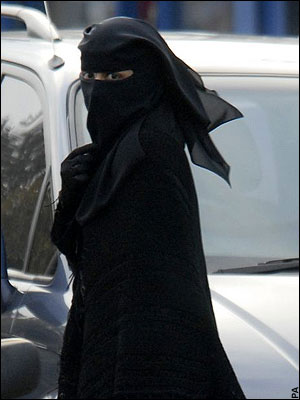
We’ve written about women who choose to wear the niqab before at several places here at Miscellany101, but it is becoming an increasing phenomenon here in America and has caught the eye of main stream corporate media as well. What distinguishes America from her European colleagues in government is she has allowed people to exercise their freedom and not just given lip service to the notion, even if doing so makes others uncomfortable.  That’s the beauty of this country.  It is up to us to insure it remain that way.   I strongly urge you to take a look at the article in its entirety at the link; I will post a brief excerpt for you to read below

HEBAH AHMED (her first name is pronounced HIB-ah) was born in Chattanooga, raised in Nashville and Houston, and speaks with a slight drawl. She played basketball for her Catholic high school, earned a master’s in mechanical engineering and once worked in the Gulf of Mexico oilfields.

She is not a Muslim Everywoman; it is not a role she would ever claim for herself. Her story is hers alone. But she was willing to spend several days with a reporter to give an idea of what American life looks like from behind the veil, a garment that has become a powerful symbol of culture clash.

All that’s visible of Ms. Ahmed when she ventures into mixed company are her deep brown eyes, some faint freckles where the sun hits the top of her nose, and her hands. She used to leave the house in jeans and T-shirt (she still can, under her jilbab), but that all changed after the 9/11 attacks. It shook her deeply that the people who had committed the horrifying acts had identified themselves as Muslims.

“I just kept thinking ‘Why would they do this in the name of Islam?’ ” she said. “Does my religion really say to do those horrible things?”

HEBAH AHMED (her first name is pronounced HIB-ah) was born in Chattanooga, raised in Nashville and Houston, and speaks with a slight drawl. She played basketball for her Catholic high school, earned a master’s in mechanical engineering and once worked in the Gulf of Mexico oilfields.

She is not a Muslim Everywoman; it is not a role she would ever claim for herself. Her story is hers alone. But she was willing to spend several days with a reporter to give an idea of what American life looks like from behind the veil, a garment that has become a powerful symbol of culture clash.

All that’s visible of Ms. Ahmed when she ventures into mixed company are her deep brown eyes, some faint freckles where the sun hits the top of her nose, and her hands. She used to leave the house in jeans and T-shirt (she still can, under her jilbab), but that all changed after the 9/11 attacks. It shook her deeply that the people who had committed the horrifying acts had identified themselves as Muslims.

“I just kept thinking ‘Why would they do this in the name of Islam?’ ” she said. “Does my religion really say to do those horrible things?”

“I was really questioning my life’s purpose,” Ms. Ahmed said. “And everything about the bigger picture. I just wasn’t about me and my career anymore.”

She also reacted to a backlash against Islam and the news that many American Muslim women were not covering for fear of being targeted. “It was all so wrong,” she said. She took it upon herself to provide a positive example of her embattled faith, in a way that was hard to ignore.

So on Sept. 17, 2001, she wore a hijab into the laboratory where she worked, along with her business attire.

“A co-worker said, ‘You need to wrap a big ol’ American flag around your head so people know what side you’re on,’ ” Ms. Ahmed said. “From then on, they never let up.”

Three months later, she quit her job and started wearing a niqab, covering her face from view when in the presence of men other than her husband.

“I do this because I want to be closer to God, I want to please him and I want to live a modest lifestyle,” said Ms. Ahmed, who asked that her appearance without a veil not be described. “I want to be tested in that way. The niqab is a constant reminder to do the right thing. It’s God-consciousness in my face.”

First Person Account of Racism in liberal France


A Jewish Voice Against the Burqa Ban

Even as a Jew in New York, I know of what it is like to be Muslim in France.

While studying abroad in the French city of Strasbourg in 2007, I decided to grow a bushy beard. Little did I know that in France, only traditional Jewish and Muslim men don anything but the most finely trimmed mustache or goatee. Since I did not wear a yarmulke or other head covering, people who saw me on the street assumed that I was Muslim.

I felt that police officers and passersby treated me with suspicion, and even on the crowded rush hour bus, few chose to sit next to me if they could avoid it. On one occasion someone followed me home and tried to start a fight, only to find that I was a bewildered American, not a French Muslim.

Never before, and never since, have I experienced disdain of this sort. On a daily basis, I was made to feel badly because of my appearance — and what was presumed to be my corresponding religious affiliation. So when I read of the effort by French President Nicolas Sarkozy and his supporters to criminalize the burqa (and other garments that fully cover a woman’s body, head, and face) in France, I understood it to be far more than a measure to protect women’s rights or preserve the concept of a secular society, on which the modern French state is built.

In my opinion, it is easy to see how the “burqa ban” might be misused as a part of a broader effort to stigmatize a religious population, one that already perceives itself to be on the margins of society.

Admittedly, I am fundamentally opposed to any garment or religious practice — including those found in my own Jewish tradition — that suggests that women hold a different or subservient position. But the burqa ban in France will not achieve the aim of gender equality. If anything, it will strengthen religious conservatives in France’s Muslim population by convincing members of the moderate majority of Muslims that the rest of French society will never accept them.

While there are said to be only 2,000 women who wear burqas in all of France today, the entire Muslim population, estimated to be around five to six million, will take umbrage at another measure that singles out their community.

If we assume that Sarkozy is genuinely motivated by the belief that the burqa “hurts the dignity of women and is unacceptable in French society,” according to an April 21 article in the New York Times, his best response would in fact be to enact measures welcoming Muslim citizens more fully into French society. Such affirmations would undercut efforts by the small minority of religiously conservative Muslims to gather a following among disaffected coreligionists who feel unable to overcome anti-Muslim prejudice.

The need for the French government to treat religious minorities with respect is bolstered by its own history. In 1781, the enlightened German thinker Christian Wilhelm von Dohm made what at the time was a revolutionary suggestion: “Certainly, the Jew will not be prevented by his religion from being a good citizen, if only the government will give him a citizen’s rights.” But it was the French who first put Dohm’s prophetic vision into action.

In 1806, French Emperor Napoleon Bonaparte emancipated French Jews by passing laws to improve their economic and social status. He invited them to live anywhere they pleased and recognized their religion, affirming its permanent place within the private sphere of French life. Though he did renege on several of his early commitments, Napoleon’s efforts ultimately enabled Jews to become a full part of French society.

Through these acts of profound tolerance over 200 years ago, France set an example for all of Europe and proved that its open-mindedness was more than rhetorical.

Modern France would do well to follow its own admirable example and truly treat Muslim citizens as equal participants in society. Foregoing the burqa ban would be a sensible first step.

Americans Kill Muslims Like Roaches


The American attitude about war in Islamic lands and the genocide nature of that action is so apparent to even the most casual observer, I want to post this article from another observer.

The current American imperial offensive “has all the characteristics of a race war,” and is viewed as such by much of the world. “In Muslim nations, the U.S. treats the inhabitants like roaches, stomping human beings underfoot and cursing them when they scurry to get out of the way.”

The latest American atrocity in Afghanistan – the wanton slaughter of civilians on an inter-city bus near Kandahar – is yet more bloody proof that the United States military offensive in the Muslim world has all the characteristics of a race war. The men, women and children in the packed, full-size bus found themselves suddenly boxed in between two American convoys on a highway of death – a place where the natives are instantly liquidated if they are unfortunate enough to find themselves in proximity to U.S. soldiers. Such highways of death inevitably appear whenever U.S. troops are deployed among populations that Americans think of as less than human.
In Iraq, the road between central Baghdad and the airport was also known among the natives as the “highway of death.” American convoys routinely fired on commuters on their way to work if they felt the Iraqi vehicles got too close. Civilian employees of the United States share in the imperial privilege of killing Muslims at will. In 2005, British mercenaries took a leisurely drive along Baghdad’s “highway of death” playing Elvis Presley records while shooting Iraqi motorists for sport. So confident of impunity were the soldiers of fortune, they videotaped their ghoulish joyride, to entertain friends and relatives back home. And they were right; neither the mercenary killers nor their corporate employers were punished.
In 2007, Blackwater mercenaries opened fire on commuters trapped in a traffic jam in Baghdad’s Nisour Square, killing 17 and wounding at least 20 – apparently because they were bored. But, why not? U.S. troops had been committing mass murder in villages like Haditha for years. Early in the war, they leveled Fallujah, a city larger than Birmingham, Alabama, after first bombing the hospital. Casual killing is a prerogative of imperial occupiers when the natives are considered sub-human.
“They would never behave in such a manner in European.”

In the newly-released WikiLeaks video of a 2007 aerial human turkey-shoot over a suburban Baghdad neighborhood, the voices of the American helicopter pilots and gunners are testimony to the endemic, pathological racism of the U.S. occupying force. The Americans beg their commanders for permission to kill Iraqis milling about on the street below, presenting no threat to anyone. They are thrilled when their cannon fire rips into over a dozen men, including two journalists. “Oh yeah, look at those dead bastards,” says one G.I. When they fire on a car that stopped to aid one of the victims, severely wounding two children, the Americans crack that it served the Iraqis right for bringing children into a battle. But there was no battle, just Americans bringing casual death into an Iraqi neighborhood.

Americans seem unable to resist raining death from the skies on wedding parties in Afghanistan. Apparently, any gathering of Afghans, anywhere, for any reason, is sufficient cause for Americans to unleash high-tech weapons of destruction. They would never behave in such a manner in European countries because, well, people live there. But in Muslim nations, the U.S. treats the inhabitants like roaches, stomping human beings underfoot and cursing them when they scurry to get out of the way. This is race war, pure and simple. The fact that it’s commander-in-chief is a Black man does not alter the character of the crime, one iota.

NOW The Teabaggers Have a Reason to be MAD!


Just when you think it’s safe to have hope in government they go and make a major bo0 boo when it comes to your rights as a citizen.  For now, government is pretty safe in saying they will go after and even KILL Anwar al-Awlaki because as far as everyone is concerned he’s a bad guy and he’s not entitled to the same rights and privileges as the rest of us and that’s because the government said so.  It doesn’t matter that not one shred of proof has been offered other than the government’s claim to Awlaki’s nefarious character, or that we haven’t given him a chance to defend himself against the accusation.  Nor does it seem to matter that his rights as an American citizen are irrelevant as far as the government is concerned; perhaps there are many who assert he isn’t an American citizen, much like the teabaggers who say the same about Obama, and in that he and Obama, oddly enough, have something  in common. What is telling is the government’s premise their position to extra-judiciously kill Awlaki is in ‘strict accordance with the law.‘  He’s no longer considered a ‘militant preacher’ now he’s an operative for al-Qaida based on the kind of evidence that was enough to allow others to stand trial or have access to the judicial system but for him is a death sentence without recourse to the rights guaranteed him by the US Constitution.  However the incremental erosion of citizenship rights by Government means what’s here and allowed today can very easily be taken away tomorrow merely on the declaration of an un-named and in general civics terms unaccountable public  servant.

What bothers this observer is how close the US response to perceived acts of terrorism mimics that of the Israelis who claimed the right to kill any of their enemies whenever and wherever they wanted at the beginning of the 21st century.  Years later Israel is still an insecure, even by their own admission, country that continues to kill its opponents while at the same time further dimming hopes for peace and security.  Simply put, assassinations of political foes does not engender security or peace nor the cessation of hostilities, but rather exacerbates them.  That is a lesson the US, despite the Israeli model, has refused to learn.

What looms on the American horizon is the prospect that any one who resists the government and can be adequately portrayed as evil enough for his death to be accepted by a large segment of the US population stands the risk of having their rights casually dismissed and their life equally dispatched the way of a common criminal without the ability to prove or disprove a charge or legally defend himself. I know that’s enough to get tea baggers angry in this day and age; the existence of a black American as president sets them off.  The polarization of American society has made it possible for people to turn a blind eye to  the idea that one branch of government can unilaterally determine the rights it is willing to extend to a citizen with the citizen having no say in the matter especially when that citizen is not from one group or another.  That can only mean the continued insurgency of the federal government on the rights of its citizen.

Quebec’s witch hunt against niqabi minority


(Our neighbors to the North have been struck with Islamophobia too)

Governments intervene against the religious wishes of Jehovah’s Witness families to give blood transfusions to save the lives of their kin. The Quebec government wants to intervene to deny health care to women whose religious wish is to wear the niqab.

In Saudi Arabia, Iran and parts of Taliban-controlled Afghanistan, police or vigilante militias crack down on women not wearing the niqab or the burqa. In Quebec, authorities want to crack down on women who do.

Quebec officials have already chased down one niqab-wearing woman to oust her from a second French language class after she had been hounded out of her first. The bureaucrats are emulating the gendarmes of autocrats Kemal Ataturk of Turkey in the 1920s and the first Shah of Iran in the 1930s who persecuted women wearing either the niqab or the hijab.

It is scary when a state feels compelled to keep women either covered or uncovered.

It is scarier when majorities in democracies feel threatened by a minority – in this case, a tiny minority within the Muslim minority. Or feel the need to crush an isolated religious or cultural practice. Had such attitudes prevailed in an earlier era, we may not have been blessed today with Hutterites, Orthodox Jews, Sikhs and others in the rich religious tapestry of Canada.

Across Europe and now sadly in Quebec, populations and governments are in a tizzy over a few dozen niqabi women. Sadder still, Quebec is not only out of step with the rest of Canada but has taken a bigoted leap ahead of Europe, the historic home of Islamophobia.

In France – where out of 5 million Muslims, 367 wear the niqab (as counted by the domestic intelligence service, no less) – a parliamentary panel has pondered the issue for a year and suggested a ban from schools and hospitals but nowhere else.

In Denmark – where out of 100,000 Muslims, there are less than 200 niqabis (as estimated by the ministry of social affairs), the government is still mulling a ban.

In Quebec, less than 25 women are said to wear the niqab – of whom only 10 turned up last year at the Montreal office of the provincial health board out of 118,000 visitors.

Yet the obsession with the niqab continues. On the day Jean Charest tabled his anti-niqab bill, Hydro Quebec’s $3.2 billion deal to take over NB Power and gain access to the lucrative U.S. market collapsed – with nary a public concern.

His bill calls not only for showing the face for the legitimate purposes of a photo ID and security. It also bans niqabis from working for, or even receiving services from, government and the broader public sector. These taxpayers may be denied all schooling, including French language instruction, and all non-emergency health care, including regular checkups.

Charest rationalized it on the basis of gender equity, the secular nature of the state, the need to integrate immigrants, and the importance of personal interaction. Except that:

The giant crucifix in the National Assembly will stay.

Property and other tax breaks given the churches will remain, including for the Catholic Church, where women must remain in the pews and not ascend to the pulpit.

Niqabi women will be driven out of the public sphere, end up with less personal interaction with others and be ghettoized. It is a strange way to advance gender equity.

It is argued, as by Nicolas Sarkozy in France, that banning the niqab is not anti-Islamic, since it may not be a religious requirement, as opined by a senior Egyptian cleric last year. We elect politicians not to propound fatwas but to implement secular, democratic laws in an equitable manner for one and all. As for those enamoured of the authoritarian ways of Egypt, they are free to move there.

We are witnessing collective hysteria, prompting even liberal governments to cave in. It was not a pretty sight to see Charest, a Liberal, competing for headlines with Ann Coulter, the Muslim-baiting neo-con from America.

That’s democracy in action, it can be said. But we have seen many ugly manifestations of the popular will before. Targeting the niqabis may not be in the same league as past Canadian sins against some minorities but history should provide us with the perspective to pause.

The Feminist Hypocrisy


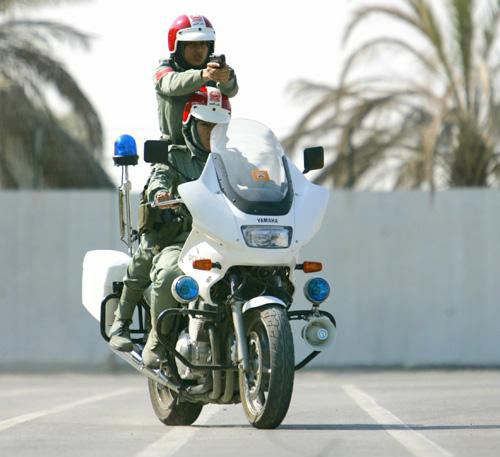
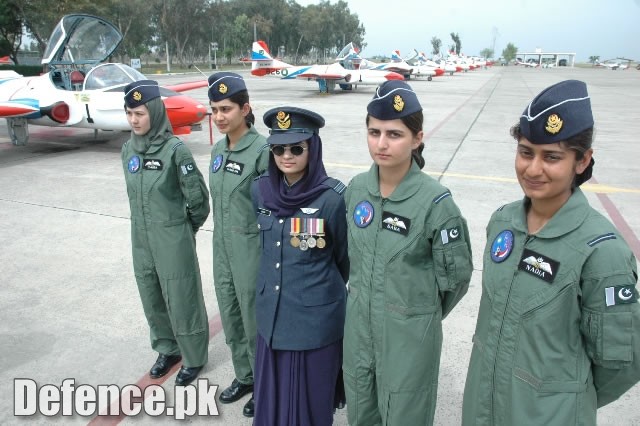
While faux pas French feminist criticize the candidacy of one of their own because of an article of clothing, America’s other allies, Pakistan and the United Arab Emirates have figured out how to make the best use of all of their human resources, men and women, those who wear a scarf and those who don’t but still want to serve their country.  Why a country would want to deny participation of one half of its citizens because of a scarf or a religious belief, even while the very same people want to serve, participate, protect is a study in racism and a mindset that takes people backwards in time we decided was counterproductive or worse.  No forward thinking country should countenance such a philosophy neither should a country support one that does.  A new America would do well to cast its lot with the likes of  Pakistan and the UAE and shun the homophobia that is overtaking Europe, and countries like France and Denmark and clearly and emphatically make a statement that the religious rights of a citizen of a country and that’s citizen’s desire to serve his or her country are the basis of solid, long lasting relationships America will honor.   Anything less than that is contributing more to the problem than to the solution.

New Threat Source Identified at American Muslim Mosques


This alert dropped in my email box today and it’s worth getting out to the public in order to protect themselves from the next terror attack.
Latest news reports are that five terrorist cell groups have been operating in many of our masajid.  They have been identified as:  Bin Gossipin’, Bin Arguin’, Bin Fightin’, Bin Complainin’, and Bin Missin’.
Their leader, Shaitan Bin Iblis, trained these groups to destroy the muslim community. The plan is to enter the masjid disguised as Muslims and to work from within to discourage, disrupt, and destroy.
However, there have been reports of a sixth group. A tiny cell known by the name Bin Prayin’ is actually the only effective counter terrorism force in the masjid. Unlike other terrorist cells, the Bin Prayin’ team does not blend in with whoever and whatever comes along.

Bin Prayin’ does whatever is needed to uplift and encourage the muslim community.  We have noticed that the Bin Prayin’ cell group has different characteristics than the others. They have Bin Workin’, Bin Studyin’, Bin Fastin’, Bin Givin’ and Bin Patiently Perseverin’ in the cause of Allah!

NO MASJID IS EXEMPT!


Another Nail in the Islamophobia Coffin


I’m sure they’ll resurrect some scary headline grabbing anecdote of how Muslims are somehow a threat to the rights of non Muslims, but they can’t find it in the tragedy of the churches being burned in Malaysia.

Muslim groups in Malaysia are offering their help to prevent any further attacks on Christian places of worship amid a spree of attacks on churches in the multi-ethnic, Muslim-majority Asian country, The Star reported on Sunday, January 10. “This is an offer of peace and goodwill,” Nadzim Johan, the executive secretary of the Muslim Consumers Association of Malaysia (PPIM), told a news conference.

“We don’t want our Christian brothers to be in danger.”

PPIM is one of 130 Muslim NGOs that vowed to become the “eyes and ears” of the government to shield churches against attacks.

Seven churches have been fire-bombed or vandalized since Friday in an escalating row over a court ruling allowing Christians to use the word “Allah” as a translation for God in their publications.

The High Court overturned two weeks ago a government ban on the use of the word “Allah,” stirring protests by many Malay Muslims.

The NGOs would be offer volunteers who would be on the look out for any suspicious behaviors and alert the authorities.

“What is important that these people know that they are watched,” insisted Nadzim.

“This has got to stop.”


Somewhere there’s an Islamophobe who must be wringing his/her hands and shouting out ‘damnit’ at what can only be described as an unanimous response by the Muslims of Malaysia against this tragedy in their country.  Damnit indeed!

From your neighbors


Love for Jesus Can Bring Christians, Muslims Together – Ibrahim Hooper

“Behold! The angels said: ‘O Mary! God giveth thee glad tidings of a Word from Him. His name will be Jesus Christ, the son of Mary, held in honor in this world and the Hereafter and in (the company of) those nearest to God.’”

Before searching for this quote in the New Testament, you might first ask your Muslim co-worker, friend or neighbor for a copy of the Quran, Islam’s revealed text. The quote is from verse 45 of chapter 3 in the Quran.

It is well known, particularly in this holiday season, that Christians follow the teachings of Jesus. What is less well understood is that Muslims also love and revere Jesus as one of God’s greatest messengers to mankind.

Other verses in the Quran, regarded by Muslims as the direct word of God, state that Jesus was strengthened with the “Holy Spirit” (2:87) and is a “sign for the whole world.” (21:91) His virgin birth was confirmed when Mary is quoted as asking: “How can I have a son when no man has ever touched me?” (3:47)

The Quran shows Jesus speaking from the cradle and, with God’s permission, curing lepers and the blind. (5:110) God also states in the Quran: “We gave (Jesus) the Gospel (Injeel) and put compassion and mercy into the hearts of his followers.” (57:27)

As forces of hate in this country and worldwide try to pull Muslims and Christians apart, we are in desperate need of a unifying force that can bridge the widening gap of interfaith misunderstanding and mistrust. That force could be the message of love, peace and forgiveness taught by Jesus and accepted by followers of both faiths.

Christians and Muslims would do well to consider another verse in the Quran reaffirming God’s eternal message of spiritual unity: “Say ye: ‘We believe in God and the revelation given to us and to Abraham, Ismail, Isaac, Jacob, and the Tribes, and that given to Moses and Jesus, and that given to (all) Prophets from their Lord. We make no distinction between any of them, and it is unto Him that we surrender ourselves.’” (2:136)

The Prophet Muhammad himself sought to erase any distinctions between the message he taught and that taught by Jesus, who he called God’s “spirit and word.” Prophet Muhammad said: “Both in this world and in the Hereafter, I am the nearest of all people to Jesus, the son of Mary. The prophets are paternal brothers; their mothers are different, but their religion is one.”

When Muslims mention the Prophet Muhammad, they always add the phrase “peace be upon him.” Christians may be surprised to learn that the same phrase always follows a Muslim’s mention of Jesus or that we believe Jesus will return to earth in the last days before the final judgment. Disrespect toward Jesus, as we have seen all too often in our society, is very offensive to Muslims.

Unfortunately, violent events and hate-filled rhetoric around the world provide ample opportunity for promoting religious hostility. And yes, Muslims and Christians do have some differing perspectives on Jesus’ life and teachings. But his spiritual legacy offers an alternative opportunity for people of faith to recognize their shared religious heritage.

America’s Muslim community stands ready to honor that legacy by building bridges of interfaith understanding and challenging those who would divide our nation along religious or ethnic lines.

We have more in common than we think.

Right-click here to download pictures. To help protect your privacy, Outlook prevented automatic download of this picture from the Internet.

I have some good Muslim friends


Tenn_mayorYeah, right.  In a throwback to ‘some of my best friends are Negro’, this Tennessee mayor applies the stereotype to Muslims to cover up his ignorance contained in an email he forwarded where he asks readers to remember a series of “Muslim” terrorist attacks. For example, “Remember the MUSLIM bombing of the World Trade Center in 1993! To use this stamp would be a slap in the face to all those AMERICANS who died at the hands of those whom this stamp honors.”

Choosing to ignore the scores of Muslim victims of 911 and the rather dubious aftermath of the attacks where calls for a more honest and open investigation are being made everyday, Clarksville Mayor Johnny Piper wants to lie and mislead people about that fateful day in American history in order to score points on the Islamophobia battlefied.  In the process he gets most everything wrong, like the assertion that the stamp is new, and its creation was ordered by President Barack Obama, when in fact it has appeared in five of George W. Bush’s eight years in office.

The politics of hate, lies and distortion are being ramped up as people find purpose and comfort in such tactics to reinforce stereotypes and prejudices that have long simmered under the American collective psyche.  People of reason and faith should recognize the tactics of the Pipers of America, call them out on it and discard them as quickly as such people spring up.

Terrorism-The unequal treatment of two religiously motivated crimes


lady-justiceTwo men, one Christian and the other Muslim, commit murder just one day apart in the United States. Both appear to have been motivated by their religious beliefs. The Christian murderer is Scott Roeder and his victim is Dr. George Tiller, a physician from Wichita, KS who performed late term abortions. The Muslim murderer is Abdulhakim Mujahid Muhammad and his victims are Pvt. William Long and Pvt. Quinton Ezeagwula who were new U.S. Army recruiters.

These two murder cases expose the media’s and our legal system’s bias against Muslims. Both crimes seem to fit the definition of terrorism motivated by religious extremism. The media and the legal system, however, are treating these alleged murderers and their crimes very differently.

The Muslim murder suspect, Mr. Muhammad, is charged with terrorism along with first degree murder. Mr. Muhammad’s faith has been front and center from the very earliest news reports. The American-Muslim community’s almost immediate repudiation of Mr. Muhammad’s murder was and still is largely ignored.

On the other hand, the Christian murder suspect, Mr. Roeder, is not being charged with terrorism. His faith has not been the focus of news reports even though there seems to be ample evidence to suggest that Mr. Roeder espouses extreme, right-wing Christian beliefs. And lastly, the media is giving anti-abortion groups ample opportunity to distance themselves from the murderous actions of one of their own.

Let’s start with the terrorism charges. Domestic terrorism is defined as an act that is dangerous to human life (guns were fired in the direction of the victims – this requirement is met) and which is a violation of the criminal laws of the U.S. or any State (both shootings fulfill this requirement) and which appears to be intended to intimidate or coerce a civilian population or to influence the policy of a government by intimidation or coercion or to affect the conduct of a government by, among other things, assassination (an argument for this element can be made in both shootings).

Mr. Muhammad is charged with 15 counts of engaging in a terrorist act. This is in addition to the murder charge. Mr. Roeder is charged with murder but there are no terrorism charges. On the face of both cases there seems to be ample indications that these men committed murder with the objective of intimidating a civilian population or with the intention to influence a government policy.

So, why a terrorism charge in one case but not the other? Both cases are heinous. Both local communities surely want to send the strongest message possible to the public that these crimes will be punished to the greatest extent of the law. And ultimately a judge or jury will decide whether the charges are proven beyond a reasonable doubt so the prosecutor runs little risk by adding the appropriate terrorism charge.

The disparate treatment of these two murder cases began right from the first media reports. Most major newswires and major newspapers focused heavily on Mr. Muhammad’s religion very early on.

The Associated Press reported on Mr. Muhammad’s crime by stating that a “Muslim convert with political and religious motives” shot two uniformed soldiers. The New York Times described Mr. Muhammad as “an American convert to Islam.” CNN reported that Mr. Muhammad is a “Muslim convert”.

Let’s compare the reporting by these same news sources on Mr. Roeder’s murder. The Associated Press is mum on Mr. Roeder’s Christian faith. Ditto for the New York Times and CNN. None of theses same news sources make any mention of Mr. Roeder’s religious affiliation or the obvious role his extremist religious beliefs may have played in the killing of Dr. Tiller.

What exacerbates this obvious bias in reporting is the willingness of the media to offer the anti-abortion groups immediate opportunities to distance themselves from Mr. Roeder’s murder while none of them provided a similar opportunity for the American-Muslim community even as they reported that Mr. Muhammad is a Muslim. Major national and regional American-Muslim organizations issued almost immediate statements condemning Mr. Muhammad’s murderous actions so the excuse cannot be a lack of public condemnation of the murder from the American-Muslim community.

To the American-Muslim community this unequal treatment is at the very least annoying and more likely very troubling. The bad news is that this situation is not going to change in the immediate future.

Not enough Americans know what real Muslims are like. There are up to 7 million Muslims living in America. By contrast there are a few hundred million Christians in America. Suffice to say that Americans feel more familiar with Christian values than they do with Muslim values. They don’t realize just how similar these values are – both faith traditions abhor the killing of innocents and neither faith condones the actions of Mr. Muhammad or Mr. Roeder. Plus, the steady stream of news about Muslim extremists killing others and themselves in suicide missions overseas certainly doesn’t help.

There is only one way for American-Muslims to sway Americans’ opinion of Islam. More Americans need to know what real Muslims are all about. While the media can do its job better by giving a voice to the American-Muslim community, American-Muslims need to take matters into their own hands.

American-Muslims need to become civically engaged. They need to get involved on issues of the common good and not just special interest issues. It has to be at the grassroots level with one on one interactions predicated on substantive work that gives non-Muslim Americans a chance to see firsthand what American-Muslims are all about.

President Obama’s message to the Muslim world, including his numerous nods to American-Muslims was great, but American-Muslims need to do some serious, old school, grassroots relational work of their own.

Hat tip to AltMuslim comment.

The Darfur Deception


by Muhammad Idris Ahmed

Darfur ProtestIn Errol Morris’s 2004 film The Fog of War, former US Defense Secretary Robert McNamara recalls General Curtis LeMay, the architect of the fire-bombings of Japan during WWII, saying that “if we’d lost the war, we’d all have been prosecuted as war criminals.” LeMay was merely articulating an unacknowledged truism of international relations: power bestows, among other things, the right to label. So it is that mass slaughter perpetrated by the big powers, from Vietnam to Iraq and Afghanistan, is normalized through labels such as “counterinsurgency,” “pacification” and “war on terror,” while similar acts carried out by states out of favor result in the severest of charges. It is this politics of naming that is the subject of Mahmood Mamdani’s explosive new book, Saviors and Survivors: Darfur, Politics and the War on Terror.

Like the Middle East, parts of Africa have been engulfed in conflict for much of the post-colonial period. While the media coverage in both cases is perfunctory, in the case of Africa it is also sporadic. To the extent that there is coverage, the emphasis is on the dramatic or the grotesque. When the subject is not war, it is usually famine, disease or poverty — sometimes all together, always free of context. The wars are between “tribes” led by “warlords,” that take place in “failed states” ruled by “corrupt dictators.” Driven by primal motives, they rarely involve discernible issues. The gallery of rogues gives way only to a tableau of victims, inevitably in need of White saviors. A headline like “Can Bono save Africa?” is as illustrative of Western attitudes towards the continent as the comments of Richard Littlejohn, Britain’s highest-paid columnist, who wrote at the peak of the Rwandan genocide “Does anyone really give a monkey’s about what happens in Rwanda? If the Mbongo tribe wants to wipe out the Mbingo tribe then as far as I am concerned that is entirely a matter for them.”

Darfur is the conspicuous exception to this trend, though Rwanda did enter Western vocabulary after the 1994 genocide. This, Mamdani argues, is primarily due to the efforts of one organization — the Save Darfur Coalition (SDC) — whose advocacy has been central to turning this into the biggest mass movement in the United States since the anti-Vietnam mobilization, bigger than the anti-apartheid movement. While the mobilization did have the salutary effect of raising awareness about an issue otherwise unknown to the majority of US citizens, its privileging of acting over knowing renders this less meaningful. Indeed, the campaign’s shunning of complexity, its substituting of moral certainty for knowledge, and its preference for military solutions, precludes the very end that it purports to strive for. Invoking what it claims are lessons of the Nazi Holocaust and the Rwanda genocide, it combines slogans such as “never again” with the battle cries of a new “good war”, such as “boots on the ground”, and “out of Iraq and into Darfur”. Mamdani contends that SDC is not a peace movement, it is a war movement.

The SDC was established in July 2004 through the combined efforts of the US Holocaust Memorial Museum and the American Jewish World Service. It has since been joined by a broad spectrum of political and religious organizations, a gaggle of celebrities and prominent intellectuals. It has spawned student chapters all across the country that range from the high school to university levels. Led by an advertising executive, it is the only organization capable of bringing together such unlikely partners as the Reverend Al Sharpton and author Elie Wiesel, actor George Clooney and former US Ambassador to the UN John Bolton. If the signature activity of the anti-Vietnam war movement was the teach-in, for the SDC it is the advertising campaign. The expert has been replaced by the celebrity, the campaigner by the advertising agent. With an annual budget of $14 million the SDC employs the DC-based PR firm M+R Strategic Services (M&R) for its publicity. While M&R boasts a clientele comprising mainly green and humanitarian non-profits, in 2002 it was exposed by PR Watch for using its progressive credentials to greenwash DuPont, one of the world’s leading polluters. The centrality of propaganda to the SDC’s success was underscored by the fact that in the period between Spring 2007 and January 2008, the president of M&R Bill Wasserman also served as Save Darfur’s executive director.

The apparent diversity of the SDC’s affiliates also obscures the fact that its agenda is mainly driven by Zionist organizations and the Christian Right. However, Mamdani pays scant attention to the composition of the SDC even though he devotes a whole chapter to its politics and methods. As The Jerusalem Post reported ahead of the SDC’s rally in Washington on 30 April 2006, it is “[l]ittle known … that the coalition, which has presented itself as ‘an alliance of over 130 diverse faith-based, humanitarian and human rights organizations’ was actually begun exclusively as an initiative of the American Jewish community.” It noted that even in 2006 that coalition was “heavily weighted” with a “diverse collection of local and national Jewish groups.” The Washington Post reported the same day that “[k]eeping the peace within the diverse Save Darfur Coalition has not been easy” due to tensions, in particular, between evangelical Christians and the mostly Muslim Darfuri immigrants. The Sudanese immigrants also objected to the lineup of speakers which, according to the paper, included “eight Western Christians, seven Jews, four politicians and assorted celebrities — but no Muslims and no one from Darfur” (two were eventually added at the last minute). Ned Goldstein has suggested in his investigation of the Zionist interests behind the SDC that Darfur is being deployed as a strategic distraction from Israeli crimes against the Palestinians (most recently at the UN anti-racism conference). The salient feature of the SDC propaganda is to paint the conflict as war between “Arabs” and “Africans” and to label the violence “genocide.”

The genocide debate hinges on two factors: numbers and identity. For mass violence to qualify as genocide the killing has to be on a large enough scale, and the intent to eliminate a discrete racial, ethnic, or religious group has to be established. Mamdani argues that in order to sustain its claim of genocide, the SDC has inflated casualty figures and racialized the conflict.

The mortality figure of 400,000 has become a staple of SDC propaganda even though it has been repeatedly discredited. In 2007, the British Advertising Standards Authority chided the SDC (and the Aegis Trust) for breaching “standards of truthfulness” in its use of the figure for its UK advertising campaign. The number had already been challenged when a panel convened by the US Government Accountability Office in collaboration with the National Academy of Sciences concluded that of the six estimates they studied, the figures presented by the SDC were the least reliable. The most reliable estimate was the study carried out by the World Heath Organization-affiliated Center for Research on the Epidemiology of Disasters (CRED) that had recorded 131,000 excess deaths at the peak of the conflict of which only 30 percent were due to violence. The violence had dropped sharply after January 2005; this, Mamdani avers, was due mainly to the intervention of African Union peacekeepers. By 2008, the total deaths for the whole year had dropped to 1,500. These numbers are far lower than what constitutes an emergency according to the UN, let alone genocide.

The conflict began as a civil war in 1987-89, driven less by race or ethnic rivalries than by a struggle for land and resources — it pitted the mostly nomadic landless Arabs against the mostly sedentary Fur peasants. Compounded by Khartoum’s botched attempt at land reform during the 1990s, turning it into a party to the civil war, the simmering conflict erupted into a full-scale insurgency in 2003. This eventually led to the government’s brutal counterinsurgency campaign where it turned to nomadic tribes from Darfur and Chad to serve as proxies.

Mamdani identifies three causes as having contributed to the conflict. First, is the history of colonial rule wherein the British went about a project of retribalizing Darfur through a system of native administration which created tribal homelands and introduced a principle of discrimination that privileged “natives” over “settlers.” This led to the dispossession of nomadic tribes, especially the camel nomads of the north. The tribal identities were further solidified through a census that required each registrant to choose a “race”; a written history that presented Arabs as “settlers” from the Middle East; and laws that gave preferential treatment to whoever was deemed a “native”. This narrative also allowed the British colonizers to present themselves as merely following the precedent of an earlier Arab colonization.

Drought and desertification was the second contributing factor. The Sahara’s southern rim expanded by 100 kilometers, forcing nomadic tribes further south and eventually to encroach on the lands of the sedentary Fur tribes.

Finally, the civil war in neighboring Chad where opposition groups armed by Cold War rivals — the US, France and Israel on one side, and Libya and the Soviet Union on the other — had frequently taken refuge in Darfur, leading to a proliferation of weapons and militias. Mamdani explains that the Western powers were involved in the conflict long before the Sudanese government was; and Omar al-Bashir’s Islamist regime wasn’t even in power at the time.

The Arab-versus-African narrative obscures the fact that since at least the British colonial era, Arabs have been Darfur’s most deprived constituency. “If Darfur was marginal in Sudan,” writes Mamdani, “the Arabs of Darfur were marginal in Darfur.” Contrary to the British historiography — whose assumptions have since been reproduced in 20th century nationalist writings — most Arabs arrived in Sudan as refugees fleeing persecution in Mamluk Egypt. Moreover, the diffusion of Arab culture was more a consequence of commerce than of conquest. Mamdani demonstrates that “Arab” is not a racial, ethnic, or cultural identity. It is an assumed political identity that is more a reflection of preference and power than of genealogy. For example, former slaves once freed would become Fur in Darfur, and Arab in Funj, the Sultanate in riverine Sudan where Arabs dominated. To be an Arab in Darfur therefore signifies nothing so much as weakness. The conflict in Darfur today is as much between Arabs (the Abbala camel nomads against the Baggara cattle nomads) as it is against the relatively privileged Fur and Massalit, and the less privileged Zaghawa. The SDC however emphasizes the north-south axis of the conflict that pits Arab against Fur and ignores the south-south Axis which pits Arab against Arab.

The Darfuri rebels likewise defy easy classification. When the insurgency began in 2003, there were two major groups — the Justice and Equality Movement (JEM) and the Sudan Liberation Army (SLA) — they have now split into 26. JEM, which is the largest rebel organization, has an Islamist orientation and draws its inspiration from Hassan al-Turabi, the influential Sudanese Islamist and one time ally of Omar al-Bashir. In contrast, the SLA is secular-Africanist with ties to the Sudan People’s Liberation Army (SPLA) in the South (led by the late John Garang). Before the split between the Islamists in Khartoum, the government had employed Darfuri Islamists led by future JEM founder Khalil Ibrahim for its counterinsurgency in the south. (Ibrahim opposed the power-sharing agreement that ended the war in the south.) However, according to Sudan scholar Alex de Waal, both organizations learned “to characterize their plight in the simplified terms that had proved so effective in winning foreign sympathy for the south: they were the ‘African’ victims of an ‘Arab’ regime.” The government’s response to the insurgency was at first a half-hearted attempt at reconciliation, followed by the arming of a proxy force comprising nomadic militias, many of them from Chad, who have come to be known as the Janjawid. The consequences were devastating, with large-scale bloodletting and the displacement of 2.5 million people.

Khartoum’s use of proxies to quell an insurgency and the resulting death and displacement parallel US policies in Iraq, where ethnic-sectarian militias have been deployed against the mostly-Sunni insurgency. Yet, unlike Iraq, where in excess of a million have died according to the lates ORB poll, and five million displaced, the violence in Darfur has been labeled a genocide. Darfur has also spawned domestic mobilization in the US on a scale for which there is no parallel in the case of Iraq. Mamdani argues that this is due to the fact that Iraq requires Americans to act as citizens, with all the responsibility and complicated political choices it entails, whereas Darfur only requires them to act as humans where they choose to take responsibility out of a sense of philanthropy. He notes that “In Darfur, Americans can feel themselves to be what they know they are not in Iraq: powerful saviors.” As the Nigerian writer Uzodinma Iweala observed, “It seems that these days, wracked by guilt at the humanitarian crisis it has created in the Middle East, the West has turned to Africa for redemption.” In adopting the language of good and evil, Mamdani observes, the SDC has acted as “the great depoliticizer” in precluding political reconciliation in favor of a moral (read military) solution.

In Saviors and Survivors, Mamdani emphasizes regional over international solutions. Western modes of conflict resolution in Africa resemble nothing so much as the International Monetary Fund’s Structural Adjustment Programs: “Those who made decisions did not have to live with their consequences, nor pay for them.” The Western emphasis on the humanitarian crisis in lieu of a political solution merely prolongs the conflict. By contrast, the AU’s approach is both humanitarian and political. The African Union’s (AU) intervention in Darfur had been largely successful in reducing the violence, yet its operation was undermined by Western powers that failed to deliver the support they had pledged when the AU brokered the N’DJamena ceasefire agreement in April 2004. It was also vilified in SDC propaganda. Mamdani asserts that much of the foot-dragging was to discredit the AU so that the notion of an African solution for an African problem could be discredited. The aim was to “blue hat” the AU forces and bring them under Western command. In a Washington Post op-ed pointedly titled “Stop Trying To ‘Save’ Africa,” Iweala asked, “How is it that a former mid-level US diplomat receives more attention for his cowboy antics in Sudan than do the numerous African Union countries that have sent food and troops and spent countless hours trying to negotiate a settlement among all parties in that crisis?”

The recent International Criminal Court case has further entrenched the Khartoum government in its defiant stance. Criminal prosecutions during an ongoing conflict merely exacerbate matters, Mamdani argues. More so when the adjudicating body has a demonstrable record of bias. The model for justice must be the post-Apartheid Truth and Reconciliation Commission rather than Nuremberg — survivors’ justice rather than victors’ justice. The well-being of surviving multitudes must not be subordinated to the imperative of punishing individual perpetrators. Mamdani offers a trenchant critique of what he calls the “New Humanitarian Order,” which has supplanted traditional colonialism and turned human rights into the new pretext for intervention. The “international community”, which Mamdani argues is nothing more than a “post-Cold War nom de guerre for the Western powers”, has created “a bifurcated system whereby state sovereignty obtains in large parts of the world but is suspended in more and more countries in Africa and the Middle East” reducing citizens to wards in “an open-ended international rescue operation”.

The Obama Administration already appears to be making a break with its predecessor’s approach and has ordered a review of its Sudan policy. Scott Gration, the new envoy, has already visited Khartoum and Darfur, as has John Kerry, the chairman of the Senate Foreign Relations Committee. In the case of the Bush Administration, the SDC was able to mobilize Congress against the State Department that was seeking a political resolution modeled on the power-sharing agreement that ended the longstanding conflict in the south. It remains to be seen how much the Obama Administration is able to resist the formidable lobbying power of the SDC. While Mamdani maintains that the aim of the SDC is to induce the US government to intervene militarily in Sudan, it appears that the real interest of its core organizations is to perpetuate the conflict so as to continue using the image of the Arab as the perpetrator to distract from the regional reality of the Arab as the victim.

What does 50 billion dollars get you?


aircraft_carrierThe more I think about Bernard Madoff and his crime of stealing 50 billion dollars of other people’s money the more I’m amazed at what he got away with.  Fifty billion dollars gets you about 10 Nimitz class nuclear powered aircraft carriers and I don’t see anything like that  parked in front of his NYC apartment or in the garage of any of his houses or those of his relatives.  So in addition to wondering how much is 50 billion US dollars is the question, where did it go? That’s a whole lot of money.  Even if it’s squirreled away somewhere, there’s no chance Madoff himself will be able to use it since he’ll be in prison for the rest of his life, and at 70 years of age, that might not be long.

Finally there’s the question, how did this guy manage to steal such a large amount of money from so many people over so long a period of time without getting caught?  The  answer is Madoff has connections who ignored pleas to  officials over a number of years of Madoff’s crimes that he was crooked.  Let’s not forget we’re not talking about a couple of million dollars.  At the time officials were warned Madoff had already squandered several billion dollars and as early as 2001 people were saying there’s something rotten in Denmark with this guy.  Now, I would just love to blame the Republicans for this 50 billion heist because they were the ones who were negligent, and ignored Madoff until the end of Bush’s term.  But accounts claim that Democrats were the recipients of Madoff’s stolen money with contributions he gave to Democratic office holders/seekers, so the responsibility for regulatory blinders  is  no doubt shared.  The question then becomes, is there anyone  in government who thinks it’s wrong to steal 50 billion dollars?  Apparently not. Are all politicians and their political appointees  that crooked?  Apparently so. Fifty billion dollars can buy a lot of influence as well.  Spread out over several decades among money hungry, greedy politicians, no doubt that amount of money can vanish, but with huge rewards for the one distributing it.  It wouldn’t take much for a politician to turn a blind eye to repeated requests to investigate someone who is lining their pockets with untoward amounts of money.

I’ve often read about sleeper cells of Islamic terrorists in the US, which haven’t been discovered yet by the way despite the repeated claims of their existence, but Madoff’s financial manipulation and graft are on a scale that Muslims and any other terrorists would “die” for.  Quite simply, Madoff’s stolen money was used to influence legislation for Madoff’s interests and those of his clients.  He did that while wearing expensive suits, a firmly entrenched member of the financial side of society who was loved and respected by all, yet he bought politicians and advanced causes, especially his own, that were in direct contravention to the interests of America.  He should be water boarded until he tells us where the money went, to whom and for what purpose.  Nothing less than that should be acceptable.