The Feminist Hypocrisy


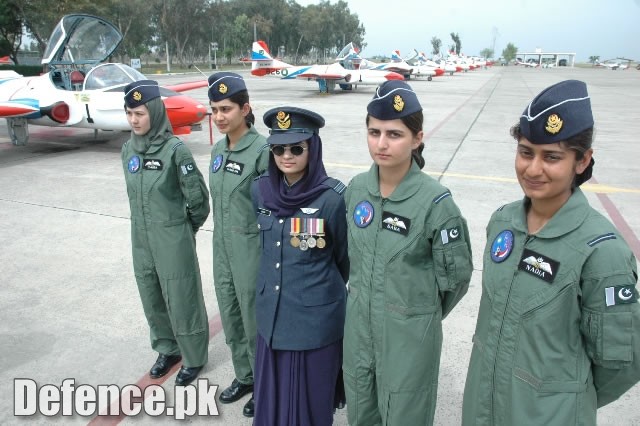
While faux pas French feminist criticize the candidacy of one of their own because of an article of clothing, America’s other allies, Pakistan and the United Arab Emirates have figured out how to make the best use of all of their human resources, men and women, those who wear a scarf and those who don’t but still want to serve their country.  Why a country would want to deny participation of one half of its citizens because of a scarf or a religious belief, even while the very same people want to serve, participate, protect is a study in racism and a mindset that takes people backwards in time we decided was counterproductive or worse.  No forward thinking country should countenance such a philosophy neither should a country support one that does.  A new America would do well to cast its lot with the likes of  Pakistan and the UAE and shun the homophobia that is overtaking Europe, and countries like France and Denmark and clearly and emphatically make a statement that the religious rights of a citizen of a country and that’s citizen’s desire to serve his or her country are the basis of solid, long lasting relationships America will honor.   Anything less than that is contributing more to the problem than to the solution.

France’s Fascism Rears it’s Ugly Head Again!


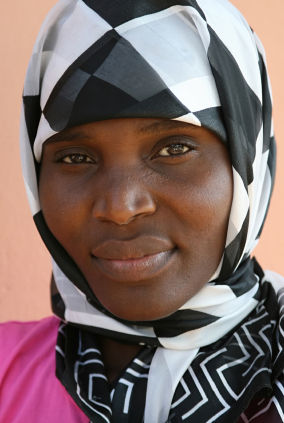
Twenty-first century France  has  replaced 20th century  Nazi Germany as  the European hotbed of political fascism, climbing on the backs of its Muslim population to claim this distinction much like German socialism climbed on the graves and skeletons of the European Jewish minority in the 30s and 40s.  Nationalism and secularism are the reasons given for this decision on the part of French government  to curtail the rights of a vibrant Muslim minority,  making a mockery of the French motto of ‘liberty, equality, fraternity’ while inciting its citizens to turn against one another based on the clothes they wear and the religion they profess.  While the tombstones of French Muslims are desecrated,  French feminists, who claim advocacy of  a woman’s right to choose, bemoan and denounce the candidacy of a French women who supports contraception and abortion rights because she chooses to wear a scarf on her hair!  The hypocrisy of the French position, so steeped in bigotry and irrational hatred have led Ilham Moussaid to point out

It is with great sadness that I watch … my life reduced to my headscarf. It is with great sadness that I hear that my personal beliefs are a danger to others while I advocate friendship, respect, tolerance, solidarity and equality for all human beings.

It would appear based on what she says above, Moussaid is more French than any of her detractors.  Touche!

What You Won’t Find in Corporate Media


muslim_clinicMain stream media and many politicians and other “phobes” have expended a lot of effort to portray Islam and Muslims as a menacing, threatening force in America, despite all the evidence to the contrary.  You can find a lot of  negative publicity about Muslims all over the blogosphere, so I’ll take the time to show you what some of your neighbors are doing to improve relations between the different communities as well as make a positive contribution to their society.  The three health care clinics mentioned in this piece are probably just a drop in the bucket in terms of the service Muslims seek to give to their communities.  The health care clinics in Flint, Michigan, Tampa, Florida and San Bernadino, California offer free health services to citizens of these cities regardless of race, color or creed.  George H.W. Bush called it a thousand points of light, and later on Colin Powell became the focal point for volunteerism nationwide, emphasizing the need for people to get involved in improving the quality of life without relying on big government to do that.  It seems the Muslims in America have taken that advise to heart.  It won’t stop the Islamophobes from their spread wide innuendo and rumor and fear mongering….but it will improve the quality of life of some of the people in the cities and towns where these Muslim professionals are busy at work.

More Iran News on a personal level


I received a copy of this interview between two friends, one of whom is an Iranian studying to be a religious scholar.  The interview took place after the elections amidst the turmoil  and furor over the election results.  There are some interesting revelations in this interview which I took the liberty to highlight in bold.  What the interview reveals is the Iranian street’s  perspective to the recent events taking place there and it differs greatly from what we have been told by corporate media.

Q: Based on the media and resources that you have access to, can you give us a general idea about what you think is happening in Tehran ?

Al: There are several factors in this situation that have come together. There is one segment of the population that did want Mousavi to win the election. These people had done some propaganda to make it seem like Mousavi will get most of the votes. In particular, Tehran … because Tehran is a metropolitan city, you have people with all kinds of backgrounds and thinking. In Tehran itself, [Mousavi] had a lot of supporters. Tehran is part of what we call “Ustan-e-Tehran”, where Tehran is the central city and the “ustan” includes the suburbs and smaller towns surrounding Tehran . An ustan is bigger than a district, but smaller than a province. If you look at the election results, in
these suburbs and small towns in Ustan-e-Tehran, Ahmadinejad got more votes than Mousavi. But in the central city of Tehran, Ahmadinejad got fewer votes than Mousavi.

But you see, Tehran isn’t all of Iran . People in Tehran sometimes think that because they are all supporters of Mousavi, all of Iran must be supporters of Mousavi, but this is not true. Overall, in 2
ustans, Azerbaijan-e- Ghardi and Ustan-e-Sistan- e-Balochistan, Mousavi got more votes than Ahmadinejad. In the rest of the ustans … I think Iran has a total of 24 ustans … in the rest of the 22 ustans, Ahmadinejad took more votes. Even in Ustan-e-Tehran, Ahmadinejad has more votes than Mousavi, but in the Tehran city, Mousavi has more votes.

So what happened is that the people in Tehran thought that he would win, Mousavi, because they had created a sort of atmosphere where they thought that the newspapers there, the Western media, and the American media was supporting him. But if you look at the rest of Iran,
Ahmadinejad has done a lot of good work. I mean, there were projects that would take 7 or 8 or 9 years to complete, and he completed these projects in 2 or 3 years. He brought electricity to places that had none, clean water to places where water wasn’t clean, and many things like this. He has greatly helped the poor people of Iran . The majority of Iran, therefore, was with Ahmadinejad.

That leaves Tehran, the Tehran city particularly. Now here there were groups led by important people like Ayatollah Akbar Hashemi Rafsanjani [a powerful cleric who chairs Iran’s Assembly of Experts, and a former president] and others who said they would support Mousavi. They said they would protest, but they wanted to protest peacefully. They never had the intention to come to Tehran and damage property, break things, or burn things, because in Iran, overall, this is not something that’s in our history. It’s very rare and even if it happens once in many years, it’s done by small groups and it is considered very bad. Whoever you are protesting against, doing these things, damaging and breaking things is considered very bad.

Now Tehran has millions of people, and bringing out a few thousand to protest is not such a big feat. When some of these people were going back recently, they were arrested by the Iranian intelligence and questioned. They said that they were neither with Ahmadinejad, nor
with Mousavi. In fact, they said they hadn’t even voted at all. They said that they had specifically received orders from a lady in England named Zohra, which I think is a fake name, who had given them orders to do all of this breaking and damaging and violence. They recorded her phone calls, and showed it on TV here. I saw it myself. She would call them and give them orders to go out and destroy things, set fire to gas stations, and so on. And now the foreign minister of Iran has
done a press conference and openly said that these people in England are calling people over here and telling them to go out and commit vandalism and violence. They had all of this planned ahead of time, well before the election.

Q: What are the people you know saying about Ayatollah Khamenei’s sermon on Friday?

A: If you noticed, in the khutba [sermon] by the Rahber [the title used to address the Supreme Leader], he mentioned Rafsanjani by name and criticized him, but he also supported him and said good things about him. He also criticized Ahmadinejad, but also supported him. So after
this, Rafsanjani and the other leaders who were supporting Mousavi withdrew from the protests. They said that after the Rahber’s speech, we don’t think it is right to continue this opposition, and the Rahber has now shown us the right path. But some of the small parties and groups supporting Mir Hossein Mousavi and Mehdi Karroubi continued their protests.

Another thing that happened was that during the debates, Ahmadinejad accidentally criticized Rafsanjani and portrayed him in a negative light. As a result, some of Ahmadinejad’ s supporters began to have a negative image of Rafsanjani. On the other hand, Rafsanjani’s people also became angry, saying that Ahmadinejad’s people have maligned them. But then, in his khutba on Friday, the Rahber admonished both Rafsanjani and Ahmadinejad. He scolded Ahmadinejad for saying negative things about Rafsanjani without any proof. Of course Khamenei and Rafsanjani have differences in their opinions. This is normal in politics. It happens everywhere. It does not discredit the other person entirely. Once the Rahber brought everyone together in this way, Rafsanjani’s group withdrew and decided that they will not continue the protests.

The protests that continued after the speech were not done by people here. They were done by foreign influences, like this woman Zohra in England . I saw on the news that yesterday [Saturday], they even burned a mosque. Can you imagine that? You can completely forget about
the idea that any real Iranian, even a supporter of Mousavi, would ever burn a mosque. Anyone who would burn a mosque … this means that he is not even a Muslim. When this news came out over here, everybody became completely convinced that the people doing all of this have been planted from outside Iran. Nobody burns a mosque! I told you before that even burning a bank or another building is something that is considered very bad over here. People here are very educated and civilized.

Q: What about the reported bombing of Ayatollah Khomeini’s tomb? Do you think that this was also carried out by people planted from outside Iran? Could Mousavi’s supporters have done this?

A: See, this is what I’m telling you. This is not the kind of thing that Mousavi’s supporters could have done. They may have had minor grievances with the other side, like the disagreements between Ahmadinejad and Rafsanjani, but these incidents of bombings and destruction are all being done by people outside Iran that have been planted by foreign powers. They were showing on TV here that these are people who were given training in Iraq and then were sent over here to
do these things. These people have been hired and paid.

What do these people want? They want to delegitimize this record-breaking election we’ve had where 85% of people came out and voted. They want people to think that this report of an 85% turnout is fraudulent, that there is all this infighting going on in Iran and people don’t have faith in the system. But the world has seen on the day of the election here, that there were endless lines at the voting stations before voting had even started … in such a big democracy,
where 85% of people came out to vote.

Look, Ahmadinejad got 24 million votes, and Mousavi got about 13 million, and with the rest of the candidates, it’s a total of 39 million people who came out and participated in the process of democracy. Think about that… why would so many people come out and vote if they did not have any faith in the system? Who votes? It is those people who know that they can get justice and a better life through the process. If a person thinks there is corruption and
deception in the system, he wouldn’t bother to vote, he would just stay home. People participated in this election and came out to vote because they accepted the system and had faith in it.

But there are some parts of the process that are very suspicious. First, by law, the final results of the election cannot be certified by the Supreme Leader for a period of at least three days, in order to allow for any grievances that participating candidates may have.
Second, voting was done on paper ballots and counted by hand. How is it possible that 39 million votes were counted in such a short time, just a few hours?

As far as the three day law goes, I have to look into this myself and see what the methodology was exactly. But I will explain what I know to you about the vote counting. During the election, there were about 47,000 polling stations for voting. [I have independently confirmed that this is accurate.] For each station, every candidate was allowed to have a representative
present to oversee the process. Mir Hossein Mousavi had 47,000 representatives, one at each station, and Ahmadinejad I think had 42,000 or something like that. The other candidates had fewer representatives. When the voting ended at 11 pm, they immediately started counting. Once they had the final tallies at each station, the representatives were made to sign off on them, and the numbers were fed into a centrally computerized system where the tallies were collected.

Now, if you divide 39 million votes by 47,000 stations, it comes to 893 votes per station on average. This is a very small number of ballots that can easily be counted in a short period of time, and the final tally from each station was submitted to the central computerized system immediately. They reported the results live on TV as the final tallies came in. Again, remember that the representatives of both candidates at each polling station were required to sign off
on the final tally at that station.

Also, the ballots were present in a booklet, like a checkbook where you can rip out the checks. This is how the ballots were distributed, and like a checkbook, each booklet had a fixed number of ballots. As soon as a booklet was exhausted, they would enter that record into the
computer, so that the computer would keep track of how many booklets had been used up. Even after all of this, the Guardian Council allowed for people to come forward and report any irregularities in writing so that they could be investigated. This was not done at first, but
later, on prompting, when a complaint was filed, the Guardian Council agreed to a partial recount of 10% of the votes.

Q: Speaking of the Guardian Council, Ali Larijani, the pro-Khamenei Speaker of Parliament, has implied that some members of the Guardian Council are taking sides in the situation, which takes away from Khamenei’s statement that this was a clear victory for Ahmadinejad, and even contradicts it–

A: Ali Larijani said this? Really?

Q: Yes, this is what was reported here on Sunday morning.

A: No, no. It’s not true. I watched Ali Larijani on TV just last night [Saturday] and he said that the Western media wants to take our great success in this election with record turnout and portray it in a negative light. He said to the public of Iran that we should be celebrating our wonderful success as a democracy. I saw this myself, on TV, and everyone in Iran saw it, so no one here will ever believe this report. I think the Western media may have taken his words and edited them to quote them out of context.

Q: I also wanted to ask you about your access to the media. Apart from state-run television broadcasts, do you have complete access to the internet, sites like YouTube, Facebook, and Twitter for instance?

A: Yes, we have complete access.

Q: Well, over here, because of the ban on foreign journalists covering the events in Tehran, a lot of the major media outlets have started to broadcast web-based images and videos that are being sent in by people on the ground in Iran . There are literally hundreds of videos and pictures that have come in this way showing large numbers of people protesting, and many of them show brutal violence, home invasions, and so on. There is one particularly gruesome video of a woman named Neda who was shot and killed on camera by paramilitary forces, and it has evoked widespread reaction. Are you familiar with these kinds of events?

A: Look, in Iran, we have a few sources. We have two TV channels, radio, and then we have the newspapers, which are particularly popular among Iranians. Now, we also have the internet, and yes, we are familiar with these videos showing the murders of these people and the violence against them. I can tell you the impression of the people here… they believe that it is the people who are damaging and vandalizing, these planted forces from outside, that are committing these murders. This is what people believe in Iran . You know, one of the biggest pieces of propaganda is that the forces here are allowed to use firearms. They’re not. If you look closely at
these videos, you’ll notice that the legitimate police and officers are using clubs, tear gas, and water canons to control the crowd, not firearms. If you are seeing people using guns and firearms, these are the rogues from outside Iran who are terrorizing the people and vandalizing property. I’m telling you, all of Iran is against these people who are committing these acts of violence and vandalism.
I’ll tell you something which I’m not sure you know. Last week, the
office of the Rahber called on hundreds of thousands of people to celebrate at a place called Meydan-e-Wali- Asr, not because Ahmadinejad won, but to celebrate Iran’s democratic process, to
celebrate our momentous election with a record-breaking turnout. A few days later, people were called out again to demonstrate against these people who were committing acts of violence and vandalism in the protests, and again hundreds of thousands of people came out for that
demonstration. But the international media never covers these kinds of things. Instead, the media is taking a few protests with a few hundred or a few thousand people in Tehran and making them out to be much more significant than they are. And then you have seen the huge crowd that attended the Rahber’s speech at Friday prayers. Again, there were hundreds of thousands of
people who came to hear him and support him, from all over the country. You have seen them on TV. People were so energized and so excited to see the Rahber that the first twenty minutes were just them cheering and chanting slogans praising him.

Who are these people? Are they not Iranians? Just because the media never shows this side of things, everyone thinks that these protesters committing violence is all that is going on here, while the rest of Iran is silent, and there is no other point of view. In fact, most Iranians are upset with the government for not being more aggressive in cracking down on these people.

Q: In that case, why do you think the government isn’t cracking down on these people more aggressively?

A: Because they are mixed in with the normal people. If you know 100% that the people standing in front of you are your enemy, you can be aggressive. But these people are in regular clothing, they are in the middle of the city, where there are also regular people mixed in, working, in the shops, walking around. So you have to be careful in how you go about tackling the situation. This is also why the government forces are not allowed to use firearms. If they fire at them, the rogues will fire back, and they won’t care if the public is in the way. So you have to be careful.

Q: You’re speaking a lot about these videos on the internet that are being exaggerated to mean more than what they are, and you’re also complaining that the media is not covering your side of the situation. However, if the government bans all foreign media outlets as they have, it forces them to rely on these videos, images, blogs, and Tweets as their primary source of information, which you claim are misrepresentative. Does the government understand that this works
against them? Also, why hasn’t your side organized events and made their own videos to present your side of the story?

A: This thing that you’re saying is absolutely right. This is something that is lacking on our side. The supporters on our side should do this more of this kind of work. The people who are supporting Ahmadinejad, our government, and our police force need to express what they think, make videos, and send them out so that people can see the other side. We were discussing this among ourselves the other day. It has been shocking to us to see that what we are witnessing here is so different from what the international media is showing.

Q: There are two websites you should read and let me know what you think, pakalert.wordpress.com and prisonplanet.com. On the second one, there is an article about how the BBC took a picture from a pro-Ahmadinejad rally and claimed that it was a Mousavi rally.  In past protests like the one in 1999, the establishment in Iran was united. However, now there are reports of powerful figures like Rafsanjani and Khatami moving away from Khamenei. Neither of the two was present at the Friday sermon even though they were summoned by Khamenei to attend. Also, on Sunday morning Ayatollah Montazeri declared a period of mourning for those killed in the protests from Wednesday to Friday. Rafsanjani has made a statement saying that the protests and the voice of the people should be respected and supported. Mousavi has also reportedly declared that he is ready for martyrdom. Do you believe that there is a genuine rift in the clerical
establishment?

A: [Expresses surprise at statements from Montazeri and Rafsanjani.] Look, there is no doubt that there are disagreements among some of these men. They are nothing new. Montazeri, although he is respected because he is a mujtahid [the highest rank achievable in Shia religious training], does not have much of a following here. As you know, he was originally selected by Imam Khomeini as his successor, but later the Imam denounced him because of a corruption scandal. It was a dark spot on his character, and although he is learned and respected, he was not qualified to become the next Rahber. He is a controversial figure who gets a lot of attention from the foreign media, but the media and the people here consider him insignificant.

Q: But what about Rafsanjani? There are reports that Jawad Shahristani, the representative and son-in-law of Ayatollah Sistani in Iraq, met secretly with Rafsanjani and the Assembly of Experts in Qom to consider redrafting the system of clerical rule in Iran by establishing a collective ruling body instead of a single Supreme Leader. Are you familiar with this? [Note: Sistani, based in Iraq, is one of the most influential Shia spiritual leaders in the region.]

A; Well, yes, we have heard something like this, that they are considering introducing the system of shoora-e-rahbariya, or a council of mujtahids that act as a supreme authority instead of one supreme leader. But you see, this is nothing new. The late Shaheed Muttahari, who was considered to be … well, you can think of him as number 2 to Imam Khomeini, also suggested the idea of having a mujtahid council. But this idea was not welcomed or accepted among the people. We do have a report from authentic sources that Rafsanjani, on his last trip to Iraq, met with Ayatollah Sistani, who advised him to obey Khamenei. He said that it was not in the interest of Iran to not obey the Rahber, who provides excellent leadership for the country.

The second thing is that if several people get together to float ideas … well, that is the job of the Assembly of Experts, which Rafsanjani is the chairman of. These are people who are mujtahids and are elected by the people of Iran . They keep watch over the supreme leadership, and God forbid if the Rahber makes a mistake or makes a wrong decision, they have the authority to replace him. So there already is a body that oversees these things. If there was a council of people to issue fatwas and edicts, without a singular figure of authority, it would not have as much authenticity and credibility among the people.

At our institution in Qom, in the Imam Khomeini Madrassa, we have many seminars, where ulema [scholars] from around the world come to speak and debate. They disagree very often and have open debates, where they sometimes have completely antithetical views on things. Open academic
discussion and debate are very normal and encouraged here. This does not mean that there are any serious enmities within the clerical establishment.

Q: Do you think, then, that despite their differences, eventually Rafsanjani and Khatami will end up supporting Khamenei?

A: Look, all of these men understand, accept, and revere the system. This is not something they disagree on. They’re united on this. The difference is in their preference of methodology in order to get things done. For example, they often discuss how we should deal with the Western world. One group says that we should be firm and outspoken in our approach. The other says that we should be softer and more diplomatic. For example, Mohammad Khatami may be more open to engaging
in talks and making concessions with the West about Iran’s nuclear program to avoid sanctions and other headaches. Others believe that we should take a harder stance and stand our ground. These disagreements on policy are very normal. They happen in every country in the world.
Remember, even when Mohammad Khatami was president, it was still Khamenei who was the Supreme Leader. Khatami did try his soft approach on the nuclear issue. The Rahber told him to make concessions, but if there is no response or accommodation on the other side, he should go
back to being aggressive. So at the end of his presidency, after Ahmadinejad was elected, Iran returned to the aggressive stance.

Q: Regarding the nuclear issue, Ahmadinejad has said that he wants to develop the nuclear program for energy, not to make a bomb. Khamenei has also issued a fatwa against building a nuclear bomb. Why should the rest of the world believe them?

A: You know, there is one fundamental thing that people in the West don’t understand about Iran, and if they can understand this one basic concept, they will understand many other things. Look, the government of Iran is an Islamic government. Their view is, if there is something that isn’t even allowed in Sharia, something that Islam does not allow us to do, how can we even think of doing this thing? The Rahber has said this many times, and as you said, issued a fatwa against making a nuclear bomb. He has said that if this is something I give permission for, it can jeopardize my own faith and my own stature as a Muslim. It’s against our moral and religious beliefs. America looks at this issue according to their own mentality. They think, we’re lying, so they must be lying too. You can look through all of the speeches of the Rahber, and you will not find a single instance of deception or lying. He cannot do it. If he lies or does something wrong, he cannot stay the Supreme Leader. The Assembly of Experts would have to replace him.

A: One of the biggest problems that people here have with Ahmadinejad is his stance on Israel and his denial of the Holocaust. It is one thing to be critical of Israeli policy, but what purpose does denying the Holocaust and holding conferences dedicated to Holocaust denial serve
in helping Iran’s interests and relations with the rest of the world?

A: Look, if you listen to his words carefully, he doesn’t say that he accepts or denies the Holocaust. He is a university professor, an academic. He looks at it as a historical event, like any other. He doesn’t understand why each event in recorded history is subjected to research and re-evaluation except for this one. In Denmark, they can make cartoons insulting the Holy Prophet and this is defended as freedom of opinion. But in this case, it is taboo to have any opinions
on this issue.

Q: You do see, though, that there are parallels in the way Muslims feel about the Danish cartoons and the way Jews feel about the Holocaust? It is a very personal, emotional issue for them. Academic debate is one thing, but do you think it serves any kind of purpose when people
in powerful political positions express these opinions? If the goal is to try and resolve the Israeli-Palestinian issue, why should people in political positions highlight an unnecessary issue that would only inflame the other side and complicate the potential for a solution? Wouldn’t it be more effective to put the Holocaust issue aside and just focus on the Israeli-Palestinian issue?

A: Again, many of Ahmadinejad’s statements have been misunderstood. He does not reject the Holocaust. Okay, suppose he says the Holocaust happened just as it is recorded in history, without challenging it. It still happened in Europe, right? Why then are the Palestinian people being punished for it? That is the real question.
Also remember, we have 30,000 Jews living in Iran very peacefully. They like the Iranian government. We have always made a clear distinction between Judaism and Zionism. This is very important. Our opposition is to the Zionists, not to the Jews. We have a lot of respect for Judaism … it is also a religion of God, from Abraham.

Q: What kind of approach do you think the people of Iran want to see from President Obama and the United States during this time?

A: The Iranians have always maintained that that the United States should communicate with them at a level of equality, with mutual respect. They should remember that just as they are a nation, we are also a nation. If the United States talks down to Iran like they are our boss, and want to tell us what to do, we will not listen to a word they say. The same goes for Obama. Obama needs to be more honest.. One one hand, he says that we should improve our relations with Iran, and
on the other, he comes out and says he is very upset with the unjust treatment of these people who are committing violence and vandalism in Tehran. He should open his eyes and see how many supporters there are of the government and the Supreme Leader. These 85% that came out to
vote … whoever they voted for, they are still supporters of the Rahber and the government. They vote because they have faith in the system. He should look in the United States . When has the United States had an 85% voter turnout? What do you have, maybe 40%?

Q: Last year, it was around 60%.

A: Okay, 60%. Why was it higher than usual last year? Because people in America had some hopes and expectations in the last election. They had faith in the system and thought that Obama would come and change things. Iranians have the same support for their system. This is why there was such a high turnout. So Obama needs to be more honest, especially with his own people. He is taking their taxes and sending American soldiers into different countries where they are dying for no
reason, to protect the interests of the rich people in the United States. If Obama can stop this and just take good care of his own people, that is good enough, we will not have any problems with him. The American government spends more time protecting the interests of Zionism than it does the interests of its own people. We have never been against the people in America, just the policies of its government.

Q: My last question is a personal one. You still enjoy a very close relationship with your brother, who lives in the West, is non-religious, and has strong secular beliefs. You on the other hand
live in Qom, and are a few years shy of being a religious scholar at the highest (mujtahid) rank. To what extent, if any, have your stark ideological differences had an effect on your relationship?

A: You know, as I’ve lived and studied here, I have learned many things. My faith teaches me that human beings are the creations of God, and God has created this world and everything in it for human beings. This is very important. God has given human beings a great stature, and thus humanity is of great importance. If there is any ideology that is against this universal concept of humanity … this is what we are at war with. This concept is present in all belief systems. These other systems and religions only differ in how they translate this concept of humanity. We may try to help them understand our beliefs and they will try to help us understand theirs, but we will never fight them. We will only fight those who are enemies of humanity, those who humiliate others, abuse them, make mental and physical slaves of them, or think of them as lesser beings.

I believe that as human beings, we should worship and praise our Creator. But this service to God shouldn’t be of the kind that harms others. For example, you can say that you’re secular, that you don’t believe in a god, and you don’t believe in worship. You don’t think it’s required of you. So your ideology is different. But based on this, we will never clash with each other. Whoever truly understands Islam will never wage war against you for not believing. This is why I will never have a conflict with my brother.
However, if someone’s ideology says that I am a lesser person, that he rules over me, or he’s my boss, we will probably clash with each other. This is what I mean when I say our conflict is not with Jews or Judaism, but with Zionism. We place great importance on this difference.

Q: Thank you for taking the time to speak with me.

A: Thank you. Continue reading “More Iran News on a personal level”

The French Government and Hypocrisy- One and the same


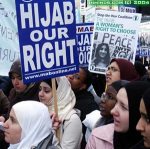
lorealLet me see if I understand this correctly, the French government can impose limits on what a hijab-demo-17jan04-741person can wear or not wear in order to attend government schools, yet a private company cannot say who it can hire to be sales staff for its products, even when the people appearing in those products are people of color?

France can ban the wearing of religious symbols even when those wearing them are doing so of their own free will in an expression of their religious beliefs in a society thatsupposedly  promotes, liberty, fraternity and equality, while insisting at the same time that companies do not have the right to determine who they can  employ in selling their products?  No one sees the slightest bit of hypocrisy in the French position?

People, who of their own free will,  practice a faith that may be different and not customary to the wider society  and choose to wear clothes that express themselves in ways different than the majority, but who are at the same time law abiding citizens who do not  frighten or intimidate others, should not have laws legislated which seek to limit or curtail that expression.  In fact the beauty of liberty and freedom means acts of social interaction are interpreted based on the law, which should should not be enacted to deny expression, but rather the acts of illegality that expression may or may not encourage.  Therefore, if a school girl walking down a French street is the victim of sexual harassment or assault it is the perpetrator of that action who should be limited not the girl wearing an article of clothing.   What the French want to do is take the act of discipline off their hands by removing the object of people’s ire, and in the process limit the freedom of its citizens.

Likewise, companies who have broadly used women of color in their advertising campaigns but choose to hire a sales staff they think may be able to sale their product to a broad based clientele should not have the weight of the State descend on them in a punitive way.  L’Oreal in France has to have the support of a majority of women of color in order to be profitable.  If hiring people that reflect a certain demographic will give them that market, how can the State justify changing that dynamic and jeopardizing the viability of the Company?  Will the State then say that the public MUST buy certain products in order to insure the success of a company so that it doesn’t go under because of the financially oppressive measures of the State?  Don’t be surprised if that happens next.

For now, France is following in the tradition of other western countries that seek to use expressions of liberty and freedom as slogans  which fall quickly when government wants to intervene in the lives of its citizens.  The tools the state uses for this intervention are usually fear and loathing of opponents who are unknown or unfamiliar.  Civilized people should recognize such tactics for what they are.  Ignorant people are too easily persuaded and succomb to the deceit.  The two cases above highlight how France is counting on the latter with its citizens!  Que sera, sera!

The face of Islam in America


aminahassilmiIt’s varied, multi-racial and ethnic, and for the most part peaceful and prosperous.  It seeks to live with its neighbors and contribute to the well being of its co-religionists and the society in general.  It is NOT the monster portrayed in the media, out to destroy the American way of life.  It is the American way of life.  The story below is a case in point.

I was completing a degree in Recreation, when I met my first Muslims. It was the first year that we had been able to pre-register by computer. I pre-registered and went to Oklahoma to take care of some family business. The business took longer than expected, so I returned to school two weeks into the semester (too late to drop a course).

I wasn’t worried about catching up my missed work. I was sitting at the top of my class, in my field. Even as a student, I was winning awards, in competition with professionals.

Now, you need to understand that while I was attending college and excelling, ran my own business, and had many close friends, I was extremely shy. My transcripts actually had me listed as severely reticent. I was very slow to get to know people and rarely spoke to anyone unless was forced to, or already knew them. The classes I was taking has to do administration and city planning, plus programming for children. Children were the only people I ever felt comfortable with.

Well, back to the story. The computer printout held one enormous surprise for me. I was registered for a Theatre class…a class were I would be required to perform in front of real live people. I was horrified! I could not even ask a question in class, how was I going to get on a stage in front of people? My husband was his usual very calm and sensible self. He suggested that I talk to the teacher, explain the problem, and arrange to paint scenery or sew costumes. The teacher agreed to try and find a way to help me out. So I went to class the following Tuesday.

When I entered the classroom, I received my second shock. The class was full of ‘Arabs’ and ‘camel jockeys’. Well, I had never seen one but I had heard of them.

There was no way I was going to sit in a room full of dirty heathens! After all, you could catch some dreadful disease from those people. Everyone knew they were dirty, not to be trusted either. I shut the door and went home. (Now, there is one little thing you should know. I had on a pair of leather hot pants, a halter top, and a glass of wine in my hands…but they were the bad ones in my mind.)

When I told my husband about the Arabs in the class and that there was no way I was going back, he responded in his usual calm way. He reminded that I was always claiming that God had a reason for everything and maybe I should spend some time thinking about it before I made my final decision. He also reminded me that I had a scholars award that was paying my tuition and if I wanted to keep it, I would have to maintain my G.P.A.. Three credit hours or ‘F’ would have destroyed my chances.

For the next two days, I prayed for guidance. On Thursday I went back to the class convinced that God had put me there to save those poor ignorant heathens from the fires of hell.

I proceeded to explain to them how they would burn in the fires of hell for all eternity, if they did not accept Jesus as their personal savior. They were very polite, but did not convert. Then, I explained how Jesus loved them and had died on the cross to save them from their sins. All they had to do was accept him into their hearts. They were very polite, but still did not convert. So, I decided to read their own book to show them that Islam was a false religion and Mohammed was a false God.

One of the students gave me a copy of the Qur’an and another book about Islam, and I proceeded with my research. I was sure I would find the evidence I needed very quickly. Well, I read the Qur’an and the other book. Then I read another 15 books, Sahih Muslim and returned to the Qur’an. I was determined I would convert them! My studies continued for the next one and half years.

During that time, I started having a few problems with my husband. I was changing, just in little ways but enough to bother him. We used to go to the bar every Friday and Saturday, or to a party, and I no longer wanted to go. I was quieter and more distant. He was sure I was having an affair, so he kicked me out. I moved into an apartment with my children and continued my determined efforts to convert the Muslims to Christianity.

The, one day, there was a knock on my door. I opened the door and saw a man in a long white night gown with a red and white checkered table cloth on his head. He was accompanied by three men in pajamas. (It was the first time I had ever seen their cultural dress.) Well, I was more than a little offended by men showing up at my door in night clothes. What kind of a woman did they think I was? Had they no pride or dignity? Imagine my shock when the one wearing the table cloth said he understood I wanted to be a Muslim! I quickly informed him I did not want to be a Muslim. I was Christian. However, I did have a few questions. If he had the time….

His name was Abdul-Aziz Al-Shiek and he made the time. He was very patient and discussed every question with me. He never made me feel silly or that a question was stupid. He asked me if I believed there was only one God and I said yes. Then he asked if I believed Mohammed was His Messenger. Again I said yes. He told me that I was already a Muslim!.

I argued that I was Christian, I was just trying to understand Islam. (Inside I was thinking: I couldn’t be a Muslim! I was American and white! What would my husband say? If I am Muslim, I will have to divorce my husband. My family would die!)

We continued talking. Later, he explained that attaining knowledge and understanding of spirituality was a little like climbing a ladder. If you climb a ladder and try to skip a few rungs, there was danger of falling. The Shahadah was just the first step on the ladder. Still we had to talk some more.

Later that afternoon, May 21, 1977 at Asr’, I took Shahadah. However, there were still some things I could not accept and it was my nature to be completely truthful so i added a disclaimer. I said: “I bear witness that there is no god but God and Mohammed is His Messenger” ‘but, I will never cover my hair and if my husband takes another wife, I will castrate him.’

I heard gasps from the other men in the room, but Abdul Aziz silenced them. Later I learned that he told the brothers never to discuss those two subjects with me. He was sure I would come to the correct understanding.

The Shahadah was indeed a solid footing on the ladder to spiritual knowledge and closeness to God. but it has been a slow climb. Abdul Aziz continued to visit me and answer my questions. May Allah reward him for his patience and tolerance. He never admonished me or acted like a question was stupid or silly. He treated each question with dignity and told me that the only stupid question was the one never asked. Hmmm…my grandmother used to say that.

He explained that Allah ahd told us to seek knowledge and questions were one of the ways to accomplish that. When he explained something, it was like watching a rose open – petal by petal, until it reached its full glory. When I told him that I did not agree with something and why, he always said I was correct up to a point. The he would show me how to look deeper and from different directions to reach a fuller understanding. Alhamdulillah!

Over the years, I had many teachers. Each one special, each one different. I am thankful for each one of them and the knowledge they gave. Each teacher helped me to grow and to love Islam more. As my knowledge increased, the changes in me became more apparent. Within the first year, I was wearing hijab. I have no idea when I started. It came naturally, with increased knowledge and understanding. In time I even came to to a proponent of polygamy. I knew that if Allah had allowed it, there had to be something good in it.

“Glorify the name of thy Guardian – Lord Most High, Who hath created, and further, given order and proportion; Who hath measured, and granted guidance; and Who bringeth out the (green and lush) pasture, and doth make it (but) swarthy stubble, By degrees shall We teach thee (The Message), so thou shalt not forget, except as Allah wills: for He knoweth what is manifest and what is hidden. And We will make it easy for thee (to follow) the simple (path).” (Al-A’la 87:1-8)

When I first started to study Islam, I did not expect to find anything that I needed or wanted in my personal life. Little did I know that Islam would change my life. No human could have ever convinced me that I would finally be at peace and overflowing with love and joy because of Islam.

This book spoke of THE ONE GOD, THE CREATOR OF THE UNIVERSE. It described the beautiful way in which He had organised the world. This wondrous Qur’an had all the answers. Allah is The Loving! Allah is the Source of Peace! Allah is the Protector! Allah is the Forgiver! Allah is the Provider! Allah is the maintainer! Allah is the Generous One! Allah is the Responsive! Allah is the Protecting Friend! Allah is the Expander!

“Have we not expanded thee thy breast? And removed from thee thy burden the which did gall thy back? And raised high the esteem (in which) thou (art held)? So, verily, with every difficulty, there is relief: Verily, with every difficulty there is relief!” (Al-Ishirah, 94: 1-6)

The Qur’an addressed all the issues of existence and showed a clear path to success. It was like a map forgiving, an owner manual for life!

How Islam changed my Life
“How much more we love the light…If once we lived in Darkness.”

When I first embraced Islam, I really did not think it was going to affect my life very much. Islam did not just affect my life. It totally changed it.

Family life: My husband and I loved each other very deeply. That love for each other still exists. Still, when I started studying Islam, we started having some difficulties. He saw me changing and did not understand what was happening. Neither did I. But then, I did not even realise I was changing. He decided that the only thing that could make me change was another man. There was no way to make him understand what was changing me because I did not know.

After I realised that I was a Muslim, it did not help matters. After all…the only reason a woman changes something as fundamental as her religion is another man. He could not find evidence of this other man…but he had to exist. We ended up in a very ugly divorce. The courts determined that the unorthodox religion would be detrimental to the development of my children. So they were removed from my custody.

During the divorce, there was a time when I was told I could make a choice. I could renounce this religion and leave with my children, or renounce my children and leave with my religion. I was in shock. To me this was not a possible choice. If I renounce my Islam….I would be teaching my children how to be deceptive. For there was no way to deny what was in my heart. I could not deny Allah, not then, not ever. I prayed like I had never prayed before. After the thirty minutes was up, I knew that there was no safer place for my children to be than in the hands of Allah. If I denied him, there would be no way in the future to show my children the wonders of being with Allah. The courts were told that I would leave my children in the hands of Allah. This was not a rejection of my children!

I left the courts knowing that life without my babies would be very difficult. My heart bled, even though I knew, inside, I had done the right thing. I found solace in Ayat-Ul-Khursi.

“Allah! There is no god but He – the Living, the Self-subsisting, Supporter of all. No slumber can seize him nor sleep. His are all things in the heavens and on earth. Who is there can intercede in His presence except as He permitteth? He knoweth what (appeareth to His creatures as) Before or After or Behind them. Nor shall they compass aught of His knowledge except as He willeth. His Throne doth extend over the heavens and the earth, and he feeleth no fatigue in guarding and preserving them for He is Most High, The Supreme (in Glory).” (Al-Baqarah, 2:255)

This also got me started looking at all the attributes of Allah and discovering the beauty of each one.

Child custody and divorce were not the only problems I was to face. The rest of my family was not very accepting of my choice either. Most of the family refused to have anything to do with me. My mother was of the belief that it was just a phase and I would grow out of it. My sister, the ‘mental health expert’ was sure I had simply lost my mind and should be institutionalised. My father believed I should be killed before placed myself deeper in Hell. Suddenly I found myself with no husband and no family. What would be next?

Friends: Most of my friends drifted away during that first year. I was no fun anymore. I did not want to go to parties or bars. I was not interested in finding a boyfriend. All I ever did was read that ‘stupid’ book (the Qur’an) and talk about Islam. What a bore. I still did not have enough knowledge to help them understand why Islam was so beautiful.

Employment: My job was next to go. While I had won just about every award there was in my field and was recognised as a serious trend setter and money maker, the day I put on hijab, was the end of my job. Now I was without a family, without friends and without a job.

In all this, the first light was my grandmother. She approved of my choice and joined me. What a surprise! I always knew she had alot of wisdom, but this! She died soon after that. When I stop to think about it, I almost get jealous. The day she pronounced Shahadah, all her misdeeds had been erased, while her good deeds were preserved. She died so soon after accepting Islam that I knew her ‘BOOK’ was bound to be heavy on the good side. It fills me with such joy!

As my knowledge grew and I was better able to answer questions, many things changed. But, it was the changes made in me as a person that had the greatest impact. A few years after I went public with my Islam, my mother called me and said she did not know what this ‘Islam thing’ was, but she hoped I would stay with it. She liked what it was doing for me. A couple of years after that she called again and asked what a person had to do to be a Muslim. I told her that all person had to do was know that there was only ONE God and Mohammed was His Messenger. Her response was: “Any fool knows that. But what do you have to do?” I repeated the same information and she said: “Well…OK. But let’s not tell your father just yet.”

Little did she know that he had gone through the same conversation a few weeks before that. My real father (the one who thought I should be killed) had done it almost two months earlier. Then, my sister, the mental health person, she told me that I was the most ‘liberated’ person she knew. Coming from her that was the greatest compliment I could have received.

Rather than try to tell you about how each person came to accept Islam, let me simply say that more members of my family continue to find Islam every year. I was especially happy when a dear friends, Brother Qaiser Imam, told me that my ex-husband took Shahdah. When Brother Qaiser asked him why, he said it was because he had been watching me for 16 years and he wanted his daughter to have what I had. He came and asked me to forgive him for all he had done. I had forgiven him long before that.

Now my oldest son, Whittney, has called, as I am writing this book, and announced that he also wants to become Muslim. He plans on taking the Shahadah as the ISNA Convention in a couple of weeks. For now, he is learning as much as he can. Allah is The Most Merciful.

Over the years, I have come to be known for my talks on Islam, and many listeners have chosen to be Muslim. My inner peace has continued to increase with my knowledge and confidence in the Wisdom of Allah. I know that Allah is not only my Creator but, my dearest friend. I know that Allah will always be there and will never reject me. For every step I take toward Allah, He takes 10 toward me. What a wonderful knowledge.

True, Allah has tested me, as was promised, and rewarded me far beyond what I could ever have hoped for. A few years ago, the doctors told me I had cancer and it was terminal. They explained that there was no cure, it was too far advanced, and proceeded to help prepare me for my death by explaining how the disease would progress. I had maybe one year left to live. I was concerned about my children, especially my youngest. Who would take care of him? Still I was not depressed. We must all die. I was confident that the pain I was experiencing contained Blessings.

I remembered a good friend, Kareem Al-Misawi, who died of cancer when he was still in his 20’s. Shortly before he died, he told me that Allah was truly Merciful. This man was in unbelievable anguish and radiating with Allah’s love. He said: “Allah intends that I should enter heaven with a clean book.” His death experience gave me something to think about. He taught me of Allah’s love and mercy. This was something no one else had ever really discussed. Allah’s love!

I did not take me long to start being aware of His blessings. Friends who loved me came out of nowhere. I was given the gift of making Hag. Even more importantly, I learned how very important it was for me to share the Truth of Islam with everyone. It did not matter if people, Muslim or not, agreed with me or even liked me. The only approval I needed was from Allah. The only love I needed was from Allah. Yet, I discovered more and more people, who for no apparent reason, loved me. I rejoiced, for I remembered reading that if Allah loves you, He causes others to love you. I am not worthy of all the love. That means it must be another gift from Allah. Allah is the Greatest!

There is no way to fully explain how my life changed. Alhamdulillah! I am so very glad that I am a Muslim. Islam is my life. Islam is the beat of my heart. Islam is the blood that courses through my veins. Islam is my strength. Islam is my life so wonderful and beautiful. Without Islam, I am nothing and should Allah ever turn His magnificent face from me I could not survive.

“O Allah! let my heart have light, and my sight have light, and my hearing (senses) have light, and let me have light on my right, and let me have light on my left, and let me have light above me, and have light under me, and have light in front of me, and have light behind me; and let me have light.” (Bukhari, vol. 8. pp. 221, #329)

“Oh my Lord! Forgive my sins and my ignorance and my exceeding the limits (boundaries of righteousness) in all my deeds and what you know better than I. O Allah! Forgive my mistakes, those done intentionally or out of my ignorance or (without) or with seriousness, and I confess that all such mistakes are done by me. Oh Allah! Forgive my sins of the past and of the future which I did openly or secretly. You are the One who makes the things go before, and You are the One who delays them, and You are the Omnipotent.” (Bukhari, vol. , pp. 271, #407)

Pedophilia in Israel and other non-kosher news


Evidently Old Testament law allows for marriage with young girls like it’s sister religions.

A 14-year-old Israeli girl has got a divorce from her 17-year-old husband, making her what media are describing as the country’s youngest divorcee. The two sweethearts had exchanged vows in front of friends, exchanged a ring, and the union had been consummated.

The pair went on to get a divorce after the boy’s parents offered the bride a sum she couldn’t refuse.  I like the rather casual and informal nature of their wedding ceremonies; gather a few friends, get a ring and voila, you’re married!    We could go digging through scripture and find where marriage with girls even younger is justified in Judaic religious law just as the Islamophobes have done, providing us with voluminous and erroneous information about this subject as it applies to Islam, but I’ll spare the readers what would be a chore for me.  However, there’s more!!

Pigs are now kosher in Israel’s illegal occupation of Palestinian territory.  Some Israelis think pigs are better at detecting terrorists than dogs.  At first when I read this article I thought the settlers were hoping the pigs would be protection against Palestinian intrusion on their land, a kind of natural animalistic force field. Evidently it’s against religious law to raise pigs so this is a big step to get approval allowing  them.  Perhaps pig farms will be in Israel’s future, in which case there might be something to the purported claim that Israelis are the descendants of monkeys and pigs.  I guess for now they’ll have to import them, the pigs that is, from their main ally, the US.  Oink!

Here we go again….


A Charlotte, NC credit union wants to discriminate against its customers who wear scarves, hats, sunglasses, et.al.  Of course the move is aimed against Muslim women who wear the hijab as a part of their wardrobe when out in public; all the other folks mentioned in the news report can easily doff their offending clothes item.

The credit union says it’s their way of protecting their employees from bank robbers. (I really wonder how many banks have been held up by women wearing hijab?) but Rose Hamid has it right…it’s simply the bank’s way of taking an offensive jab at Muslims in America and humiliate those Muslim women who are its patrons. No one should pay anyone else to subjugate them to second class citizen status, so, here’s a shout out to the Muslims in the Charlotte area…psssst.  Take your business elsewhere.

American Muslims carving their own niche


muslimsIslam has always been in America; it’s almost as American as apple pie, just like its sister religions, Judaism and Christianity.  However, with it has come the historical baggage of these three great monotheistic religions, each taking its turn on the sacrificial altar of distrust and dislike against the other two.  Since Islam in America is a homegrown phenomenon, its adherents have had the luxury of defining themselves and what they think their mission is, yet that definition has sometimes been at odds with what other Muslims not native to America have had in mind, and the result is the two groups have butt heads a time or two.  I ran across this letter that speaks to that confrontation and the resulting frustration that has arisen as a result. Hat tip to Muslim Matters!

So Very Tired

Dear brothers and sisters in Islam, and specifically you in North America who will understand this best.

I have a problem.

I know where I came from, I know who I am, and I have a pretty good idea of where I want to go.

But I am tired.

Tired of the Muslim Identity Crisis Conferences.  Tired of Muslims in America conferences.  You’re a human being that was created for the sole purpose of worshipping the One who created you.  Get over it and move on.

Tired of confused pseudo-intellectuals who keep trying to legitimize their deepest, darkest insecurities under the cover of academic acceptance.  Women can’t lead men in prayer, and homosexuality will never be acceptable.

Tired of the explicit condemnation of Muslim terrorists that comes without the explicit condemnation of all terrorism, particularly against Muslims.  Can the Ummah of Muhammad please unite, the Ummah of the likes of Umar ibn al Khatab, Khalid ibn Waleed, Sad ibn abi Waqqas, and Hamza please find the necessary pieces of spine required to call George Bush et al what they are?

Speaking of which, I’m tired of the games Muslim politicians and political organizations play to put a position forward that deludes no one except yourselves for believing they’d believe you.

Tired of victim-culture fatwas that turn every situation into a necessity, and that coddles our ummah into weakness for the sake of ease and some overarching goal of dawah that never seems to be properly articulated in simple, coherent language.

Tired of Islamic teachers of any calibre who complain about the adab and khuluq of people and are badly in need of it themselves, in all forms of communication.

Tired of all the acronymed organizations and their leadership, and their inability to establish an agreed upon method for moonsighting.  Really.  All the opinions are correct, so please, just put them all in a hat, draw one out, and if you all unite on it, we’ll follow it.  Even me.  I promise.

Tired of the word Islamophobia.  Who came up with this ridiculous word?  Whoever it was, they need to be shot…with a super soaker.  I want to curl myself up in the fetal position every time I hear that word.

Tired of you telling me we need fiqh of minorities, and that we should combine prayers in the work place.  This isn’t Muslim Spain, we have rights that can be exercised – please stop cowering in the corner, or at least stop trying to get us to join you there.

Tired at your exasperation over Barack Obama not wanting to talk to you during the election.  Who would want to talk to a pack of sniveling lackeys who have no respect for themselves and act as though they are embarassed at the religion they profess to follow?

And I’m tired of you acting like Obama’s theMahdi incarnate.  We only rooted for him because we wanted to stick it to GWB, not because we like his politics of homosexuality, late term abortions, and worst of all, restarting the war in afghanistan.

I’m so, so very tired of it all.  And if you looked at the list above, you may be tired of it as well.  But you know what?  I’m tired of you too.

Tired of you sitting behind your computer, writing in a style that makes you sound like ranting and raving lunatic.

Tired of you complaining about everything and doing absolutely nothing.

Tired of the online chickenhawk hate brigade who hates everything about America and happily pay their taxes after clicking “Submit” on their latest online rant against it.

Tired of people who call for Hijrah and never go, citing the reasons of the people who are against hijrah – “But dude, there are no ANSAR on the other end, otherwise, like, I’m sooo there!”  It’s called planning, genius, see lessons of the Prophet’s (SAW) escape from Makkah for a primer on how to plan AHEAD.

Tired of your open hatred of all nonMuslims / kafirs in the name of al wala w’al bara.  Yes, I said kafirs.  Does that make you feel better?  Then I’m also tired of your pettiness.

Tired of your delusions of mind and intention reading.  Don’t you see the potential aqida problems here?

Tired of your PDF refutations.  I have absolutely no idea who the author of the document is, or his credentials to say and interpret as he has.  Please tell me what you understand, or don’t bother.

Tired of you taking every fiqh issue and making it an aqeedah issue such that if it’s not in accordance with what the scholar du jour spoonfed you yesterday, that person must most certainly either be off the manhaj, a sell-out, or both.

And I’m tired of you not knowing anything about the fundamentals of Islam, like, for example, the Seerah!

Tired, tired, tired.

Did you like the list above?  Really?  I’m tired of you too.

Tired of you expecting everyone to follow you blindly and stupidly.

Tired of you looking down your nose at people who are far more qualified to deal with logic, analogy, and argumentation and telling them, “But you don’t know Arabic.”  Yeah, I don’t know latin either, but if I have a medical condition, my doctor will still explain it to me, and if he’s any good, he’ll tell me to get a second opinion if I have doubts.

Tired of your partisanship, and tired of you calling it a mercy.  Really?  Coulda fooled me.  Visit my community on the first and last day of Ramadan, I’ll show you mercy.

Tired of you expecting me to disconnect my mind on fiqh, believe the most ridiculously esoteric ideas about God, and then strive for spiritual ecstacy.  Are you kidding me?

But I’m not done yet, oh no – I’m tired of you too.

Tired of you prioritizing your career, your family, and all your weaknesses over the worship of Allah.

Tired of you complaining to scholars about what a victim you are.

Tired of you saying you need to live in a house.  You liar.  You can rent a house – you just don’t want to lose money.  Admit it.

Tired of you looking for easy fatwas rather than picking yourselves up by the bootstraps and working at being a Muslim, and struggling with the challenges.

Tired of your back home mentality that keeps the child you think is fair from marrying an African American.  The only thing black here is your heart.

Tired of you believing your donations entitle you to run the masjid.

Tired of the way you run the masjid.  It stinks, figuratively and literally.

Tired of you complaining about the poor ethics of Muslim governments, while you have the same ethics, the only thing separating you and them is the scale of the violation.

Tired, tired, tired, so very tired.

The ironic thing of all this is that despite all that, I still love you for the sake of Allah.  As I said to begin this letter, you are my dear brothers and sisters in Islam.  I have my flaws, I have my weaknesses, and I am by no means perfect.  At any point in my life, I could have fit into multiple categories in that complaint list.

But do you know why I’m tired?  I’m tired because we have so many issues, and I feel obligated to do something about all of it.  I want to fix it.  I want to make it right.  You probably do too.

In the end, we are here to worship Allah.  I don’t know a lot, but I know that much.  All I can do is ask Allah to guide us all to come together, to be the people whom He Loves, to be people whom He will be pleased with.

Islam is here to stay, so let’s move on


amalAmericans, and those who live within its borders, come in all shapes, sizes and colors, and while some of the American dream and the meaning of the words, ‘send me your tired and your poor; your huddled masses yearning to be free’ has not always turned out the way those huddled masses wanted at the time, America has been a largely successful experiment.

It is however, a work in progress, continually defined, reshaped, molded in a way that meets the needs of most of the 300 million plus who live within its borders.  America has seen all sorts of people come and go.  Many have blended and integrated themselves into the social fabric, indistinguishable from the whole, while others have chosen to retain their identities.  The common thread has always been the rule of law that’s kept the entire cloth from unravelling.

Sure there are times in the Nation’s history we can point to when the administration of the law has not been equitable, but social agitation (something sorely missed in today’s citizenry) always corrected that inequity which resulted in a better mix of brown, whites, reds, and yellows.  We discovered along the way that it wasn’t necessary to lose those colors or attitudes in the elixir of America; that sometimes it was healthy to keep them distinguished not seperated, visible, not homogenized, ‘in order to form a more perfect union.’

So it is that now we have black, white, Jew, Gentile, Muslim unbeliever living, perhaps askew, but in relative peace and with the knowledge they can take their grievance to the Law should the need arise.  This is what happened to Amal Hersi  a Somali American Muslim woman who was told service at a credit union was only possible if she blended and forsake her Muslim identity.

For Amal this was not an option, so she took her case to a higher authority, in this instance the people in charge of the credit union.  No doubt the employee of the bank forgot their roots, forgot that despite the finely coiffed hair and contemporary styled clothes they wore that day, they most likely had an acestor, perhaps not too far in their past who looked like Amal and chose to stay that way…….or not.  Most likely that distant relative decided when he/she ran into an obdurate public servant bent on defining their place in the American fabric they weren’t going to bend and that act of resistance made it possible for Amal to refuse today, which made the quilt that much more pretty and pliable for the common good.

Muslim women in the West have defined their role as one of modesty wrapped in clothes they’ve chosen to express their identity.  In most cases, if not all, it is their conscious choice to wear hijab just as they also choose to obey the law and just as there is no penalty for embracing the latter, neither should there be for the former.  The officials of the credit union, more in touch with the spirit of the Law than the wayward employee who started this all, recognized that instantly and issued a statement which said in part:

Navy Federal values and respects all its members. Working with the law enforcement community, we have recently implemented a policy to make sure we can positively identify everyone we serve in our many branches.

Navy Federal weighed very carefully the need to accommodate religious and cultural customs, as well as medical conditions. Our policy does not prohibit nor discourage the use of headscarves, and will make sure it’s thoroughly understood to all employees.

I salute them and nothing further needs to be addressed to them. To the employee who lost her way I would encourage a quick visual primer on American history. Perhaps they will see someone they know or someone who looks like them. While they’re at it they’ll most likely see someone who looks like Amal Hersi too.

WOT=War on Islam?


There’s no mistake that America had every reason to be angry at what happened on September 11, 2001, but that tragedy was used by some to take out centuries old grudges against people in the Middle East and steer America on a course which has led it to become a violator of international treaties and agreements unparalleled in our nation’s history.  Nowhere is that exemplified more than with Guantanamo Bay where scores of Muslim men were snatched up from all over the world and placed in an isolated military camp where they were tortured for no apparent reason.

An Algerian man who spent nearly seven years in Guantanamo Bay says his U.S. interrogators never questioned him on the main terrorism allegation against him.

Mustafa Ait Idir, who was freed this week and returned to his adopted homeland of Bosnia, was accused of planning to go to Afghanistan to fight against U.S. forces.

“They’ve never asked anything about charges which were brought against us. They’ve never asked about Afghanistan,” he told Reuters in an interview.

Ait wasn’t captured on some battlefield endangering the lives of US servicemen and women, rather he was taken from his country, Bosnia and imprisoned in Gitmo Bay after his own country’s court had determined he was innocent of the charges for which the US government picked him up. It seems however that US authorities were interested in Islamic relief organizations working in Bosnia, which appears to be even the focus of officials even here in America.  (The Holy Land Foundation trial recently concluded in Texas is an example where relief efforts particularly for Palestinians suffering under the worse case of state sponsored terrorism were shut down under flimsily constructed charges.)

The charge for which the US picked up Ait, conspiring to attack the US embassy in Sarajevo,  was dropped by authorities while he was in Gitmo and a US federal judge ordered and government officials acceded to the order that he be released from his unlawful imprisonment, but why was he picked up in the first place?

From this observer’s perspective it appears America has given into its dark side, filled with sadism and masochistic fantacies played out in our artistic and entertainment culture which could be acted out in reality against an enemy we were told only responded to such brutality.  The Bush administration was/is not the least bit interested in fighting its true enemies it merely wanted bodies, the 21st century version of the body count notion that came out of the Vietnam war, to fill up Guantanamo and justify its existence.

At a Pentagon briefing in the spring of 2002, a senior Army intelligence officer expressed doubt about the entire intelligence-gathering process.

“He said that we’re not getting anything, and his thought was that we’re not getting anything because there might not be anything to get,” said Donald J. Guter, a retired rear admiral who was the head of the Navy’s Judge Advocate General’s Corps at the time.

*snip*

In 2002, a CIA analyst interviewed several dozen detainees at Guantanamo and reported to senior National Security Council officials that many of them didn’t belong there, a former White House official said.

Despite the analyst’s findings, the administration made no further review of the Guantanamo detainees. The White House had determined that all of them were enemy combatants, the former official said.

Rather than taking a closer look at whom they were holding, a group of five White House, Justice Department and Pentagon lawyers who called themselves the “War Council” devised a legal framework that enabled the administration to detain suspected “enemy combatants” indefinitely with few legal rights.

The threat of new terrorist attacks, the War Council argued, allowed President Bush to disregard or rewrite American law, international treaties and the Uniform Code of Military Justice to permit unlimited detentions and harsh interrogations.

The group further argued that detainees had no legal right to defend themselves, and that American soldiers — along with the War Council members, their bosses and Bush — should be shielded from prosecution for actions that many experts argue are war crimes.

This attitude that the executive could unilaterally re-write or even ignore existing law is a theme that has been consistently explored during the Bush administration and found expression in a doctrine known as  “unilateral executive”. With this gloves off approach, people in the field were allowed to do whatever they wanted; there were no limits to the power or the abuse they could reap on people under their control and consequentially torture and physical abuse were more normal than not.

(Ait) said he was kept for four months, lightly dressed, in a very cold refrigerated container. For short periods of the day he was taken outside, where it was very hot. Other prisoners were subjected to long periods in total darkness or very bright light, he said.

There was torture every minute,” Ait Idir said. “It did not matter to them if we were terrorists or not.

Indeed.

Mumbai’s tragedy: Good news


Terrorism in all its forms is an unacceptable ideology which should be dealt with by the full force of the international community.  The Muslim community of India has gotten off to an excellent start.

Indian Muslims say they do not want the gunmen killed by the security forces during the attacks in Mumbai to be buried in Muslim graveyards.

Community leaders believe the militants cannot be called Muslims because they went against the teachings of Islam and killed innocent civilians.

One leader said the militants had “defamed” the religion.

*snip*

…they could not believe that the assailants, who they said had “killed innocent civilians unprovoked”, were true followers of Islam.

Ibrahim Tai, the president of the Indian Muslim Council, which looks after the social and religious affairs of the Muslim community in India, said that they had “defamed” his religion.

“They are not Muslims as they have not followed our religion which teaches us to live in peace.

“If the government does not respect our demands we will take up extreme steps. We do not want the bodies of people who have committed an act of terrorism to be buried in our cemeteries.

“These terrorists are a black spot on our religion, we will very sternly protest the burial of these terrorists in our cemetery,” he said.

Other Muslim groups have written to their local assembly representatives to say that if the authorities force the militants to be buried in a Muslim graveyard, they too will come out on the streets in protest.

Having thrown down the gauntlet it will be interesting to see how the Indian government responds to its Muslim citizens’ demands that terrorists not be interred in Muslim cemeteries and who among the “evil doers” will insist upon it given a clear expression by Muslims that that not be the case.

Colin Powell-In Your Face!


I  really was not that much of a fan of Colin Powell, but I might change my mind after his blistering endorsement of Obama where he scorched today’s  REPUBLICAN PARTY, taking no prisoners.  He said what Obama should have said, and what I have been hollering for him to say ever since the RACIST RIGHT has made being a Muslim an issue.  In case you missed it, this is what Powell said:

I wish more people would stand up to this right wing cabal that has played every racist card in their deck to keep Americans off balance and in the dark while they rob the country blind of its money and its wealth of freedom and liberty.  I hope Powell’s declaration in support of Obama will start a trend long missing in the political arena where people are confronted when they make racist, insane accusations against other Americans because of their dislike or hatred of them.  It’s clear we still have a tendency to do that here and not talking about it has only made it worse in the last eight years.  Powell said some things that needed to be said and I take my hat off to him.  Finally, some one with balls!  In fact, in my opinion, more balls than the man he’s endorsing, but at this stage in his life, Powell has nothing to lose and such a proclamation is appropriate for him to make.  Surely he’ll receive a lot of political fall out for it, but why should he or any of us care?  There’s more at stake than the professional career of someone who’s on the downswing of that career.  Powell’s imagery made us all confront our prejudices, that though we may have, should never get in the way of our rights and freedoms as citizens of this great country.  Oh, and it’s more than appropriate to show you the mother  who made Colin Powell proud to be American….and me too.

How refreshing


to read someone write about Islam and not be apologetic, and especially when it is a woman! My wildest dream is that this woman be appointed to a cabinet level position in an Obama administration. My typing that probably insures his defeat among this widely hysteric Islamophobic electorate, but I don’t care and I don’t think the author of this piece does either, so here goes. (hat tip to Taalib)

Spare Me the Sermon On Muslim Women By Mohja Kahf

Crimson chiffon, silver lamé or green silk: Which scarf to wear today? My veil collection is 64 scarves and growing. The scarves hang four or five to a row on a rack in my closet, and elation fills me when I open the door to this beautiful array. Last week, I chose a particularly nice scarf to slip on for the Eid al-Fitr festivities marking the end of the month of Ramadan.

It irks me that I even have to say this: Being a Muslim woman is a joyful thing.

My first neighbor in Arkansas borrowed my Quran and returned it, saying, “I’m glad I’m not a Muslim woman.” Excuse me, but a woman with Saint Paul in her religious heritage has no place feeling superior to a Muslim woman, as far as woman-affirming principles are concerned. Maybe no worse, if I listen to Christian feminists, but certainly no better.

Blessings abound for me as a Muslim woman: The freshness of ablution is mine, and the daily meditation zone of five prayers that involve graceful, yoga-like movements, performed in prayer attire. Prayer scarves are a chapter in themselves, cool and comforting as bedsheets. They lie folded in the velveteen prayer rug when not in use: two lightweight muslin pieces, the long drapey headcover and the roomy gathered skirt. I fling open the top piece, and it billows like summer laundry, a lace-edged meadow. I slip into the bottom piece to cover my legs for prayer time because I am wearing shorts around the house today.

These create a tent of tranquility. The serene spirit sent from God is called by a feminine name, “sakinah,” in the Quran, and I understand why some Muslim women like to wear their prayer clothes for more than prayer, to take that sakinah into the world with them. I, too, wear a (smaller) version of the veil when I go out. What a loss it would be for me not to have in my life this alternating structure, of covering outdoors and uncovering indoors. I take pleasure in preparing a clean, folded set for a houseguest, the way home-decor mavens lay elegant plump towels around a bathroom to give it a relaxing feel.

Tassled turquoise cotton and flowered peach crepe flutter as I pull out a black-and-ivory striped headscarf for the day. When I was 22 and balked at buying a $30 paisley scarf, my best friend told me, “I never scrimp on scarves. If people are going to make a big deal of it, it may as well look good.”

I embraced that principle, too, even when I was a scratch-poor graduate student. Today I sort my scarves, always looking to replace the frayed ones and to find missing colors, my collection shrinking and expanding, dynamic, bright: The blue-and-yellow daisy print is good with jeans, the incandescent purple voile for a night on the town, the gray houndstooth solidly professional, the white chambray anytime.

As beautiful as veils are, they are not the best part of being a Muslim woman — and many Muslim women in Islamic countries don’t veil. The central blessing of Islam to women is that it affirms their spiritual equality with men, a principle stated over and over in the Quran, on a plane believers hold to be untouched by the social or legalistic “women in Islam” concerns raised by other parts of the Scripture, in verses parsed endlessly by patriarchal interpreters as well as Muslim feminists and used by Islamophobes to “prove” Islam’s sexism. This is how most believing Muslim women experience God: as the Friend who is beyond gender, not as the Father, not as the Son, not inhabiting a male form, or any form.

And the reasons for being a joyful Muslim woman go beyond the spiritual. Marriage is a contract in Islam, not a sacrament. The prenup is not some new invention; it’s the standard Muslim format. I can put whatever I want in it, but Muslims never get credit for that. Or for having mahr, the bridegift that goes from the man to the woman — not to her family, but to her, for her own private use. A mahr has to have significant value — a year’s salary, say. And if patriarchal customs have overridden Islam and whittled away this blessing in many Muslim locales, it’s still there, available, in the law. Hey, I got mine (cash, partly deferred because my husband was broke when we married; like a loan to him, owed to me whenever I want to claim it) — and I was married in Saudi Arabia, a country whose personal-status laws are drawn from the most conservative end of the Muslim spectrum.

I had to sign my name indicating my consent, or the marriage contract would not have been valid under Saudi Islamic law. And, of course, I chose whom to marry. Every Muslim girl in the conservative circle of my youth chose her husband. We just did it our way, a conservative Muslim way, and we did it without this nonsensical Western custom of teenage dating. My friends Salma and Magda chose at 16 and 17: Salma to marry boy-next-door Muhammad, with whom she grew up, and Magda to marry a doctor 10 years her senior who came courting from half a world away. Both sisters have careers, one as a counselor, one as a school principal, and both are still vibrantly married and vibrantly Muslim, their kids now in college.

I held out until I was 18, making my parents beat back suitors at the door until I was good and ready. And here I am, still married to the guy I finally let in the door, 22 years (some of them not even dysfunctional) later. My cousin, on the other hand, broke off a marriage she contracted (but did not consummate) at 16 and chose another man. Another childhood friend, Zeynab, chose four times and is looking for Mr. Fifth. Her serial monogamy is nothing new or radical; she didn’t pick up the idea from reading Cosmo or from the “liberating” influence of U.S. troops in Afghanistan. It’s simply what a lot of women in early Muslim history did, in 7th- and 8th-century Arabia.

And would you guess that we’ve also been freer to divorce and remarry than Christian women have been for most of history? In medieval times, when Christian authorities were against divorce and remarriage, this was seen as another Islamic abomination. Now that divorce and remarriage are popular in the West, Muslims don’t get credit for having had that flexibility all along. We just can’t win with the Muslim-haters.

Here’s another one: Medieval Christianity excoriated Islam for being orgiastic, which seems to mean that Muslims didn’t lay a guilt trip on hot sex (at least within what were deemed licit relationships). Now that hot sex is all the rage in the post-sexual revolution West, you’d think Muslims would get some credit for the pro-sex attitude of Islam — but no. The older stereotype has been turned on its head, and in the new one, we’re the prudes. Listen, we’re the only monotheistic faith I know with an actual legal rule that the wife has a right to orgasm.

Of course, I’m still putting in my time struggling for a more woman-affirming interpretation of Islam and in criticizing Muslim misogyny (which at times is almost as bad as American misogyny), but let me take a moment to celebrate some of the good stuff. Under Islamic law, custody of minor children always goes first to the mother. The Quran doesn’t blame Eve. Literacy for women is highly encouraged by the traditions of the Prophet Muhammad. Breast-feeding is a woman’s choice and a means for her to create family ties independent of male lineage, as nursing creates legally recognized family relationships under Islamic law. Rapists are punishable by death in Islamic law (and yes, an atavistic part of me applauds that death penalty), which they certainly are not in any Western legal code. Birth control allowed in Islamic law? Check. Masturbation? Let’s just say former surgeon general Joycelyn Elders’s permissive stance on that practice is not unknown among classical and modern Muslim jurists. Abortion? Again, allowances exist — even Muslims seem not to remember that.

It’s easy to forget that Muslims are not inherently more sexist than folks in other religions. Muslim societies may lag behind on some issues that women in certain economically advanced, non-Muslim societies have resolved after much effort, but on other issues, Muslim women’s options run about the same as those of women all over the world. And in some areas of life, Muslim women are better equipped by their faith tradition for autonomy and dignity.

There are “givens” that I take for granted as a Muslim woman that women of other faiths had to struggle to gain. For example, it took European and American women centuries to catch up to Islamic law on a woman’s fully equal right to own property. And it’s not an airy abstraction; it’s a right Muslim women have practiced, even in Saudi Arabia, where women own businesses, donate land for schools and endow trusts, just as they did in 14th-century Egypt, 9th-century Iraq and anywhere else Islamic law has been in effect.

Khadija was the boss of her husband, our beloved Prophet Muhammad, hiring him during her fourth widowhood to run caravans for her successful business; he caught her eye, and she proposed marriage to him. Fatima is the revered mother figure of Shiite Islam, our lady of compassion, possessed of a rich emotional trove for us. Her daughter Zainab is the classic figure of high moral protest, the Muslim Antigone, shaking her fist at the corrupt caliph who killed her brother, her tomb a shrine of comfort for millions of the pious. Saints, queens, poets, scribes and scholars adorn the history of Muslim womanhood.

In modern times, Muslim women have been heads of state five times in Muslim-majority countries, elected democratically by popular vote (in Bangladesh twice and also in Turkey, Indonesia and Pakistan). And I’m not saying that a woman president is necessarily a women’s president, but how many times has a woman been president of the United States?

Yet even all that gorgeous history pales when I open my closet door for the evening’s pick: teal georgette, pink-and-beige plaid, creamy fringed wool or ice-blue organza? God, why would anyone assume I would want to give up such beauty? I love being a Muslim woman. And I’m always looking for my next great polka-dot scarf.

Oh no they don’t!


I saw this editorial and thought how naive of someone to write.   The GOP doesn’t have to accept ANY group of people, and especially Muslims.  I still shake my head at the way the Republican Party treated Sami al-Arian who urged the Muslims of Florida to vote for George Bush in 2000 and then spent the last five years in prison, persecuted by the very party he supported. The GOP has had one major policy battle success after another on the backs of “Islamophobia” and its announcements of the arrests of various Muslim groups and personalities here in the US and abroad.  As for the US arrests, very few of them have amounted to much in the way of revealing a terrorist base, instead they have ended up as immigration violations that merely amounted to paperwork issues.  That hasn’t stopped the Republicans from sounding the alarm over the Muslims in our midst, as we have seen with this latest shameful approach.  I’m a little disappointed by some who stand outside a political establishment banging on the door to be let in or crying to be included.  It’s really a little unbecoming.  I understand where it comes from, however.  Minorities in America have always wanted to participate in American politics, and this very act is a sign of their respect for the institutions this country holds dear, so it’s a good thing to see a Muslim writer say they should be included in the American political process, but it’s beneath human dignity to demand inclusion with those who are oppressing you.  What Muslims should do, and any other group that thinks it is not welcomed among the two major American political parties is what other progressive Americans who are equally interested in the “process” do; form their own party which addresses their concerns and those of other dispossessed groups in America.  As the writer of the editorial mentions, the Republican National Convention was held in a city that elected the first Muslim Democrat to the US Senate who had a broad enough appeal to get elected in a state with a Muslim population of less than 5,000.  So grassroots politics is what Muslims of America should get involved in, but with the goal of defining a party that suits their needs as citizens of the US, not asking for inclusion with a party that exploits and persecutes them.  The former takes a lot of work, the latter is laziness.  Muslims would do well to remember the verse from the Quran, ‘for every difficulty there is relief.’

Computer game encourages killing Muslims


Since the end of the article below says the game became popular because of bloggers who linked to it, let me be one of the bloggers who links to it, not because I want people to play the game which features killing Muslims but because I want someone to hack the game and change the players around a bit.  Let’s see how quickly the game would come down if it featured Christians and Muslims killing Sikhs and Jews, or hmm..let’s say Sikhs and Muslims killing Christians and Hindus, or Hindus and Sikhs killing Jews and Buddhists or Muslims killing Jews, or better yet, Palestinians killing Israelis or Anglicans killing Roman Catholics.  Here’s the article.

A computer game in which players control an American soldier sent to “wipe out the Muslim race” has been condemned as offensive and tasteless by a British Muslim group.

The goal of Muslim Massacre, which can be downloaded for free on the internet, is to “ensure that no Muslim man or woman is left alive”, according to the game’s creator.

Players control an “American Hero” armed with a machine gun and rocket launcher who is parachuted into the Middle East.

Users progress through levels, first killing Arabs that appear on screen and later taking on Osama bin Laden, Mohammed and finally Allah.

The game’s creator, a freelance programmer known as Sigvatr, described the game on the SomethingAwful.com website as “fun and funny”.

In a “How you can help” section, he writes to visitors: “Don’t whinge about how offensive and ‘edgy’ this is.”

British Muslim youth organisation The Ramadhan Foundation expressed its “deep condemnation and anger” at the game.

The group said: “This game is glorifying the killing of Muslims in the Middle East and we urge ISP providers to take action to remove this site from their services as it incites violence towards Muslims and is trying to justify the killing of innocent Muslims.

“We have written to the British Government to urge an inquiry into this game and take action to shut down the site. This is not satire but a deliberate attempt to demonise Muslims.”

The foundation’s chief executive, Mohammed Shafiq, added: “Encouraging children and young people in a game to kill Muslims is unacceptable, tasteless and deeply offensive.

“There is an increase in violence in this country and some of it comes from video games. When kids spend six hours a day on violent games they are more likely to go outside and commit violence.

“If it was the other way around, with a game featuring Muslims killing Israelis or Americans, there would be uproar and rightly so.

“I would urge ISPs to take action against sites like this and there can be no justification for this sort of video game. I hope the person who made this game thinks again.”

The game was first released in January this year but has become more popular in recent days after being linked to by several prominent blogs.

One that got away


Islam is a moderate voice on the American stage, despite the screeching of some who use it to scare and intimidate Americans into self-serving goals that have more to do with politics than the preservation of the American fabric. Mohammad Qatanani was a target used by such people who wanted him to be a poster boy for their hate, claiming he was a member of Hamas who hid his affiliation with that organization in order to infiltrate America and spread his Islamic deception far and wide throughout this country. But by their works you shall know them or something like comes from the good book as Qatanani who cooperated with US authorities encouraged everyone else to do the same despite all the hate filled rhetoric directed towards him. In so doing he gained the admiration and respect of FBI agents, Jewish Rabbis, and local, state and federal members of the legislative branches of government, even though there were others in government, notably the Department of Homeland Security who wanted Qatanani deported. Well, the news is he won’t be, or at least not for now, although DHS still has 30 days to appeal a judge’s decision that their case was weak and without merit and Qatanani can stay put in the US.

A prominent Muslim cleric, celebrated for his moderation by supporters but accused of ties to a terrorist group by the U.S. Department of Homeland Security, today won his bid to call the United States his permanent home.

In his 69-page decision, Immigration Judge Alberto Riefkohl said Homeland Security officials had presented a case weak on evidence and credibility in their effort to cast Imam Mohammad Qatanani as someone who had had ties to Hamas, a Palestinian terrorist organization, and who had lied about it to obtain a so-called green card here.

Riefkohl, often using blunt language in his written decision, said that records obtained by Homeland Security officials from Israeli authorities were “too unreliable to prove that Mr. Qatanani has engaged in terrorist activities.”

He added: “The court also finds DHS’s other evidence is insufficient.”

Outside court on the 11th floor the Peter F. Rodino Federal Building in Newark, the imam’s supporters praised the decision, and said it would bolster their community’s faith in the U.S. justice system. Many Muslims and Arabs saw the government’s deportation effort as evidence that Muslims and Arabs, regardless of their views, are stereotyped as terrorist, or terrorist sympathizers.

Aref Assaf, head of the American Arab Forum in Paterson, said earlier that the case had been watched closely by Muslims and Arabs across the United States as well as overseas.

We have been working well with the FBI, the U.S. Attorney’s office, and immigration, mostly because of the imam and his encouragement to us to cooperate and work with the government,” Assaf explained.

This of course is not the image the government wants you to have, a cooperating, civic minded Islam that identifies itself with the environment in which it voluntarily places itself. Instead Islam has to be defiant, menacing, uncooperative, in order to propel the propaganda that it’s a threat to the survival of the nation. In that sense, Qatanani is one that escaped the snare of the government’s trap and most likely will live to tell about it. Congratulations to him, his family, friends and supporters. Ramadan will have just a little more meaning for them and America will be a better place because of that.

Muslim patriotism in the US military


I’ve heard a lot from people especially on the right about problems associated with having Muslims involved in anything American, as if the presence of Muslims is a threat to the process or would somehow leave it tainted. I remember vividly during the first Gulf war when America was concerned about its image, a lot was said about Muslims in the US military and especially those who converted to Islam because of their exposure to the Gulf. Now, however, those same people some of whom are still in the military and those who joined later are “tainted” goods, worthy of suspicion and distrust. America is cannabalistic in that sense when it comes to anyone other than blond hair and blue eyed soldiers fighting its wars. From the Civil War upto the Vietnam war people of color have always been looked down upon as unworthy of service in the US military. Today is no different, except now we have bloggers who point out to those who care to know stories of patriotism in the US military that work for the country. Check out this story of a young man who volunteered to join the military in response to Bush’s war on terror.
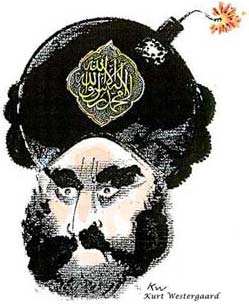
Islam, anti-semitism and France


We all remember the caricature of the last Messenger which appeared in European newspapers, some times more than once, as an act of solidarity with the Danish publishers where the cartoon originated. The worldwide reaction of Muslims ran the entire gamut of emotions from anger to demands that the offending cartoon be retracted to calls for the resignation of the cartoonist and/or the editor of the newspaper. European publishers insisted on their rights to a free press saying they would not be intimidated by any reaction no matter how violent or incendiary. Other publications printed the offending cartoon as an act of solidarity with the Danish publications. Sometime later, newspapers again published the cartoon, in my opinion, as an act of provocation hoping to get a reaction from Muslims which would be prominently displayed across the front page of newspapers around the world, but the basic premise of freedom of the press to publish a cartoon even if billions of people found it offensive was always the reason given for the cartoon’s publication. Editors, reporters, et.al all cited the right to a free press to publish unfettered any and everything deemed by them relevant to find its way on the printed page, no matter how many people it upset, no matter which religion was attacked.

Advance a short time later to 2008 and we find this headline.

Satirist sparks uproar with Sarkozy son Jewish jibe

and this one.

Cartoonist gets death threats over Sarkozy ‘Jew” quip

From the former headline:

A French newspaper satirist has sparked a feverish tug-of-war over free speech and anti-Semitism with a biting column on the engagement of President Nicolas Sarkozy’s son to a Jewish heiress.

Published on July 2 in the satirical weekly Charlie Hebdo, the piece cost the 79-year-old Sine, a veteran cartoonist and anarchist writer whose real name is Maurice Sinet, his job after he refused to apologise.

Since then it has unleashed a torrent of op-ed articles, blog entries, petitions and counter-petitions as French writers, politicians and armchair commentators line up to vilify or defend him.

A lifelong provocateur whose previous targets have included Muslim fundamentalists and gays, Sine finally went to the police after a website published a call for him to be murdered, his lawyer said on Sunday.

Explaining what the uproar is all about, the second link writes.

L’affaire Siné, as it is known, began a month ago when the cartoonist wrote a column in Charlie Hebdo, a satirical weekly, about the engagement of Mr Sarkozy, 21, to Jessica Sebaoun-Darty, the Jewish heiress of an electronic goods chain.

Sinet repeated an unfounded rumour that the son of the President planned to become Jewish and added: “He’ll go a long way in life, that little lad.”

The remark caused fury amid claims that it alluded to age-old prejudices about Jews and money.

With the press speculating that Mr Sarkozy could sue Charlie Hebdo, Philippe Val, its editor, asked Sinet to apologise.

“I’d rather cut my balls off,” he replied.

He was fired and Mr Val said that his comments “could be interpreted as making a link between the conversion to Judaism and social success and that was neither acceptable nor defendable in court”.

What I find amazing is the swiftness with which some people found the material offensive and retribution for the offense demanded, and the call by people who said the press had the right to publish material offensive to Muslims supporting the firing of someone who made at best a passing remark about Jewishness. With regards to French Jews, or Judaism, the press does not have the right to offend and should be concerned with French-Jewish reaction, it’s just that someone forgot to tell Monsieur Sinet that. It’s interesting how the reaction to Sinet’s cartoon follows closely the reaction Muslims had to offending material in the past, including the call by some in the Jewish community for Monsieur Sinet’s death! Shades of Salman Rushdie perhaps?