Memory Hole Material- Hitler’s Jewish Army


I am placing this article on the blog only to refer to it the next time I’m told because there were Palestinians who may have agreed, met or collaborated with Nazi Germany and Hitler they therefore deserve every bad thing they get……because I want to remind such people there were also Jewish Germans who served in Hitler’s army who fought, guarded over and perhaps even in some cases killed fellow Jews, and therefore by the logical extension of the first part of this sentence ask do the people from whom they came also deserve what they get?

The idea of collective punishment is a common one when talking about the Middle East and especially treatment meted out to the enemies of the state of Israel and Jews in particular.  Would they extend that argument to themselves?

Cambridge University researcher Bryan Rigg has traced the Jewish ancestry of more than 1,200 of Hitler’s soldiers, including two field marshals and fifteen generals (two full generals, eight lieutenant generals, five major generals), “men commanding up to 100,000 troops.”

In approximately 20 cases, Jewish soldiers in the Nazi army were awarded Germany’s highest military honor, the Knight’s Cross.

One of these Jewish veterans is today an 82 year old resident of northern Germany, an observant Jew who served as a captain and practiced his religion within the Wehrmacht throughout the war.

One of the Jewish field marshals was Erhard Milch, deputy to Luftwaffe Chief Hermann Goering. Rumors of Milch’s Jewish identity circulated widely in Germany in the 1930s.

In one of the famous anecdotes of the time, Goering falsified Milch’s birth record and when met with protests about having a Jew in the Nazi high command, Goering replied, “I decide who is a Jew and who is an Aryan.”

What this shows is the absolute corruptible nature of power.  In the case of Adolph Hitler he no more believed what he was saying about the final solution than he would about the man in the moon, but he went through all of that, and dragged the rest of the world along with him because it was acceptable to the masses of his citizens and people in his military, some of whom were Jews who took advantage of the power they had for personal reasons, in order to amass power, satisfy an ego out of control, and probably along with that collect a whole lot of money in process.  Hitler appealed to the basest of human nature……hatred and fear, even though he knew there was no reason for any of it!  He was giving personal dispensations to people so they would no longer be Jewish so he could retain their services to keep him in power.  If he feared them at all, the last place he would want them would be in the military apparatus that sustained him and his wars of aggression for so long.  He not only kept them he welcomed them into his fraternity of blood lust and murder, and they accepted and served willingly, knowing full well what that service was doing to the rest of humanity, including their own coreligionists.  This is the essence of the intoxication of power; it causes people to forget the rule of law, to bend all conventions of human interaction and contact, to suspend humanity in order to engage in the most ruthless and aggressive behavior asked them of the state they serve.  There are parallels in today’s various wars, and especially the war on terror which has turned into the war on Islam. One of the ways they succeed in enlisting otherwise good decent people to their cause is to demonize everyone that’s not a part of their circle of power; anyone not granted their “exemption” is someone to be considered “against us”, a negative, a negation, an “anti” not worthy of the right to exist, but rather the right to be destroyed, and all for the advancement of state power.  In many ways therefore, this is not about race or ethnicity; Hitler didn’t mind at all enlisting Jews who agreed with his program of the absolute acquisition of Power to work to that end, even while he claimed they were the “problem”, and George W. Bush had no problems lying his way into the ever expanding power of the federal government into wars of aggression where he had allies from the Muslim world who agreed with his demonic plots because they too relish power.

The point of all this is to remind the people who believe in the idea of collectivism that if they want to throw that stone at people who allied themselves with power, they should really look closely at those who worked for the State’s interests.  They might be surprised to find people from their own midst………..and what will they do then?

Pedophilia-Even Jews Suffer From Its Curse


rabbis IIOver the last decade much has been made of pedophilia and how predominant it is in Islamic culture.  Everyone from the last Prophet of God to Yassir Arafat has suffered the accusation that this deviant behavior is indicative of Islam.  Catholicism too has been branded by  pedophilia because of the many revelations  some of its clergy have abused worshipers in this way.  Under the title, ‘Protecting the pedophiles’, are we to assume with this latest revelation that Judaism, the oldest religion, is the progenitor of this way of life among the religions of the world?

For several weeks in April last year, the seven-year-old son of residents of the ultra-Orthodox Ramat Beit Shemesh neighborhood insisted on staying at home. “This was odd, because he always loved to go to school,” relates his mother. “All of a sudden he looked scared and tried to find excuses not to go.”

Then one day the boy suddenly told his elder brother: “The rabbi touched me.”

“The rabbi” is a teacher at the ultra-Orthodox Yishrei Lev school for boys, which the boy attended. “When his brother asked, ‘Where did he touch you?'” relates the father, “the boy pointed to his intimate parts.”

The parents, who immigrated to Israel from the United States about 10 years ago, are very active in the ultra-Orthodox “Anglo-Saxon” (English-speaking) community in Ramat Beit Shemesh. As soon as the incident became known they received phone calls from rabbis and community functionaries who tried to dissuade them from continuing to investigate, and pressure them to deal with the incident with the help of the Mishmeret Hatzniut modesty patrol from Mea She’arim in Jerusalem.

The parents, who initially submitted to the pressure, ultimately took courage and in August 2008 they filed a complaint with the police. From the questioning of the boy by the police it emerged that ostensibly innocent tickling descended into indecent acts every day during recess over a long period. Parallel to the investigation the parents turned to the school directors, and the teacher was fired. During the following months three other boys from the class also filed complaints against the rabbi with the police.

However, at the start of the current school year the suspect had no difficulty in finding another educational institution in Ramat Beit Shemesh, and has been teaching there ever since.

This week the Jerusalem District Attorney’s Office decided to close the case against the teacher for lack of evidence. The boy’s parents have appealed this decision. They complain that the case was dealt with in a flawed way after several investigators were replaced during the course of the investigation. Beit Shemesh police dismiss these claims.

Ever since the affair was revealed, the parents have been vulnerable and exposed to a community that is condemning them for having laundered their dirty linen in public, and especially for complaining to the authorities. Later on their names were made public, and rumors were circulated to the effect that it was one of their sons who molested his brother. The father of the family has had to leave his synagogue because of the alienating way he was treated by the congregation.

But the most resounding slap, according to the father, was felt by the family when the principal of the school to which their son, the victim of the abuse, had been accepted during the summer, informed them that he had decided to revoke his acceptance on the excuse that he would need treatment that the school did not have the capacity to offer. “I think they simply want to distance us because we are a family that makes problems,” says the father. “My son asked me, ‘Daddy, is it because of what happened?’ What answer could I give him?”

The storm around the Yishrei Lev story refuses to die down, especially as other affairs involving sexual abuse of children have surfaced lately. Four 10-year-olds from the ultra-Orthodox Bais Shalom institution for boys filed complaints with police this year against two rabbis on suspicion of physical and psychological abuse. In the course of the investigation it emerged that one of the teachers is also suspected of sexual molestation.

According to a source familiar with the details of the case, the rabbi would yell at the children that they are stupid and dolts, hit them on their sexual organs and twist their arms tightly.

According to Rabbi Tzvi Rabinsky, the director of the Toras Habayis educational institutions, of which Bais Shalom is one of three schools, the management is not obligated to report as long as the cases have not been proven to it. Also, because the investigation of the institution was carried out during vacation time and found that they are clean, there was no need to suspend the teachers.

According to Rabinsky and educational supervisor Rabbi Yosef Juliard, the complaints refer to the two best teachers at the school, and throughout the entire year during which the parents are claiming the teachers abused their children the directors heard only praise of the teachers from parents. Moreover, according to them, one of the families that filed complaints continued to send the complainant’s younger brother to study with the teacher who is suspected of abuse.

To support their claim regarding the teachers’ innocence, the directors showed a graphological test of one of the teachers in which he came out clear of any suspicion. They say they were prepared to see to all the necessary tests carried out by expert psychologists, but the parents of the children were not prepared to cooperate.

“We initially thought of going to the police, but we can’t spill innocent blood. And apart from that the parents of the other children pressed us not to fire the teachers,” said Yuliard and Rabinsky. According to them the parents’ accusations against the teachers derive from the fact that the teachers sent their children for diagnosis, and there are parents who feel pressured by this.

The second case involves a complaint to the police in December last year by parents concerning the suspicion that their 6-year-old daughter had been molested when she was three by an assistant nursery teacher who is still working at the kindergarten. At around that age the little girl stopped talking and her behavior became problematic. The parents took the girl for various treatments and, as a result, two years later she began to function again normally.

According to the mother, only this year her daughter spontaneously related that the assistant used to strip her naked, tie her up and ask her to touch her body in different ways. “The child had never seen people behaving in a sexual way,” says the father, with tears in his eyes. “How could she have imagined all those details?”

In the meantime the case has been closed for lack of evidence because the girl did not cooperate with the investigation. About a year ago, when the suspicion of another case arose and the parents demanded that the institution take action, the kindergarten employee was suspended, but she has since returned to work.

In Ramat Beit Shemesh, the population consists mostly of ultra-Orthodox Jews from abroad, who are considered more open than the Israeli-born ultra-Orthodox. Most of them work and therefore are more connected to the world around them. However, as new immigrants they are prisoners in the hands of the rabbinical establishment that is the captive of the most extreme Israeli ultra-Orthodoxy. The parents’ reporting to the police in the three cases has been interpreted by the rabbis and school directors as traitorous to the community.

In all the cases, the children’s departure from the schools stirred up a storm. The parents have been cold-shouldered by neighbors and friends, and have had to stop worshiping at their synagogues. As a result of the demands to retract their complaints they are feeling threatened. One family has even left Israel but is continuing to cooperate with police investigators.

“Instead of looking inward in an attempt to understand how Ramat Beit Shemesh has become a city of refuge for pedophiles and how to stop the plague, they are thinking about how to silence us,” said one parent whose child fell victim to sexual abuse.

“There is denial here by an entire community,” says Helise Pollack, a former welfare officer from Ramat Beit Shemesh and an expert on children who have experienced sexual abuse, who is treating some of the children. “They simply don’t believe the complainants. The people suspected of sexual abuse do not look like monsters. These are people who have families, regular people. They make an excellent impression on their surroundings. What happens is that the victim’s family is put on trial.”

However, if thus far the community’s attitude toward those who decided to complain to the police has been one of condemnation, only now, in the wake of the additional cases, are voices beginning to be heard calling for protest against the silencing of the incidents at the price of exposing children to risk of abuse. Recently fear of the “plague of sexual abuse,” as people in the community are defining it, has led to some urgent assemblies of parents to discuss the problem.

About three weeks ago parents whose children are enrolled at the educational institution where the assistant is working convened to discuss what steps to take following a rumor that there has been another complaint against her. A week later, about 15 women met in a private home to hear Pollack and get her advice. “People in Ramat Beit Shemesh are taking the law into their hands,” Pollack said. According to her, “Pedophilia is an addiction. Pedophiles must not be around children.”

Pollack told the women that if the school does not fire the teacher, they must withdraw their children from the school in order to protect them. Her familiarity with the welfare system, the fact that she is religious and not ultra-Orthodox and the fact that she is Anglo-Saxon in origin have made her the address to which the parents are turning. The women were raised in a society where problematic topics like abuse are not discussed, and as mothers they are now going through a process of opening their eyes and mouths in order to warn their children.

“In ultra-Orthodox society the child’s voice is not heard. They prefer to be considerate of the adult,” said one mother.

The women confessed to Pollack their bad feeling about the beatings in heder (traditional school for young boys) as a matter of routine – a rabbi who crudely pushes a child’s face into the Pentateuch on the table, another rabbi who cruelly twists ears – and said that this reality has to stop.

“Write about us compassionately,” one of the women requested after the meeting. “I love this community. ”

At another meeting held this month on the issue of sexual abuse, attended by nearly 100 people, the lecturer, a volunteer from the hotline on sexual abuse issues for religious women and girls, apologized for talking about immodest things. “I didn’t understand why she was apologizing the whole time,” complained one woman. “I got up and said, ‘We’re talking about child abuse. What does that have to do with modesty?'”

The speaker, D., is the mother of children who studied at an institution where sexual abuse took place. Ever since the abuse affairs became known, she has been acting unremitingly to fight the community’s terrible silence. “They are saying that to blame the teachers is murder,” she says, “and talking about how rabbinical law prohibits harming their livelihood. But against that, what about the danger of the harm to children? I am asking how it is possible to keep someone who is suspected of abuse at a school with little children.”

During the past year 10 families applied to the welfare office in Ramat Beit Shemesh and the National Council for the Child concerning such issues. According to the NCC’s director, Dr. Yitzhak Kadman, this represents an increase in the rate of applicants from that neighborhood. However, according to Kadman and Pollack, in Ramat Beit Shemesh a kind of social chaos prevails. “Beit Shemesh has grown at dramatic rates but the welfare office has not been given extra manpower slots. There aren’t enough social workers and welfare officers,” says Kadman. “Among other things a population has arrived here that is closed and extremist, and requires complex treatment.”

The prosecution did not bother to inform the complainants in the Yishrei Lev case that it had been closed, because of a malfunction. This fact added to the parents’ overall feeling that they are being punished for reporting the abuse. “If in this particular community, someone who gathers up the courage and complains doesn’t get the fastest and best treatment, he will retreat and the whole community will get the message that it is not a good idea to report,” says Kadman. “We mustn’t miss this window of opportunity.”

Expected to lie or coverup


It’s said Muslims, when asked questions about their activities, are expected to lie and/or coverup their involvement in anything illegal.  I don’t know about that, but it does seem that’s what some who enlist in the Israeli Defense Force are expected to do when asked about their abuse of Palestinians.

Far-right activists distributed fliers to fresh draftees at the Israel Defense Forces induction center in Tel Hashomer on Tuesday urging them not to confide in their commanders and to refrain from cooperating with investigators if they physically abuse Palestinians in the territories.

The notice was intended for enlistees into the Kfir infantry brigade, most of whose operations take place in the territories.

It cites the case of First Lieutenant Adam Malul, an officer in the Kfir brigade who is standing trial for beating a Palestinian. In addition, the pamphlet mentions the Kfir brigade commander, Colonel Itai Virov, who was censured for making statements which justified the use of violence against unarmed Palestinians in certain instances.

The brochure stated that these two incidents were cases in which “foreign considerations were involved in the system’s chain of command.”

The bottom of the notice is signed by “students of Rabbi Ginzburg” – a reference to Yitzhak Ginzburg, who is viewed as a leader of extremist settlers in the West Bank. Ginzburg is the author of “Baruch the Man,” a book honoring Baruch Goldstein, the settler who massacred Palestinians at the Tomb of the Patriarchs in Hebron.

The two examples mentioned in the article only saw the light of day because non-Israelis pressed for the prosecution of the offending parties, otherwise, the implication goes, nothing would have happened to them and the brutality of the Israelis towards the Palestinians under their control would continue unabated. With regard to the latter, of  that you can be sure.

From Your Neighbor…..perhaps


A Daughter of Detroit, by Najah Bazzy

I was born on April 15 in Downtown Detroit’s Henry Ford Hospital on a Christian holiday, Good Friday, to a blue collar Arab Muslim family, while all of America was rushing to the post office to mail their taxes, in a decade called the Sixties that would belong to civil rights, civil strife, old glory, grief, and greatness.

With such a start I can’t pretend to be surprised that a lot of my life has since been shaped and defined by civil rights, human rights, grief and sadness, joy and greatness. My father called me Najah, (it means ‘success’), after an artist named Najah Salam. Salam, the root word of Islam, means ‘peace.’ I learned early in life that a person who aspires to peace would model success, while a person who aspires to success may not always be peaceful. I am a Muslim by birth and by choice, a person who submits her will to God in a collaborative partnership between Creator and Created. The message of Islam in the Holy Qur’an, coupled with the example of the Messenger Muhammed and his holy family’s way of life, play key roles in shaping who I am, what I do, how I do it, and why.

Being a Muslim is not rooted in the rote performance of religious rituals. It is based on living your faith every moment of the day. Islam is cellular to a devout Muslim. It is a blue print for humanity, a blue print I use daily as a guide. I pay reverence to my Lord, and I reference His messengers, including Muhammed, Jesus, Moses, Noah and Abraham. It is, however, the life of Muhammed that has most influenced how I conduct myself and make decisions. He was the most complete of human beings, a mosaic of man and prophet, who taught us how to live a faithful life through his day-to-day example. He was, to paraphrase one of his contemporaries, the living Quran manifested in humanity. For Muslims, he is the divinely inspired messenger whose teaching completes the divine ring of dialogue between humankind and the Creator, beginning with Judaism and ending with Islam.

*

I measure my daily life by my impending death, as did the Prophet Muhammad. For me, he remains a constant reminder of the sacredness of time. He did not waste time. He utilized every moment to be of service to his Creator. For Muslims, Muhammad is the exemplary manifestation of a principled life. He has taught me that each breath is a gift, as is every thought. He has taught me to be efficient.

As a Muslim nurse, I am doubly aware of my physical body and its miracle. How it moves, walks, talks, sees, hears, speaks, and regenerates itself. Muhammad’s prayers and supplications have been handed down to us. Through them, I have learned to thank God for all of these faculties, which allow me to be productive as a human. I might have been created a bird, or an animal that slithers on the floor. I might have been born to crawl on my belly or carry a burden on my back. Instead, I was born a human, with a brain, free will, a heart that loves, and a womb that can bear children. How grateful I am to this Creator, and how worthy He is of my admiration and acknowledgment.

Raising a righteous family has been a primary goal in my life. I sometimes ask myself about the legacy or imprint I want to leave behind. When I depart this life what will my children say about me? I look to Muhammad’s legacy to help me answer these questions. On his deathbed he said, “I leave behind two weighty things, the Holy Quran and my revered Family. And he who holds firm to these two will never go astray; they will meet me at the fountain of abundance in Heaven.” I draw from these words the notion that our legacy lies in our most inspired actions and in our children.

Islam has taught me how to live with a conscious difference. It has taught me to be a nurse of a different kind, one that advocates for the rights of patients to exercise their faith, so that as they lie sick in their hospital beds their faith can play its proper role in their healing or their dying. Islam has taught me to be a daughter of a different kind, often through lessons derived from the life of the Prophet’s glorious daughter, Fatima. The Messenger taught me how to be a parent of a different kind, one that would not favor a son over a daughter, one that would love children and grandchildren. Islam has taught me how to be a wife of a different kind, one who understands that a marriage is a society’s strongest unit, because the family rests on its foundation. Islam and the Prophet have taught me how to exercise modesty as a testimony to the status of women. It has taught me that women are not commodities to be exploited by a billion dollar pornography industry. A woman is precious, valuable. She is not for sale. In all these ways, Islam has taught me how to hold my physical nature back, and move my humanness forward. This is the way I’d like to be remembered. This is the legacy I want to leave my children.

My favorite “watch words” are called the Key to Success. They were written by an unknown author. When I was in junior high school, it was a tradition for the ninth-grade class to pass down the “Key to Success” to upcoming students. It was a large, white key made of hard cardboard wrapped with red ribbon. The words inscribed on the key became a creed for me. It was presented to me as an upcoming class representative, and the following year I presented it to the next class. I quote it here because it expresses the legacy I’d like to leave behind. Its message is the cellular message of Islam.

“She was a success because she lived well, laughed often and loved much. She gained the respect of intelligent people and the love of little children. She filled her niche and accomplished her task whether by a kind gesture, a perfect poem, or a rescued soul. She always looked for the best in others and gave the best she had to give. For mom was a person for whom peace was a noun, verb, adjective, and an article of her faith. Her success was that she was a Muslim, she loved Islam, the faith of peace, and to God she did indeed humbly submit.”

Every person should have a mission and vision, says Steven Covey, author of The Seven Habits of Highly Effective People. Today, corporate America looks to Mr. Covey to teach principle-centered guidelines to run profitable businesses with integrity. I was introduced to his lessons and philosophy as part of a corporate training seminar for the health care system I worked for. Covey says that to be effective you need to start with the end in mind, as your first guiding principle. His second guiding principle is, Put first things first. I became enthralled with Mr. Covey’s message because it expresses Islam’s code of conduct in plain English. Its value system has been around for 1500 years, (somewhat longer than Mr. Covey). As I listened to the trainers teach the seven habits for success, I thought to myself, How interesting: I grew up with the seven habits rooted in my faith. Using Covey’s frame of reference, the developer of my program is God, the trainer is Muhammed, and the training manual is the Holy Quran. As a nurse in my field, these principles resonate with the tone of who I am now and who I will continue to be.

Through everyday learning experiences like this one, I have come to see that the principles I was taught as a child are principles worth sharing. For a Muslims, to “think with the end in mind” means to strive each day on earth to be worthy of Heaven. “Putting first things first” means giving God first place in life, my family second, and all else will follow. This coordination of priorities is powerful and effective in building a character of peace and success. Islam is indeed a way of life. Muslims believe that everything we do is a form of worship. Even sleep is a form of worship.

*

My first conscious memory, at the age of three-and-a-half, is marked with vivid images I still recall.

My mom was opening the oven to baste the turkey and, as always, I was under foot. I remember the smell, and the hustle of the kitchen laid with gray and red tiled linoleum. I remember my mother in her white shirt and apron, and how pretty I thought she was. Then I heard a sudden scream from the living room and my mom rushed to my father, who stood motionless, crying out loud. Seeing my father cry surprised me; I’m not sure that I understood anything except the sadness. I also recall a few days later, televised pictures of the hearse and seeing a little boy about my size saluting his daddy’s flag draped casket. I remember the death of John F. Kennedy on November 22, 1963.

More than pictures, the sadness remains imprinted on my brain. This first impression of grief, I am sure, remains the unconscious base of my deep feelings for the dying and for those they leave behind. Today in my practice as a nurse, I am keenly aware of the power of grief and how it manifests itself in the many patients I see and serve.

I am one of those privileged people whose work permits me to listen often to the war stories of men, women and children. Over the last decade, many of my patients have immigrated from Bosnia, Kosovo, Lebanon, Palestine, and Iraq. When they relate heart-wrenching stories of losing their homes, their babies, their spouses, their parents, their hope and even their minds, I listen and cry along with them, wondering at our cruelty and hoping that one day mankind will grow up. If it weren’t for my faith in Islam, and my belief in a Judgment Day that will bring justice to oppressors and joy to those oppressed, I would not be able to do my work. It is hard to fathom the mind of a child who has watched a bomb falling on his home. It is difficult to hear elders speak of the black skies over Iraq after the air strikes, the fleece of white sheep turned black by debris, the wanton destruction of life in the years following the Gulf War. Yet with each painful story comes a surrender, an acceptance, and a proof that the human spirit has the capacity to endure somehow, some way. It is one of the aspects of my work that intrigues and attracts me and keeps me coming back.

Certain events in the Prophet Muhammad’s life affirm my own responsibility to the poor, the orphaned, the wayfarer, and even to one’s enemies. I keep these stories close to me.

According to one report, the Prophet had a neighbor, a pagan Meccan with a tribal mentality who hated him. Every night, the man would place his household trash in front of the Prophet’s door to humiliate him. Each morning the Prophet would open his door to leave his home and be greeted with the man’s garbage. In time, however, the neighbor fell ill, and the Prophet knocked at his door and went in to visit him. When the Prophet sat by his bedside, the man was so surprised, he asked, “What would bring you here to see me? Don’t you know I don’t like you?” The Prophet said, “Yes I know, but I am a man of principle, and my faith tells me to take care of my neighbors and to visit the sick. You are my neighbor and you are sick.”

This story has always been dear to me. Through it, I’ve been taught something about humility, grace, and caring for the ill. And because the man was of Jewish descent, the story also teaches me to respect people whose faith differs from mine.

*

One day I was giving a lecture to a group of nurses on caring for Muslim mothers. I was out of state and speaking at a hospital that served a high concentration of Muslim women seeking obstetric services. My lecture was on Women in Islam the first hour, and Care of the Muslim Mother the second hour. I was explaining the ethical code of Islam concerning birthing, death, burial of babies and fetuses, abortion, genetic counseling, grief counseling and other related issues. When the discussion ended, a managing nurse came to me and asked if she could see me privately. She wore a troubled expression. Of course I obliged. When we were alone, she began by asking if I had a strong stomach. Then she invited me to visit their pathology laboratory. As I followed her through the corridors, she unlocked one door after another. I could feel a coolness as we approached the room, and then we entered a typical pathology lab. There the woman raised her hands and gestured to the shelves lining the walls. “Here is our museum of babies,” she said. “I don’t know what to do with them all. I’ve had them on shelves here for years.”

I could see by their dated labels that some of the containers were seven years old. I looked at the white tubs filled with human beings, little bodies of people in formaldehyde, and my eyes welled. Some of the containers held two and three babies settled on top of each other. They ranged in fetal age from 12 weeks to full term. Little hands and feet, little faces and bodies. I thought of the Prophet.

Each day as he left his home, on the way to his Mosque in Medina, he would stop at the cemetery along the way. He would stop on the way and again coming back and say Salaam, the salutation of peace, to the people in their graves.

I asked to be left alone for a while. When the nurse had gone, I began to lift down the containers one by one. I said “Assalamu Aleikum, little ones, from me and your Messengers.” As I looked over the lab file of 220 babies with no names, I thought of the Prophet’s warning to care for the orphaned and those who are homeless and helpless. I wondered what to do and knew from his teaching that Muslims must be buried. But the responsibility, I slowly realized, was not just to bury the Muslims among these babies (of which I found none), but to bury all of them, since Islam concerns itself with everyone.

In the old days in Arabia, before Muhammad became a prophet, there was a widespread practice of burying babies alive- especially baby girls. Later, Muhammad put a stop to this. The Holy Quran contains a verse that says babies buried alive will call out a question on Judgment Day, before God’s eternal tribunal of justice, asking what sin they had committed to warrant being buried alive.

I recall all this now because it taught me two things: The babies in their bottles were orphaned, homeless, helpless. And I was guided.

On another occasion a mother miscarried her fetus, which fell into the toilet.

The mother became so upset that the nurse panicked. I was entering the room to visit the mother and heard the commotion. Luckily, I caught the nurse, who was about to flush the toilet, grabbing her hand. Then I found a sifter and lifted the baby. As we rinsed it, it lay in the palm of my hand, about 10 weeks old. That baby was buried, like the others.

*

When I was about fifteen, I began to assist in the ritual washing of the Muslim women who have died. The first person I attended was my aunt, who passed away suddenly. She was the love of our lives and many of us grieved for her. I remember watching as we wrapped her body with the plain sheets Muslims use to shroud the dead. I recall how we placed a scarf-like head covering over her hair. I remember thinking, How interesting it is, that we are born without clothes but die shrouded. I wondered: Were we born naked and innocent, only to die shrouded, as if to cover up a life of sins? I wasn’t learned in the rites of Islam at 15. I was a practicing young Muslim girl, who observed modesty in my character and clothing, but there was a lot I didn’t understand.

One day a few years later, I came across a book called simply, Muhammed. It was a biography. Near the end, when I reached the part about his death, I wept over the story. How does the world lose an Abraham, a Moses, a Jesus, a Muhammad? How does the world recover from such a loss? He died in his home, in the arms of his beloved cousin and son-in-law Ali. In my tradition Ali, who was raised by the Prophet, washed, shrouded, and buried the Prophet’s body. Reading about this, I recalled the shrouding of my aunt, and realized that if the Prophet was shrouded, it must teach us something about death: The body is a dignified gift and carrying case, and even in death the genitals should be covered and the body clothed. I began to revise my thought of a few years before, about shrouding and sin, for I realized that Muhammad was a man without sin, yet in death he was shrouded.

From that time on, the circumstances surrounding death became sacred moments for me. Today, I spend many of my working hours helping people through the dying process, the grieving process, and more. I advocate for improved hospice services, and I belong to several coalitions dedicated to treating people with dignity near life’s end.

*

When I was growing up my grandmother lived with us. She was my love and I was hers. We shared the same bedroom. She would tell me stories of the old country and her youth. One day she called me to our room. I was about 20 at the time. . She told me to get a pad and paper and write her last will down. I wasn’t ready to live without my grandmother. I would never be ready. But I sat with her, and as she spoke her wishes, I wrote them down. She asked me to be sure her shroud was white and green, to visit her grave often, to always plant flowers at her grave. She asked me to be sure her daughters and I washed her and to be sure no one other than us saw her. She held me to this Amana or trust, that I would care for the elderly and that I would never as a nurse be harsh with the ill or the elderly. I have until this day lived up to the promise. Tomorrow, God willing, I’ll go on.

The Prophet Muhammed was once brought to a dying man who was suffering so terribly with a lingering illness. The Prophet asked many questions and discovered that this was a man who had been harsh with his mother, and she in turn was unforgiving of him for it. The Prophet went to speak to the mother. “Will you forgive your son? He is suffering because you have not forgiven him for what he has done to you.” The woman replied, “He was too harsh with me, after I gave him all I had in my life.” At this point, the Prophet of God instructed his companions to build a bonfire. And he said to her, “Then push your son into this fire.” She said, “Prophet of God, you ask me to do what I cannot, he is my son.” The Prophet replied, “If he dies without your forgiveness the fire will be his eternal home.” The mother quickly forgave her son, and he died in peace.

I carry these stories with me. They are living lessons of a dynamic faith.

*

This year my mother joined me on the Hajj, the Muslim pilgrimage to Mecca. It was the second time each of us had performed these sacred rites. Holding her hand, praying next to her, eating with her, and hearing her supplication for her children, as she made her circuit around the holy Ka’ba, are among the peak memories of a lifetime. I looked at my mother often on our trip.

A young person once asked the Prophet, “If my mother and father call me at the same time, to whom should I respond?” the Prophet replied, “Your mother.” “And the second time?” The Prophet replied, “Your mother.” “And the third time?” The Prophet replied,”Your mother.” “And the fourth time?” The Prophet replied, “Your father.”

Although I am 42 years of age, my mother looked after me constantly while we were on the pilgrimage. She tried to feed me and felt concerned about my whereabouts every minute that I was not with her. In short, she worried about me as though I were a baby. I thought, “Yes indeed, all six of her children will always be her babies. Just as all four of my children will always be my babies.” I watched her with sadness in my heart because she was aging, slowing down and, when fatigued, forgetful.

There we were in Mecca, the Prophet’s birthplace, and then Medina, his chosen place of refuge, the two holiest cities in Islam, and I was with my mother. I couldn’t help recalling in those surroundings that the Prophet Muhammed had lost his father soon after his birth, or that he had lost his mother a few years later. I wondered about the trials of a child without parents, how much he must have missed them. He knew what it was to be orphaned. When he called upon his people to care for orphans, he knew first hand the lonely heart of a child without parental love. At the age of seven or so, he came into the protecting arms of his grandfather, Abu Muttalib, but lost him too before long, then passed into the hands of a loving uncle, Abu Talib, who raised him into adulthood. No wonder this safety net, the extended family, remains important in Islam. For me, it is as important as the nuclear family.

In Mecca and Medina, I could feel the presence of this man, this messenger, Muhammed. I could feel his spirit and his blessings in my life. In Mecca when I prayed before the Ka’ba, and again in his Mosque in Medina, I recommitted myself to being the best example of a human being that I can be. I recommitted myself to the principles laid down by this most complete human being: a man and a messenger, a father and husband, an advocate for human rights, founder of a just and fair government. If more people knew his story and the world in which it took place, they would understand that Muhammad liberated women and the voice of the oppressed. He exiled racism, freed slaves, married widows, and protected orphans. Moreover, his message lived after him, and soon united much of the world under the banner of monotheism. Muhammad’s teaching lives on today, attracting new people, revitalizing the lives of those who learn about him. He makes me proud to be a Muslim.
Americans Punked by the Israeli War Machine


MIDEAST-ISRAEL-PALESTINIAN-CLASHESIt’s sad to see how helpless Americans feel when they try to help Palestinians and have to deal with the Israeli government instead.  Placing themselves at great danger when confronted with Israelis, Americans have come to learn they cannot depend on Washington to help them in such confrontations.  Witness the hopelessness in the Shapiro post here.  It’s interesting to note that Shapiro’s cargo that was interdicted by the Israelis included toys, medicines, toolkits, olive tree saplings, and one 50-kilo bag of cement.  This is the same relief effort that got Cynthia McKinney arrested, who said the cargo was mostly crayons for kids to draw; the point being there was nothing that could be even remotely considered threatening to the existence of Israel.  A simple check of the ship’s cargo by all the people assembled to block this one boat could have ascertained this more quickly and at less expense to US taxpayers than all the showboating and bluster put on by F16 overflights and the incarceration of those aboard.   Existential threats to Israel ceased long ago and what Israel seeks to do with it’s blockade of Gaza, an act of war, is to get Palestinians to leave Gaza, or at the very least accept serfdom under the authority of the Israeli government.

By accepting this 2nd class international relationship,  the US is giving up its claim to being a superpower and has become instead a super bitch to the Israeli war machine.  Even now the US Secretary of Defense is headed to Israel to hold talks with officials there about Iran.  There is no mutual give and take in the American-Israeli alliance there is only take on the part of the Israelis who leave even people of good will feeling utterly hopeless, and which makes Washington look increasingly more impotent.

Cynthia McKinney’s letter from an Israeli prison


gaza_swimming_pool-by-latuffThis is not the last word on McKinney’s attempts at trying to help the people of Gaza, she has already said she will join George Galloway’s attempt to enter Gaza from the Rafah crossing on the Egyptian border, but her letter is worth a mention and her sacrifice at great peril to her own personal safety should be noted.

This is Cynthia McKinney and I’m speaking from an Israeli prison cellblock in Ramle. [I am one of] the Free Gaza 21, human rights activists currently imprisoned for trying to take medical supplies to Gaza, building supplies – and even crayons for children, I had a suitcase full of crayons for children. While we were on our way to Gaza the Israelis threatened to fire on our boat, but we did not turn around. The Israelis high-jacked and arrested us because we wanted to give crayons to the children in Gaza. We have been detained, and we want the people of the world to see how we have been treated just because we wanted to deliver humanitarian assistance to the people of Gaza.

At the outbreak of Israel’s Operation ‘Cast Lead’ [in December 2008], I boarded a Free Gaza boat with one day’s notice and tried, as the US representative in a multi-national delegation, to deliver 3 tons of medical supplies to an already besieged and ravaged Gaza.

During Operation Cast Lead, U.S.-supplied F-16’s rained hellfire on a trapped people. Ethnic cleansing became full scale outright genocide. U.S.-supplied white phosphorus, depleted uranium, robotic technology, DIME weapons, and cluster bombs – new weapons creating injuries never treated before by Jordanian and Norwegian doctors. I was later told by doctors who were there in Gaza during Israel’s onslaught that Gaza had become Israel’s veritable weapons testing laboratory, people used to test and improve the kill ratio of their weapons.

The world saw Israel’s despicable violence thanks to al-Jazeera Arabic and Press TV that broadcast in English. I saw those broadcasts live and around the clock, not from the USA but from Lebanon, where my first attempt to get into Gaza had ended because the Israeli military rammed the boat I was on in international water … It’s a miracle that I’m even here to write about my second encounter with the Israeli military, again a humanitarian mission aborted by the Israeli military.

The Israeli authorities have tried to get us to confess that we committed a crime … I am now known as Israeli prisoner number 88794. How can I be in prison for collecting crayons to kids?

Zionism has surely run out of its last legitimacy if this is what it does to people who believe so deeply in human rights for all that they put their own lives on the line for someone else’s children. Israel is the fullest expression of Zionism, but if Israel fears for its security because Gaza’s children have crayons then not only has Israel lost its last shred of legitimacy, but Israel must be declared a failed state.

I am facing deportation from the state that brought me here at gunpoint after commandeering our boat. I was brought to Israel against my will. I am being held in this prison because I had a dream that Gaza’s children could color & paint, that Gaza’s wounded could be healed, and that Gaza’s bombed-out houses could be rebuilt.

But I’ve learned an interesting thing by being inside this prison. First of all, it’s incredibly black: populated mostly by Ethiopians who also had a dream … like my cellmates, one who is pregnant. They are all are in their twenties. They thought they were coming to the Holy Land. They had a dream that their lives would be better … The once proud, never colonized Ethiopia [has been thrown into] the back pocket of the United States, and become a place of torture, rendition, and occupation. Ethiopians must free their country because superpower politics [have] become more important than human rights and self-determination.

My cellmates came to the Holy Land so they could be free from the exigencies of superpower politics. They committed no crime except to have a dream. They came to Israel because they thought that Israel held promise for them. Their journey to Israel through Sudan and Egypt was arduous. I can only imagine what it must have been like for them. And it wasn’t cheap. Many of them represent their family’s best collective efforts for self-fulfilment. They made their way to the United Nations High Commission for Refugees. They got their yellow paper of identification. They got their certificate for police protection. They are refugees from tragedy, and they made it to Israel only after they arrived Israel told them “there is no UN in Israel.”

The police here have license to pick them up & suck them into the black hole of a farce for a justice system. These beautiful, industrious and proud women represent the hopes of entire families. The idea of Israel tricked them and the rest of us. In a widely propagandized slick marketing campaign, Israel represented itself as a place of refuge and safety for the world’s first Jews and Christian. I too believed that marketing and failed to look deeper.

The truth is that Israel lied to the world. Israel lied to the families of these young women. Israel lied to the women themselves who are now trapped in Ramle’s detention facility. And what are we to do? One of my cellmates cried today. She has been here for 6 months. As an American, crying with them is not enough. The policy of the United States must be better, and while we watch President Obama give 12.8 trillion dollars to the financial elite of the United States it ought now be clear that hope, change, and ‘yes we can’ were powerfully presented images of dignity and self-fulfilment, individually and nationally, that besieged people everywhere truly believed in.

It was a slick marketing campaign as slickly put to the world and to the voters of America as was Israel’s marketing to the world. It tricked all of us but, more tragically, these young women.

We must cast an informed vote about better candidates seeking to represent us. I have read and re-read Dr. Martin Luther King Junior’s letter from a Birmingham jail. Never in my wildest dreams would I have ever imagined that I too would one day have to do so. It is clear that taxpayers in Europe and the U.S. have a lot to atone for, for what they’ve done to others around the world.

What an irony! My son begins his law school program without me because I am in prison, in my own way trying to do my best, again, for other people’s children. Forgive me, my son. I guess I’m experiencing the harsh reality which is why people need dreams. [But] I’m lucky. I will leave this place. Has Israel become the place where dreams die?

Ask the people of Palestine. Ask the stream of black and Asian men whom I see being processed at Ramle. Ask the women on my cellblock. [Ask yourself:] what are you willing to do?

Let’s change the world together & reclaim what we all need as human beings: Dignity. I appeal to the United Nations to get these women of Ramle, who have done nothing wrong other than to believe in Israel as the guardian of the Holy Land, resettled in safe homes. I appeal to the United State’s Department of State to include the plight of detained UNHCR-certified refugees in the Israel country report in its annual human rights report. I appeal once again to President Obama to go to Gaza: send your special envoy, George Mitchell there, and to engage Hamas as the elected choice of the Palestinian people.

I dedicate this message to those who struggle to achieve a free Palestine, and to the women I’ve met at Ramle. This is Cynthia McKinney, July 2nd 2009, also known as Ramle prisoner number 88794.

Hilarious


I was doing some surfing early today and ran across this article and laughed until tears ran down my face.  As an American, I simply don’t see how anyone could propose this with a straight face,  and its merely being stated is a sure sign the Israelis are NOT interested in peace.

A week after President Barack Obama’s address to the Muslim world, Netanyahu said the Palestinian state would have to be unarmed and recognize Israel as the Jewish state — a condition amounting to Palestinian refugees giving up the goal of returning to Israel.

With those conditions, he said, he could accept “a demilitarized Palestinian state alongside the Jewish state.”

That’s kinda like me telling my neighbor, I’ll accept him living next to me if he just turns in his firearms, because only I have a right to own them.  It’s not happening….and with such foolish conditions, neither will peace in the Middle East.  The Palestinians have practically given in to the other terms in the above quote; the right to self-defense would surely be the final nail in their coffin.  Accepting it would only realize the holocaust political zionism wants to impose on the people who occupy the land.

CHARACTER


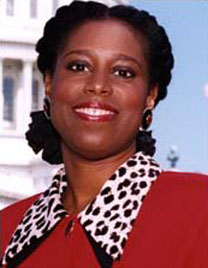
mckinney2-sizedWebster, in one of its definitions of “character”, says it is moral excellence and firmness, and in the case of Cynthia McKinney the definition is appropriate. McKinney is now in an Israeli prison because she along with other humanitarians decided to defy the self-imposed Israeli blockade of Gaza, a blockade that everyone except Israel, says must be removed. I’m inclined to think it must be in the water of the state of Georgia that gives its residents, or some of them, the moral courage, backbone,  to face and speak out against injustice, especially when it comes in the form of political Zionism.

There was Martin Luther King who spoke against racism, interestingly enough which “Zionism” has been equated with and there’s Jimmy Carter who has  been a vocal opponent of the oppression of Palestinians and the proponent of an equitable solution for all parties in Israel and the Occupied Territories. Now along comes McKinney, drinking the same water of the Georgia hills and calling out from the jails of Israel to let freedom ring. The “movement” is catching, isn’t it?

On another level, McKinney has taken up a cause that for now is not a very politically correct one and which puts her in the cross hairs of the status quo.  That parallels the path travelled by King in his fight against Jim Crow.  At the time, King’s movement wasn’t a very popular movement and while it ended up getting him killed, there were people who said he was fanatical, impatient, a communist, and everything else bad that could be said about a person to marginalize him in the eyes of the American public and the world.  It didn’t work and now there’s a holiday named after him….but it came with great personal sacrifice for Dr. King and his family.  I am reminded of Muhammad Ali who took a stand against the Vietnam war….a stand which took him all the way to the US Supreme Court.  Along the way he was vilified, despised, stripped of his livelihood for a time.  Not Ali, and though he took a position which made him a lone figure in many ways, he too prevailed, politically and personally.  Now he’s the darling of media…he lit the Olympic flame in Los Angeles during the Olympic games and is applauded everywhere he goes, but that didn’t come without courage and character.
Oceans and time zones removed from the shores of America was one Nelson Mandela who languised in a South African prison for almost three decades for opposing the racist and brutal political movement apartheid….. a system of government which by the way Israel supported politically and militarily.  Most of that time he stayed there, as did civil rights  predecessors of Mandela while being demonized by the establishment and denied any sense of humanity or dignity, yet he persevered and later bacame the president and leader of a New South Africa in spite of his oppressors and because of them.  Liberty cannot be denied a people who want it or those who want it for them, even when it’s opposed by the strongest of nations.  Israel should have learned that lesson since they too were the oppressed, but it will have to be repeated for them but with  roles reversed and this time at the expense of their political zionism.

Mckinney has joined the list of people who have chosen to give up a comfortable life to oppose slavery.  She picked up the gauntlet thrown down by Obama who said, along with an international community of nations, that the blockade of Gaza must be lifted.

Now we must extend a hand of opportunity to those who seek peace. As part of a lasting cease-fire, Gaza’s border crossings should be open to allow the flow of aid and commerce, with an appropriate monitoring regime, with the international and Palestinian Authority participating.

Relief efforts must be able to reach innocent Palestinians who depend on them. The United States will fully support an international donor’s conference to seek short-term humanitarian assistance and long-term reconstruction for the Palestinian economy. This assistance will be provided to and guided by the Palestinian Authority.

Let’s be clear that the blockade of Gaza is not about the security of Israel, the strongest military government in the Middle East and some would say one of the strongest in the world, but rather it, the blockade, is about destroying the will of the Palestinian people, denying them sovereignty and continuing a military presence in the occupied territories.  For Israelis, all Palestinians are terrorists.  Witness the recent round up by the Israelis of non Hamas supporters in the West Bank. Meanwhile civilians living in Gaza continue to suffer as a result of the seige with only a minimal amount of the supplies needed by the people living there actually arriving.  It is a humanitarian crisis of epic proportions and one that McKinney responded.  She now sits in an Israeli jail as a result of her activism, like activists who’ve gone before her, having broken no law, yet speaking for those whose voices aren’t or can’t be heard.   Her detractors, like Obama’s have resorted to the race card; the blogosphere is full of unflattering pictures of McKinney and what they mean, which further underscores the correctness of her position, for McKinney’s position is the only position on which to fall during this crisis in Gaza.  It is the same position required of humanity in all other similar scenarios, despite the attempts of revisionists to the contrary.  Political zionism doesn’t take too kindly to exposing the sufferings of any people except their own.

What is perverse is the Israeli lack of regard for law.  The confiscation of aide and the imprisonment of relief workers comes on the heels of a human rights report that says Israeli committed war crimes in its assault on Gaza late last year and early this,  and on the heels of another announcement that America will renew Israeli loan guarantees.  The message is quite clear, Israel can endlessly break the law and suffer no negative consequences.  Kudos, therefore to a small movement of which McKinney is a part that is going against the oppressive jugernaut of political zionism and siding with its brothers and sisters of humanity in being a part of a solution.  I think it’s the Georgia water that does it.

The shape of things to come


Israel is NOT a democratic state, and the people who live there are not interested in democracy.  In the “old days” saying that made one an enemy of America, or at the least, a place to be colonized and brought democracy, but our special relationship with Israel simply doesn’t allow such solutions be applied to the Israeli problem.  What is surely a sign of things to come is this news coming from that troubled country

A community in northern Israel has changed its bylaws to demand that new residents pledge support for “Zionism, Jewish heritage and settlement of the land” in a thinly veiled attempt to block Arab applicants from gaining admission.   Critics are calling the bylaw, adopted by Manof, home to 170 Jewish families in Galilee, a local “loyalty oath” similar to a national scheme recently proposed by the far-Right party of the government minister Avigdor Lieberman.   Other Jewish communities in the central Galilee — falling under the umbrella of a regional council known as Misgav — are preparing similar bylaws in response to a court petition filed by an Arab couple hoping to build a home in Misgav.

Reading the article at the link above is like being taken back into the early 1900s in American history.  The language used to justify such racist actions is steeped in fear and bigotry from a group of people who promised, at least indirectly, never to be apart of such action and or speech again.  How quickly they’ve forgotten and how pathetic their reality has become.  America should not enable such “hate speech” any longer.

The Global Peace Index


israeli_flagThe Global Peace Index offers some interesting insight into what is considered a peaceful country and what isn’t.  The top ten peaceful countries are in order, New Zealand, Denmark, Norway, Iceland, Austria, Sweden, Japan, Canada, Finland, Slovenia.  Denmark and Norway have been the scene of some pretty violent opposition to Muslim immigration to their countries, but evidently the citizens have managed to coexist peacefully with one another.  The Netherlands another country that has seen stiff opposition to immigrants is the 22nd most peaceful country and France is ranked number 30.  America is ranked 83 which surprised me considering we invaded three countries and are the only country at war with other countries, or forces in other countries.  The ten most violent countries in the world are Zimbabwe, Russia, Pakistan, Chad, The Republic of the Congo, Sudan, Israel, Somalia, Afghanistan and finally Iraq, the most violent country of the 144 countries considered.  With the exception of Iraq, Somalia and Afghanistan, all of the other worst offenders are fighting their own populations and not foreigners invading their territory. (Guess who that invader is in two of the cases.)  Only one of the 10 worst countries is an ally of America, while the others have cold to almost no relations with the United States and face some sort of condemnation from America as a result of their human rights violations against their own.   Israel meanwhile continues to enjoy copious amounts of US aid,  materiel and support for its apartheid like policies towards its Arab citizens and neighbors.  Noteworthy too is the fact that Israel has been in the bottom 5 consistently for the last three years. It is definitely time for CHANGE.

We are committed to censorship and racism


Well at least that’s what we’re saying when we support the current government of Israel whose foreign minister has said he wants to ban Arab Israelis from marking the anniversary of the dispossession of hundreds of thousands of Arab Palestinians in 1948.  How does that go over in a country, the US, which allows Jews to mark and commemorate the Holocaust?

Another in your face moment, brought to you by the Likudiniks


The Israeli Prime Minister, Benjamin  Netanyahu visited the US this week amid all sorts of speculation surrounding the US/Israeli “special relationship”.  One thing is certain, despite all the talk of “change” coming to Washington, Israel still runs the show when it comes to US foreign policy, and especially policy regarding the Middle East.  Casting all doubts whether the current Israeli government is for a two state solution, which Obama has said he favors, Netanyahu’s visit came on the eve of the announcement Israel was going to expand settlements in the West Bank which goes to show you a US president can say whatever he wants but it has no basis in reality as far as Israel is concerned.  Take that, Obama!!

Israel Warns EU to tone down


Warnings usually accompany threats, as in ‘if you don’t stop doing this I’m going to do something in response’, so what is Israel’s warning of consequence?

Israel warned the European Union on Thursday to tone down its criticism of the new Israeli government or risk forfeiting the bloc’s role as broker in Mideast peace efforts.

So my question is what is it Israel can threaten the European Union with? Israeli military threats against Europe have been made before and with rabid Israeli politicians now in power, the implication of Israel’s warning is probably not lost on Europeans.  Also, Israel has never accepted the EU’s role as a peace broker, the latest Gaza offensive, is proof of that when the Israelis bombed, strafed and blocked aid supplies to Palestinians in Gaza which came from Europe.  What is really at stake here is Israeli access to European markets.  The Israelis want to ply their trade of espionage, industrial, political and military and they can’t do that now as easily as they can in the US.  Evidently old habits die hard in the relations between Europeans and Jews.

Israelis Consider American Jews First Jewish Then Israeli


At least that’s what they’ve told Rahm Emmanuel.

National Union chairman Ya’acov “Ketzele” Katz sent a letter to White House chief-of-staff Rahm Emanuel last week admonishing him not to forget his Jewish and Israeli origins.

Katz claims that in a private meeting with the unnamed leader, Emanuel said, “In the next four years, there will be a peace agreement with the Palestinians on the basis of two states for two peoples, and it does not matter to us who is the prime minister.”

In the letter, a Hebrew version of which was provided to The Jerusalem Post by Katz’s parliamentary aide, Katz wrote: “For many Israelis, this report is a cause for worry because it reveals a condescending attitude toward our prime minister and Israeli public opinion. This is an attitude that Israel does not expect from a real friend such as the US, and all the more so from an Israeli Jew who has succeeded in being appointed White House chief-of-staff.”

Katz was hinting that Emanuel should use his influence to protect Israeli interests, which, he believes, are best served by preventing the creation of a Palestinian state in the West Bank and the Gaza Strip.

One has to wonder how many other Jewish Americans in government have been given the same message and acted on that message/hint/threat, that Israeli/Jewish interests supersede American interests. Perhaps that explains the current hot water Congresswomen Jane Harman finds herself in as she tried to make deals with a member of the Israeli government to influence American policy in exchange for his help in gaining her an influential position in government, the House Committee on Intelligence no less!  The Harman episode is dramatic because it reveals how the US government was keeping wiretapes on Israeli espionage in this country before 911 which representative Harman got caught up in.  Most likely other Jewish Americans used their influence to shut this aspect of wiretapping, i.e. connections between Israeli officials and the events of 911 out of the public domain and for many that is considered their job!

A foul pay off


The bit of news that the Palestinian doctor, Ezzeldeen Abu al-Aish, who was treating Palestinians and Israelis during the Gaza war has had his name submitted for the Nobel Peace prize is both foul and obscene.  It is nothing more than a payoff some people somewhere  suggest he receive for the public anguish and humiliation he has had to face at the hands of an indifferent, and scornful Israeli government.  I’m sure you all remember the story of this doctor who was informed on Israeli tv live that his daughters had been killed by the IDF.  He wasn’t received very well by Israelis who took offense at his suggestion there be peace between Israelis and Palestinians either, so how is it his name was arrived at as a candidate for this prize; why would he even accept it?  Nothing he does will bring back his daughters; however, there is something that can prevent his tragedy from being repeated and it’s not anything of his own doing. Israel recognize the territorial sovereignty of its Palestinian neighbors and remove their armed forces from the occupied territories.   Ezzeldeen Abu al-Aish has done enough.  Well he could do one thing more and that is come to Washington and convince the current administration to have the chutzpah to just say no to Israeli demands for illegal settlements with US dollars.  Or better yet, ask the US government to repudiate the current Israeli leadership that harbors a terrorist as its foreign minister; or perhaps just call for an economic boycott of Israel until it ends its occupation of Palestinian territory.  Anything less than that makes the Nobel Peace Prize a cheap trophy to hang up on the mantle Dr.  Abu al-Aish has in his tent in some refugee camp.

Israel attacks Sudan and blames Hamas?

Israel makes it clear they think they can go anywhere and attack anyone they think has a terrorist infrastructure. Of course only Israel can single-handedly define what constitutes a “terrorist infrastructure” whether in a contiguous neighbor or one far removed, like Sudan, Cyprus, or even western Europe and or North America.


sudan_gazaIsrael  launched an attack on Sudanese territory to supposedly interdict an arms convoy supplied by Iran headed to Gaza….and if you believe that I have a bridge to sell you in Brooklyn.  No doubt an attack took place, or that’s according to US authorities and it was launched by Israel, but the reasons for the attack hardly have anything to do with weapons.  Hamas makes a good point when they say

“Should it turn out that there were raids and a high number of people killed, this would mean Israel is seeking to use the opportunity to blame Hamas and hit Sudan,” he said.

The fact that the Gaza Strip is not a neighbour of Sudan, with Egypt in between, “shows these are false claims,” he added.

Israel has pounded Gaza and Egypt in attempts to destroy the tunnel system they say exists to smuggle things into Gaza; however, now they think it’s justified to bomb a regional neighbor that has never hosted, fomented, incited or carried out any attacks against Israel.  Sudan is a political foe of Israel; it is a predominantly Muslim country which has repudiated Israel’s expansionist policies in the West Bank and Gaza.  I would hope that the predominantly Christian country of America would repudiate Israeli policy in Palestine… UN resolutions demand at least that.  Should the US expect an attack of the magnitude of the Sudanese intrusion?  Have we already had such an attack?  Israel makes it clear they think they can go anywhere and attack anyone they think has a terrorist infrastructure.  Of course only Israel can single-handedly define what constitutes a “terrorist infrastructure” whether in a contiguous neighbor or one far removed, like Sudan, Cyprus, or even western Europe and or North America.  What’s even more unfortunate about all this is the US would rather be impotent in its response to Israeli aggression than to take a stand against it.  In doing so, America has signed on to Israeli aggression against all its “foes” and the possibility of a world war the likes of the previous two.  It seems humanity gets this once a century itch to literally fight itself to the death, when it’s not necessary nor prudent; but it’s become our destiny and America has become the prime enabler in movement towards that end.  Instability of the region that allows for Israeli hegemony has always been the goal of Israeli policy, that and the usurpation of its neighbors natural resources.  In order to accomplish this they cannot have opposition; acquiescence is essential and the slightest objection vocal or otherwise is considered an existential threat to those  goals.  That said, one should only expect more death and destruction.

No comment


“This is an action that sowed massive destruction among civilians. It is not certain that it was possible do have done it differently, but ultimately we have emerged from this operation and are not facing real paralysis from the Qassams. It is very possible that we will repeat such an operation on a larger scale in the years to come, because the problem in the Gaza Strip is not simple and it is not at all certain that it has been solved. What we want this evening is to hear from the fighters.”

Aviv: “I am squad commander of a company that is still in training, from the Givati Brigade. We went into a neighborhood in the southern part of Gaza City. Altogether, this is a special experience. In the course of the training, you wait for the day you will go into Gaza, and in the end it isn’t really like they say it is. It’s more like, you come, you take over a house, you kick the tenants out and you move in. We stayed in a house for something like a week.

“Toward the end of the operation there was a plan to go into a very densely populated area inside Gaza City itself. In the briefings they started to talk to us about orders for opening fire inside the city, because as you know they used a huge amount of firepower and killed a huge number of people along the way, so that we wouldn’t get hurt and they wouldn’t fire on us.

“At first the specified action was to go into a house. We were supposed to go in with an armored personnel carrier called an Achzarit [literally, Cruel] to burst through the lower door, to start shooting inside and then … I call this murder … in effect, we were supposed to go up floor by floor, and any person we identified – we were supposed to shoot. I initially asked myself: Where is the logic in this?

“From above they said it was permissible, because anyone who remained in the sector and inside Gaza City was in effect condemned, a terrorist, because they hadn’t fled. I didn’t really understand: On the one hand they don’t really have anywhere to flee to, but on the other hand they’re telling us they hadn’t fled so it’s their fault … This also scared me a bit. I tried to exert some influence, insofar as is possible from within my subordinate position, to change this. In the end the specification involved going into a house, operating megaphones and telling [the tenants]: ‘Come on, everyone get out, you have five minutes, leave the house, anyone who doesn’t get out gets killed.’

“I went to our soldiers and said, ‘The order has changed. We go into the house, they have five minutes to escape, we check each person who goes out individually to see that he has no weapons, and then we start going into the house floor by floor to clean it out … This means going into the house, opening fire at everything that moves , throwing a grenade, all those things. And then there was a very annoying moment. One of my soldiers came to me and asked, ‘Why?’ I said, ‘What isn’t clear? We don’t want to kill innocent civilians.’ He goes, ‘Yeah? Anyone who’s in there is a terrorist, that’s a known fact.’ I said, ‘Do you think the people there will really run away? No one will run away.’ He says, ‘That’s clear,’ and then his buddies join in: ‘We need to murder any person who’s in there. Yeah, any person who’s in Gaza is a terrorist,’ and all the other things that they stuff our heads with, in the media.

“And then I try to explain to the guy that not everyone who is in there is a terrorist, and that after he kills, say, three children and four mothers, we’ll go upstairs and kill another 20 or so people. And in the end it turns out that [there are] eight floors times five apartments on a floor – something like a minimum of 40 or 50 families that you murder. I tried to explain why we had to let them leave, and only then go into the houses. It didn’t really help. This is really frustrating, to see that they understand that inside Gaza you are allowed to do anything you want, to break down doors of houses for no reason other than it’s cool.

“You do not get the impression from the officers that there is any logic to it, but they won’t say anything. To write ‘death to the Arabs’ on the walls, to take family pictures and spit on them, just because you can. I think this is the main thing in understanding how much the IDF has fallen in the realm of ethics, really. It’s what I’ll remember the most.”

“One of our officers, a company commander, saw someone coming on some road, a woman, an old woman. She was walking along pretty far away, but close enough so you could take out someone you saw there. If she were suspicious, not suspicious – I don’t know. In the end, he sent people up to the roof, to take her out with their weapons. From the description of this story, I simply felt it was murder in cold blood.”

Zamir: “I don’t understand. Why did he shoot her?”

Aviv: “That’s what is so nice, supposedly, about Gaza: You see a person on a road, walking along a path. He doesn’t have to be with a weapon, you don’t have to identify him with anything and you can just shoot him. With us it was an old woman, on whom I didn’t see any weapon. The order was to take the person out, that woman, the moment you see her.”

Zvi: “Aviv’s descriptions are accurate, but it’s possible to understand where this is coming from. And that woman, you don’t know whether she’s … She wasn’t supposed to be there, because there were announcements and there were bombings. Logic says she shouldn’t be there. The way you describe it, as murder in cold blood, that isn’t right. It’s known that they have lookouts and that sort of thing.”

Gilad: “Even before we went in, the battalion commander made it clear to everyone that a very important lesson from the Second Lebanon War was the way the IDF goes in – with a lot of fire. The intention was to protect soldiers’ lives by means of firepower. In the operation the IDF’s losses really were light and the price was that a lot of Palestinians got killed.”

Ram: “I serve in an operations company in the Givati Brigade. After we’d gone into the first houses, there was a house with a family inside. Entry was relatively calm. We didn’t open fire, we just yelled at everyone to come down. We put them in a room and then left the house and entered it from a different lot. A few days after we went in, there was an order to release the family. They had set up positions upstairs. There was a sharpshooters’ position on the roof. The platoon commander let the family go and told them to go to the right. One mother and her two children didn’t understand and went to the left, but they forgot to tell the sharpshooter on the roof they had let them go, and it was was okay and he should hold his fire and he … he did what he was supposed to, like he was following his orders.”

Question from the audience: “At what range was this?”

Ram: “Between 100 and 200 meters, something like that. They had also came out of the house that he was on the roof of, they had advanced a bit and suddenly he saw then, people moving around in an area where they were forbidden to move around. I don’t think he felt too bad about it, because after all, as far as he was concerned, he did his job according to the orders he was given. And the atmosphere in general, from what I understood from most of my men who I talked to … I don’t know how to describe it …. The lives of Palestinians, let’s say, is something very, very less important than the lives of our soldiers. So as far as they are concerned they can justify it that way.”

Yuval Friedman (chief instructor at the Rabin program): “Wasn’t there a standing order to request permission to open fire?”

Ram: “No. It exists, beyond a certain line. The idea is that you are afraid that they are going to escape from you. If a terrorist is approaching and he is too close, he could blow up the house or something like that.”

Zamir: “After a killing like that, by mistake, do they do some sort of investigation in the IDF? Do they look into how they could have corrected it?”

Ram: “They haven’t come from the Military Police’s investigative unit yet. There hasn’t been any … For all incidents, there are individual investigations and general examinations, of all of the conduct of the war. But they haven’t focused on this specifically.”

Moshe: “The attitude is very simple: It isn’t pleasant to say so, but no one cares at all. We aren’t investigating this. This is what happens during fighting and this is what happens during routine security.”

Ram: “What I do remember in particular at the beginning is the feeling of almost a religious mission. My sergeant is a student at a hesder yeshiva [a program that combines religious study and military service]. Before we went in, he assembled the whole platoon and led the prayer for those going into battle. A brigade rabbi was there, who afterward came into Gaza and went around patting us on the shoulder and encouraging us, and praying with people. And also when we were inside they sent in those booklets, full of Psalms, a ton of Psalms. I think that at least in the house I was in for a week, we could have filled a room with the Psalms they sent us, and other booklets like that.

“There was a huge gap between what the Education Corps sent out and what the IDF rabbinate sent out. The Education Corps published a pamphlet for commanders – something about the history of Israel’s fighting in Gaza from 1948 to the present. The rabbinate brought in a lot of booklets and articles, and … their message was very clear: We are the Jewish people, we came to this land by a miracle, God brought us back to this land and now we need to fight to expel the gentiles who are interfering with our conquest of this holy land. This was the main message, and the whole sense many soldiers had in this operation was of a religious war. From my position as a commander and ‘explainer,’ I attempted to talk about the politics – the streams in Palestinian society, about how not everyone who is in Gaza is Hamas, and not every inhabitant wants to vanquish us. I wanted to explain to the soldiers that this war is not a war for the sanctification of the holy name, but rather one to stop the Qassams.”

Hat tip.

It just keeps getting worse


News from Israel that genocide was the intent of the Gazan intrusion and nothing less grows stronger everyday with the release of soldier testimony to that effect. A word on the cartoon posted below; it clearly shows a dementia that has nothing at all to do with terrorism, the use of deadly force or American interests, nor Israeli interests for that matter.  With the exception of one drawing, no one who appears in the cartoons is even remotely connected to the “terrorism” the Israelis claim they are fighting.  One of the cartoon’s panels shows a blatant act of homosexuality as an act of war which speaks to the mindset of today’s modern armies.  What it does show is a hatred for Arabs and a willingness to kill women and infants, something we’ve seen in the latest “war” in Gaza and something which is underscored with this latest news

“Rules of Engagement: Open fire also upon rescue,” was handwritten in Hebrew on a sheet of paper found in one of the Palestinian homes the Israel Defense Forces took over during Operation Cast Lead. A reservist officer who did not take part in the Gaza offensive believes that the note is part of orders a low-level commander wrote before giving his soldiers their daily briefing.

One of the main themes in news reports during the Gaza operation, and which appears in many testimonies, is that IDF soldiers shot at Palestinian and Red Cross rescuers, making it impossible to evacuate the wounde.d and dead. As a result, an unknown number of Palestinians bled to death as others cowered in their homes for days without medical treatment, waiting to be rescued.

The bodies of the dead lay outside the homes or on roadsides for days, sometimes as long as two weeks. Haaretz has reported a number of such cases, some of them as they happened. The document found in the house provides written proof that IDF commanders ordered their troops to shoot at rescuers.

It is significant to remember that those who lay bleeding to death easily within reach of rescue personnel who perhaps could have been saved were the likes of women and children.