Gaza invasion is on


gaza-invasion-3_002The invasion of Gaza by Israeli forces has begun. Of course it was expected, but there are two points I want to make about it.  This conflict is about land and resources, so to that end if the Israelis can get it without inflicting maximum casualties that’s a plus for them as far as they’re concerned.  Already, Gaza residents are reporting that fliers were released by the IDF saying they should “leave”.  Of course once they do, they cannot return, which suits the Israelis just fine.
“Due to the terrorist actions undertaken by terrorist elements from the region of your residences against the state of Israel, the Israel Defense Forces are compelled to respond immediately in the region of your residences. For your safety, you are ordered to leave the area immediately”

The second point to be made about this invasion is it will inflict heavy civilian casualties, which also suits the Israelis just fine. In fact Israelis don’t consider any Palestinian a civilian, they are all terrorists, young, old, infant, male, female.  Even people who render medical aid and assistance to any one of the aforementioned groups is considered a legitimate target, which is why the Dignity, loaded with medical supplies for Gaza residents was attacked by the Israeli navy and had to abort their mission.

A recent article published in The Washington Post, for instance, quoted a senior Israeli military official saying: “There are many aspects to Hamas, and we are trying to hit the whole spectrum, because everything is connected and everything supports terrorism against Israel.” An Israeli army spokeswoman went further, stating “Anything affiliated with Hamas is a legitimate target.” Given that, in the ghetto of Gaza, Hamas is effectively the “ruling” party — it was democratically elected, after all — and its network of social and charitable organizations are the largest provider of social services to the impoverished and besieged population, all of Gaza’s civilian infrastructure, public schools, hospitals, universities, law and order organs, traffic police, sewage treatment and water purification stations, ministries providing vital services to the public, mosques, public theaters and many non-governmental institutions can technically be considered “affiliated” with Hamas.

Finally, I’m amused at the spin most news reports are giving about the absence of any reaction by Obama to this latest Israeli atrocity, as if anything he says can change what’s taking place on the ground in Gaza.  It appears the absence of Obama’s reaction is why the Israelis are engaging in their blood lust; they can’t help themselves unless an American president stops them.  It’s the old, ‘the devil made me do it’ response with a slight twist.


WOT=War on Islam?


There’s no mistake that America had every reason to be angry at what happened on September 11, 2001, but that tragedy was used by some to take out centuries old grudges against people in the Middle East and steer America on a course which has led it to become a violator of international treaties and agreements unparalleled in our nation’s history.  Nowhere is that exemplified more than with Guantanamo Bay where scores of Muslim men were snatched up from all over the world and placed in an isolated military camp where they were tortured for no apparent reason.

An Algerian man who spent nearly seven years in Guantanamo Bay says his U.S. interrogators never questioned him on the main terrorism allegation against him.

Mustafa Ait Idir, who was freed this week and returned to his adopted homeland of Bosnia, was accused of planning to go to Afghanistan to fight against U.S. forces.

“They’ve never asked anything about charges which were brought against us. They’ve never asked about Afghanistan,” he told Reuters in an interview.

Ait wasn’t captured on some battlefield endangering the lives of US servicemen and women, rather he was taken from his country, Bosnia and imprisoned in Gitmo Bay after his own country’s court had determined he was innocent of the charges for which the US government picked him up. It seems however that US authorities were interested in Islamic relief organizations working in Bosnia, which appears to be even the focus of officials even here in America.  (The Holy Land Foundation trial recently concluded in Texas is an example where relief efforts particularly for Palestinians suffering under the worse case of state sponsored terrorism were shut down under flimsily constructed charges.)

The charge for which the US picked up Ait, conspiring to attack the US embassy in Sarajevo,  was dropped by authorities while he was in Gitmo and a US federal judge ordered and government officials acceded to the order that he be released from his unlawful imprisonment, but why was he picked up in the first place?

From this observer’s perspective it appears America has given into its dark side, filled with sadism and masochistic fantacies played out in our artistic and entertainment culture which could be acted out in reality against an enemy we were told only responded to such brutality.  The Bush administration was/is not the least bit interested in fighting its true enemies it merely wanted bodies, the 21st century version of the body count notion that came out of the Vietnam war, to fill up Guantanamo and justify its existence.

At a Pentagon briefing in the spring of 2002, a senior Army intelligence officer expressed doubt about the entire intelligence-gathering process.

“He said that we’re not getting anything, and his thought was that we’re not getting anything because there might not be anything to get,” said Donald J. Guter, a retired rear admiral who was the head of the Navy’s Judge Advocate General’s Corps at the time.

*snip*

In 2002, a CIA analyst interviewed several dozen detainees at Guantanamo and reported to senior National Security Council officials that many of them didn’t belong there, a former White House official said.

Despite the analyst’s findings, the administration made no further review of the Guantanamo detainees. The White House had determined that all of them were enemy combatants, the former official said.

Rather than taking a closer look at whom they were holding, a group of five White House, Justice Department and Pentagon lawyers who called themselves the “War Council” devised a legal framework that enabled the administration to detain suspected “enemy combatants” indefinitely with few legal rights.

The threat of new terrorist attacks, the War Council argued, allowed President Bush to disregard or rewrite American law, international treaties and the Uniform Code of Military Justice to permit unlimited detentions and harsh interrogations.

The group further argued that detainees had no legal right to defend themselves, and that American soldiers — along with the War Council members, their bosses and Bush — should be shielded from prosecution for actions that many experts argue are war crimes.

This attitude that the executive could unilaterally re-write or even ignore existing law is a theme that has been consistently explored during the Bush administration and found expression in a doctrine known as  “unilateral executive”. With this gloves off approach, people in the field were allowed to do whatever they wanted; there were no limits to the power or the abuse they could reap on people under their control and consequentially torture and physical abuse were more normal than not.

(Ait) said he was kept for four months, lightly dressed, in a very cold refrigerated container. For short periods of the day he was taken outside, where it was very hot. Other prisoners were subjected to long periods in total darkness or very bright light, he said.

There was torture every minute,” Ait Idir said. “It did not matter to them if we were terrorists or not.

Indeed.

John McCain winner of the 2008 presidential elections


Please vote for Barack Obama.  Vote for Barack Obama, please.  I sincerely hope Obama wins the elections this coming Tuesday and I urge all who are reading this to vote for the man. He is a better candidate and person than John McCain, but despite all I’ve said, I don ‘t think he will win.  There are three main reasons why I believe this.

Our Country been betrayed by three; the government we elect to represent us and pave the way for the preservation of our freedoms and the fulfillment of our potential as a society, an obsequious press which has spouted every lie mouthed, and a candidate himself who has allowed and exploited political expediency over principle in this campaign.

September 11, 2001 was an awful day in the history of the country. It rocked the very foundation of the nation and allowed politicians and those who served with them an opportunity to expand government in ways not attempted since the Civil War.  From September 12, 2001 until today,  Americans have been fed a steady diet of hate and fear which has been difficult to remove from our collective consciousness and which politicians and members of the press have used to advance separate agendas which have had ramifications for this present election.

Our government failed us, using the fear generated by the terror attacks of 911 to turn American citizen against another, in its quest to expand government, open new lands for military conquest and limit the rights and freedoms it knew would get in the way of government tyranny.   Increased surveillance, forced renditions of people with strange names or faiths, denial of people to due process and the coercion of other institutions to achieve these goals, notably telecommunications companies, were all a part of government’s utilization of 911’s terror.  People of faith trusted their government and believed what they were told and re-elected that government a second time, while sending an “opposition” party to power in the alternative branch of government, the legislative,  to pick up where and perhaps enhance what the executive failed to do or could not do.  Unfortunately that branch of government too failed us becoming a rubber stamp for a government out of control, echoing the “lie” that would lead to such horrible acts of legislation as the Patriot and the Military Commissions Acts , passed, ratified and in some cases passed or extended a second time. We believed what was being told to us even though those that told us knew they were lying and those that reported what we were told didn’t care they were passing along the lie.  The press confused corporate responsibility with corporate profit, making yellow journalism the order of the day, using it to pit us against one another, and boosting a poorly run and essentially racist campaign to legitimacy.

But unfortunately, Barack Obama shares some blame in this debacle.  He in the minds of some, and me didn’t really do a good enough job distinguishing himself from his opponent.  Sure, there is the obvious  which makes this an historic race of enormous proportions, but Mr. Obama fell prey to political expediency, the order of the day with politicians, which basically says don’t take a stand, always fall in-between, be middle of the road, let the absence of your actions make you a winner.  In doing so he allowed a significant portion of the population to be smeared, i.e. Muslims and Arabs, he did not clearly delineate his policies from those of his opponent and in the process showed an absence of character.  It is not enough to reduce campaigns to simple sound bites and one word slogans that are different from those of your opponent; leaders lead not imitate, and above all they challenge and inspire not duck and dodge.  People intuitively are able to sense the absence of leadership despite all the faux pas trappings surrounding it, and this may account for the close poll numbers in the final days.

Simply put we are not ready nor are our leaders for what it is Mr. Obama wants.  We have been traumatized by foreign and domestic enemies who have sapped our will and spirit in ways that heretofore were unimaginable.  We, in time, will recover but time will be the medicine that heals our wounds, not phony profiteering and slogans.  For now, and for reasons mentioned above, our destiny appears to be that of continuity, doing what we have been accustomed to these last 8 years and regrettably that’s more of the same, status quo….not change.  I wish it weren’t so but that’s how I see it from where I stand.  Meanwhile, please go vote Obama and let’s hope I’m wrong.

How refreshing


to read someone write about Islam and not be apologetic, and especially when it is a woman! My wildest dream is that this woman be appointed to a cabinet level position in an Obama administration. My typing that probably insures his defeat among this widely hysteric Islamophobic electorate, but I don’t care and I don’t think the author of this piece does either, so here goes. (hat tip to Taalib)

Spare Me the Sermon On Muslim Women By Mohja Kahf

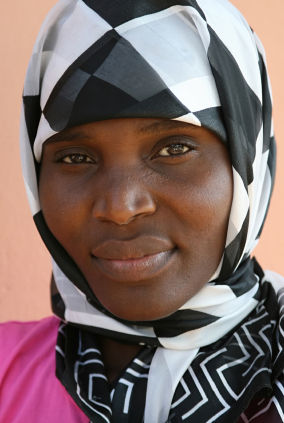
Crimson chiffon, silver lamé or green silk: Which scarf to wear today? My veil collection is 64 scarves and growing. The scarves hang four or five to a row on a rack in my closet, and elation fills me when I open the door to this beautiful array. Last week, I chose a particularly nice scarf to slip on for the Eid al-Fitr festivities marking the end of the month of Ramadan.

It irks me that I even have to say this: Being a Muslim woman is a joyful thing.

My first neighbor in Arkansas borrowed my Quran and returned it, saying, “I’m glad I’m not a Muslim woman.” Excuse me, but a woman with Saint Paul in her religious heritage has no place feeling superior to a Muslim woman, as far as woman-affirming principles are concerned. Maybe no worse, if I listen to Christian feminists, but certainly no better.

Blessings abound for me as a Muslim woman: The freshness of ablution is mine, and the daily meditation zone of five prayers that involve graceful, yoga-like movements, performed in prayer attire. Prayer scarves are a chapter in themselves, cool and comforting as bedsheets. They lie folded in the velveteen prayer rug when not in use: two lightweight muslin pieces, the long drapey headcover and the roomy gathered skirt. I fling open the top piece, and it billows like summer laundry, a lace-edged meadow. I slip into the bottom piece to cover my legs for prayer time because I am wearing shorts around the house today.

These create a tent of tranquility. The serene spirit sent from God is called by a feminine name, “sakinah,” in the Quran, and I understand why some Muslim women like to wear their prayer clothes for more than prayer, to take that sakinah into the world with them. I, too, wear a (smaller) version of the veil when I go out. What a loss it would be for me not to have in my life this alternating structure, of covering outdoors and uncovering indoors. I take pleasure in preparing a clean, folded set for a houseguest, the way home-decor mavens lay elegant plump towels around a bathroom to give it a relaxing feel.

Tassled turquoise cotton and flowered peach crepe flutter as I pull out a black-and-ivory striped headscarf for the day. When I was 22 and balked at buying a $30 paisley scarf, my best friend told me, “I never scrimp on scarves. If people are going to make a big deal of it, it may as well look good.”

I embraced that principle, too, even when I was a scratch-poor graduate student. Today I sort my scarves, always looking to replace the frayed ones and to find missing colors, my collection shrinking and expanding, dynamic, bright: The blue-and-yellow daisy print is good with jeans, the incandescent purple voile for a night on the town, the gray houndstooth solidly professional, the white chambray anytime.

As beautiful as veils are, they are not the best part of being a Muslim woman — and many Muslim women in Islamic countries don’t veil. The central blessing of Islam to women is that it affirms their spiritual equality with men, a principle stated over and over in the Quran, on a plane believers hold to be untouched by the social or legalistic “women in Islam” concerns raised by other parts of the Scripture, in verses parsed endlessly by patriarchal interpreters as well as Muslim feminists and used by Islamophobes to “prove” Islam’s sexism. This is how most believing Muslim women experience God: as the Friend who is beyond gender, not as the Father, not as the Son, not inhabiting a male form, or any form.

And the reasons for being a joyful Muslim woman go beyond the spiritual. Marriage is a contract in Islam, not a sacrament. The prenup is not some new invention; it’s the standard Muslim format. I can put whatever I want in it, but Muslims never get credit for that. Or for having mahr, the bridegift that goes from the man to the woman — not to her family, but to her, for her own private use. A mahr has to have significant value — a year’s salary, say. And if patriarchal customs have overridden Islam and whittled away this blessing in many Muslim locales, it’s still there, available, in the law. Hey, I got mine (cash, partly deferred because my husband was broke when we married; like a loan to him, owed to me whenever I want to claim it) — and I was married in Saudi Arabia, a country whose personal-status laws are drawn from the most conservative end of the Muslim spectrum.

I had to sign my name indicating my consent, or the marriage contract would not have been valid under Saudi Islamic law. And, of course, I chose whom to marry. Every Muslim girl in the conservative circle of my youth chose her husband. We just did it our way, a conservative Muslim way, and we did it without this nonsensical Western custom of teenage dating. My friends Salma and Magda chose at 16 and 17: Salma to marry boy-next-door Muhammad, with whom she grew up, and Magda to marry a doctor 10 years her senior who came courting from half a world away. Both sisters have careers, one as a counselor, one as a school principal, and both are still vibrantly married and vibrantly Muslim, their kids now in college.

I held out until I was 18, making my parents beat back suitors at the door until I was good and ready. And here I am, still married to the guy I finally let in the door, 22 years (some of them not even dysfunctional) later. My cousin, on the other hand, broke off a marriage she contracted (but did not consummate) at 16 and chose another man. Another childhood friend, Zeynab, chose four times and is looking for Mr. Fifth. Her serial monogamy is nothing new or radical; she didn’t pick up the idea from reading Cosmo or from the “liberating” influence of U.S. troops in Afghanistan. It’s simply what a lot of women in early Muslim history did, in 7th- and 8th-century Arabia.

And would you guess that we’ve also been freer to divorce and remarry than Christian women have been for most of history? In medieval times, when Christian authorities were against divorce and remarriage, this was seen as another Islamic abomination. Now that divorce and remarriage are popular in the West, Muslims don’t get credit for having had that flexibility all along. We just can’t win with the Muslim-haters.

Here’s another one: Medieval Christianity excoriated Islam for being orgiastic, which seems to mean that Muslims didn’t lay a guilt trip on hot sex (at least within what were deemed licit relationships). Now that hot sex is all the rage in the post-sexual revolution West, you’d think Muslims would get some credit for the pro-sex attitude of Islam — but no. The older stereotype has been turned on its head, and in the new one, we’re the prudes. Listen, we’re the only monotheistic faith I know with an actual legal rule that the wife has a right to orgasm.

Of course, I’m still putting in my time struggling for a more woman-affirming interpretation of Islam and in criticizing Muslim misogyny (which at times is almost as bad as American misogyny), but let me take a moment to celebrate some of the good stuff. Under Islamic law, custody of minor children always goes first to the mother. The Quran doesn’t blame Eve. Literacy for women is highly encouraged by the traditions of the Prophet Muhammad. Breast-feeding is a woman’s choice and a means for her to create family ties independent of male lineage, as nursing creates legally recognized family relationships under Islamic law. Rapists are punishable by death in Islamic law (and yes, an atavistic part of me applauds that death penalty), which they certainly are not in any Western legal code. Birth control allowed in Islamic law? Check. Masturbation? Let’s just say former surgeon general Joycelyn Elders’s permissive stance on that practice is not unknown among classical and modern Muslim jurists. Abortion? Again, allowances exist — even Muslims seem not to remember that.

It’s easy to forget that Muslims are not inherently more sexist than folks in other religions. Muslim societies may lag behind on some issues that women in certain economically advanced, non-Muslim societies have resolved after much effort, but on other issues, Muslim women’s options run about the same as those of women all over the world. And in some areas of life, Muslim women are better equipped by their faith tradition for autonomy and dignity.

There are “givens” that I take for granted as a Muslim woman that women of other faiths had to struggle to gain. For example, it took European and American women centuries to catch up to Islamic law on a woman’s fully equal right to own property. And it’s not an airy abstraction; it’s a right Muslim women have practiced, even in Saudi Arabia, where women own businesses, donate land for schools and endow trusts, just as they did in 14th-century Egypt, 9th-century Iraq and anywhere else Islamic law has been in effect.

Khadija was the boss of her husband, our beloved Prophet Muhammad, hiring him during her fourth widowhood to run caravans for her successful business; he caught her eye, and she proposed marriage to him. Fatima is the revered mother figure of Shiite Islam, our lady of compassion, possessed of a rich emotional trove for us. Her daughter Zainab is the classic figure of high moral protest, the Muslim Antigone, shaking her fist at the corrupt caliph who killed her brother, her tomb a shrine of comfort for millions of the pious. Saints, queens, poets, scribes and scholars adorn the history of Muslim womanhood.

In modern times, Muslim women have been heads of state five times in Muslim-majority countries, elected democratically by popular vote (in Bangladesh twice and also in Turkey, Indonesia and Pakistan). And I’m not saying that a woman president is necessarily a women’s president, but how many times has a woman been president of the United States?

Yet even all that gorgeous history pales when I open my closet door for the evening’s pick: teal georgette, pink-and-beige plaid, creamy fringed wool or ice-blue organza? God, why would anyone assume I would want to give up such beauty? I love being a Muslim woman. And I’m always looking for my next great polka-dot scarf.