
Tag: Eid al-Fitr
Saudi racism

The following editorial is not unique to Saudi Arabia, rather it’s an Arab Gulf mentality that is steeped in tribalism and nationalism and from the looks of the comments generates intense feelings among many of the people who live there. I remarked after reading it, what would the king of Abyssinia or the people of Medina say to the nascent Islamic community that came to them seeking shelter from the oppression of the Quraish; would there even be an Islamic community if they were not afforded freedom from oppression that all mankind is entitled? If these two diverse communities of faithful….the Christian king of then Abyssinia or the at that time faithless people of Medina (Yathrib) had not been forthcoming with this fundamental right would there even be a Saudi Arabia today? Of course one could not know that….but equally certain, the all encompassing faith of Islam cannot coexist with the racialism of the Kingdom of Saudi Arabia. Read on and then take time to read the comments posted after the article
Since the beginning of the campaign against illegal workers, some foreigners who were born in the Kingdom or spent years working here have started calling on the authorities to consider granting them Saudi citizenship.
Those born in the Kingdom argue that they have spent most of their lives here, speak Arabic and adapted to its culture. They say it would be very difficult to adjust in their home countries.
This sounds to be a valid argument if one was born in a developed industrialized nation. In those countries, a foreigner makes efforts to assimilate in society by learning local languages and adapting to its ways of life.
However, in most Gulf countries, including Saudi Arabia most foreigners rarely interact with locals and if they do, they communicate in a language, which is a mix of badly spoken Arabic and sign language. It could be termed gibberish. Moreover, almost every ethnic group lives nearly in complete isolation from the rest of the local community, and other ethnic groups. Every group lives in self-designated neighborhoods busy with its communal activities. For instance, Ethiopians mostly inhabit Riyadh’s neighborhood Manfouha.
In such neighborhoods, there are community schools that only teach their own curriculum instead of using Saudi textbooks. The students only engage with those from the same ethnic background and are deprived of any possibility of interacting with Saudi children. Moreover, communal activities are limited to the same group, including social visitations and functions, as well as religious celebrations, such as Eid Al-Fitr and Eid Al-Adha. These communities even have their medial care and business systems, which cater specifically to their needs. How could a person living in such a social and economic setup hopes to become a Saudi, not to mention if that person is living illegally in the country?
On the other hand, there are those who claim that they have lived long years in the country enough to earn the right to Saudi citizenship. But for decades they have taken away jobs that rightfully belong to the Saudis and yet they demand citizenship.
In my opinion, it would be a grave mistake to grant foreigners Saudi citizenship on any basis. These demands run counter to the objectives of Saudization of the labor market, which is controlled by foreigners with skills that can be found among the local population or Saudis can be trained to occupy these jobs.
Observers may recall that when the new naturalization law was introduced a few years back, the naturalized citizens were flocking to government’s financial institutions seeking loans of all types and to even avail themselves of the benefits of Hafez, a program that provides monthly stipends to the unemployed. One can obviously conclude that the primary purpose for seeking citizenship is to acquire monetary benefits rather than a genuine sentiment of belonging to the Saudi society. We have seen in the past that thousands of foreigners succeeded in obtaining Saudi citizenship and most of them started their businesses in various areas. Interestingly, when one visits their establishments, one would find people belonging to their native countries only.
This situation has been exacerbated by the investment law that permitted foreigners with almost trivial financial resources to invest in projects that have no added value to the economy or in the employment of Saudis. Nevertheless, they are eligible to receive all economic benefits. One of the consequences of opening doors to foreign investors is that they began operating as monopolies. Ubiquitously known among Saudis, each ethnic group controls a particular type of trade, and does not like outside competition. When a Saudi decides to start a new business, such groups work to drive this person out of business or force him to sell his business project to the group. Moreover, these ethnically dominated businesses only hire staff belonging to the same group. In case they hire a Saudi national, it is because of the labor law, and eventually this person would be driven out of his job by creating uncomfortable environment or by alienating and undermining his skills and potentials.
The local press frequently reports the same methods being practiced by most foreigners at managerial or mid-level positions in the private sector. It is not hard to imagine what such elements would do to Saudis if they were granted citizenship.
The Saudi education system and various training programs have produced thousands of competent graduates for the job market. They can easily occupy most of the managerial and mid-level jobs currently occupied by individuals from the developing countries. Hence, the cause of the massive unemployment of Saudis is not due to a lack of skills; it is because of an unfriendly environment and the continuous undermining of the skills and potentials of the Saudi youth by foreigners, pushing them away from their rightful jobs.
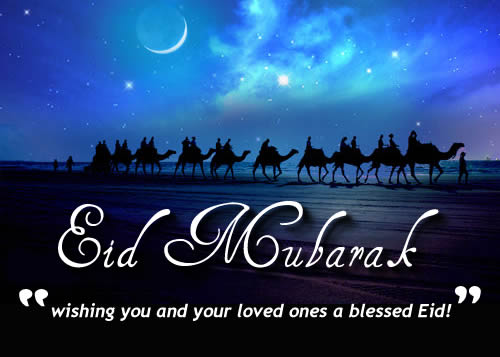
Eid Mubarak-For some this means 30 days of fasting
It all started with my tweet on Thursday evening that said
#EidAlFitr falls on Sunday, says UAE astronomy expert I don’t want to stoke the sighting vs calculations argument, fyi http://tinyurl.com/cszdjtz
and the article linked to was rather detailed and explicit in its explanation at how the end of the month of fasting is arrived. And no, I really don’t want to rekindle the calculations vs. sighting debate that ravages the Muslim world on the occasion of the two biggest celebrations of the Muslim calendar. The determination for when to start and end the month should be one made by the community as much as by consensus of the world-wide Muslim community. There really is no such thing as a pan-Islamic organization or movement despite what the Islamophobes may say or think.
I have noticed however, that a lot of Muslim communities like to tie their observance of these two Eids with the countries in the Arabian peninsula for reasons I don’t entirely understand but for those of you who do, then this is the definitive announcement for you for Eid al-Fitr for 2012. Eid will be observed on Sunday, August 19 in both Saudi Arabia and the United Arab Emirates. No doubt the other GCC countries in the peninsula will mark their celebrations on the same day, although there is no official announcement to that effect as of the time of this post. It’s also important to note some where in the global community Muslims may decide to celebrate Eid on Saturday, 18 August or on Monday, 20 August and to them this message is the same. To the millions of Muslims fasting and waiting for the Eid celebration let me congratulate you on completing an arduous task at a very difficult time of the year. I hope it was spiritually rewarding for you and equally important I hope that your prayers and fast are answered and accepted.
Related articles
- Eid Al Fitr Mubarak (desertpeace.wordpress.com)
- All About the Eid Al-Fitr Celebration: Rulings, Etiquette, and Sunnah (altahrir.wordpress.com)
- EID AL – FITR….. the count Down (mimiiluv.wordpress.com)
 Miscellany101's Weblog