Hypocrisy in power is an amazing thing; not everyone can see it. Police and armed citizens are a good start and a toxic mix. As shown here constantly police who confront armed white citizens usually take a more professional and more restrained approach than they do when confronted with citizens of color, armed or not. This is a decent collage of experiences that have occurred lately in America
Police Actually Do Show Restraint—When They’re Facing Armed White Guys
What is going on in the minds of some cops that frequently prompts empathy for armed white men but unleashes lethal fury on unarmed African-American men?
As a ceaseless flat line of tragedies snuffs out the lives of young brothers, one peculiar parallel trend emerges: For every unarmed black man who dies at the hands of white police officers, it seems as if there’s one armed white man who survives such an encounter.
In a way, that flies in the face of a popular national narrative that police officers are having some trouble restraining their trigger-happy selves. The excessive use of force by police is at the core of that discussion: Recently, for example, the Justice Department applauded the Seattle Police Department’s implementation of mandatory “de-escalation training” program for new officers. The force used “must be both reasonable and necessary,” said Principal Deputy Assistant Attorney General Vanita Gupta in a statement last week. “[T]his training will provide valuable guidance to officers when they make split-second decisions about when and how to use force.”
The problem, however, is that we assume that cops have a restraint problem. But judging from a growing number of confrontations between police and armed white guys, it’s reasonable to conclude the killings of African-American men and women may have another cause. And in the rush to a future full of body cameras, training, diversity hiring and other essential tools for modern law enforcement, we should probably find out what it takes to change that.
Michael Wilcox, 27, prone on the ground, unharmed
Going viral recently is a body-cam-captured video of rookie New Richmond, Ohio, cop Jesse Kidder talking down a young, armed and white 27-year old Michael Wilcox, who is accused of killing his fiancee and best friend hours before. Wilcox challenged Kidder to “shoot me!”
Kidder did not. He reasoned Wilcox into a peaceful arrest, earning himself all sorts of national props for showing “great restraint and maturity.” And who knows? Maybe policing in the post-Ferguson world made Kidder rethink the situation.
And maybe it didn’t. Instead, Wilcox ended up joining the pantheon of armed and dangerous white dudes who stayed alive even after police have identified them as homicidal suspects on killing rampages. One unfortunate week might find us gripped in national outrage over the untimely and unjustified deaths of Freddie Gray in Baltimore or Eric Harris in Tulsa; but, highlighted less are numerous confrontations between cops and rather dangerous white guys with guns who have already massacred people or are about to commit domestic terrorism.
This raises deeply disturbing but necessary questions that hint at a need for more than just a “de-escalation” program. What exactly is going on in the minds of some cops that frequently prompts empathy for armed white men but unleashes lethal fury on unarmed black men?
Take Eric Fein, for example, a white 31-year old sitting comfortably in jail on charges of killing one Pennsylvania state trooper in September and wounding another before forcing state police into a 48-day manhunt. Or still-alive 41-year old Ryan Giroux, a white supremacist who is accused of killing one person and injuring five in March during a shooting rampage in Mesa, Ariz. Cops finally caught up with him and took him into custody after Tasing him. And let’s not even get started on the jaw-dropping actions of Adam Kokesh, a gun-rights activist who not only loaded a shotgun across the street from White House grounds, but also videotaped and posted the whole thing online.
James Holmes’ Class of 2006 Westview High School photo
Perhaps one of the more notorious armed white guys involved in mass murder is James Holmes of Aurora, Colo., who, even after allegedly slaughtering a dozen people and injuring 70 in a movie theater shooting in 2012, managed to survive the police response and is on trial.
In almost half of all active-shooter situations, police didn’t even kill the shooter. According to aSeptember 2013 FBI briefing on a study of 160 mass-casualty, “active shooter” incidents between 2000 and 2013, most ended once the perpetrator stopped shooting, either because he fled or took his own life.
Curiously, the FBI details every demographic, geographic and casualty-type of data in its compelling 47-page study, even telling us that only six of the shooters were female, but fails to disclose one critical shooter characteristic: race.
The Congressional Research Service, however, did some leg work for its own March 2013 paper“Public Mass Shootings in the United States.” Despite an annoying lack of data, that study did conclude that the “the gunmen generally acted alone, were usually white and male.” Of the 81 shooters in this report, 41 died by suicide and 10 at the hands of law enforcement.
Police restraint is employed frequently when officers run up against gun-carrying white dudes engaged in all forms of villainy. Yet, we’ve seen unarmed and ultimately innocent black men and black women find themselves either badly hurt or dead just for looking suspicious or being in the wrong place at a particular wrong time.
Most frightening is the issue of why. There’s never really a clear answer for that beyond our 400-year knowledge of state-sanctioned violence against African Americans. White officers, in particular, would never admit to any subconscious bias pegging black men as subhuman.
What recent studies do show is that public perceptions of black people do not help. When white people aren’t generally associating black people with criminal activity, they are viewing people of a darker hue as otherworldly. The Sentencing Project’s 2014 “Race and Punishment” study shows that most whites support criminal punishment for blacks and Latinos because they perceive people of color as most likely to commit crimes.
Meanwhile, the Religion News Service’s “2012American National Election Study” and Associated Press polling showed that most whites still harbor a view of blacks as less hardworking and less intelligent.
But an even more recent and troubling study, published in November 2014 in the journal Social, Psychological & Personality Science, appears to offer some insight. Researchers determined that white attitudes have shifted dramatically over generations, from once perceiving blacks as “three fifths of a human” to now being “superhuman.”
Respondents in surveys were more likely to link terms such as “ghost, paranormal, spirit, wizard, supernatural, magic, mystical” to pictures of black people than they were to ascribe those qualities to whites, who were linked to more “human words” such as “person, individual, humanity, people, civilian, mankind, citizen.” The authors of the study worried that “[p]erhaps people assume that Blacks possess extra (i.e., superhuman) strength which enables them to endure violence more easily than other humans.”
Perhaps, for reasons still unknown, there are white police officers who think that brothers are faster than bullets and speeding trains. Maybe—and we don’t know—an armed white guy receives more lenience because there’s a chance he could be exercising his rights as a “citizen.” For now, all we have is instinct, polls and a growing list of sad stories.
We’re not getting better at dealing with our differences, we’re getting worse and it’s hurting us as a civilization, as a country. The inability to deal with this problem could lead to the destruction of America in the ways we experienced during the days preceding the Civil War. Do we really wanna’ go there America?
Well written, timely, prescient piece which appeared in the Baltimore Sun last year before Freddie Gray’s death at the hands of Baltimore’s police, the article below chronicles the difficulty Baltimore Police have put it’s citizens and government through as it persecutes its black citizens. Well worth the time to read
The city has paid about $5.7 million since 2011 over lawsuits claiming that police officers brazenly beat up alleged suspects. One hidden cost: The perception that officers are violent can poison the relationship between residents and police.
On a cold January afternoon, Jerriel Lyles parked his car in front of the P&J Carry Out on East Monument Street and darted inside to buy some food. After paying for a box of chicken, he noticed a big guy in jeans, a hooded sweatshirt and a baseball cap.
“What’s up?” the man said to Lyles. Others, also dressed in jeans and hoodies, blocked the door to the street — making Lyles fear that he would be robbed. Instead, the man identified himself a police officer, frisked Lyles and demanded he sit on the greasy floor. Lyles objected.
“The officer hit me so hard it felt like his radio was in his hand,” Lyles testified about the 2009 incident, after suing Detective David Greene. “The blow was so heavy. My eyes swelled up. Blood was dripping down my nose and out my eye.”
The Baltimore detective offered a different version of events in court, saying that Lyles’ injuries might have resulted from poking himself in the face. He also couldn’t say why officers stopped Lyles, who was not charged with any crime.
But jurors didn’t buy the officer’s explanation. They ruled in Lyles’ favor, and the court ultimately ordered the city to pay him $200,000, the statutory limit in Maryland for most lawsuits against a municipality.
The beating Lyles received from Baltimore police officers — along with the resulting payout from city funds — is part of a disturbing pattern, a six-month investigation by The Baltimore Sun has found.
Over the past four years, more than 100 people have won court judgments or settlements related to allegations of brutality and civil rights violations. Victims include a 15-year-old boy riding a dirt bike, a 26-year-old pregnant accountant who had witnessed a beating, a 50-year-old woman selling church raffle tickets, a 65-year-old church deacon rolling a cigarette and an 87-year-old grandmother aiding her wounded grandson.
Those cases detail a frightful human toll. Officers have battered dozens of residents who suffered broken bones — jaws, noses, arms, legs, ankles — head trauma, organ failure, and even death, coming during questionable arrests. Some residents were beaten while handcuffed; others were thrown to the pavement.
And in almost every case, prosecutors or judges dismissed the charges against the victims — if charges were filed at all. In an incident that drew headlines recently, charges against a South Baltimore man were dropped after a video showed an officer repeatedly punching him — a beating that led the police commissioner to say he was “shocked.”
Such beatings, in which the victims are most often African-Americans, carry a hefty cost. They can poison relationships between police and the community, limiting cooperation in the fight against crime, the mayor and police officials say. They also divert money in the city budget — the $5.7 million in taxpayer funds paid out since January 2011 would cover the price of a state-of-the-art rec center or renovations at more than 30 playgrounds. And that doesn’t count the $5.8 million spent by the city on legal fees to defend these claims brought against police.
“These officers taint the whole department when they create these kinds of issues for the city,” said City Council President Bernard C. “Jack” Young. “I’m tired of the lawsuits that cost the city millions of dollars by some of these police officers.”
City policies help to shield the scope and impact of beatings from the public, even though Mayor Stephanie Rawlings-Blake acknowledges that police brutality was one of the main issues broached by residents in nine recent forums across Baltimore.
The city’s settlement agreements contain a clause that prohibits injured residents from making any public statement — or talking to the news media — about the incidents. And when settlements are placed on the agenda at public meetings involving the mayor and other top officials, the cases are described using excerpts from police reports, with allegations of brutality routinely omitted. State law also helps to shield the details, by barring city officials from discussing internal disciplinary actions against the officers — even when a court has found them at fault.
The Rev. Jamal-Harrison Bryant, a local pastor who has railed against police brutality, was surprised to hear that the city has spent millions to settle police misconduct allegations.
“I am absolutely stunned,” said Bryant, who leads a Northwest Baltimore mega-church. “I had no idea it was this bad. I had no idea we had this volume in this city.”
Among the findings of The Sun’s investigation, which included a review of thousands of court records and interviews with victims, along with audio and video recordings of trials:
Since 2011, the city has been involved in 102 court judgments and settlements related to allegations of civil rights and constitutional violations such as assault, false arrest and false imprisonment, making payouts that ranged up to $500,000. (The statutory cap can be exceeded when there are multiple claims in a lawsuit, and if there is malice the cap may not apply.) In 43 of the lawsuits, taxpayers paid $30,000 or more. In such settlements, the city and the officers involved do not acknowledge any wrongdoing.
Many of the lawsuits stemmed from the now-disbanded Violent Crimes Impact Section, which used plainclothes officers to target high-crime areas. Officers frequently wrote in charging documents that they feared for their safety and that residents received the injuries when resisting arrest.
Department officials said some officers were exonerated in internal force investigations, even though jurors and the city awarded thousands of dollars to battered residents in those incidents.
For years, leaders in Baltimore’s Police Department, the nation’s eighth-largest, didn’t track or monitor the number of lawsuits filed against each officer. As a result, city officials were unaware that some officers were the target of as many as five lawsuits.
The Sun’s findings include only lawsuits that have been settled or decided in court; dozens of similar cases are still pending. The city has faced 317 lawsuits over police conduct since 2011 — and recently budgeted an additional $4.2 million for legal fees, judgments and lawsuits, a $2.5 million increase from fiscal 2014.
“This is not something I take lightly,” Rawlings-Blake said. “I’ve worked hard, very hard, to have a dialogue with the community about how do we build trust and send the message that law enforcement that acts outside of the law will not be tolerated.”
Police Commissioner Anthony W. Batts, who took over in late 2012, has publicly vowed to eliminate misconduct among the city’s 2,800 officers. Other police officials say the department has begun to track such allegations more closely to punish officers in the wrong.
LLOYD FOX
Deputy Commissioner Jerry Rodriguez leads the bureau tasked with keeping police officers accountable.
“I can’t speak to what was done before, but I can certainly tell you that’s what’s being done now, and we won’t deviate from that,” said Deputy Commissioner Jerry Rodriguez, who joined the agency in January 2013 to lead the new Professional Standards and Accountability Bureau.
Rodriguez, who once worked in Internal Affairs at the Los Angeles Police Department, said the mandate is to provide policing in a professional manner that doesn’t violate constitutional rights.
“We will not let officers get away with any wrongdoing,” Rodriguez said. “It will not be tolerated.”
The department would not allow The Sun to interview officers named in the lawsuits, saying that would violate department policy. Annual base salaries for the officers ranged from $61,000 and $67,000.
But Robert F. Cherry, president of the city’s Fraternal Order of Police lodge, cautioned that some people file frivolous lawsuits against officers who work to keep the city safe.
“Our officers are not brutal,” he said. “The trial attorneys and criminal elements want to take advantage of the courts.”
Eighty-seven-year-old Venus Green heard the scream while rocking on her porch on Poplar Grove Street in West Baltimore’s Walbrook neighborhood.
“Grandma, call the ambulance. I been shot,” she thought she heard her grandson say on that morning in July 2007. As he lumbered closer, she spotted blood from a wound in his leg and called 911.
The retired teacher was used to helping others. Green had moved to Baltimore decades earlier from South Carolina after working at R.J. Reynolds and Westinghouse. Once here, she worked at Fort Meade and earned two degrees at Coppin State University.
The mother of two and grandmother of seven dedicated her career to teaching special-education students, but couldn’t sit still in her retirement years. She had two hobbies: going to church and raising foster kids. Dozens of children funneled through her home. They, like her own grandchildren, called her “Grandma Green.”
Paramedics and police responded to the emergency call, but the white officer became hostile.
“What happened? Who shot you?” Green recalled the officer saying to her grandson, according to an 11-page letter in which she detailed the incident for her lawyer. Excerpts from the letter were included in her lawsuit. “You’re lying. You know you were shot inside that house. We ain’t going to help you because you are lying.”
“Mister, he isn’t lying,” replied Green, who had no criminal record. “He came from down that way running, calling me to call the ambulance.”
The officer, who is not identified in the lawsuit, wanted to go into the basement, but Green demanded a warrant. Her grandson kept two dogs downstairs and she feared they would attack. The officer unhooked the lock, but Green latched it.
He shoved Green against the wall. She hit the wooden floor.
“Bitch, you ain’t no better than any of the other old black bitches I have locked up,” Green recalled the officer saying as he stood over her. “He pulled me up, pushed me in the dining room over the couch, put his knees in my back, twisted my arms and wrist and put handcuffs on my hands and threw me face down on the couch.”
After pulling Green to her feet, the officer told her she was under arrest. Green complained of pain.
“My neck and shoulder are hurting,” Green told him. “Please take these handcuffs off.”
An African-American officer then walked in the house, saw her sobbing and asked that the handcuffs be removed since Green wasn’t violent.
The cuffs came off, and Green didn’t face any charges. But a broken shoulder tormented her for months.
“I am here because of injuries received to my body by a police officer,” Green wrote on stationery stamped with “wish on a star” at the bottom of each page. “I am suffering with pain and at night I can hardly sleep since this incident occurred.”
In June 2010, she sued the officers; an April 2012 settlement required the city to pay her $95,000.
Green died six weeks later of natural causes
Many Baltimoreans who reached similar settlements declined to be interviewed about the alleged police misconduct — with good reason.
A clause in the city’s agreements prohibits any public statement about the incident that triggered the lawsuit. Limitations on “public statements shall include a prohibition in discussing any facts or allegations … with the news media” except to say the lawsuit has been settled, it states.
The penalty for talking? City lawyers could sue to get back as much as half or more of the settlement.
That amount is negotiated in each case, depending on the severity of the allegations, said David Ralph, deputy city solicitor. The amount of money involved is shielded from the public because the clause might never be triggered, he said, adding that in “99.9 percent of the cases it’s never an issue.”
Such “non-disparagement” clauses are common in legal settlements, he noted. “We don’t want to pay taxpayers’ money and then have people saying things that they couldn’t say in court. Some facts are hotly disputed.”
In such settlements, the city and the officers involved do not acknowledge any wrongdoing.
Starr Brown, an East Baltimore woman who reached a settlement agreement, wanted to talk about her arrest — an encounter with police that left the pregnant accountant face down, bleeding and bruised, on the sidewalk. (Her baby was unhurt.)
BALTIMORE POLICE
Starr Brown said officers slammed her to the ground on Sept. 18, 2009. She was pregnant.
But Brown, a Morgan State University graduate, said the clause prevented her from sharing details, so the events of Sept. 18, 2009, can only be reconstructed from court transcripts.
Returning home with her young daughter as the sun set, Brown was on the front steps of her brick house when she spotted two girls walking along North Luzerne Avenue.
Suddenly, a group of about 20 girls came from the other direction and attacked the two girls.
Brown, who went into her house to avoid the fighting, watched the beating through a window. Other neighbors called 911, but by the time officers Karen Crisafulli and Andrew Galletti arrived, the attackers had fled.
Brown, who was then 26, could hear the officers yelling at the victims and came outside to urge the officers to chase the girls who had fled. An argument started, and Galletti lunged at her, she later testified in court.
She grabbed the iron railing, but Galletti wrapped his arm around her neck. She said she screamed that she was pregnant, but Galletti responded, “[We] hear it all the time.”
“He comes and grabs my arms,” Brown, who had no criminal record, testified. “He’s like, ‘You’re getting arrested. You’re coming with me.’”
“They slammed me down on my face,” Brown added, her voice cracking. “The skin was gone on my face. …
“I was tossed like a rag doll. He had his knee on my back and neck. She had her knee on my back trying to put handcuffs on me.”
The officers arrested her for obstruction, disorderly conduct, resisting arrest and assault. She fought the charges in District Court in March 2010.
The officers minimized the incident and Brown’s injuries, telling the judge that her screams drew a crowd and she refused to go back in her house. Crisafulli said Brown hit the ground after letting go of the railing.
“It was like a sling shot,” Crisafulli testified. “The resistance stopped. We all fell off the porch.”
Brown then kicked and flailed, Crisafulli added, noting that bystanders told the officers that Brown was pregnant. Crisafulli said Brown scratched her with fingernails; Galletti said Brown bit his arm and knuckle.
But the testimony of two witnesses confirmed Brown’s version of events.
“Mrs. Brown was standing up in her doorway,” said neighbor Ruby Lee. “They threw her to the ground, and [Galletti] put his knee in her back.”
The judge acquitted Brown of all criminal charges. She sued in April 2010 and settled the case in March 2011 for $125,000.
Scandals have plagued Baltimore’s Police Department in recent years. Sixteen officers were convicted in a kickback scheme with a towing company, and another was convicted of selling heroin from the Northwest District police station’s parking lot.
When Rawlings-Blake hired Batts in 2012, the mayor talked about Baltimore becoming “the safest big city in America.” Batts earned a reputation of building community engagement during his 30 years of leading departments on the West Coast.
ALGERINA PERNA
Police Commissioner Anthony W. Batts has vowed to eliminate police misconduct.
But ridding the Baltimore agency of misconduct may not be easy. The agency’s strategic plan, released late last year, said discipline “has not always been a priority for the Baltimore Police Department,” and it has been common “for cases in this department to take as many as three years to resolve.” A more recent consultant’s report on the Internal Affairs Division said detectives lack training and often take shortcuts when investigating officers suspected of misconduct.
Many complaints have focused on the Violent Crimes Impact Section, which had more than 260 officers in 2012. City Council members and community activists said those officers used heavy-handed tactics and had no accountability.
In addition to the allegations of excessive force, officers in the unit were accused by prosecutors of lying on a search warrant and working to protect a drug dealer in order to make arrests. One received six months of home detention; the other went to prison for eight years for protecting the drug dealer.
Three other members were charged in 2010 with kidnapping two city teens and leaving one in a Howard County state park without shoes, socks or his cellphone. A jury acquitted two officers of assault, kidnapping and false imprisonment but convicted them of misconduct.
In September 2012, the unit sparked outrage when a detective threw Anthony Anderson, 46, to the ground during a drug arrest. Anderson’s spleen ruptured, and he died a short time later.
The state medical examiner’s office said the death was a homicide caused by blunt force trauma. But Baltimore State’s Attorney Gregg Bernstein declined to bring charges, ruling that the officers did not use excessive force and followed police guidelines. The family filed a federal lawsuit, alleging that three detectives kicked Anderson for several minutes; the case is ongoing.
Batts disbanded the Violent Crimes Impact Section in December 2012 in response to complaints and created the Special Enforcement Section to address spikes in serious crimes. The unit has about 130 officers.
The name change brought a new direction, Rodriguez said. New leaders have been appointed and officers are wearing uniforms that identify them as police.
“It’s not just a philosophical and name change,” he said. “What is acceptable has changed.”
Still, misconduct persists.
This year, other officers have been accused of killing a dog while off-duty in February and of an attempted homicide in April. An officer went to jail in April for 45 days for beating a drug suspect who had broken into his girlfriend’s home. Another officer was arrested in June and charged with slitting a Shar-Pei’s throat while on duty; he has pleaded not guilty.
The Violent Crimes Impact Section detectives who testified in Lyles’ lawsuit — which accused police of hitting him at the P&J Carry Out in East Baltimore — appeared confident on the witness stand as Domenic Iamele, Lyles’ attorney, pressed for answers on the injuries.
Detective Greene told jurors Lyles became hostile in the carryout and tried walking away. Lyles lifted his hands up as Greene tried to stop him, the officer said.
“Did Mr. Lyles touch his face?” Iamele asked.
“I don’t know if Mr. Lyles touched his face,” Greene replied, noting that he blinked and could have missed it. He suggested Lyles injured himself. “That’s the only thing that could’ve happened. I don’t know how he broke the bridge of his nose.”
“You didn’t punch him in the nose?”
“No sir.”
Sgt. Michael Guzman told jurors he didn’t recall being in the store or seeing anything suspicious.
Lyles then told jurors about another incident: Three weeks after his nose was broken, Lt. Christopher Nyberg and Detective Paul Southard stopped him near his apartment on Moravia Park Road.
The officers ordered Lyles to drop his pants and underwear. He did. They told him to squat and cough. He did — out of fear. Lyles testified that an officer then searched his genitals for drugs and rammed a gloved finger in his rectum.
He told jurors the incident wasn’t a “coincidence.” He believed the officers were retaliating because he had complained about his broken nose.
Jurors awarded Lyles $500,000 for the incident at the carryout, but the judge reduced it to $200,000 to comply with a state law that caps damages in suits against municipalities.
The city also paid Lyles $24,000 to settle a separate lawsuit related to the street search.
Today, Lyles, who served probation for credit card theft in 1999, is reluctant to talk about the civil trial.
“I’m afraid of the police,” he said. “I want to speak out, but it could be dangerous. These people are dangerous. Internal Affairs is not like they say they are. I complained. They said it was unsustained.”
Rodney Hill, who took over the Internal Affairs Division in May 2013, confirmed that Lyles’ complaint was not sustained — meaning investigators could not prove it was true. Police said Southard left the force in May 2012, but would not say whether it was related to Lyles’ case, noting that state law prohibits the disclosure of personnel matters. Police would not say whether the other officers were disciplined.
Civil rights abuses can tarnish a police department’s image in any city, experts say. Strained relationships make it difficult for officers to gain trust on the streets — from getting tips to solving crimes to winning taxpayer support to hire more officers.
“All of those things are put in jeopardy,” said David A. Harris, an expert at the University of Pittsburgh Law School on police misconduct and accountability. “People will tend to view [police] as illegitimate. This is a real problem for police departments.”
Good, solid policing requires mutual respect between officers and residents, he added.
Rawlings-Blake acknowledged the importance of that relationship in an interview about the costly settlements. “It is a sacred covenant that each officer makes with members of the community, and when it’s broken, it’s devastating for not just the victim, but it’s devastating for our ability to move forward as a city.”
She said the relationship between the community and police has improved since Batts was hired, noting that residents are providing more tips to Crime Stoppers and making fewer complaints about discourteous officers.
But more than a dozen bystanders who were named in court records or who testified in court declined to talk to The Sun about the arrests and altercations that they witnessed — saying, like Lyles, that they feared retaliation from police.
City Councilman Brandon Scott, vice chairman of the council’s Public Safety Committee, said police leaders need to cleanse the force of bad officers.
“We have to expedite the process,” Scott said. “We have to fire them. We can’t afford to keep paying these settlements. These folks that are beating people have to go.”
The Sun’s findings come as the nation’s attention has been focused on a white officer’s shooting of an unarmed black teenager in Ferguson, Mo. — an incident that triggered days of violent protests. The officer said he acted in self-defense, but many area residents saw the shooting as a symptom of racially biased policing.
The shooting triggered a nationwide debate on the use of force by police, and U.S. Attorney General Eric H. Holder Jr. announced an investigation of the town’s police department. Published reports noted that five current and one former member of the 53-officer agency faced pending federal lawsuits that claimed they used excessive force.
Such broad inquiries by the Department of Justice’s civil rights division examine whether officers have a history of discrimination or using force beyond standard guidelines. They typically lead to consent decrees and years of court monitoring. Twenty federal probes have started in the past six years, in cities that include Cleveland, New Orleans and Portland.
Attorney A. Dwight Pettit questions why the Department of Justice hasn’t opened an investigation into the Baltimore Police Department.
He has filed scores of lawsuits against officers, and his office gets dozens of calls each week from people alleging police abuse. He says he only takes the cases in which injuries are visible.
“It’s absolutely called for,” Pettit said, noting the long list of settlements and court judgments involving city police. “Baltimore City is so much out of control, the Police Department, in my opinion, warrants federal intervention and investigation.”
Five years after an incident that left her injured, Barbara Floyd still wonders what happened to the officer she said attacked her.
“I believe in justice,” Floyd said, recounting a confrontation with undercover officers who were making a drug sweep in her McElderry Park neighborhood. “That’s what I believe in. I don’t think people should be treated like animals — even guilty ones. But I was an innocent one.”
On a Tuesday afternoon in March 2009, Floyd spotted a crowd of officers and bystanders up the street, her lawsuit stated. She then heard a detective threaten to fire a stun gun at her 20-year-old grandson.
Floyd, who was 58 at the time and without a criminal record, climbed down the four steps of her gray brick rowhouse to usher her grandson away from the drug operation.
After being told to leave, she said she walked home and leaned on a tree. Someone suddenly wrapped an arm around her neck and threw her to the ground.
“I was struggling ’cause I didn’t know who it was,” Floyd recalled in an interview that mirrored her descriptions in court records. “He was trying to grab my arms. He put his knee on my neck. He put another leg in the small of my back. He was grinding my face to the pavement.”
Though she was face down on the sidewalk, she heard Detective Joseph Grossman, a member of the Violent Crimes Impact Section, scream at her to lie down.
Floyd, who is 4-foot-11 and 107 pounds, couldn’t breathe with Grossman on her back. A struggle ensued and Floyd tried standing, but Grossman kept her down while handcuffing her.
Her vision faded.
“After that I thought I was gonna die because I had tunnel vision,” she said in the interview, fighting back tears. “Everything had gotten dark, dark and black.”
When the altercation ended, Floyd had gashes on her forehead, face and knees. Paramedics treated her before she was taken to jail.
But because her blood pressure topped 200, jailers declined to admit her to the Central Booking and Intake Facility, according to court records. Medics rushed her to Mercy Hospital.
After she was released from the hospital, Grossman charged her with resisting arrest and obstruction.
In charging documents, he gave a different account of the incident, accusing Floyd of stepping between officers and her grandson. When officers ordered the grandson to leave, he refused. Floyd then “adopted a hostile and aggressive posture” and tried to pull him away, Grossman wrote. Officers then tried to arrest her, but she tried breaking away and fell face-first to the ground. When officers handcuffed Floyd, she scraped “her forehead on the sidewalk, causing a minor laceration.”
Floyd soon received a letter from Internal Affairs stating that Grossman and another officer were being investigated for misconduct.
Still, Floyd was ashamed to go outside after the melee.
“My face was a mess,” she recalled, her voice dropping as she stared at the street from a kitchen chair. “My hair was gone on that side. I was bruised up. Not only my face, my arms, my legs. My whole body was sore.”
She is still upset that officers ignored her questions that day. “All they do is tell you to shut the hell up.”
Floyd, who reached a $30,000 settlement in 2011, initially declined to discuss her case when The Sun contacted her in May. The next day, she changed her mind and agreed to an interview, even though she fears retaliation from police and city lawyers for speaking out, and has moved out of the city.
Hill, the Internal Affairs chief, said her complaint against Grossman was not sustained. Grossman left the force in July 2012, but officials declined to say why, noting the legal restrictions on releasing personnel records to the public. He joined the Baltimore County Police Department the same month; that agency would not make him available for comment.
Although the city’s settlements and judgments have totaled $5.7 million since 2011, a state law may have saved Baltimore taxpayers millions of dollars. The Local Government Tort Claims Act caps damages against local governments at $200,000 per claim.
Taxpayers in other cities aren’t as lucky. Cleveland and Dallas have paid between $500,000 and more than $1 million to settle individual police misconduct cases.
The Dallas Police Department has paid $6.6 million in 26 settlements and judgments since 2011; the Miami-Dade County department paid $1.8 million over that period in an unspecified number of cases. Both agencies are similar in size to Baltimore’s.
In addition to the settlements and jury awards, Baltimore has paid $5.8 million to outside law firms to defend those lawsuits and others since July 2010.
According to city policy, officials are bound to defend officers as long as they follow departmental guidelines when using force to make arrests. An agreement between the city and police union guarantees that taxpayers will pay court damages in such cases.
Although police officials declined to release individual personnel records, they did discuss the issue in broad terms, saying that from 2012 through July, the department received 3,048 misconduct complaints against officers. Of those, officials sustained 1,203 complaints — 39 percent — meaning investigators could prove the claims were true.
That led to 61 resignations and discipline for more than 850 officers, measures ranging from written reprimands to suspensions.
But in some cases that resulted in settlements or judgments, officers were not disciplined even after they were found liable in court.
Cherry, the union president, said it would be unfair to discipline officers if they were cleared in internal investigations. He stressed that nobody can predict how a jury will decide cases.
“The [officers] who get the most complaints are the ones who are doing their work,” he said. “These may be some of the best officers.”
Salahudeen Abdul-Aziz was awarded $170,000 in 2011 by a Baltimore jury as compensation for a beating by police in West Baltimore’s Upton area. But he remains haunted by the incident and fears the police.
The nightmare began on a warm day in September 2009 as he walked out of a corner store and headed toward Westwood Street, sipping on a cold soda and munching on potato chips.
Abdul-Aziz, then 24, was hurrying back to his aunt’s air-conditioned home. On the way, he joined up with a neighborhood acquaintance.
Officers Robert Stokes and Marvin Gross spotted them leave an alley in a well-known drug area, according to charging documents. As the officers neared, the man with Abdul-Aziz tossed a glass vial with white powder.
Abdul-Aziz was questioned, handcuffed and put in the back of a cruiser as officers quizzed the other man on the curb. As Abdul-Aziz wriggled his hands, trying to adjust his wristwatch, he was yanked out of the car.
The officers slammed him onto the ground and started punching him in the face, two witnesses testified at a 2011 civil trial over police misconduct allegations. One witness said the officers switched positions “probably six times” during the beating, as Gross “hit him five or six times with his fist.”
Abdul-Aziz was helpless. “I was unable to do anything. I was handcuffed,” he testified.
He described a broken nose and facial fracture, along with severe swelling and a hemorrhage in his right eye — injuries that took more than three weeks to heal.
“What was your state of mind that day?” his lawyer asked.
Abdul-Aziz replied, “I thought I was gonna die that day.”
Gross’ account of the incident was different. He said he saw Abdul-Aziz, hands cuffed behind his back, wiggle around in the cruiser. Gross thought Abdul-Aziz was hiding drugs, so he pulled him from the car and told him to open his hands. But Abdul-Aziz tried to head-butt Gross and run, the officer testified.
The officers said they feared for their safety and tackled Abdul-Aziz.
Abdul-Aziz tried getting up, but the officers ordered him to stop. Gross placed a forearm across Abdul-Aziz’s chest and Stokes pinned his legs to the ground, Gross said, adding: “He just refused to stay still.”
“What was Mr. Abdul-Aziz doing that was illegal?” Abdul-Aziz’s lawyer asked.
“He wasn’t doing anything,” Gross replied. “That’s why I conducted a field interview.”
Stokes told jurors he didn’t hit Abdul-Aziz. “I didn’t really do anything except hold his legs down,” Stokes said, adding he didn’t see Abdul-Aziz do anything illegal before the stop.
Abdul-Aziz was vindicated by the court system. After a two-day civil trial in February 2011, jurors awarded him damages. And a judge dismissed criminal charges of resisting arrest, assault, drug possession and disorderly conduct.
Still, Abdul-Aziz, who was found guilty of carrying a firearm in 2005, is upset that despite his complaint, police officials said the two officers were cleared by an internal investigation.
“If I fight on any other job or beat up anybody, I’m terminated,” Abdul-Aziz, 29, said recently in his Baltimore home.
“You beat up a citizen for no reason and had no real probable cause, and you still have your jobs. That’s crazy. These cops still have jobs.”
Police officials say a host of department reforms are underway to address misconduct.
For example, months after taking over, Batts created the Professional Standards and Accountability Bureau, which oversees training, policies and all internal issues, and pushed to eliminate a backlog of more than 130 disciplinary cases.
He moved to toughen trial boards, which hear disciplinary cases after complaints are investigated internally, by changing their makeup. They now consist of two command staff members and a lieutenant instead of a command staff member, a lieutenant and a person of the same rank as the accused. As a result, the rate at which officers are held responsible has jumped from 57 percent to 88 percent, officials say.
A computer system implemented five months ago tracks lawsuits filed against officers, Rodriguez said.
The information is combined with another tracking system in use since 2010. That system tracks matters such as injuries from arrests, citizen complaints and use-of-force reports. It is designed to enable police leaders to intervene with counseling, better supervision, training and, if appropriate, disciplinary action.
“We’re monitoring them where it was not done before,” Rodriguez said, adding that “bugs” are being worked out as the department studies the best national standards to measure officers. Other police agencies, including the Maryland State Police, already use the same system.
Still, the tracking system has shortcomings. For example, police officials acknowledge that it does not include lawsuits that concluded before the agency started tracking them this year.
Samuel Walker, emeritus professor of criminal justice at the University of Nebraska, isn’t surprised that Baltimore lacked a system to track lawsuits. “It has a national reputation of not being a professional and effective department.”
Former Police Commissioner Frederick H. Bealefeld III, who retired from the department in 2012, declined to be interviewed about the issue, but said through a spokesman that he had worked to eliminate misconduct and improve the agency’s relationship with residents.
“Commissioner Bealefeld was committed to making Baltimore a safer city while building a professional, community-focused and accountable police department,” said the spokesman, Anthony Guglielmi.
Asked about investigations into allegations of police brutality, Baltimore State’s Attorney Gregg Bernstein said his office has prosecuted 10 officers for assault and 10 others for less serious offenses since 2011. In some high-profile deaths, officers were not prosecuted because they had only seconds to make decisions, Bernstein said. That’s very different from cases where officers are more deliberate and assault handcuffed suspects, he added.
KIM HAIRSTON
Baltimore State’s Attorney Gregg Bernstein says his office has been tough on police misconduct.
He said that improved training and recruitment, a better discipline process, and greater transparency would enhance the Police Department’s trust with the community.
“It’s a real issue for us in Baltimore,” Bernstein said.
Young, the City Council president, says many African-American residents have an uneasy relationship with the police force.
“Every black male or every African-American in this city are not criminals and shouldn’t be treated as such,” Young said. “I was stopped myself a couple times, and I am the president of City Council.”
He wants officers trained to communicate better with residents. He’s heard too many complaints about them not allowing people to talk to defend themselves.
“They violate your civil rights and tell you you can’t talk,” Young said.
He added: “[Residents] fear the police more than they fear the drug dealers on the corner.”
Amazing story of how an armed white citizen is dealt with by police and the lengths people like him, citizens, go through to show they have “privileges” that ordinary citizens don’t
An open carry activist in Madison, Michigan, caused a high school to be placed on lockdown last week, and then began taunting police officers who were called by parents who saw the man marching in front of the school while carrying a loaded shotgun.
The incident occurred last Thursday morning when a man carrying a shotgun and video camera began walking in front of Lamphere High School. As you might expect, police officials said they “received about a million 911 calls” from concerned residents in the neighborhood. The high school was then placed on lockdown for nearly an hour, until police,
“…determined the man was exercising his right to open carry and was not a threat.”
So a man near a school with a shotgun isn’t a threat? Excuse me if I beg to differ, but I happen to be a parent! If a guy is brandishing a gun outside the school my daughter attends, he is most definitely a threat!
The story, however, merely begins with the open carry lugnut and his “right” to have a loaded gun outside a school. The man, who as yet is unidentified—he goes by the YouTube handle Nunya Beeswax—then copped an attitude when the police began to ask him a few questions. An officer is heard asking the man how long he planned to be out in front of the school, to which he replied:
“Oh, the funny thing about you’re asking me a question is, I’m not going to answer it […] Anything I say can be held against me in a court of law, right?”
At this point, the officer tells Mr. Beeswax he has no plans to arrest him, and this only makes him angrier:
“Are you going to shoot me? […] That badge on my chest gives him no more rights than I have. You work for me and the tax payers, right?”
No, the officer says, he merely wants to have a conversation with Beeswax. Beeswax then took his lunacy to the next level, saying:
“No, I’m trying to talk to you, tough guy […] We all know y’all are chompin’ at the bit to put something on me.”
The officers got back into their cars and left Beeswax alone with his shotgun, his camera, and the voices in his head telling him to cause a scene and make a total asshat of himself.
Even other open carry advocates were offended by the actions of Beeswax. A pro-gun blog entitled “Bearing Arms”posted this message:
“Law enforcement officers were diverted, and school was disrupted, because this ‘gentleman’ insisted on open carrying past a high school, seemingly with the express intent of getting a rise out of authorities and making a public spectacle out of himself.”
I respect the right of Americans to legally possess guns for their personal protection. But the day you start doing so outside a school my child attends, I am going to call you on that action. As the old saying goes: Your rights end where my rights begin.
Remember how the punishment for possessing or dealing in crack was substantially higher than for cocaine, even though “crack” was nothing more than cocaine on steroids? That disparity was eliminated when President Obama signed the Fair Sentencing Act in 2010 because quite frankly is disproportionately negatively impacted minorities. The Act was unanimously approved by both Houses of Congress meaning it faced no serious opposition from Republicans.
As usual, the criminal justice system has found other ways to exacerbate racial divisions in enforcement and punishment and have filled the gap with “suspended license” offenses. Like all bad policy it has not yielded the intended results of increased revenue for the “State” simply because it was not well thought out and unfair public policy. Basically what happens is states “suspend” a person’s drivers license if they are unable to pay court costs for appearances before the judicial system for any offense meaning the only way a driver can retrieve or if they don’t have one get a license is by paying all past due court costs. Of course it doesn’t matter if you have to drive to get to work or not, and in the case of places with large rural populations like Tennessee where public transportation is sparse in some areas, tough! Such poorly planned law means a person commits the other illegal act of driving with a suspended license and when caught only increases their debt and criminal record…..if they’re lucky enough to survive the encounter with police when ticketed for such an offense. The NYT piece goes on to say
Going through the legal system, even for people charged with nonviolent misdemeanors, can be expensive, with fines, public defender fees, probation fees and other costs running into hundreds and sometimes thousands of dollars. Many people cannot pay.
As a result, some states have begun suspending driver’s licenses for unsatisfied debts stemming from any criminal case, from misdemeanors like marijuana possession to felonies in which court costs can reach into the tens of thousands of dollars……..Most states also suspend licenses for failure to pay traffic fines, another policy that critics say creates a quicksand of debt.
Though the law was projected to raise more than $20 million a year, it has not come close, according to state agencies. Revenue from litigation taxes, the primary court fee collected by the state, has remained flat and even declined a bit in 2014, and license reinstatement fees have increased far less than was anticipated.
But since suspensions under the law began in mid-2012, almost 90,000 licenses have been suspended. Over the same period, 170,000 Tennessee licenses were suspended for unpaid traffic tickets. In both categories, more than 40 percent of the suspended drivers were black, compared with 16 percent of state residents.
Bad policy often gives bad results that are of no benefit to the state or its citizens. This trend in the justice system is another example of bad policy. Fix this America!!
Walter Scott on the left, Michael Slager on the right
It happens with too much regularity in today’s America and it has to stop. Walter Scott was killed, some say assassinated, I say executed by a white North Charleston, SC police officer…shot at 8 times with nothing in his hands and no weapons on his person while he was running away from the officer. That it sounds like what happened to Mike Brown in Ferguson, Missouri who too was shot at while running from police, is eery at best and horrible that it happens so close. Scott’s murderer seems to have a history of using force in his encounters with motorists and officer Michael Slager is now in jail, charged with manslaughter in Scott’s death. All of this wouldn’t have come to light were it not for the video that was captured by a passerby who said at the point he began videoing the killing the police officer had the situation under control and was in no threat from Scott. To the State of South Carolina’s credit they have charged Slager with a felony and this is the third time law enforcement officers in that state have been disciplined for excessive force when dealing with black motorists but this is the deadliest. Last year 2014 more African-Americans were killed by police than were killed in the 911 attacks over a decade ago! When will it stop America?
Remember the ‘Jena 6….a group of young black men who were charged and convicted of beating one of their white classmates in Jena, Louisiana? One of them, Theo Shaw has gone on to make a name for himself by being admitted and receiving a full scholarship to the University of Washington Law School in Seattle, Washington. That law school, which U.S. News and World Report puts in the country’s top 30, has chosen Shaw as one of the incoming class’ five William H. Gates Public Service Law Scholars. It’s a full scholarship, covering tuition, books and even some money for room and board and incidental expenses.
Shaw has also distinguished himself by advocating for juvenile justice reform in a very unconventional way calling for the state of Louisiana to close down or not fund juvenile prisons in the hopes that they won’t be filled needlessly by offenders who don’t belong there in order to continue receiving state and federal money. Such reasoning should make him a darling, and justifiably so, among many in his state who want to reduce spending and also show that redemption is uplifting for all.
Using a twisted version of Islam, the militant group Islamic State, or ISIS, has pushed online campaigns to attract youth to its bloody crusade in Syria and Iraq. Now a group of British imams and scholars is looking to “reclaim the Internet” with a new magazine aimed at shifting the conversation and spreading a message of truth.
Haqiqah, meaning “the truth” or “the reality” in Arabic, is a digital magazine created by Islamic scholars with the purpose of educating young people about the realities of extremism, according to its backers at Imams Online. The goal, they say, is to “drown out” the voices perpetuating violence.
“Someone has to reclaim that territory from ISIS, and that can only be imams: religious leaders who guide and nourish their community,” Qari Asim, senior editor at Imams Online, told the BBC. “But now that we live in a digital mobile world, some young people are not coming to the mosque so we must reach out to them -– and this is the Muslims’ contribution to combat radicalization on the net.”
More than 100 imams were reportedly present at the launch of the magazine in London Thursday night, including influential U.S. scholar Hamza Yusuf and Sheikh Abdallah Bin Bayyah, president of the Forum for Promoting Peace. One imam told BuzzFeed “Haqiqa would reach out to vulnerable people, who are often targeted by extremists on social media.”
The first issue of Haqiqah calls ISIS an “empty banner” and states that “interspersing the occasional out of context Qur’anic verse with hyperbolic arguments” doesn’t equate to legitimacy. This misconstruction, the magazine argues, is not Islam.
They are individuals who study Islam from a superficial point of view and emerge with their own ideas and imaginary interpretations, which often diverge greatly from established Islamic principles. We can see that many of the characteristics found in these young men and women are similar to those identified as the Khawarij (Extremist/Dissenters) by the Prophet Muhammad (PBUH). They have no grounding in Islamic sciences or jurisprudence and yet want to establish an ‘Islamic state’/‘Islamic System’. In the pursuit of their illintended aim, they are prepared to bulldoze the fundamental teachings of Islam.
Those in the wider Muslim community are optimistic about the effect a publication like Haqiqah can have.
“If this is part of community-led initiatives to counter ISIS, then it is exactly what’s needed,” Salam Al-Marayati, president of the Muslim Public Affairs Council, told The Huffington Post in an email Friday. “Governments and their military forces cannot bomb away ideas of violent extremism. Authentic and credible community voices can wash away the filth from the cult of death, bring the the light of life to lost souls, hoping to rehabilitate them so they don’t destroy themselves and their families.”
On April 3, 2015, one American Muslim will attempt to become the first person to call the athan in all fifty states.
Called “Project Muaddhin” is the history making journey by Jameel Syed from Michigan. He intends to share the beauty of Islam, stopping to collect stories in each state, making the Adhan and delivering the Last Sermon of the Prophet Sallallahu ‘alyhi wa sallam at each stop.
“I made my intention to become the first Muaddhin (Caller of the Adhan) in history to make the Adhan in all fifty states across America. It’ll be a journey that gives the international Muslim community the opportunity to dictate the terms of their own narrative across the world. Instead of reacting to headlines, they’ll be creating their own by building a positive story around the community,” said Syed.
Starting from Farmington Hills, MI, Syed will stop and the ADAMS Center in Sterling, VA and Islamic Community Center of Laurel in Maryland on Friday, April 10, 2015. The Grand Canyon and Harry Potter World are also on the schedule.
This very American tradition of driving across the United States will be a world record, but for Syed it is also a spiritual journey to gain the pleasure of Allah.
“Through travel we get to know God better, it’s that simple. I have had some of my most spiritual moments staring out across a mountain range, a desert, lake, or even just humanity going about its daily existence,” says Syed. “Travel makes the familiar unfamiliar to us and in doing so we come to better appreciate God’s creation. Throughout the Qur’an verses ask man to reflect on what has been created on earth and in the heavens – what better way to do that than through travel?”
“I want to be a part of the legacy,” he said on his choice of reading the universal Farewell Sermon, which he says is the antidote to the many ills of society. It is a simple solution to a complex problem, said Syed. Project Muaddhin will also collect adhans of different muaddhins from each state and compile the journey into a documentary.
It’s a matter of telling our own stories, said Dr Malik Bella, Director of Islamic Studies at Oakland University, while endorsing Project Muaddhin. “The adhan- this message of Islam is for all people.”
Every home should have a designated muaddhin, recommends Syed, who wants to give this position the honor that it deserves. Many muaddins are the unsung heroes of their communities.
A father and committed husband, he will leave his family behind to travel the country telling the stories of American Muslims. Syed is a marketing professional, a youth leader, and was the official muaddhin for the annual convention of the Islamic Society of North America (ISNA) in 2014. He credits his Islamic schoolteacher at the Michigan Islamic School, Isa Abdul Baseer, for taking him as a personal mission and taming his youthful hyperactivity. Baseer, who is active in the jamaat at-tabligh movement, taught him the benefits of calling people to worship.
His father, the late Dr Salam Abdus Syed who passed away in 2004, also inspires Syed.
The project is looking for 35 families to sponsor each day of their historic journey. For $500, families can choose a cause of their choice to be highlighted during the trip and on social media. For more information, email info@muaddhin.com and to follow the journey, go to Facebook.com/muaddhin or on Twitter/Instagram: @themuaddhin .
I was born Lew Alcindor. Now I’m Kareem Abdul-Jabbar.
The transition from Lew to Kareem was not merely a change in celebrity brand name — like Sean Combs to Puff Daddy to Diddy to P. Diddy — but a transformation of heart, mind and soul. I used to be Lew Alcindor, the pale reflection of what white America expected of me. Now I’m Kareem Abdul-Jabbar, the manifestation of my African history, culture and beliefs.
For most people, converting from one religion to another is a private matter requiring intense scrutiny of one’s conscience. But when you’re famous, it becomes a public spectacle for one and all to debate. And when you convert to an unfamiliar or unpopular religion, it invites criticism of one’s intelligence, patriotism and sanity. I should know. Even though I became a Muslim more than 40 years ago, I’m still defending that choice.
Unease with celebrity
I was introduced to Islam while I was a freshman at UCLA. Although I had already achieved a certain degree of national fame as a basketball player, I tried hard to keep my personal life private. Celebrity made me nervous and uncomfortable. I was still young, so I couldn’t really articulate why I felt so shy of the spotlight. Over the next few years, I started to understand it better.
Part of my restraint was the feeling that the person the public was celebrating wasn’t the real me. Not only did I have the usual teenage angst of becoming a man, but I was also playing for one of the best college basketball teams in the country and trying to maintain my studies. Add to that the weight of being black in America in 1966 and ’67, when James Meredith was ambushed while marching through Mississippi, the Black Panther Party was founded, Thurgood Marshall was appointed as the first African-American Supreme Court Justice and a race riot in Detroit left 43 dead, 1,189 injured and more than 2,000 buildings destroyed.
I came to realize that the Lew Alcindor everyone was cheering wasn’t really the person they imagined. They wanted me to be the clean-cut example of racial equality. The poster boy for how anybody from any background — regardless of race, religion or economic standing — could achieve the American dream. To them, I was the living proof that racism was a myth.
I knew better. Being 7-foot-2 and athletic got me there, not a level playing field of equal opportunity. But I was also fighting a strict upbringing of trying to please those in authority. My father was a cop with a set of rules, I attended a Catholic school with priests and nuns with more rules, and I played basketball for coaches who had even more rules. Rebellion was not an option.
Still, I was discontented. Growing up in the 1960s, I wasn’t exposed to many black role models. I admired Martin Luther King Jr. for his selfless courage and Shaft for kicking ass and getting the girl. Otherwise, the white public’s consensus seemed to be that blacks weren’t much good. They were either needy downtrodden folks who required white people’s help to get the rights they were due or radical troublemakers wanting to take away white homes and jobs and daughters. The “good ones” were happy entertainers, either in show business or sports, who were expected to show gratitude for their good fortune. I knew this reality was somehow wrong — that something had to change. I just didn’t know what it meant for me.
Much of my early awakening came from reading “The Autobiography of Malcolm X” as a freshman. I was riveted by Malcolm’s story of how he came to realize that he was the victim of institutional racism that had imprisoned him long before he landed in an actual prison. That’s exactly how I felt: imprisoned by an image of who I was supposed to be. The first thing he did was push aside the Baptist religion that his parents had brought him up in and study Islam. To him, Christianity was a foundation of the white culture responsible for enslaving blacks and supporting the racism that permeated society. His family was attacked by the Christianity-spouting Ku Klux Klan, and his home was burned by the KKK splinter group the Black Legion.
Malcolm X’s transformation from petty criminal to political leader inspired me to look more closely at my upbringing and forced me to think more deeply about my identity. Islam helped him find his true self and gave him the strength not only to face hostility from both blacks and whites but also to fight for social justice. I began to study the Quran.
Conviction and defiance
This decision set me on an irreversible course to spiritual fulfillment. But it definitely wasn’t a smooth course. I made serious mistakes along the way. Then again, maybe the path isn’t supposed to be smooth; maybe it’s supposed to be filled with obstacles and detours and false discoveries in order to challenge and hone one’s beliefs. As Malcolm X said, “I guess a man’s entitled to make a fool of himself if he’s ready to pay the cost.”
I paid the cost.
As I said earlier, I was brought up to respect rules — and especially those who enforced the rules, such as teachers, preachers and coaches. I’d always been an exceptional student, so when I wanted to know more about Islam, I found a teacher in Hammas
Hammas Abdul-Khaalis, leader of the Hanafi “movement” in the U.S.
Abdul-Khaalis. During my years playing with the Milwaukee Bucks, Hammas’ version of Islam was a joyous revelation. Then in 1971, when I was 24, I converted to Islam and became Kareem Abdul-Jabbar (meaning “the noble one, servant of the Almighty”).
The question I’m often asked is why I had to pick a religion so foreign to American culture and a name that was hard for people to pronounce. Some fans took it very personally, as if I had firebombed their church while tearing up an American flag. Actually, I was rejecting the religion that was foreign to my American culture and embracing one that was part of my black African heritage. (An estimated 15 to 30 percent of slaves brought from Africa were Muslims.) Fans thought I joined the Nation of Islam, an American Islamic movement founded in Detroit in 1930. Although I was greatly influenced by Malcolm X, a leader in the Nation of Islam, I chose not to join because I wanted to focus more on the spiritual rather than political aspects. Eventually, Malcolm rejected the group right before three of its members assassinated him.
My parents were not pleased by my conversion. Though they weren’t strict Catholics, they had raised me to believe in Christianity as the gospel. But the more I studied history, the more disillusioned I became with the role of Christianity in subjugating my people. I knew, of course, that the Second Vatican Council in 1965 declared slavery an “infamy” that dishonored God and was a poison to society. But for me, it was too little, too late. The failure of the church to use its might and influence to stop slavery and instead to justify it as somehow connected to original sin made me angry. Papal bulls (e.g., “Dum Diversas” and “Romanus Pontifex”) condoned enslaving native people and stealing their lands.
And while I realize that many Christians risked their lives and families to fight slavery and that it would not have been ended without them, I found it hard to align myself with the cultural institutions that had turned a blind eye to such outrageous behavior in direct violation of their most sacred beliefs.
The adoption of a new name was an extension of my rejection of all things in my life that related to the enslavement of my family and people. Alcindor was a French planter in the West Indies who owned my ancestors. My forebears were Yoruba people, from present day Nigeria. Keeping the name of my family’s slave master seemed somehow to dishonor them. His name felt like a branded scar of shame.
My devotion to Islam was absolute. I even agreed to marry a woman whom Hammas suggested for me, despite my strong feelings for another woman. Ever the team player, I did as “Coach” Hammas recommended. I also followed his advice not to invite my parents to the wedding — a mistake that took me more than a decade to rectify. Although I had my doubts about some of Hammas’ instruction, I rationalized them away because of the great spiritual fulfillment I was experiencing.
But my independent spirit finally emerged. Not content to receive all my religious knowledge from one man, I pursued my own studies. I soon found that I disagreed with some of Hammas’ teachings about the Quran, and we parted ways. In 1973, I traveled to Libya and Saudi Arabia to learn enough Arabic to study the Quran on my own. I emerged from this pilgrimage with my beliefs clarified and my faith renewed.
Kareem Abdul-Jabbar in the Al Aqsa Mosque, one of Islam’s holiest sites, in Jerusalem in 1997.
From that year to this, I have never wavered or regretted my decision to convert to Islam. When I look back, I wish I could have done it in a more private way, without all the publicity and fuss that followed. But at the time I was adding my voice to the civil rights movement by denouncing the legacy of slavery and the religious institutions that had supported it. That made it more political than I had intended and distracted from what was, for me, a much more personal journey.
Many people are born into their religion. For them it is mostly a matter of legacy and convenience. Their belief is based on faith, not just in the teachings of the religion but also in the acceptance of that religion from their family and culture. For the person who converts, it is a matter of fierce conviction and defiance. Our belief is based on a combination of faith and logic because we need a powerful reason to abandon the traditions of our families and community to embrace beliefs foreign to both. Conversion is a risky business because it can result in losing family, friends and community support.
Some fans still call me Lew, then seem annoyed when I ignore them. They don’t understand that their lack of respect for my spiritual choice is insulting. It’s as if they see me as a toy action figure, existing solely to decorate their world as they see fit, rather than as an individual with his own life.
Kermit the Frog famously complained, “It’s not easy being green.” Try being Muslim in America. According to a Pew Research Center poll on attitudes about major religious groups, the U.S. public has the least regard for Muslims — slightly less than it has for atheists — even though Islam is the third-largest faith in America. The acts of aggression, terrorism and inhumanity committed by those claiming to be Muslims have made the rest of the world afraid of us. Without really knowing the peaceful practices of most of the world’s 1.6 billion Muslims, they see only the worst examples. Part of my conversion to Islam is accepting the responsibility to teach others about my religion, not to convert them but to co-exist with them through mutual respect, support and peace. One world does not have to mean one religion, just one belief in living in peace.
This may not be a reign of terror, but it damn sure is a reign of unaccountable authoritarian power
Dear Ferguson — While clearing out his office, Attorney General Eric Holder found something that belongs to you. If you don’t mind, he’d like to hand you your ass.
Among the findings, reviewed by CNN: from 2012 to 2014, 85% of people subject to vehicle stops by Ferguson police were African-American; 90% of those who received citations were black; and 93% of people arrested were black. This while 67% of the Ferguson population is black. In 88% of the cases in which the Ferguson police reported using force, it was against African-Americans. During the period 2012-2014 black drivers were twice as likely as white drivers to be searched during traffic stops, but 26% less likely to be found in possession of contraband. Blacks were disproportionately more likely to be cited for minor infractions: 95% of tickets for “manner of walking in roadway,” essentially jaywalking, were against African-Americans. Also, 94% of all “failure to comply” charges were filed against black people.
I remember thinking, back when Mark Fuhrman helped blow up the O.J. trial, that if you allow racist goons to populate your police force, sooner or later, you’re going to bust somebody who’s rich enough to afford a lawyer to ensure that this practice bites you in a big way. The Fuhrman Reckoning has come to Ferguson. Which ought to surprise approximately nobody.
The investigators found evidence of racist jokes being sent around by Ferguson police and court officials. One November 2008 email read in part that President Barack Obama wouldn’t likely be President for long because “what black man holds a steady job for four years.” Another joke that made the rounds on Ferguson government email in May 2011 said: “An African American woman in New Orleans was admitted into the hospital for a pregnancy termination. Two weeks later she received a check for $3,000. She phoned the hospital to ask who it was from. The hospital said: ‘Crimestoppers.'”
Let’s leave aside for a moment the obvious racial profiling inherent in these findings, the statistics on traffic-stop searches, for example. Imagine, for a moment, your daily life. Do you jaywalk? Do you walk in the street? Ever? Imagine that, two or three times a week, an armed police officer decides to involve himself in your life just because you jaywalk, or because you’re walking in the street. Imagine this happening, over and over again, for a decade. Or two. Or five. Imagine that the simple act of asking, “What’s the problem, officer?” is 94 percent more likely to wind up with you in handcuffs in the back of a patrol car. Imagine that the simple act of then asking, “Can you tell me what the problem is, officer?” is 88 percent more likely to get your head cracked, or worse? Imagine this happening in front of your kids, three or four times. Imagine this happening in front of your mother, your preacher, your girlfriend, your wife. Is this a life? Are you free? This may not be a reign of terror, but it damn sure is a reign of unaccountable authoritarian power.
Of course, there are the voices explaining that the facts in the Justice Department’s report are not About Race, because it’s never About Race.
“This is not the full report, and we need to be careful not to rush to judgment as we saw
Jeff Roorda
in August,” said Jeff Roorda, a former Missouri state representative and a spokesman for the St. Louis Police Officers Association. “We owe it, not just to law enforcement, but to Michael Brown, Tamir Rice and Eric Garner to figure out what’s really going on here so it can be addressed,” he said, referring to others killed by police officers in Cleveland and New York. “Reaching conclusions from statistics about traffic stops I don’t think draws the whole picture.”
Yeah, that’s the same Roorda who became famous as Darren Wilson’s most conspicuous knight errant after Wilson shot Michael Brown to death last summer. He’s a real sweetheart. And he has his own problems right now. But he’s not alone. Over at Breitbart’s Mausoleum For Sad Unemployables, they got a quote off Fox News out of extremely credible Milwaukee County Sheriff David Clarke.
Eric Holder is using traffic stops, Megyn, simply because he can exploit that data. That’s the first thing that race hustlers jump to, is looking at traffic stops to make some sort of determination that some sort of racial impropriety’s going on here. If you’re a cop and you’re working in an area that is predominantly black, most of your field interview stops, most of your police contacts, your calls for service, and most of your traffic stops are going to involve black individuals. Officers don’t target, they don’t racially profile, they criminally profile.”
And the Wall Street Journal‘s Jason Riley stops by to explain that Holder wants to hamstring honest cops who are just trying to do the right thing, and maybe make Al Sharpton some money, and to placate the angry black people of the NAACP who can’t understand that black people who encounter Ferguson’s men in blue are 88 percent more likely to deserve to be roughed up. He calls on an expert on how things are never About Race for some learned counsel.
“This is about expanding federal power in the police departments,” said Hans von Spakovsky, a former Justice Department attorney, in an interview. “The lawyers at Justice believe they are the ones who should be promulgating national standards of how cops should behave. And police departments are so afraid of bad publicity that they agree to settle the case with all kinds of rules that Justice wants to impose.”
Mr. von Spakovsky’s usual field of expertise in how things are never About Race concerns his expertise in developing voter-suppression techniques to suit the new Jim Crow in conjunction with John Roberts’ declaration of the Day Of Jubilee. Maybe Hans is branching out into criminal justice. In any case, “former Justice Department attorney” hardly suffices as a description of his career in the burgeoning field of how things are never About Race.
And, inevitably, there is the longtime white-supremacist journal, National Review, the pioneer in explaining how things are never About Race, not even racism.
The New York Times also notes that black drivers in Ferguson were twice as likely to be searched, even though searches of white drivers were more likely to turn up contraband. Again, such a statistic is meaningless unless one knows the underlying rate at which black and white drivers had outstanding warrants – which will trigger a search – and what their behavior was upon being stopped.
Black people are basically de facto criminals, and the police are simply doing the best they can. And, dammit, that joke about abortions being Crimestoppers is funny, amirite?
There is a growing industry in explaining to America how nothing ever is About Race. People get wealthy doing it. People get famous doing it. There are entire news channels and publications dedicating a great deal of time and effort in proving the case that it’s never About Race. And, somewhere in the country, someone is crossing against the light, and the odds that this person will wind up dead on the street are not anywhere near equal. If that’s not About Race, then it’s about an ungovernable country.
Invited by the US congress to speak and influence American policy no less, Netanyahu is enjoying the right to free speech and possibly usurp American foreign policy but his own country is not broadcasting the speech Americans will hear without a FIVE minute delay and after removing all references to campaigning in order to “keep the address from influencing the upcoming election”. (That also happens to be one of the reasons why Obama refused to meet with Netanyahu during this visit; it appears Obama is more Israeli than Bibi) But that’s hardly the reason why Netanyahu is receiving resistance from his own country towards his speech and visit here….it probably has more to do with the fact even his own citizens can’t stomach the lies he’s telling to a very gullible US congress and Main Stream Media.
When the Israeli prime minister argues that his speech will stop Iran from obtaining nuclear weapons, he is not only misleading Israel, he is strengthening Iran, Amnon Reshef, former head of the army’s armored corps, said at a news conference Sunday.
It’s pathetic how the bully always gets to make himself out to be the victim. In the case of the city of Cleveland it tried that tactic but it didn’t work. After killing 12 year old Tamer Rice Cleveland in an effort to defend itself against an impending lawsuit went on the offensive claiming “that Rice and his family bear responsibility for any damages, injuries, and losses that resulted from the boy’s shooting death at the hands of the police.” It didn’t seem to matter to Cleveland that Rice was killed by an officer, Tim Loehmann who was unable, demonstrably so, to carry out the duties in his previous department that notations to that effect were entered into his personnel record. The city of Cleveland either failed to check or ignored Loehmann’s previous employment and let the inept officer represent Cleveland on its streets. The city had to deflect that disaster but pointing fingers at a 12 year old boy.
Cleveland mayor Frank Jackson
Thankfully, Cleveland Mayor Frank Jackson realized what a mistake that was and promptly apologized, saying “This is not the character or personality of the city of Cleveland to be that insensitive to the family or even the victim”. Sadly there are still too many people who think that black boys/men are by the nature of their being black responsible for their deaths at the hands of police. Mike Brown, unarmed and 18 years old took an intimidating stance towards Darren Wilson and was shot at a considerable distance away; Eric Garner was assaulted by several police and was strangled to death and now Rice who a police union official said was a 12 year old in an adult body was shot one time within seconds after encountering police. This tactic seems to work in today’s America. Glad to see someone in Cleveland thinks it’s not appropriate and I hope a jury will see that too.
But I’m not encouraged by this bit of news coming from Arizona where a police officer who slammed a university professor on the ground because she didn’t react quickly enough to his demands resigned. His resignation comes after his employer placed him on administrative leave while it looked into whether he acted according to policy. Arizona State University intimated there were other behaviors or inappropriate conduct it was investigating regarding the officer. It’s not clear but some reports say termination proceedings were in the works for him. What’s troublesome is officer Stewart Ferrin’s statement he
ASU officer Stewart Ferrin
resigned because of “great financial stress and emotional anguish….(t)he lack of support, cooperation, and downright bias, coupled with an agenda to ruin my career, has become unbearable and I will not subject my family to this any longer”. Ferrin certainly got support from members of the law enforcement community which said it was ‘concerned there’s a bias against the officer and the officer was pretty much tried and convicted’; but once again there’s the claim by a person in power that he was victimized by the woman he assaulted and arrested and to many it’s a plausible excuse. A brief summary of this case
How unfortunate it is that people in power can so easily appear powerless to so many Americans. Police are not victims and by the way the latest regarding police brutality comes from LosAngeles. “He’s got a gun”, “Drop the gun” or some variation of that is probably a part of police training these days; shout that in an effort to justify use of force will be enough to make up for the absence of a firearm to some.
North Carolina state government is run solely by Republicans, known for being the party of family values and tough on crime. Today it is neither, instead if you’ve got business you want to conduct and need the help of the Republican controlled government you can hire call girls to convince the State’s legislators to do your bidding. The opinion of the State’s “Ethics Committee has just opened up a major problem for their state — they just made it legal for lobbying firms to purchase prostitutes to service politicians.” In a ruling that’s just as bad as the Citizen’s United case decided on by the US Supreme Court which gave corporations the green light to spend unlimited sums on ads and other ‘political tools’ to defeat or promote individual candidates or policy. Legally armed it seems the Republican party will go to any lengths to pursue it’s agenda even when the means are totally against the Party’s claims of standing for moral, traditional values. That shouldn’t come as any surprise, politicians in general and Republican governors in states bordering North Carolina have come under recent scrutiny for unethical, sometimes illegal behavior. (I’m speaking of Bob McDonnell in Virginia and South Carolina’s Mark Sanford) What’s even depressing is that it seems given the chance the electorate prefers morally corrupt Republican officials to sanitized Democratic policy…….NOT GOOD.
The good news coming out of North Carolina is the prosecutor’s office handling the murders of three young American Muslims has said it will seek the death penalty against Craig Hicks who had confessed to the crimes. There is no doubt he did it; he turned himself in immediately after killing his victims and it was clearly a capital murder case which the prosecutor confirmed with this decision. There are still those who claim this was about a neighborly dispute, i.e. parking and that insistence might strengthen the DA’s case for seeking the death penalty judging on what has been found in Hicks’ possession;
A search of Hicks’ computers showed he kept pictures and notes on parking activity in the lots around his condo, police said in the warrants.
which would surely prove intent and premeditation but it’s also equally clear from
46 year old Craig Stephen Hicks
Hicks’ own Facebook posts he hated religion and or religious expression. The clearest manifestation of religion, indeed the in-your-faceness of the Muslim women who wore hijab were his Muslim neighbors who he killed. Hats off to the Durham county district attorney. North Carolina trends towards a conservatism stronger than the Nation’s and with the current Islamophobia prevalent on the national stage whether the DA can prosecute towards a death penalty will depend on the judge accepting his evidence for such a ruling. Stay tuned; it ain’t over yet.
From left 23-year-old Deah Shaddy Barakat, his wife, Yusor Mohammad Abu-Salha, 21, and her sister, Razan Mohammad Abu-Salha, 19
The lives of three Muslims living in Chapel Hill were taken early last week by someone it was claimed was angry about parking spaces in the community the victims and the killer shared but in reality has turned into a debate whether the murder was religiously motivated. Deah Barakat, Yusor Mohammad Abu-Salha his wife and her sister Razan Abu-Salha were each shot, some reports have said, execution style in the head in their residence by Craig Stephen Hicks also of Chapel Hill.
46 year old Craig Stephen Hicks
Shortly after killing the three, Hicks turned himself into Chapel Hill police and no other person has been sought in connection with this crime. Hicks had been known for causing problems with his neighbors but was also a self avowed atheist, some would have you believe vehemently so, who disliked all religions and made his displeasure known on his Facebook page. In one of his posts he said, ‘I hate Islam just as much as christianity, but they have the right to worship in this country just as much as any others do’ giving one the impression he was tolerant of Muslims and Christians but it was that hatred of Islam that drove him to kill Barakat and the two Abu-Salha sisters. A lot of anger has risen in Muslim communities across America about the absence of the term “terrorist” to describe Hicks’ actions. In a time when violence by so-called Muslims, who some would say are marginally Muslim at best, are quickly and universally called terrorists and have their actions condemned as such, Muslims decried the reticence of media to do the same for this crime. It appears, regardless of the label given Hicks or his crime, people of all faiths and colors expressed their sorrow and revulsion for the murders while the district attorney charged Hicks with three counts of 1st degree murder which is a capital offense in the state of North Carolina. Whether the office will seek the death penalty remains to be seen, but it is applicable for the charge. However, there is still that nagging issue of whether Hicks was motivated by hate in the killings; the families of the victims have insisted as have others in the Muslim community that the victims’ death were racially motivated and the FBI has said it’s conducting an investigation to determine if that’s the case.
The larger American community however, seems to take umbrage at the notion that Hicks was inspired by hate, instead clinging to the narrative put forth by the police the night of the killing that it was a neighborly dispute over parking spaces that drove Hicks over the edge. At a time when news about Islam is overwhelmingly negative and spoken of in terms of violence and terrorism by Muslims against others most Americans cannot conceive of themselves as terrorists. Even at the beginning of Obama’s first term in office when Homeland Security talked about the threat of homegrown terrorism unrelated to Islam there was so much opposition to the notion such an idea existed that the Department was forced to
“step(ped) back for the past two years from conducting its own intelligence and analysis of home-grown extremism, according to current and former department officials, even though law enforcement and civil rights experts have warned of rising extremist threats.
The department has cut the number of personnel studying domestic terrorism unrelated to Islam, canceled numerous state and local law enforcement briefings, and held up dissemination of nearly a dozen reports on extremist groups, the officials and others said.
The decision to reduce the department’s role was provoked by conservative criticism”
It is entirely likely it is the same sentiment that causes many people including those in the media and law enforcement not to label this act as terrorism but a look at the facts may reveal otherwise.
Hicks stated on his Facebook account he “hated Islam”; indeed some of his posts seem to be imaginary conversations he is having with his victims:
Of course I want religion to go away. I don’t deny your right to believe whatever you’d like; but I have the right to point out its ignorant and dangerous for as long as your baseless superstitions keep killing people
When it comes to insults, your religion started this, not me. If your religion kept its big mouth shut, so would I
Hicks’ adult daughter “disowned” him because of, as she put it, his disrespect for people of other faiths. The victims were aware of Hicks’ complaints in the community and made sure to avoid the parking spaces he contested even to the point of sending detailed maps and instructions to friends visiting them of where they could park and where not to. The towing company responsible for the compound refused to take Hicks’ calls any more because he was so persistent and annoying and finally on the day of the murders the disputed parking places were empty, there were no cars parked there to cause Hicks to loose it and kill.
Clearly the victims were Muslims, the two sisters wore clothing indicative of their faith and thus much more easy to discern as opposed to others who may or may not be of a particular religious persuasion; they were easy targets for him. The couple, in their brief life together, had complained to family and friends of Hicks’ intimidating behavior, flashing his handgun at them whenever he spoke to them about parking in the complex. And speaking of handguns, and while they are a part of the American fabric, Hicks had his fair share and didn’t mind letting people know. Neighbors were aware he carried a gun and the victims clearly felt threatened by him. Indeed, some might say Hicks fit the profile of the type Homeland Security mentioned in their analysis of homespun terrorism that raised so much ire among the Right. While some may say this act of cold blooded murder was done by the neighborhood curmudgeon over parking spaces the motivation behind it was far more sinister and hate filled than that. Hicks’ neighbors, perhaps ALL of them living in the complex did everything they could to ameliorate his concerns until those concerns became excessive, vengeful, murderous and focused on the three Muslim victims.
However something must be said about who were these three young people so brutally slain by Hicks. They were all model citizens of this country AND Muslim. They excelled in their academic careers, the husband Deah was studying at UNC’s School of Dentistry soon to be joined there by his wife and the sister Razan Abu-Salha was a student at NC State. That university has gone on to establish a scholarship in their name because
“Deah, Yusor and Razan exemplified the best of N.C. State and will forever serve as role models for our student body, (NCSU Chancelor Randy) Woodson said in a statement. Each was not only an outstanding student, but individually and as a family lived their lives bringing joy to others, helping those in need and making the world a better place.
They did that….making a world a better place….by feeding the homeless in Raleigh and Durham, North Carolina and were involved in building an interfaith Habitat for Humanity home in Wake County. At the time of his death, Deah Barakat was trying to raise $20,000 through a YouCaring.com website (nando.com/xk) to pay for a trip to Turkey to provide dental care for Syrian refugees a dangerous proposition in today’s times. They were fully engaged in American society as Americans and as Muslims and they were the best this country has to offer but were killed because of the hatred Hicks had towards Muslims who he felt started something with him. Let’s not let media off the hook. Today’s America is full of venomous hatred that permeates the ‘net and airwaves. Every breath one takes they inhale America’s dislike for Muslims and Islam. Even the President of the United States gets called on the carpet for not quickly enough using the word “terrorist” to describe any act of violence against Americans that may happen at the hands of brown skinned people with funny sounding names. Hicks’ antennae were acutely tuned to this atmosphere; he was conditioned to act the only way America knows how, with violent rage. Media refuses to call him on it because he doesn’t fit the profile just like homespun extremism is not a narrative we are willing to entertain as a Nation. As a result three of our brightest are dead. Hear what Yusor AbuSalha had to say about her short life as she talks to her former teacher here. America is less a country because these three bright, intelligent people are no longer with us.
I saw a title, referring to the story that appears below, that said ‘Never, Never Call the Cops For “Help” Unless You’re Willing to Risk Someone Being Shot and Killed’ and that’s what happened in this story. It is a travesty of justice that an American was arrested for being at his own home, as was the case for Henry Louis Gates but being shot and killed by police in your home because relatives wanted the police to perform a ‘welfare check’ is incomprehensible.
James Howard Allen
When James Howard Allen’s family members asked police to stop by his home for a welfare check on Saturday, they were hoping authorities could help ensure he was safe.
Instead, their request set in motion a series of unlikely events that resulted in the 74-year-old North Carolina man’s death.
Allen was killed by an officer’s bullet, the result of a confrontation that occurred when officers from the Gastonia Police Department entered his home and found Allen, an Army veteran, pointing a handgun at them.
Now, relatives want answers, and two official investigations are underway.
“I am so hurt that he had to die like this,” Allen’s sister, Mary Battle, told ABC affiliate WSOC. “Maybe the police were frightened. Maybe they were. I don’t know. But he wouldn’t hurt a fly.”
Gastonia Police Chief Robert Helton said at a news conference that police were initially dispatched to the home around 10:20 p.m. on Saturday,according to the Charlotte Observer. When nobody answered the door, the officers left and were asked to perform a check of local hospitals in search of Allen.
At 11:30 p.m., after officers failed to locate him, police returned to Allen’s residence with local fire officials, according to the Observer.
“A decision was made to enter the house, concerned that he may be inside in need of emergency assistance,” said Helton, the police chief.
Gastonia Police Officer Josh Lefevers
Before entering through the back door, Officer Josh Lefevers announced his presence, Helton said. Once inside, Lefevers encountered Allen, who was pointing a handgun at him.
“He was challenged to lower the gun down,” Helton said at a news conference. “The gun was pointed in the direction of the officers, and a shot was fired that fatally wounded him.”
Why did police feel the need to enter?
Authorities had been made aware that Allen recently underwent heart surgery, Helton said, according to the Gaston Gazette, and were “concerned that he may be inside in need of emergency assistance.”
Lefevers was placed on administrative leave while police conduct their own investigation, according to the Observer. The North Carolina State Bureau of Investigation is conducting a separate investigation into the shooting.
Allen’s family members are demanding more information. His brother-in-law, Robert Battle, told WSOC that Allen “probably woke up, someone’s breaking in on me, so when you’re by yourself you try to protect yourself.
A friend, Otis Thompson, said he can understand why Allen a gun in his hand.
“You kicked the man’s door in,” he told the station. “He’s disoriented and he’s in his own house, privacy of his own home; my first reaction would be to grab a gun, too.”
I have more than a few questions swirling in my head, like why did the police enter from the back and not the front of the house, how many times did officer Lefevers identify himself to Allen upon entering the home…….waking someone up from their sleep in the middle of the night is disorienting for anyone, least of all someone living alone and recovering from major surgery; was the officer’s gun drawn when he encountered Mr. Allen, was he in uniform, plainclothes or wearing the military style police uniform we’ve all become so used to seeing police wearing; what duty did the officer have to retreat versus the legal occupant of the home? I could perhaps come up with a few more. Bottom line, the welfare check involving the police had a predictable outcome. The welfare of Mr. Allen is he is deceased at the hands of the police. Take note America and don’t call the police if you don’t want anyone killed.
If you are thinking of coming to America, you should know there is a political party that is not interested in you keeping or practicing your religious identity. If you want to identify as a Muslim you are not wanted in America. Just so you know.
In a Houston neighborhood it is still illegal for some places to be purchased by African-Americans
Rule 21 of the “Article & Bylaws” of Northwood Park states that “[n]o lot in said Subdivision nor any interest therein shall ever be sold, leased or rented to, or occupied by any person other than the Caucasian race.”
Documents on the Northwood Park Civic Association website showed that the group made an effort to change the race-based restriction in 2004. But almost a decade later, the group explained in its newsletter than it was still collecting signatures for the effort.
“The 1957 deed restrictions protect the homeowners from those that would mutate a diverse residential neighborhood into a conglomeration of shops, non-residential storage and car lots, junk yards, trucking companies, trailers, and mobile homes that would ruin a residential neighborhood’s desirability and destroy the quality of life of the residents…..”
The reference above to diversity is only mildly amusing. In another case however, black homeowners living in a prosperous white neighborhood had difficulties selling their house
Everyone tells you it’s hard to sell a home nowadays. No one tells you how hard it is to sell a home while black.
Last March we did all the things you are supposed to do when selling a half-million-dollar Orange County, Calif., home. We packed items we were no longer using. We downsized our furniture. We painted baseboards and repaired walls. We even bought new wall art to neutralize the feel. After seeing several comparable homes sell within weeks of listing, we were certain we would only be on the market for a month at most. We were wrong…………….
In the end, we sold our home. It took longer than planned and cost us both emotionally and financially. Our experiences showed us that while we could change everything about our home, we couldn’t change the color of our skin, nor the stigma attached to it. From the onset, we knew that black-owned homes were deemed less valuable. But we underestimated the impact that would have on our sale in a predominantly white neighborhood.
We have added this to our lessons learned. Now we know better than to underestimate the power of anti-blackness.

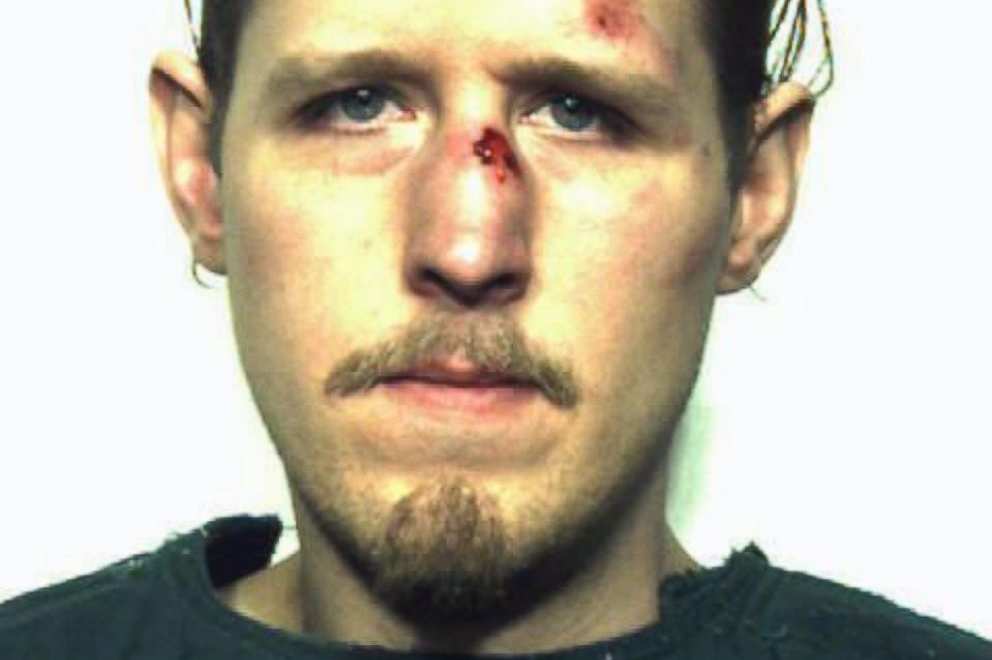
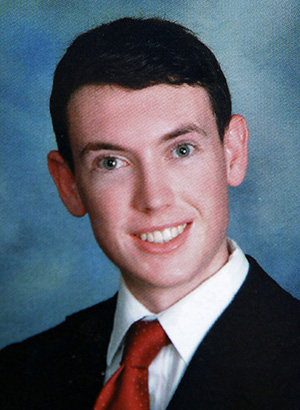


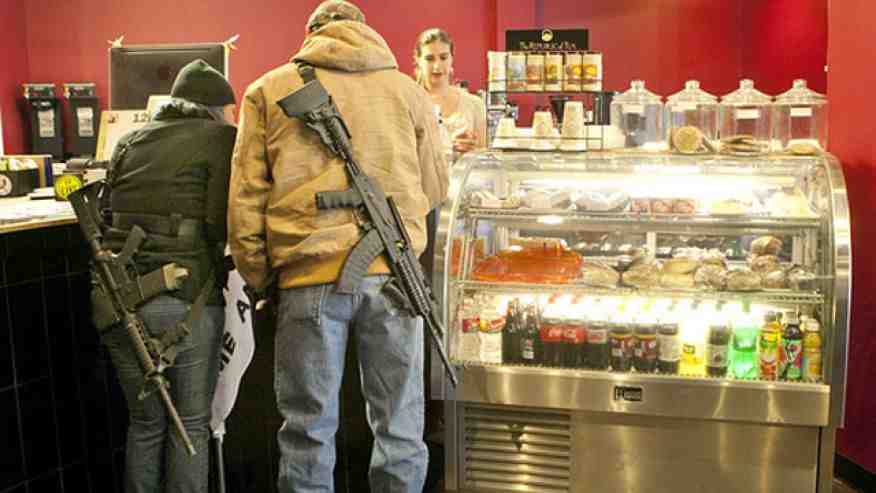
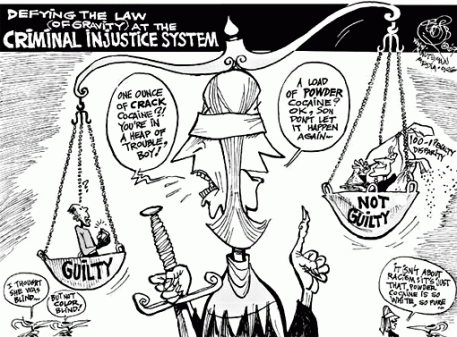
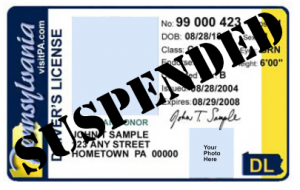


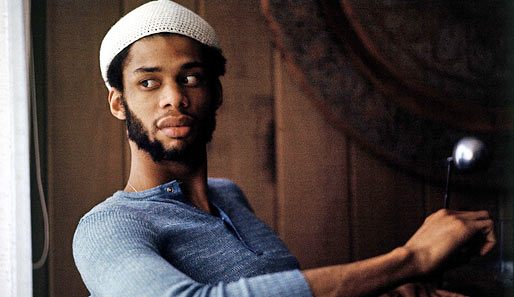
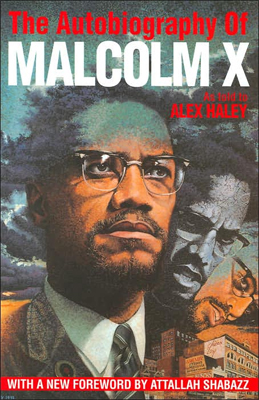


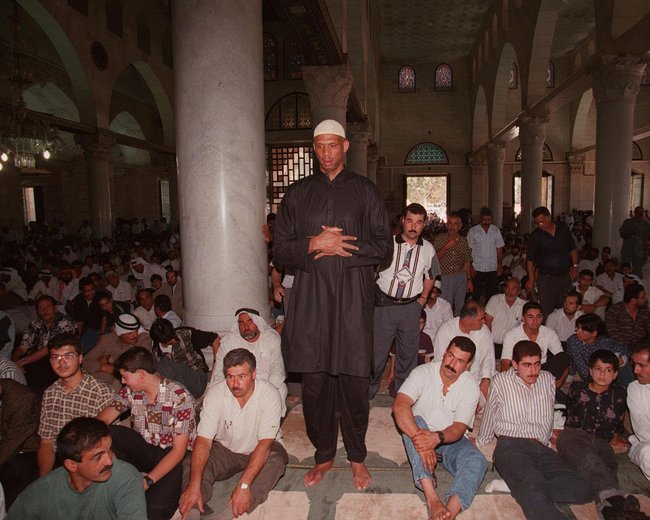


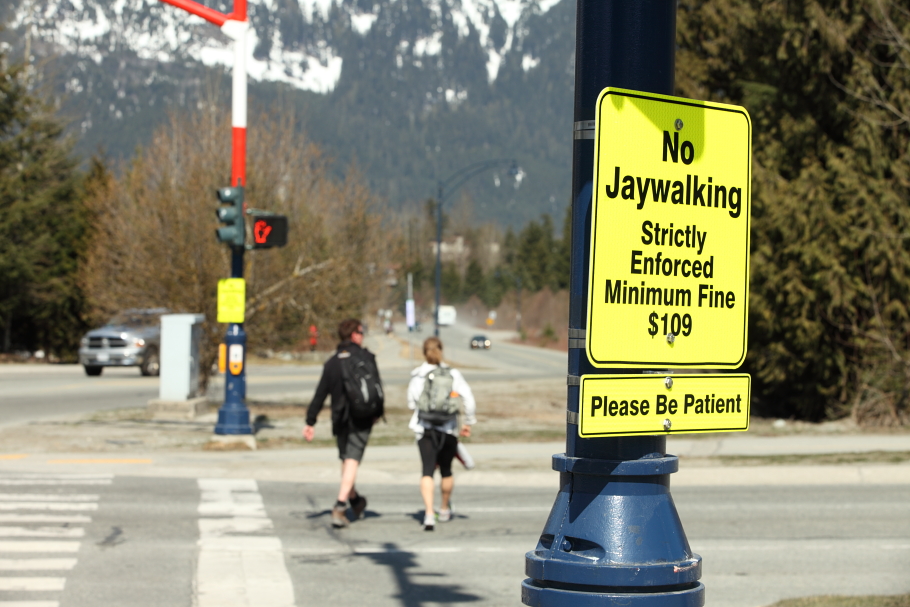












 Miscellany101's Weblog